It seems a bit tragic to write a post essentially about making toast, but here goes anyway.
In Chad Robertson’s wonderful Tartine Bread, he offers over thirty different recipes for using up old bread. The entire book is fabulously inspirational, but that chapter particularly so, given that I have a freezer full of loaves from all my baking experiments (I appear to have filled the neighbours’ freezers as well).
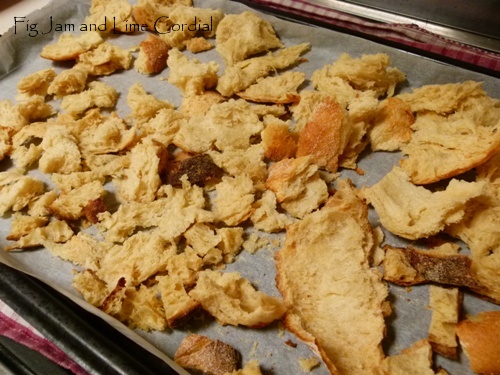
Midway through the chapter, Chad recounts how he asked the legendary Alice Waters what she did with her old bread and the reply was, simply, “bread crumbs”. That was what I had in mind when I tore apart our failed Römertopf loaf and laid it out to bake for three hours in a low 100C oven.
What I didn’t realise was how delicious oven dried sourdough is – it reminded me of the little squares of melba toast from my childhood. I’d baked the bread until it was dry all the way through – there weren’t any soft bits of crumb left at all. Before I’d even had a chance to think about whizzing them up in the food processor, Small Man devoured half of them.
I figured it had to have something to do with the crunchiness.
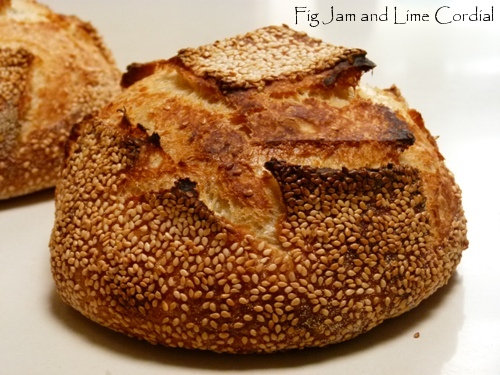
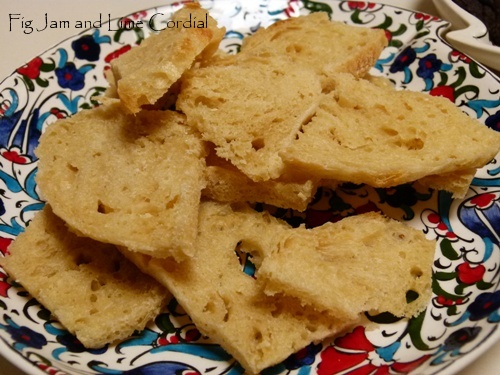
A few days later, I cut the crust off a sesame loaf (the tribe had spoken, and these loaves had been ignored by everyone except me). I sliced it up thinly and baked the pieces in the oven, again at 100C (no fan) for a couple of hours. I also tore apart half of another loaf and baked it on the lower shelf…
As they were cooking, I made a batch of frijoles negros refritos (refried beans) using precooked defrosted black beans from the freezer and a little of our recently rendered lard…
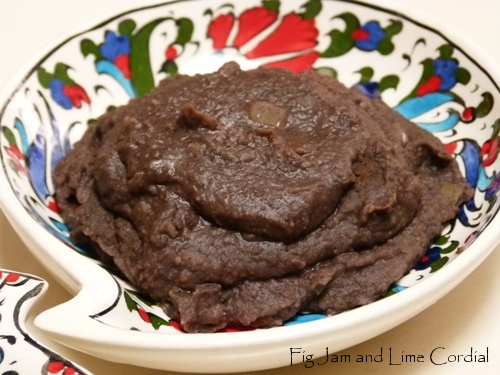
The boys scoffed the bread and dip for Sunday lunch with enormous enthusiasm. The crunchy dry sourdough made a great substitute for corn chips (without the deep frying)…
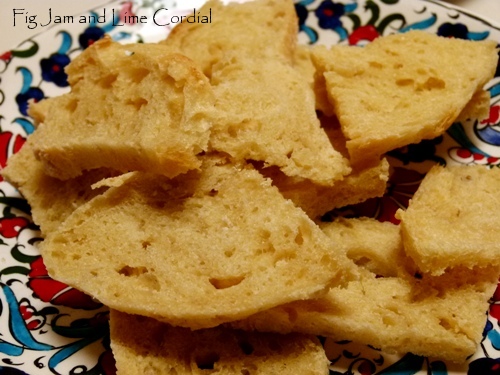
Any leftovers (providing the pieces have been baked completely dry) should keep for a while in an airtight container, in much the same way as breadcrumbs would. They make wonderful croutons for soup, can be whizzed into crumbs in the food processor (or crushed with a rolling pin as Chad Robertson suggests), and they work well with cheeses and dips. Slicing the bread produces prettier results, but the torn pieces have a certain rustic charm which we found very appealing.
In the end, lunch for the entire family cost us very little – the bread was surplus, the beans were dirt cheap, and running a low oven isn’t hugely expensive (according to my engineer husband). More importantly, we didn’t have to waste any bread!














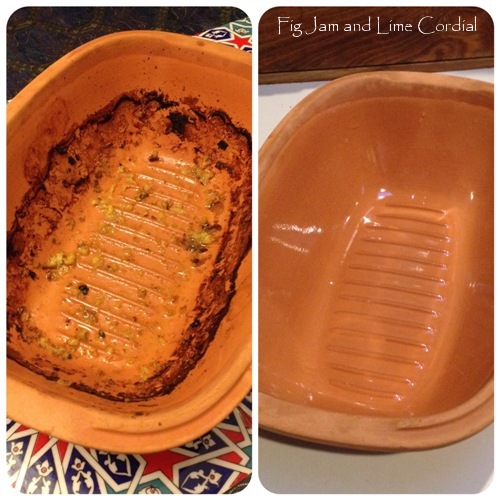




















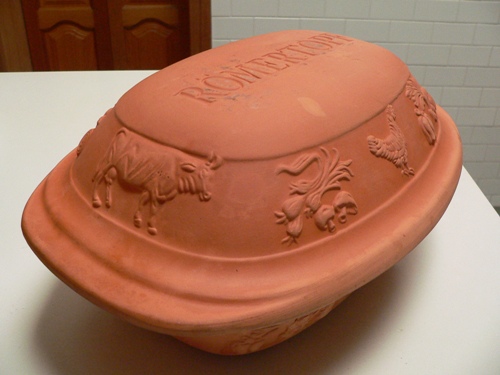






 Fig Jam and Lime Cordial