Feeds:
Posts
Comments

Archive for the ‘green living’ Category

Mask Making

Apologies for the radio silence, friends.

I haven’t been away on holidays (remember those days?), or pottering in the kitchen, delightful as that would be. Instead, I’ve been frantically sewing masks.

As COVID19 continues to spread in parts of Australia, NSW Health has urged us all to wear masks whenever we’re unable to socially distance, and I’ve been trying to make enough for our family and friends. I’ve got the process quite streamlined now, having churned out nearly a hundred in the past few weeks. Here are some thoughts…

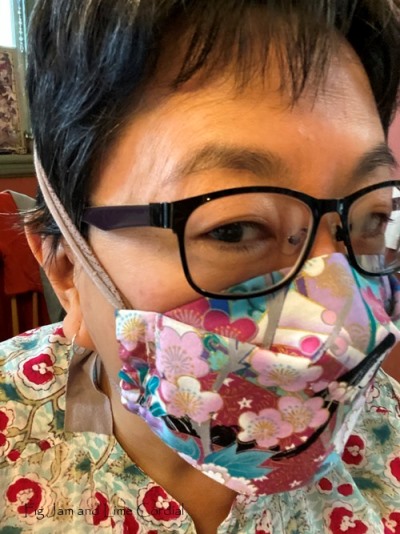
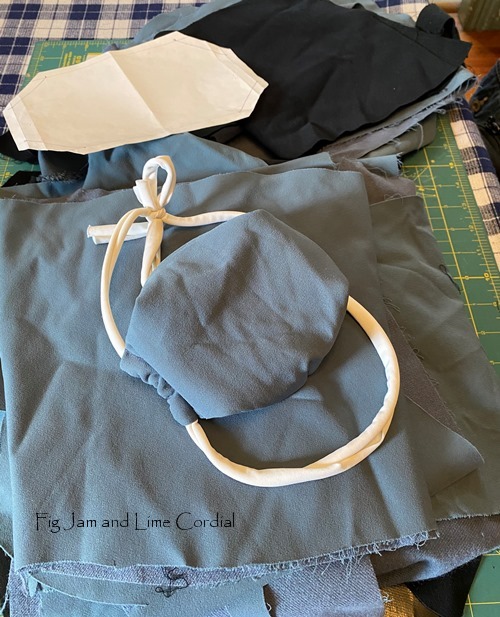
#1: In my personal opinion, ties work better than elastic ear loops. It does, of course, depend on head shape, but we’ve found that ties give a snugger fit with less gaping.

Stretchy cotton lycra makes extremely comfortable ties which tend to stay in place. We’ve been cutting 3cm (1¼”) strips across the width of the fabric (selvedge to selvedge), then giving them a good tug until they curl. I thread a 90cm (36″) continuous strip through both sides of the mask and then tie behind my neck. I’m actually using bamboo lycra which I found as a remnant at The Sewing Basket, and it’s gloriously soft…
. . . . .

#2: Fabric masks can be a sustainable alternative to paper ones. We’ve made masks from old jeans, rescued scraps, and materials sourced from The Sewing Basket (which I’ll henceforth refer to as TSB as I’ll probably mention them another ten times in this post).

These ones were made from Big Boy’s old jeans, lime green binding, interfacing and lingerie elastic that I found at TSB, and straps cut from Small Man’s old tshirts (see this post)…
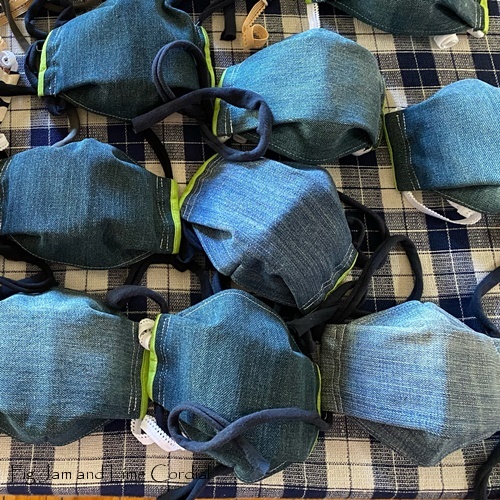
The denim ones were so popular that I made a second batch. I was able to cut ten masks from a pair of $2 Salvos’ (thrifted) jeans, and lined them with fabric from a Japanese cushion cover that I also picked up for $2 from the Salvos Store in Croydon. All the components – including the interfacing and straps – were sustainably sourced from rescued and donated materials…

. . . . .

#3: Very little fabric is actually needed to make a mask, so they’re the perfect project for leftover scrap. My darling friend Dan recently made me this patchwork quilt from a $30 donated kit that I picked up at TSB…
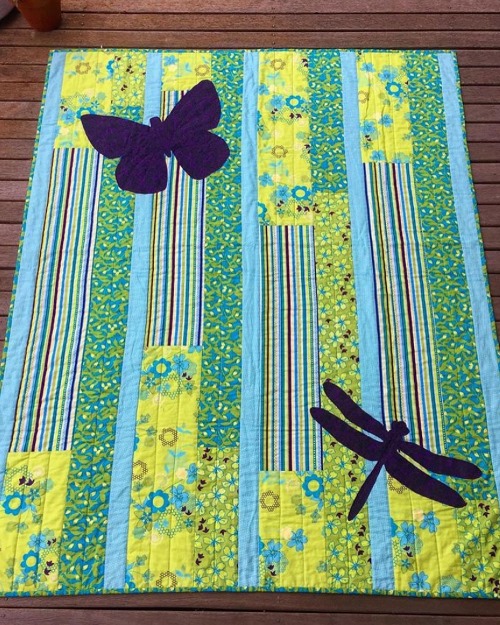
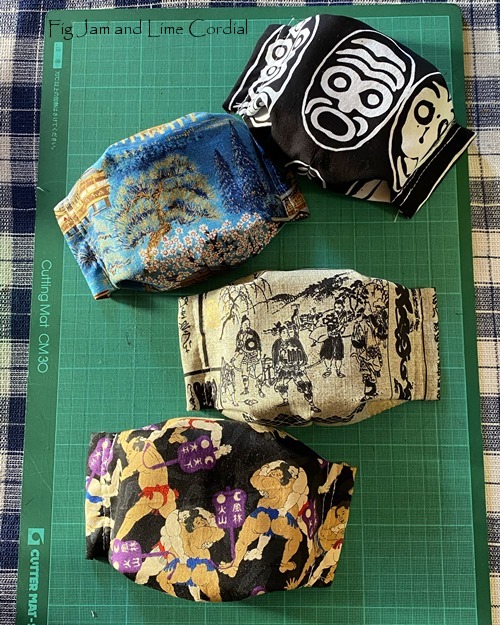
She then gave me all the excess fabric back, and I was able to turn the scraps into nearly thirty masks…
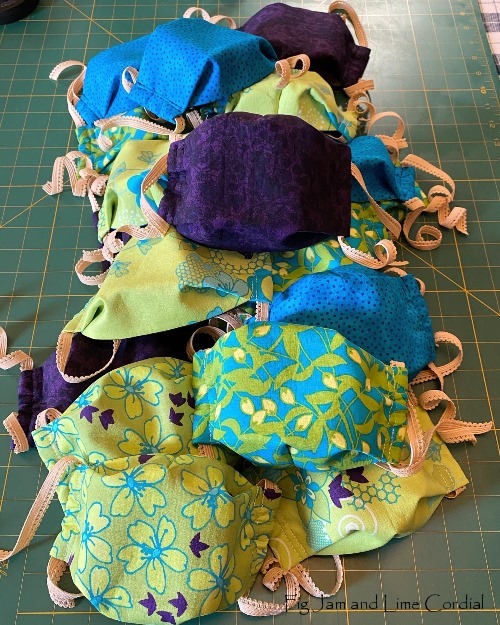
Including a pair for these little monkeys…
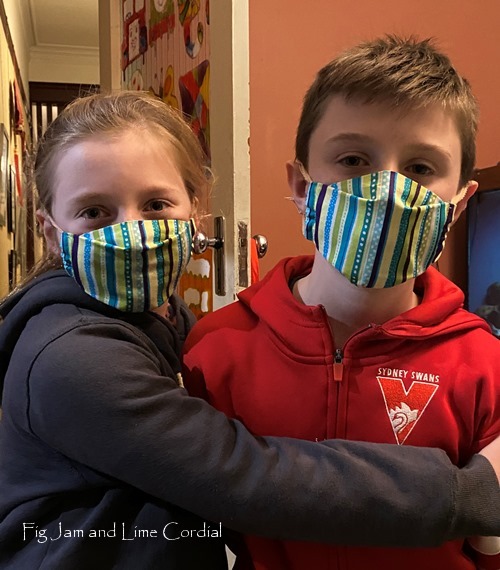
I’ve had these  pieces of Schoeller Dryskin Extreme  in my sewing room for nearly two decades. When it was first released, the fabric retailed for an astronomical amount – over $100/m from memory – so I’ve hoarded these rescued manufacturing scraps like gold. The high tech material was originally targeted at adventurers hiking in the Swiss alps, so naturally I made pieced jackets for Pete and the kids from them. It turns out they’re perfect for masks, because water runs off the external surface but they’re still reasonably breathable and comfortable to wear.

I’ve said it a dozen times, if the universe doesn’t want me to be a quarter hoarder, then it really needs to stop positively reinforcing me for it…
. . . . .

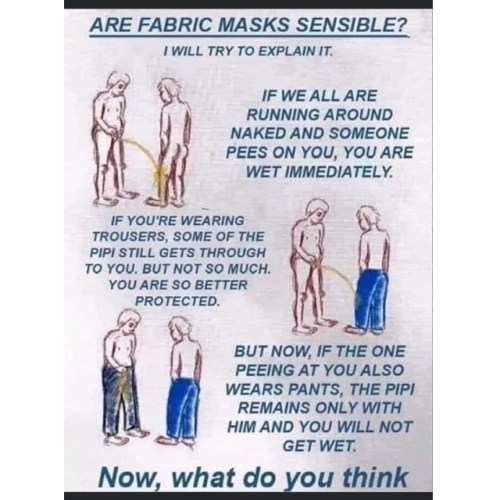
Finally, something to make you laugh. I sneezed inside my fabric mask the other day (it was seriously gross) and basically proved the truth of this graphic which Jess sent me. Stay safe, folks! ♥
Read Full Post »

A couple of weeks ago, I picked up $3 worth of quilting fabric scraps from the Sewing Basket in Balmain. At 10c per piece, this is what they looked like…

I’m not a quilter, but I was keen not to waste them, so I turned some of the pieces into pincushions. If you’d like to have a go at making your own, here’s a step-by-step tutorial I wrote a few years ago

My ever patient Pete walked into the dining room while these were in progress and just stared at the mound of stuffed pillows. “The trouble with tribbles is…” I quipped (it’s a Star Trek reference)…

I’m sure a few of you will understand this feeling…sometimes you just need to do “quaft” until your hands hurt. There’s something incredibly rewarding about filling a table with pretty creations in cheerful bright colours. Being able to do so without buying any new resources (the scrap fabric, broder cotton, buttons and polyfill were all purchased from donated and rescued stock) makes this a sustainable and guilt-free pleasure.

I gave a few of these to friends and donated the rest to the Sewing Basket Balmain to sell and/or give to their volunteers. All funds raised by these stores go to Achieve Australia, a disability support and housing charity…

So if you’re looking for a quick project, give these a go. You might find them as addictive as I do! ♥

Read Full Post »

Phoenix Projects

One of the great joys in my crafting life is finding a way to rescue something that everyone else has given up on.

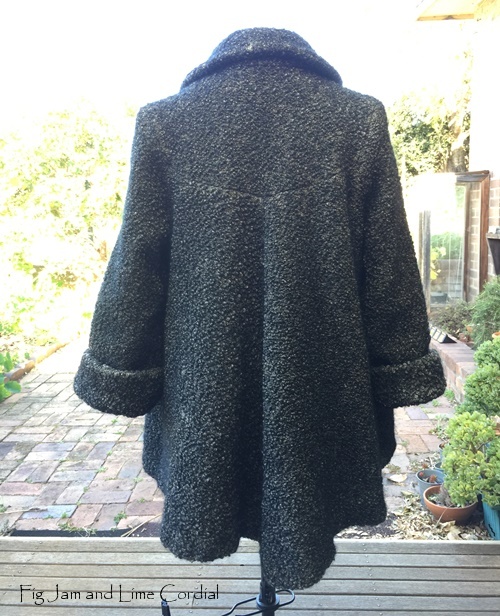
I refer to them as my Phoenix Projects – firstly because they’re items which are being transformed into something new, and secondly because I’m rescuing things which most people would be happier to burn. I thought it might be fun to share some of these with you over the coming months, in the hope that they might inspire you to look at your discards in a different light. You’ve seen some of them already – like the vermin-eaten 1950s opera coat that nearly made me throw up while I was restoring it last year

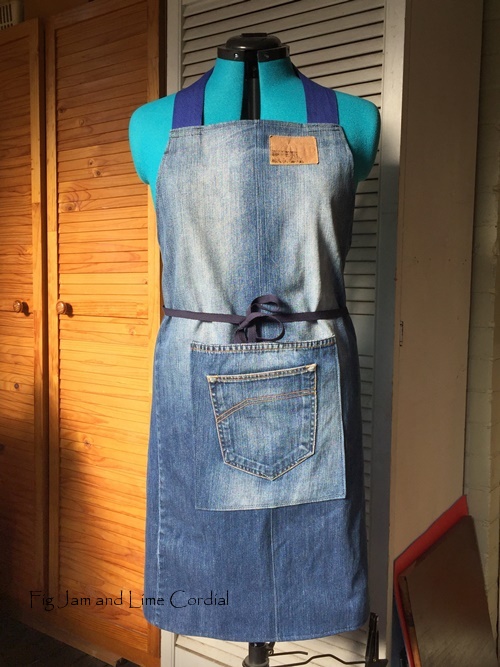
…and the roadkill denim apron I made from jeans that I found under a car outside our house…

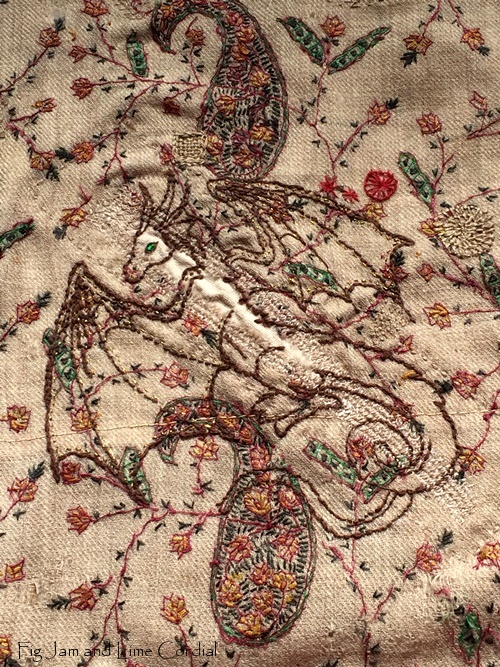
And of course, there’s my Penny shawl

. . . . .

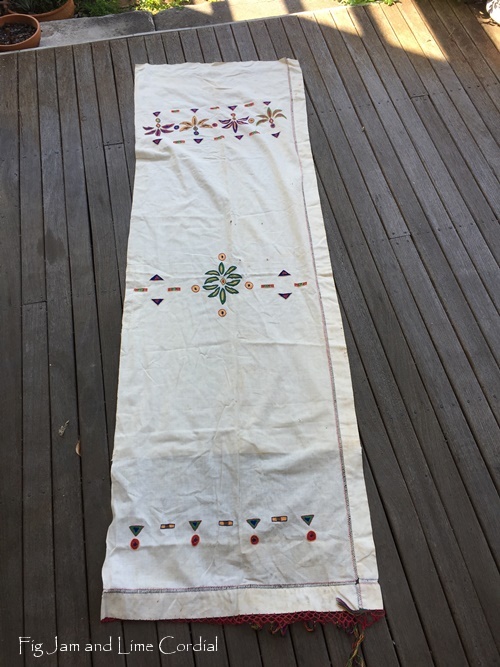
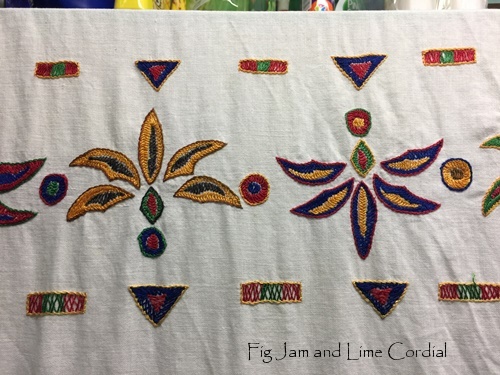
My latest project has involved this intriguing vintage textile I found at the Sewing Basket in Balmain. It was badly stained and torn, and its length made it hard to photograph. Pauline let me have it for $5 and I brought it home to try to clean it up. If anyone has a suggestion as to what it might have originally been used for, I’d love to hear it – for the life of us, we can’t figure it out. One friend suggested it might have been an altar cloth, but the fringing on just one short end rules that out, as does the lack of any religious symbols.

There is (now broken) pulled thread work down just one long edge and what appears to be shadow embroidery handstitched using rayon thread. We’ve debated whether it’s European or South American or Pacific Islander in origin. In a previous life, it had been used as a curtain, because there were rings sewn into it for hanging (sadly, these destroyed the fabric where they were attached), and although it was in a pretty grotty state, Napisan shifted some of the stains. If you ever need tips on restoring old fabrics, pop in to the Sewing Basket Balmain on a Saturday and chat to the wonderful Mark…

Then…(bear with me, this story gets better)…the following week, lovely Pauline texted me and said “Come back Celia, we’ve found its twin”.

So I went back to the store and there was another one of whatever these are, only in a much worse condition. A much stinkier, more torn, more stained condition. I offered Pauline another $5 but she refused to take it – from the way she was handing it to me at arm’s length, I think she was just happy for it to be out of her shop. I was pretty excited!

I think what I love most about a Phoenix Project is that it comes with absolutely no expectations, so the only possible outcome is a good one. Even if only a small scrap of it can be saved, that’s already better than the whole thing going to landfill. And this old piece, whatever it once was, had been dearly loved, because someone had gone to a great deal of effort to mend it by hand. I followed Mark’s advice and gave it a careful Napisan soaking, which disintegrated some of the fabric (a product of the dirt and water more than the Napisan, I suspect) but removed some of the stains.

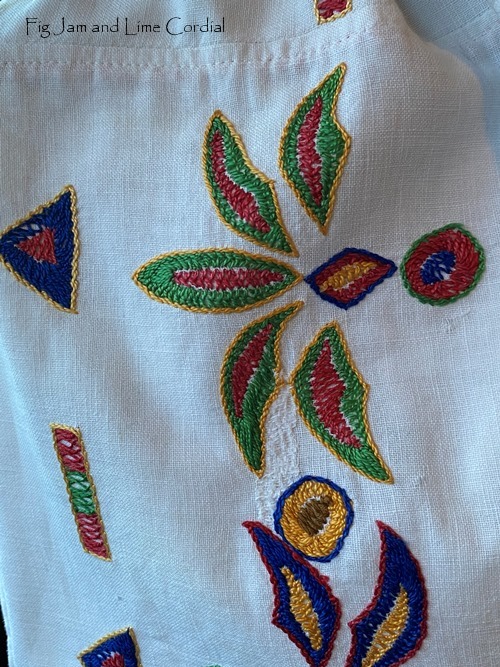
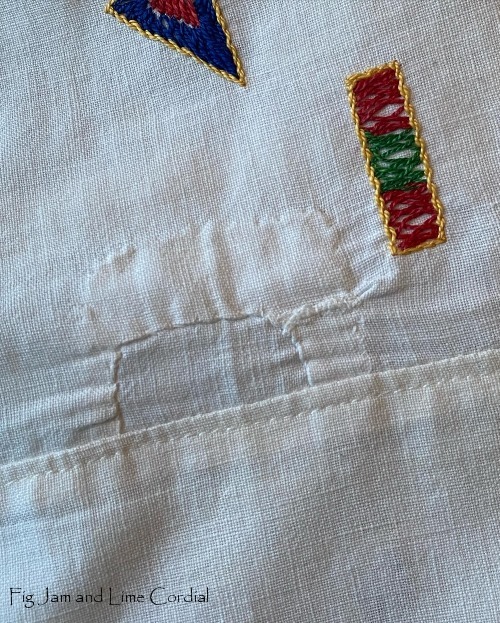
Then I cut the fabric into 12 inch panels around the embroidery, using the secondhand quilter’s square I’d also picked up from Balmain. I tried to save as much of the previous mending as I could…

I love, love, love the carefully hand-mended patches…

I ended up with four embroidered panels and enough “clean” white fabric to make a double-sided scarf. I crossed my fingers and removed the rayon fringing, cut it in half and finished the edges, then reattached it to the ends of the scarf. It was still quite badly marked, so the finished piece then had another overnight soak in Napisan – the second round removed almost all the remaining yellow stains.

Voila! I now have a new scarf for winter! One that is completely unique and carries a backstory, even if I don’t know what it is, and a treasured vintage textile has been given a second lease of life. Phoenix Projects really are the best things ever – they cost almost nothing, they challenge me creatively, they respect the history of the textile, they give new life to existing materials, and they keep precious resources out of landfill. They’re a sustainability win! ♥

Read Full Post »

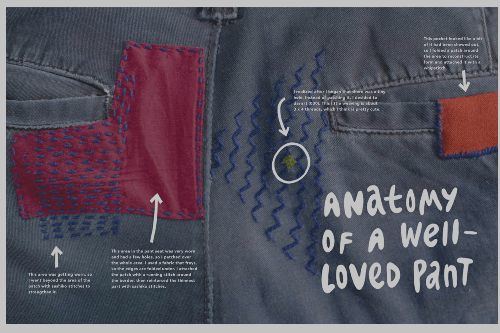
I now own quite a few mending books, but this one is my current favourite.

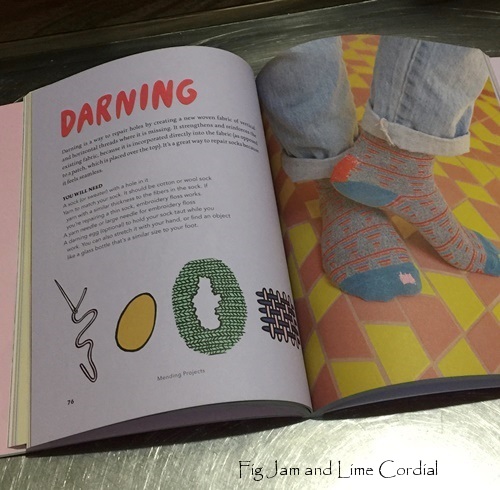
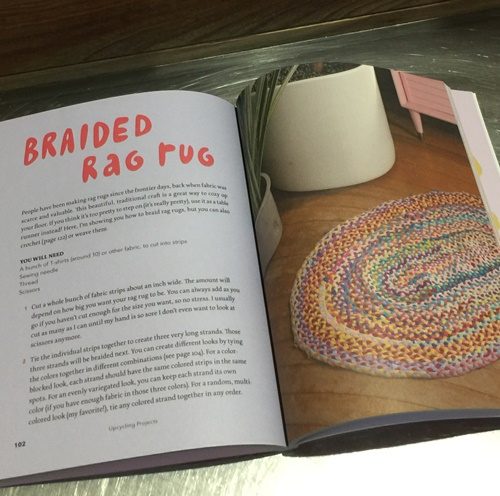
I love it so much that I bought both a paperback version and a Kindle (iPad) copy, just so that I could lend the paper version out. It’s a great deal more than simply a how-to guide, it also delves into the why-to. I took photos of a few pages so you could get a proper feel for Lily’s writing style. The book starts at the very basics (how to sew on a button) and focuses mostly on hand sewing. It’s extremely approachable for menders at all skill levels, but particularly for beginners.

It begins with Lily’s explanation on why donating our old clothes might assuage our guilt, but is actually only marginally better than sending them to landfill…

In both e-book and print format, the mending instructions are clearly illustrated and described…

Fabulous information graphics are included…

And I absolutely love that the mending work celebrates function and uniqueness over perfection. It’s like being given permission to play! As you’ve seen from my own repair efforts, I would far prefer a mend which adds to the story of a garment rather than one which hides it…

Additionally, there is a section on upcycling ideas once clothing is beyond the point of fixing…

. . . . .

A friend said to me recently, “Celia, mending is your thing, but it’s not for everyone.” And I really do understand that. As evidenced by the lukewarm response to my suggestions of a darning workshop, even my most staunchly eco-minded friends will baulk at the idea of picking up a needle to fix something.

But folks, that has to change. We can’t keep churning through new resources at the rate we’re going – the planet can’t sustain it.  If there is anything you can do to give something which already exists an extended life, then I’d urge you to have a go.

Seriously, perfection is overrated, and style is always optional. I’ve got a few posts lined up to show you the things I’ve been working on lately in the hope that they’ll encourage you to look at your old clothes in a different way.

Celebrate the story, darn those socks, stitch up that ripped seam. Lily’s book will help you get started! ♥

Read Full Post »

“So shines a good deed, in a weary world”
(Willy Wonka and the Chocolate Factory, 1971)
. . . . .

Do yourself a favour, make a nice hot cup of tea and then spend 15 minutes listening to this wonderful talk.

I hope you find it as uplifting as Pete and I did! ♥


Read Full Post »

« Newer Posts - Older Posts »