Feeds:
Posts
Comments

Archive for the ‘Recipes’ Category

Crumpets

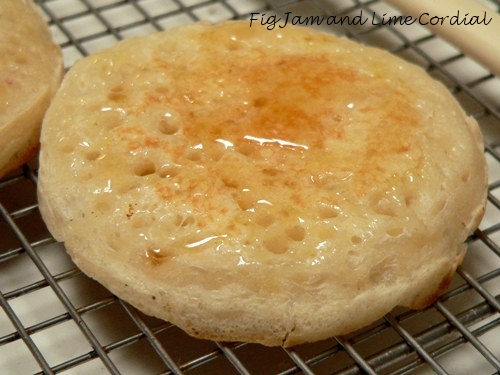
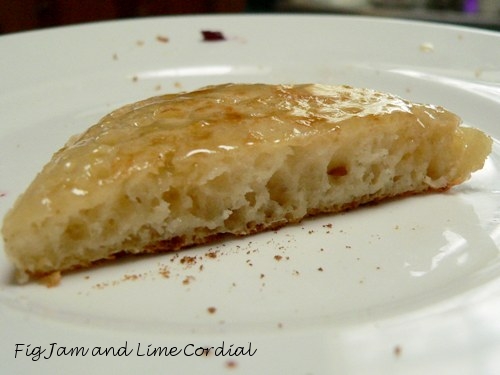
It’s hard to find a good crumpet recipe.  Most of the ones I’ve tried in the past have turned out as doughy fat pancakes, lacking the characteristic holes and texture of an old-fashioned crumpet.

I was excited and optimistic when I found this recipe – it was quite different to previous ones I’d tried, and as you can see from the photo above, it was a great success!

I tweaked the quantities and methodology a little and was delighted with the end result.  The original recipe is here – it’s a great read and has lots of useful tips on the cooking process.

  • 240g/8oz bakers flour (bread flour)
  • 240g/8oz plain (AP) flour
  • ¾ teaspoon cream of tartar, sifted
  • 10g or 1 sachet dry yeast
  • 500ml/2 cups tepid water
  • 7g fine sea salt
  • ½ teaspoon bicarbonate of soda (baking soda)
  • 140ml/5oz milk, at room temperature (I used UHT milk)

1. In a large mixing bowl, stir together the flours, sifted cream of tartar and dry yeast (don’t add the salt at this stage).
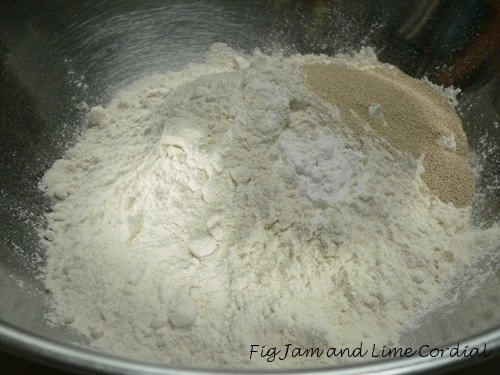
2. Make a well in the middle of the flour and add the water.  Starting from the centre and gradually working outwards, stir with a wooden or silicone spoon to form a thick, smooth batter.  Beat well by hand for two minutes.  Cover the bowl with plastic wrap and allow to rest in a warm spot for an hour. Below is a photo of the mixed batter, before resting.
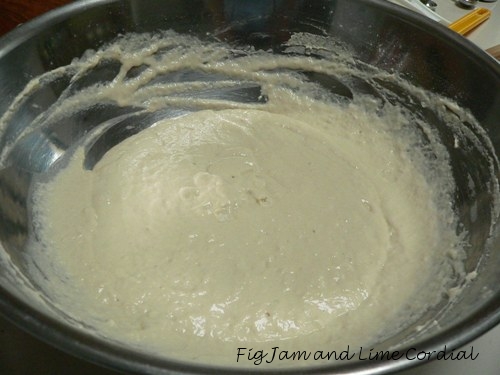
3. Add the salt and beat the batter for another minute to incorporate.  Cover the bowl again and allow to rest for another 20 minutes.

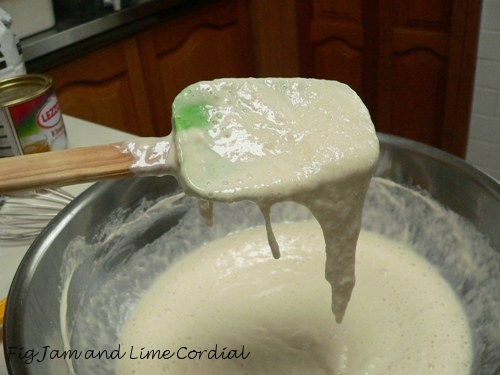
4. Dissolve the bicarbonate of soda in the room temperature milk.  Stir this into the batter gently.  The thickness of the batter will determine whether or not the crumpets will set properly – if it is too thick, the crumpets will lack holes, but if it’s too thin, the mixture will run out of the bottom of the rings.  Here’s a photo of the batter after the milk and bicarb have been added.

5. To test the batter, heat a frypan or griddle over a medium-low heat until hot.  I used a heat resistant non-stick pan.  Depending on your pan, you might need to add just a tiny bit of butter or oil to stop the batter from sticking.

6. Grease a crumpet ring and place it in the middle of the pan.  Spoon batter into the ring – my 10cm/4″ rings needed 1/3 cup of batter each.  Allow the crumpet to cook over low heat.  If the test crumpet doesn’t form holes, you’ll need to gently stir a little more lukewarm water into the batter – I needed to add several  tablespoons  of water to achieve the consistency below.
7.  The cooking process involves a little trial and error.  The crumpets need to be cooked until the tops are covered with holes and the bottoms are quite brown. The original recipe suggests 7 to 8 minutes over a low heat for this stage. Photo below of the crumpets midway through the cooking process.
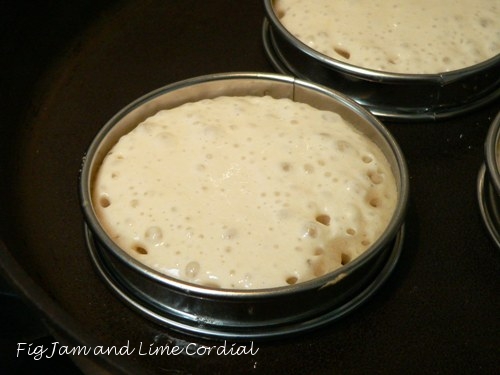
8. Once the tops are covered with holes that keep their shape, carefully remove the rings and flip the crumpets over, cooking the tops for just a couple of minutes to set them.  Re-grease the rings well after each use. As the crumpets will be toasted before eating, be careful not to overcook them at this stage.

Click here for a printable version of this recipe
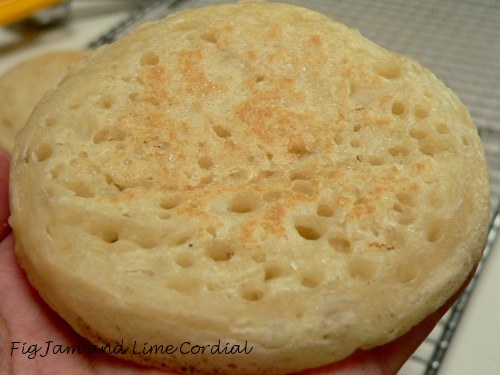
We ate our crumpets toasted and spread with butter and honey, and with Pete’s new cherry and strawberry jam.  A perfect weekend treat!
Read Full Post »

Our dear friend PeteA has coeliac disease, and a pre-diagnosis history of passionate chocolate brownie consumption.  For the past fifteen years, I’ve been trying to bake him a really good gluten-free brownie.

I didn’t want something which was nearly as good as, or a reasonable substitute for, a regular brownie. I wanted a recipe that was moreish, irresistible and absolutely delicious in its own right.

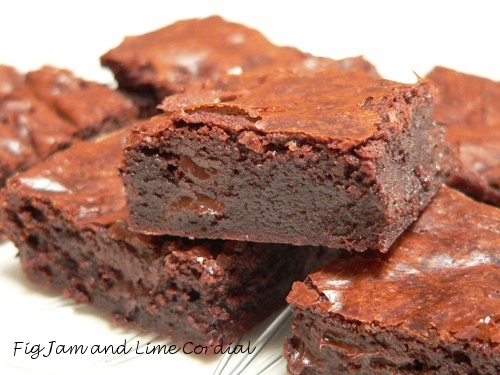
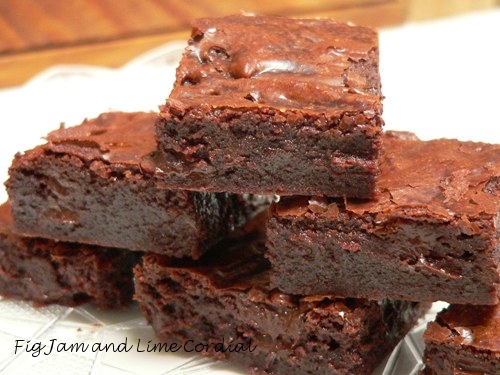
By substituting chestnut flour for the plain flour in our fudge brownie recipe, I think we’ve finally succeeded!

The litmus test was my husband Pete. The fudge brownies are his personal favourite, yet he felt the chestnut version was as good as, if not better than, the original.  The chestnut flour adds a subtle nuttiness and richness which we both found very appealing.

Please remember that this recipe works best with 50 – 60% cacao dark chocolate – anything higher than that, and you could end up with an oily brick.  I discussed this in depth in the original post here.

The batch I baked for PeteA had chocolate chips stirred through the batter, but the recipe should work equally well with added nuts instead.

The  reworked gluten-free version is as follows:

  • 90g (6 tablespoons) unsalted butter
  • 225g (8oz) 50 – 60% cacao semisweet chocolate (I used Callebaut 54%)
  • 150g (¾ cup) sugar
  • 1 teaspoon vanilla extract
  • 2 large (59g) eggs, at room temperature
  • 40g (¼ cup) chestnut flour (sifted)
  • 135g (1 cup) toasted and chopped nuts, OR 150g (1 cup) chocolate bits (Note: for the all chocolate version, I used 100g Callebaut 44% bake stable sticks, broken up AND 50g Callebaut 70% callets)

1. Preheat oven to 175C/350F or 160C/320F with fan.

2. Measure out all your ingredients and have them ready to go.  Line a 20cm (8″) baking pan with parchment paper.

3. In a medium saucepan, melt the butter, then add the chocolate and stir over low heat until melted and smooth.  Remove from the heat and stir in the sugar and vanilla until combined.

4. Stir in the eggs one at a time.  Add the sifted chestnut flour all at once and stir vigorously until you can feel the batter “snap”.

The batter starts out grainy and fairly loose.  As you beat it by hand, it will initially feel like nothing is happening, and then it will suddenly feel a bit stiffer – that’s when you’ll know a state change has occurred.  This might take one minute, or it might take several.  Stop occasionally to check how it’s going. Unlike true fudge, it’s not a huge “snap”, but the texture will definitely change noticeably – it will feel stiffer, look smoother, and pull away from the sides and bottom of the pan.

Edit Jan 2019: It’s been eight years since I wrote this post, and my hands are eight years older as well, so these days I use a handheld mixer to beat the batter. It only takes a minute or two, but it’s just easier.

5. Gently stir in the inclusions.

6. Scrape the batter into the lined tin and smooth out the top.  Bake for 25 minutes until just firm.   Do not overbake. Allow the brownies to cool completely before lifting them out of the pan and slicing.  Enjoy with gluten-free abandon!

Read Full Post »

I used to be afraid of eggs.

And probably with due cause – there are countless stories on the news about salmonella and other health risks associated with raw eggs.  But one of the most wonderful things about having chickens in the backyard is that I am finally confident enough in the quality of our eggs to eat them raw.

So this is a recipe for Christine, Christina, Jan, Amanda, Spice Girl and all my other friends who know the joy of having a warm egg, freshly laid that morning.  The eggs in this recipe are not cooked at all, so if you’re planning to make it, please only use eggs you’re completely sure about.  Commercial eggs are often months old before they’re put out for sale (even free range ones) and it would probably be unwise to use them in this recipe.  Sigh. Obviously I’m still a little afraid of eggs.

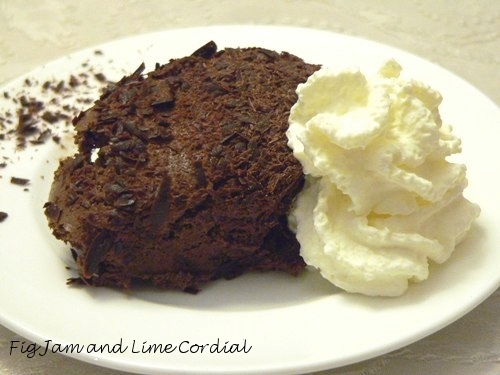
The great thing about this recipe (apart from being outrageously simple) is that there’s no added sugar or dairy.  It resulted in a firm mousse with a dark, pure chocolate flavour that matched brilliantly with our old bottle of vintage porto.

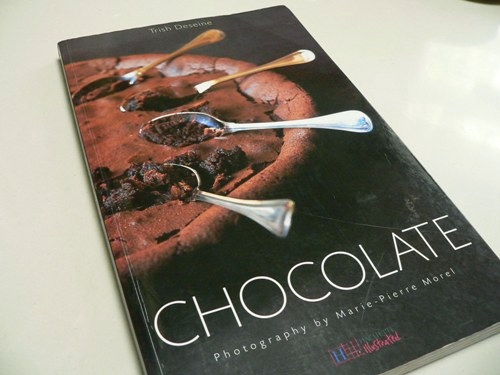
The recipe comes from Trish Deseine’s Chocolate, a much loved and well used volume on our cookbook shelf.

  • 150g (5oz) dark chocolate (I used Callebaut 811 54%)
  • 2 teaspoons rum, coffee liqueur or brandy (optional)
  • 5 super-fresh large eggs (59), separated

1. In a large bowl, melt the chocolate in the microwave or over a saucepan of simmering water.

2. Remove from heat and stir in the alcohol (optional).  Note that when the alcohol is added, the chocolate will seize up a little – don’t panic.

3. Add the egg yolks one at a time, stirring well into the chocolate mixture to loosen it up.

4. Whisk the egg whites until stiff, then stir a large spoonful into the chocolate mixture to soften it.  Then carefully fold the remaining beaten egg whites into the chocolate mixture.  Pour the mixture into a large serving bowl, or several smaller ones and refrigerate until firm.  Decorate with grated chocolate before serving.

Read Full Post »

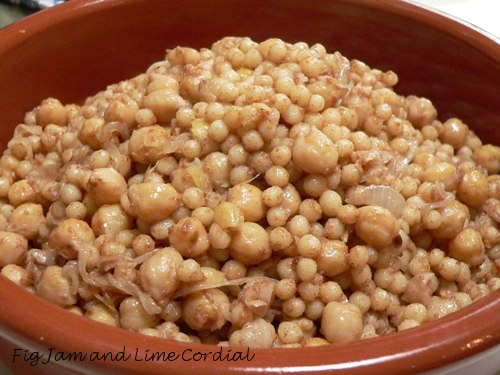
Moghrabieh

“Barbara!  Barbara!”

During any visit to the Lebanese wholesaler Harkola, we’re likely to hear someone calling for Barbara.  And that’s because she’s wonderful – she knows how much the dates are, she knows where to find the pearl barley and, as we found out on our last visit, she knows a great recipe for moghrabieh.

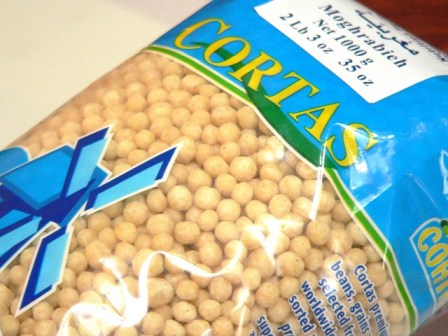
Moghrabieh is Lebanese couscous – an unusually firm pasta which needs to be boiled in water for up to half an hour before it can be eaten.  Harkola are the Australian importers, which means a kilo packet from them costs $4, as opposed to the $11 I’ve seen it on sale for in local foodie stores.

When Barbara saw me putting a packet of moghrabieh into our trolley, she offered me her recipe, commonly eaten in the Lebanese community as a  late breakfast.  Here are the instructions as they were told to me..

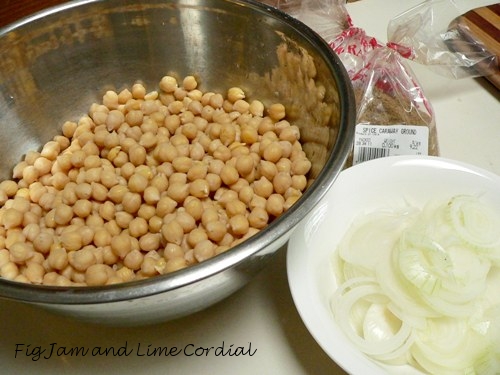
1. Soak a large quantity of dried chick peas overnight, then boil them in a large pot with plenty of salted water until just tender. (I added salt at the end, as I didn’t want to toughen the skins).  Drain well.  Tinned chick peas can also be used, drain them well, but don’t rinse them.

2.  Bring another large pot of salted water to the boil, and cook the moghrabieh until soft (this took about 25 minutes), but not mushy.  Drain well and sprinkle over with a good pinch each of ground caraway, ground cinnamon and ground allspice.

3. In a large frying pan or saute pan, fry a large quantity of sliced onion  until soft in plenty of oil, then add both the chick peas and moghrabieh and toss to combine and heat through.  Season with more salt to taste. Serve warm with pita bread.

One thing I should mention – Barbara’s instruction was to use the whole packet of moghrabieh. Now, that’s probably fine if you’re feeding a large extended family, but in our case, it resulted in an enormous quantity of food which needed to be shared out to friends and neighbours.  The flavour of the dish is subtle and delicious, with a lovely sweetness from the fried onions. I added more of the ground spices during the frying process, but they didn’t seemed to overpower the dish.  This is definitely a recipe we’ll make again!

Read Full Post »

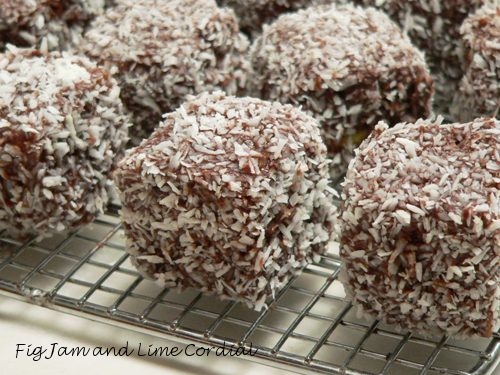
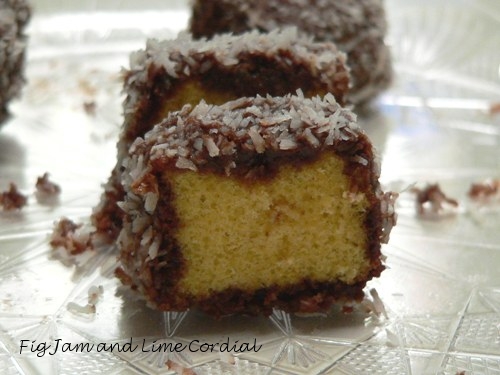
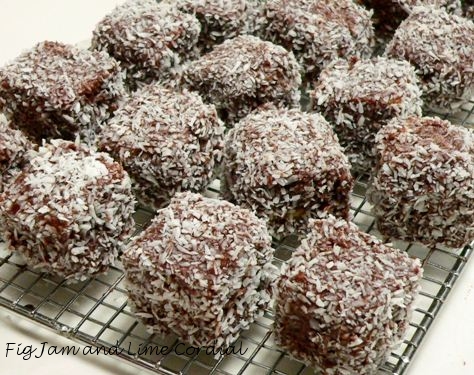
Inspired by Lorraine and Claire, I attempted my first ever batch of lamingtons for Australia Day. They worked so well that I had to make a second batch the following day!

Named after Lord Lamington, former Governor of Queensland, lamingtons are an indisputably Australian cake, and the backbone of many a fundraiser as I was growing up.

Like Claire, I used an old Australian Women’s Weekly recipe, specifically one from the now out-of-print Cakes and Slices Cookbook. The recipe included the unusual step of adding melted butter and hot water to the sponge, resulting in a light cake, which absorbed the icing like..um..a sponge.

I substituted coconut thread for the dessicated coconut, much to the delight of both Big Boy and Pete, neither of whom are fans of the latter, and tinkered just a little with the methodology.

Sponge:

  • 6 large (59g) eggs
  • ¾ cup (165g) caster sugar
  • 1 cup (150g) self-raising flour
  • 1/3 cup (45g) cornflour (cornstarch)
  • 1/3 cup (80ml) hot water
  • 15g (1 tablespoon) butter, melted
  • coconut thread, or dessicated coconut, about 3 cups (250g)

Icing:

  • 4 cups (500g) icing sugar mixture (confectioner’s sugar)
  • 1/3 cup (40g) cocoa (I used dutched)
  • 15g (1 tablespoon) butter, melted
  • ½ cup (125ml) milk

1. Line a 23cm/9″ baking tin with parchment paper.  Preheat oven to 175C/350F or 160C/320F with fan.

2. In a medium bowl, sift together the flour and cornflour.  In a cup, stir together the hot water and melted butter.

3. In a large bowl, beat the eggs together with an electric mixer until thick, then gradually add the sugar, beating well between each addition.  The batter will be thick and frothy.

4. Carefully fold in the sifted flours, then quickly but gently fold in the hot water and butter.  Pour the batter into the prepared pan, and bake for about 35 minutes.

5. Stand for five minutes in the tin, before removing to cool on a wire rack.  Allow the cake to cool completely before proceeding.

6. Cut the cooled cake into 25 squares, trimming any rough edges as required.

7. In a large heatproof bowl, sift together the cocoa and icing sugar mixture.  The original instructions are to then add the milk and butter, and stir the mixture over hot water until smooth.  Instead, I heated the milk and butter in a microwave-proof cup, and gradually whisked it into the icing sugar and cocoa until smooth.

8. Using a fork, dip the cake squares into the liquid icing, then toss them in the coconut threads.  Allow to set on a wire rack.

Click here for a printable version of this recipe

Read Full Post »

« Newer Posts - Older Posts »