Feeds:
Posts
Comments

Archive for the ‘Recipes’ Category

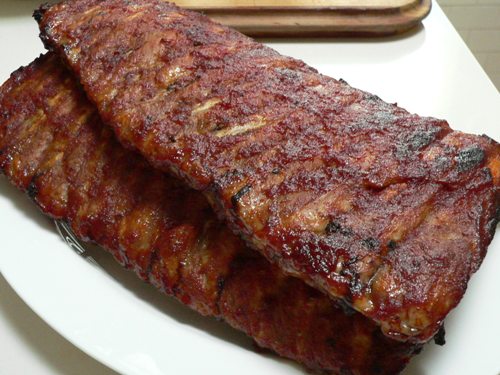
I’ve never roasted ribs in the oven before, but inspired by our recent meal at La Casa, I wanted to give it a go.

It’s usually hard to buy a full rack of American ribs (as they’re known here – I believe in the US they’re called “baby back ribs”).  They’re normally sold cut in half, but this time the gorgeous Mateja at Gojak Butchers in Haberfield had two large pieces in the coolroom.  I wanted a sweet, sticky sauce to cook these in and ended up concocting my own marinade:

  • ½ cup tomato ketchup (we used our homemade roasted version)
  • ¼ cup runny honey
  • 1 tablespoon (4 teaspoons) light soy
  • 1 tablespoon (4 teaspoons) Worcestershire sauce
  • 1 tablespoon (4 teaspoons) white wine vinegar

Quantities above are for a kilogram of ribs – I had two kilos, so I doubled the amounts above.

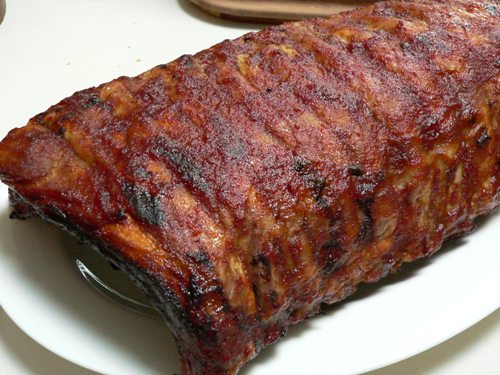
Generous spoonfuls of the marinade were rubbed over the pork an hour or so before baking, and the remainder was used to baste the meat as it roasted. We served them with potato wedges baked in duck fat.

Ribs and chips – Pete described the meal as homemade fast food!

Read Full Post »

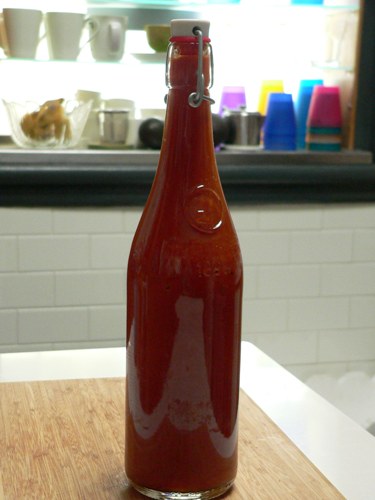
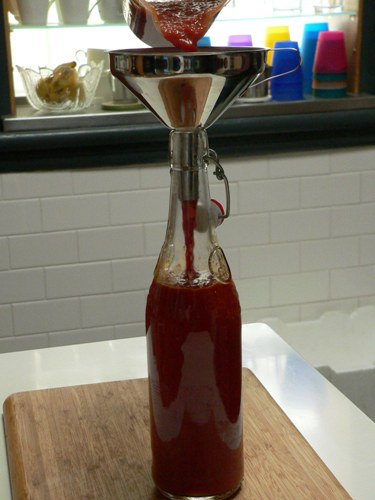
Have I convinced you to buy Pam Corbin’s Preserves book yet?  It’s a constant source of inspiration in our house, most recently for this fantastic roasted tomato ketchup.

The recipe is a little fiddly, but well worth the effort – we used up our first bottle so quickly that these photos were taken of our second batch!

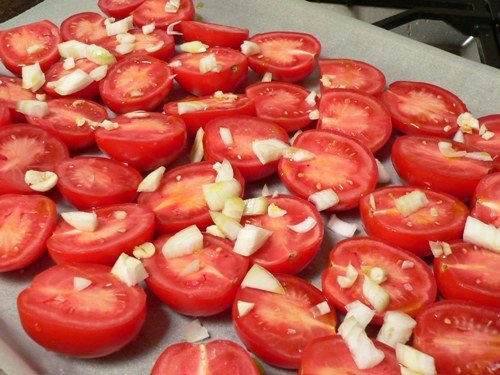
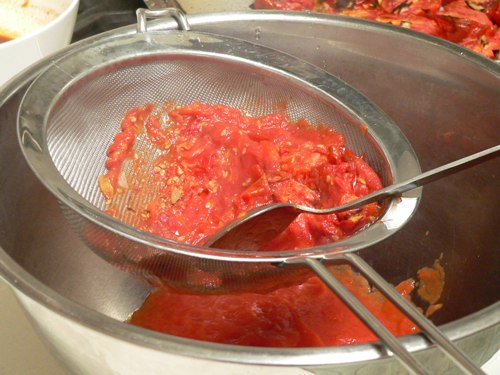
Here is our version – modified from the original to suit the ingredients we had on hand and using our preferred method for roasting the tomatoes. There are two stages involved – the tomatoes are roasted and sieved to create a passata, which is then incorporated with other ingredients to form the ketchup.

We’ve also made a version of this using bottled passata rather than homemade, which makes the process very simple indeed.  It was different, but delicious nonetheless.

Passata

  • 2 – 3kg ripe Roma tomatoes, cut in half
  • 1 large onion, chopped
  • 2 cloves garlic, sliced
  • scattering of salt
  • olive oil

Preheat oven to 200C (400F) with fan. Lay the tomatoes on a parchment lined tray, and scatter over the chopped onion, garlic and salt.  Drizzle with olive oil and bake for 30 minutes, or until the tomatoes are well softened and just starting to blacken around the edges.

Now, either process the tomatoes through a food mill or tomato juicer, or push them through a sieve as I did.  Using a food mill will result in more juice, but I was too lazy to wash it up!

Roasted Tomato Ketchup

  • 1 litre roasted tomato passata (or you could use bottled passata)
  • 100ml white wine vinegar
  • 50ml lemon juice
  • ½ teaspoon fine sea salt
  • 1 heaped teaspoon dijon mustard
  • 1 teaspoon ground ginger
  • a few grinds of black pepper
  • ¼ teaspoon ground cloves
  • 100g brown sugar

1. In a heavy based pot, combine all the ingredients except the sugar and bring to a gentle simmer.  Then add the brown sugar and stir to dissolve, and continue to simmer gently for 20 – 30 minutes until the sauce reduces to a thick ketchup consistency (it will thicken a bit further as it cools). Taste for seasoning and adjust if necessary.

2. Pour into warm sterilised bottles, seal and store in the fridge.  Pam Corbin’s original recipe states that this will keep for up to four months.

This sauce is a surprisingly versatile ingredient to have in the fridge. It’s delicious on sausages and hamburgers, makes a great addition to curries, and we’ve also been using it in a roasted rib marinade (recipe to follow).  Best of all, it’s the perfect accompaniment to a bacon and egg sandwich!

Click here for a printable version of this recipe

Read Full Post »

Bobby the Builder and Uncle Steve (Pete’s brother) have been doing some maintenance work for us.  Hammering and sawing can be very tiring, and I wanted to bake them something nice for lunch.

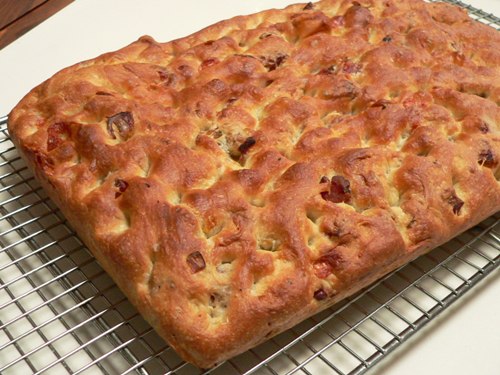
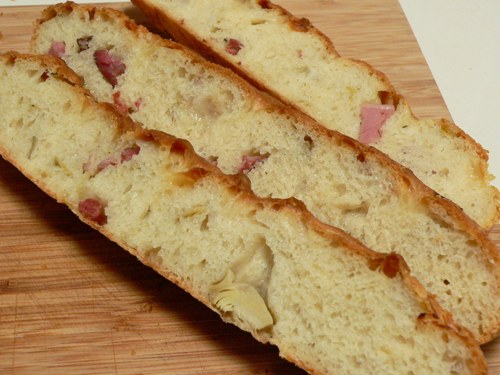
This flat loaf was dead easy to make, and I filled it with chunks of deli meats (I bought a bag of offcuts from Paesanella for $3), a little sheeps’ cheese and some marinated artichokes.  In the past I’ve also made this with olives and semi-dried tomatoes – anything that might sit comfortably on an antipasto platter would probably work well here.

  • 500g (31/3 cups) bakers flour
  • 10g (or 1 sachet) dried yeast
  • 7g (1 teaspoon) fine sea salt
  • 320g (11/3 cups) water
  • 50ml (10 teaspoons) extra virgin olive oil
  • assorted fillings, such as deli meats, pitted olives, semi-dried tomatoes, marinated artichokes and hard cheeses

1. In a large mixing bowl, whisk together the flour, salt and yeast.  Add the water and oil, then add the filling, cut up into pieces.  With a clean hand, squelch everything together to form a sticky dough.  Scrape off your hand, and cover the bowl with clingfilm.  Allow to rest for about half an hour.

2. Leaving the dough in the bowl, give it a brief knead (doing this in the bowl saves on cleaning up the bench later, and also contains all the inclusions, which tend to fly around otherwise when kneaded).  It should only take about 30 seconds for the dough to turn quite smooth.  Cover again and leave to rise until doubled – about an hour.

3. Line a roasting pan with parchment paper and scrape the risen dough into it.  Gently pat the dough out to fit evenly into the pan.  Cover and let it rest until it puffs up a little – about 20 minutes.  Preheat the oven to maximum.

4. Uncover the dough and drizzle with oil, then scatter a little salt over the top (not too much, as the fillings are already quite salty).  Push clean fingers through to the bottom of the dough – there are more detailed photos and a video of the process here.

5. Put the pan into the hot oven, lowering the temperature to 220C (430F) with fan and bake for 20 minutes, rotating the bread once during the baking time.

Easy!  Don’t get too caught up on the kneading – since the focaccia is a flatbread, it doesn’t really need to rise in the same way as a formed loaf might.  In this case, as with pizza, it doesn’t really matter if you don’t knead the dough much at all!

Read Full Post »

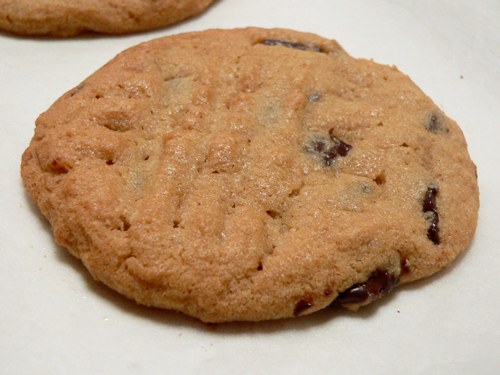
I last made these cookies in 1994.

They were so addictive that our then neighbours asked me to stop making them, as they couldn’t stop eating them.  One even froze her stash, only to find that they were just as good to eat frozen.

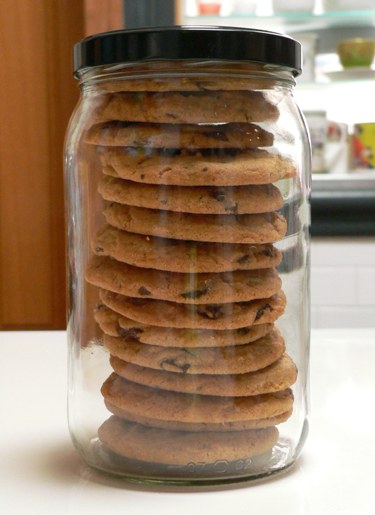
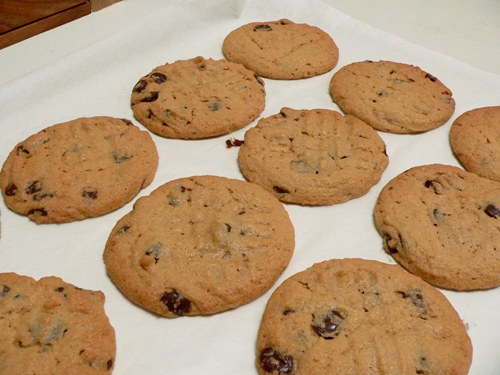
Sixteen years later, and I decided the recipe was worth a revisit, especially since Big Boy is a big peanut butter fan. These cookies are huge, stuffed with chocolate, and our son ate two between breaths.  I don’t think they’re going to last very long!

Peanut Butter Chocolate Chip Cookies

(adapted from a recipe in the Mrs Field’s Best Ever Cookie Book!)

  • 300g (2 cups) plain (AP) flour
  • ½ teaspoon bicarbonate of soda (baking soda), sifted
  • ¼ teaspoon fine sea salt
  • 265g (1¼ cups, packed) brown sugar
  • 275 (1¼ cups) white sugar
  • 250g (1 cup) unsalted butter, cold, cut into cubes
  • 3 large (59g) eggs
  • 275g (1 cup) creamy peanut butter
  • 2 teaspoons vanilla extract
  • 360g (2 cups) dark chocolate chips – I used 240g of Callebaut 811 54% and 120g of Callebaut 44% baking sticks, broken up.

1. In a medium bowl, whisk together the flour, salt and sifted bicarb of soda.  Add the chocolate chips and stir to combine.

2. In a large mixing bowl, beat together the butter and sugars to form a grainy paste.  Add the eggs, peanut butter and vanilla and mix again until just combined and no streaks remain – do not overwork the mixture.

3. Add the flour and chocolate mixture and mix on low until just combined.  Scrape off the beaters, cover the bowl and refrigerate for at least an hour.  Preheat oven to 150C (300F) with fan.

4. Scoop large tablespoons of mix onto a large tray lined with parchment paper, leaving about 4cm (1½”) between each cookie (I use an icecream scoop).   Gently flatten cookies slightly and press a cross hatch onto the top of each with the tines of a wet fork.

5. Bake for 18 to 22 minutes or until the cookies are lightly browned.  Allow to cool on a flat surface or wire rack.  Eat with abandon or freeze some for later – they’re the perfect cookie to pull out for an after school snack!

Click here for a printable version of this recipe

Read Full Post »

This post has been sitting in my drafts folder for the longest time! I’m posting it up now for Heidi, who has quinces in her kitchen..

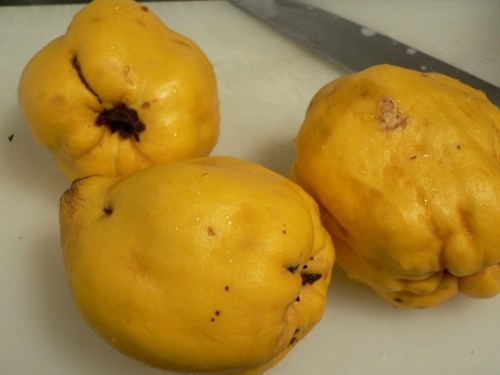
Quinces are an intriguing fruit – they’re hard and inedible when raw, undergo an astonishing colour change from bright yellow to deep red as they cook, and scent the whole kitchen with their sweet fragrance while they’re boiling.  We had a lot of fun with these!

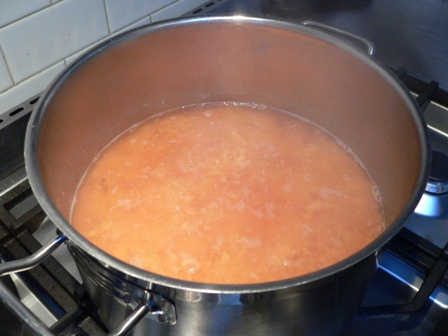
1. Wash the quinces well in a sink of cold water, scrubbing off the external fur with your fingertips.  Don’t peel or seed the fruit; instead chop them into small pieces and put them into a wide, deep pot.  Pour in enough filtered water to float the fruit.
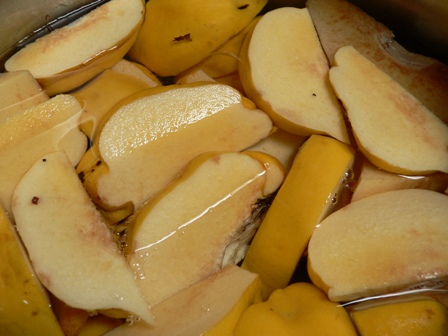
2. Bring the pot to boil, covered, and stew the fruit until it has completely turned to mush. Stir occasionally and watch that the pot doesn’t boil over.  Once the fruit begins to soften, break it up with a potato masher to speed up the process.  This can take quite a long time (a couple of hours or more, depending on the amount of fruit you have), so don’t rush it.
quince jelly 001

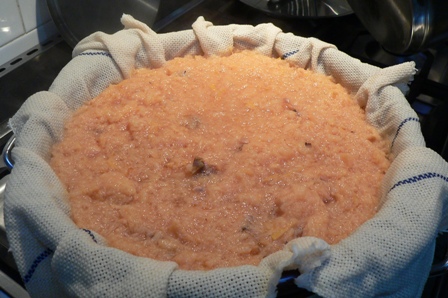
3. Line a colander with a clean, open-weave cloth and pour boiling water over it to sterilise.  Place the colander over a large bowl and pour the quince liquid and pulp in.  Allow to drain until quite dry – several hours or overnight.  Don’t press the fruit in any way, or you’ll get cloudy jelly.
quince jelly 003

4.  Measure the drained juice and pour it into a large wide pot. For every litre of liquid, add 1 jar of homemade pectin (300ml), the strained juice of 1 lemon and 1 kg of sugar.  Bring the pot to a gentle boil, uncovered over a high heat, skimming often to remove any foam or scum that floats to the top.  Foam is an indication that the pectin is working, so it’s a good thing, even though it’s a pain to skim off.  Pete believes it’s actually the pectin and lemon juice working together to clarify the jelly, so the more gunk you can remove from the top of the liquid, the clearer your jelly will be.

5. Bring the jelly to a rapid boil until it reaches 220F (104.5C) on a candy thermometer and a small blob of jelly wrinkles on a cold plate when given a little poke.  If the jelly has reached temperature and doesn’t set, try adding a little more sugar – if a jelly doesn’t set, it’s usually because the magic combination of pectin, sugar, fruit and acid isn’t quite in balance.

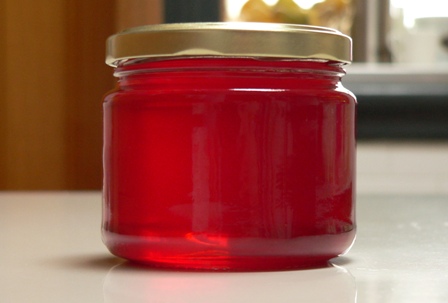
6. Once the jelly is setting up, pour it into sterilised jars, seal tightly, and hot water process by boiling them for at least 10 minutes in a large saucepan of water, with the liquid covering the lids by at least 1″ (2.5cm).  Make sure you don’t pour cold water onto the hot jars, or they’ll crack – have the water already boiling and gently lower the sealed jars in.

Quince jelly has lots of applications, both savoury and sweet. I’ve been eating it on toast with Stilton cheese, but it’s also brilliant with roast lamb.  I’ve used it in onion marmalade and Pete V recently pointed me to a recipe for quince aioli which looks delicious!
quince jelly 006

. . . . .

See our Jam Making Primer for more tips on making jam.

Read Full Post »
« Newer Posts - Older Posts »