Feeds:
Posts
Comments

Archive for the ‘Recipes’ Category

I’ve been experimenting with sourdough fruit loaves, and came up with this rather pleasing combination. It’s slightly spicy, slightly sweet and quite addictive!

For my sourdough baking friends, the formula is listed below, but in more general terms, I adapted my standard recipe as follows:

1. The all white bakers’ flour was replaced with a mix of bakers’ flour to organic wholemeal spelt to organic rye in a ratio of 4:2:1 (600g bakers, 300g spelt, 150g rye).

2. A teaspoon each of honey and ground mixed spice was added to the dough.

3. Approximately half the flour weight in walnuts and mixed dried fruit was worked in at the initial kneading.

I didn’t soak the rye or spelt, but will try doing that next time to see if it alters the texture of the bread at all.  These loaves tend to brown very quickly in the oven, so need to be monitored carefully to avoid burning.

As you can probably guess, we’re having lots of fruit toast for breakfast this week!

Sourdough Fruit Loaf (makes three 850g loaves)

  • 300g sourdough starter (166% hydration)
  • 550g water
  • 75g extra virgin olive oil
  • 600g bakers’ flour
  • 300g organic wholemeal spelt flour
  • 150g organic rye flour
  • 1 teaspoon honey
  • 1 teaspoon mixed spice
  • 16g salt
  • 100g walnut halves
  • 100g raisins
  • 200g dried cranberries
  • 200g Turkish figs, chopped

Read Full Post »

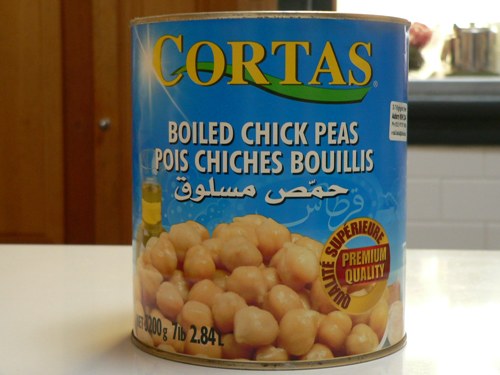
I find it hard to resist a bargain (the avocado doesn’t fall far from the tree), so when I saw these enormous cans of chickpeas on sale at Harkola a few months ago, I had to buy one.  From memory, we paid a tiny $3.50 for this 3.2kg can!

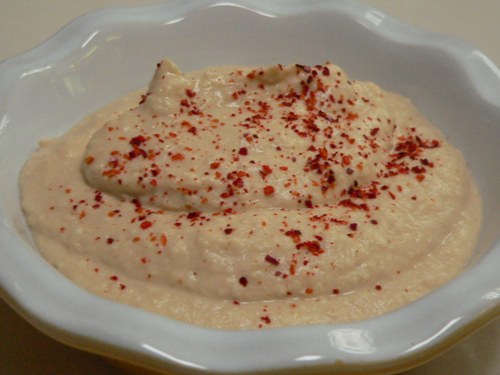
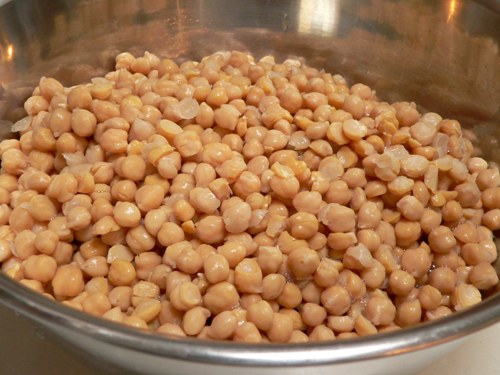
Of course, actually opening a can this size is quite a commitment, so it sat in our pantry for quite a while.  I finally opened it on the weekend, to find large, tender chick peas of great quality.  I froze four portions in ziplock bags for future soups and stews, left some in the fridge for more immediate use, and turned the rest into hommus.

The recipe I now use for hommus was inspired by an episode of Barry Vera’s Feast Bazaar.  It’s a very light and low fat dip, as opposed to most commercial versions on the market today.  That’s because the puree is loosened with hot water rather than oil, resulting in a silky, almost fluffy paste. I didn’t  measure the quantities for this, as we adjust the recipe each time for taste and texture.

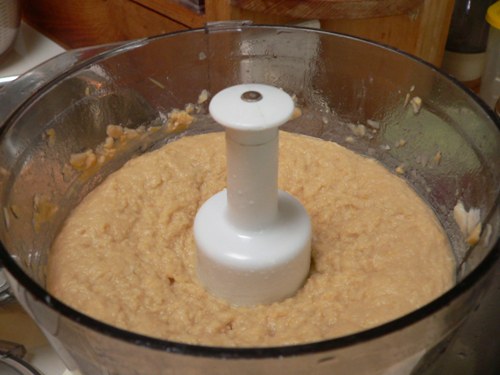
Rinse and drain the chick peas, then load them into the bowl of a large food processor with a clove or two of coarsely chopped garlic. Turn the machine on, then add hot or boiling water slowly through the chute until the mixture blends to an almost smooth paste (photo below).

Now add a few tablespoons of tahini paste (we prefer the Lebanese version),  the juice of one or two lemons, a little extra virgin olive oil, and salt to taste, then blend again until well combined.  The original version didn’t add olive oil, but we quite like the flavour, so we add just a little bit to ours.  Do keep tasting as you go, adjusting seasoning and ingredients to your own personal preference.

This recipe works well with tinned chickpeas, but absolutely brilliantly with dried ones that have been soaked overnight and boiled for a couple of hours.  The latter will produce a very smooth and silky hommus, as the freshly cooked chickpeas are softer and blend more readily than their canned counterparts.

The original Barry Vera recipe recommended serving the hommus spread thickly onto a plate and topped with slices of pan-fried, sumac-coated lamb fillet.  We usually just eat it with sourdough baguettes!

Read Full Post »

Thank you all for your advice on our avocados!

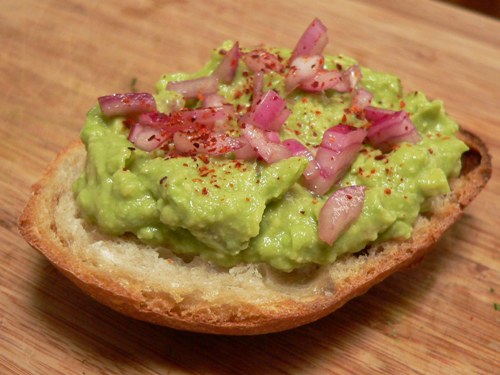
For the past week or so, we’ve had avocado on toast for breakfast every morning, and eaten copious amounts of guacamole.

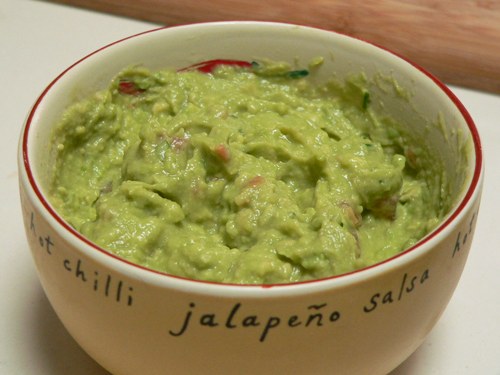
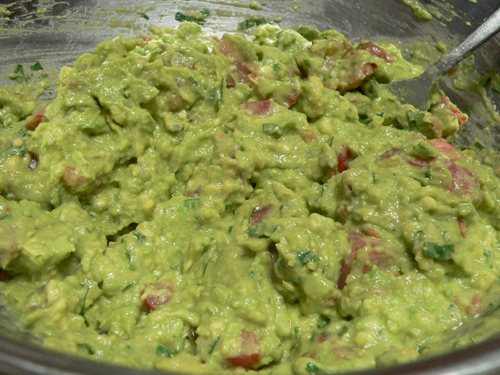
In the course of all this, we’ve made some interesting discoveries.  Firstly, adding a little vitamin C (ascorbic acid) to guacamole keeps it beautifully green, even after an extended time in the fridge.  We crushed up a couple of tablets (you probably only need one, but we were making a big batch), removed the casing, and dissolved the powder in a little warm water.  This was then sprinkled sparingly onto the avocados as they were being mashed.

Here’s a photo of the guacamole after it had been in the fridge overnight (we did press a sheet of Gladwrap onto the surface)…

. . . . .

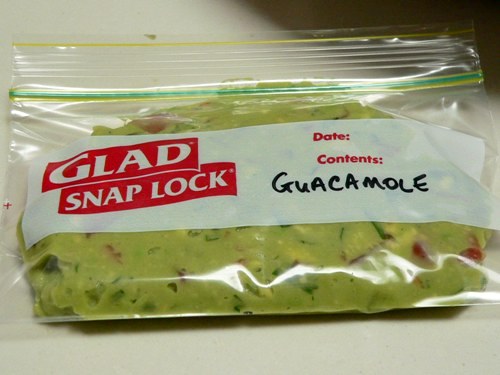
Secondly, we’ve found that guacamole freezes very well. We portioned small amounts into ziplock bags and stashed them in the freezer…

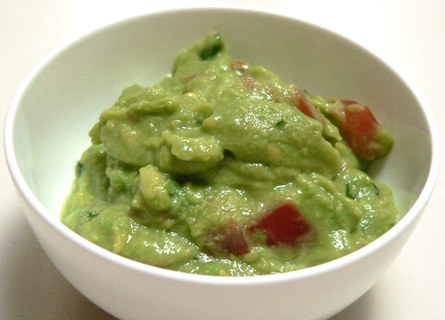
To see how they were traveling, we defrosted one after three days.  It had kept its colour beautifully and wasn’t watery at all, perhaps because the bag had excluded most of the air.  If we were planning to do this again, we’d probably leave out the tomato, as I’m not sure how it will hold up over an extended period in the freezer.

We took a photo to show you the defrosted guacamole – Pete suggested using a bowl, so that it looked less like “astronaut food”…

. . . . .

The recipe we used was very simple, and based on one given to us by our friend Barbara…

  • 3 ripe avocados
  • 1 large tomato, chopped
  • juice of half a lime
  • chopped coriander (cilantro) to taste
  • salt to taste
  • 1 vitamin C tablet, pounded, sieved and dissolved in a little water

Using a fork, mash the avocados, sprinkling sparingly with a little vitamin C water as you go – you don’t need very much at all.  Add the tomato, coriander and lime juice and continue to mash with a fork.  Taste and season with a little salt if necessary.  Now invite the neighbours around for a party!

Read Full Post »

In our winter garden, there really isn’t much growing at the moment.  The broadbeans are struggling, the seed potatoes still aren’t in the ground, and there are just four lonely apples on our young trees.

The nasturtiums, however, have really taken off! Planted around the base of the fruit trees as ground cover, they attract bees and brighten our day with a lovely sea of green every time we go outside.  We use their leaves and flowers in salads, they’re good greens for the chickens, and any excess becomes mulch for our fledgling vegetable beds.

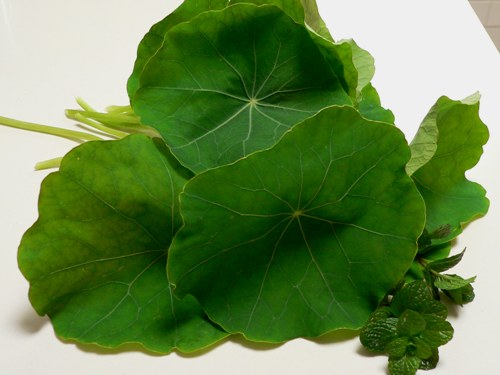
Inspired by a recipe in Pam Corbin’s wonderful book Preserves, I gathered some nasturtium leaves and a sprig of mint from the garden…

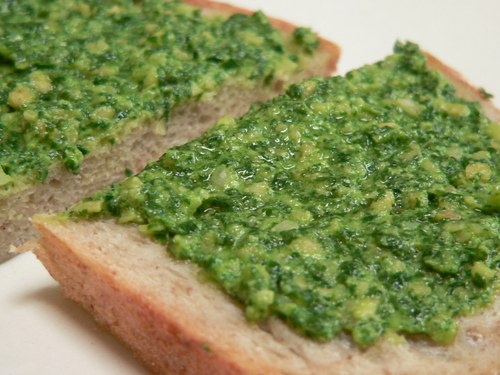
…and blitzed them in the food processor with slivered almonds, a little grated pecorino cheese, half a clove of garlic and a few brined nasturtium pods.  This was all loosened with grapeseed oil and the juice of half a lime, then seasoned with Maldon salt and a little ground black pepper.

The pesto was delicious – tangy and green, with a lovely peppery note from the nasturtiums.  It was perfect on sourdough rye, and even better on Big Boy’s lunch of spinach and ricotta ravioli.  You can imagine how happy I am about this, given that we have a whole bed of nasturtiums growing faster than we or the chickens can eat them!

Read Full Post »

Scones are on the radar this week – the fabulous  Heidi blogged about her lavender scones, and Dan’s Guardian recipe was parsley and cheese scones.

I can’t resist joining in with this easy lemonade version – they only have three ingredients and are so simple that they’re  commonly taught in kids’ cooking classes.  They’re not the prettiest of scones, but they are as light as a feather, and keep quite well.

Some clarification –  “lemonade” in Australia is carbonated fizzy soda drink, like 7-Up or Sprite.  The first time I posted this recipe, I had friends in the US attempt it with what they call lemonade and it was a complete disaster.  The bubbles are very important!

If possible, try to use pure cream (I believe it’s known in the US as heavy whipping cream) – ours was 35% fat with nothing added.  I’ve used thickened cream before quite successfully, but the scones are a bit lighter when made with pure cream.  The fat content is important – these are usually made with butter, so the cream has to fulfill that role in this recipe.

I have no idea where this recipe originates, but it came to me via my friend Joyce.  Her kids make a batch every week!

  • 3 cups (450g) self-raising flour
  • 1 cup (250g) pure cream (35% fat)
  • 1 cup (250g) lemonade (7Up, Sprite etc)

1. Preheat the oven to 200C (400F) or 190C(175F) with fan. In a large mixing bowl, mix the ingredients together.  Stir gently until combined and all the flour is moistened.  This should take less than a minute.

2. Tip the dough out onto a lightly floured surface.  Handle it gently.  Here’s a photo so you can see the consistency. It’s quite sticky at this point.

3.  Dust your hands and the top of the dough with flour,  then gently pat the dough into a thick disk.   With a floured cutter, cut out the scones, and place them side by side on a lined baking tray.  Cut out all you can, and then gently reshape the dough and cut out a few more. My batch made ten and a half scones.

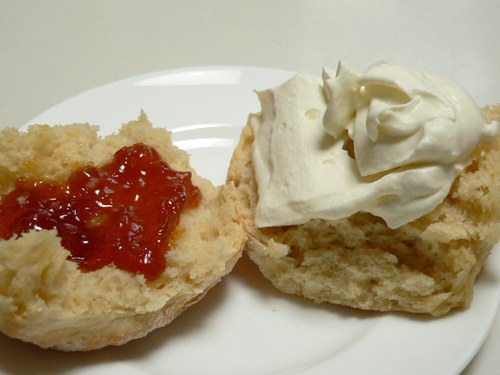
4. Bake the scones in the preheated oven for 20 minutes, or until golden brown.  We served ours with whipped vanilla cream and Pete’s apricot jam.  Perfect for  Saturday afternoon tea!

Click here for a printable version of this recipe

Read Full Post »

« Newer Posts - Older Posts »