Feeds:
Posts
Comments

Archive for the ‘Recipes’ Category

Pavlova is my mum’s all-time favourite dessert, so I made her this one for Mother’s Day.

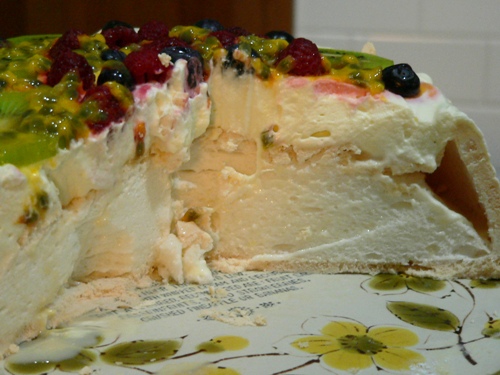
The recipe comes from Maureen Simpson’s Australian Cuisine and it has never let me down. The book offers three variations – this one is baked on a plate, eliminating the need to flip the finished pavlova over, although why anyone would want to do that is beyond me. It produces a lovely crisp exterior with a thick marshmallow centre – just the way my mum likes it!

  • 6 egg whites (as fresh as possible)
  • good pinch of salt
  • 1½ cups (330g) castor (superfine) sugar
  • 1½ teaspoons white vinegar
  • 1½ level tablespoons (6 teaspoons/20g) cornflour (cornstarch), plus extra for dusting the plate
  • 1 teaspoon vanilla extract (I used homemade)
  • lightly sweetened whipped cream for topping
  • fruit – we used kiwi fruit, passionfruit and frozen berries

1. Preheat the oven to 200C (400F) with fan.  Grease a large baking plate with butter, dust with cornflour and tap away the excess.  You could also bake this on a tray, lined with greased and floured parchment paper, providing you’re happy to serve it with the paper intact.

2. Beat the egg whites and salt until stiff, then add the sugar one large spoonful at a time until fully incorporated.  The meringue should be thick and shiny.  Gently stir in the vinegar, sifted cornflour and vanilla.

3. Pile the meringue onto the prepared plate, ensuring that it is at least 6cm (2½”) high (this will ensure a good marshmallow core).  With a spatula, try to slope the sides inwards towards the centre.  Make sure you leave room for the pavlova to expand as it bakes.

4. Drop the oven temperature to 110C (230F) with fan before placing the pavlova in the oven.  Bake for 1½ – 1¾ hours.   Allow the pavlova to cool in the oven, with the door slightly ajar.

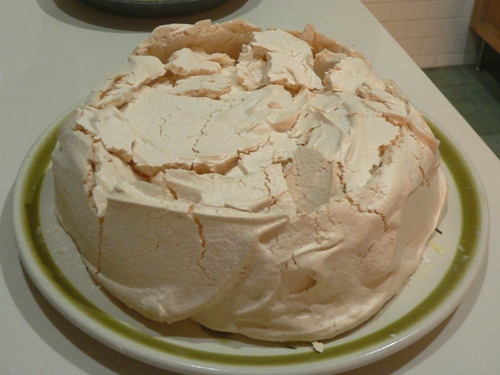
5. The pavlova will probably crack on top as it cools, revealing a thick marshmallow centre.  Don’t fret about it being broken, it will all be covered with cream anyway!

6. Top the pavlova less than an hour before serving. With a sharp knife, cut  carefully around the top of the pavlova to allow the broken bits to drop down onto the marshmallow centre.  Try and keep the sides intact.  I know it looks like a disaster at this point, but truly, it’s fine!
7. Cover up the top with whipped cream and artistically positioned fruit.  The Aussie tradition is to use strawberries, bananas and passionfruit, but we’ve gone for kiwi fruit and mixed frozen berries instead.
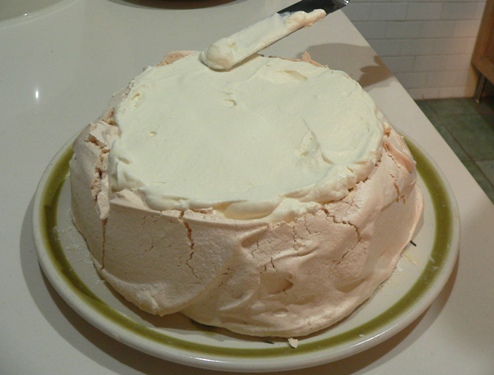
The end result is a thick, marshmallowy pavlova that isn’t overly sweet.  I managed to sneak this photo in before mum took the leftovers home!
Click here for a printable version of this recipe

. . . . .

Addendum: as Maureen Simpson’s wonderful book is now sadly out of print, I thought for completeness I’d also give you the quantities for the other two pavlova recipes in Australian Cuisine.

The methodology is basically the same as above. I’ve made the four egg version several times, but have never attempted the pavlova for a crowd.

. . . . .

Basic Marshmallow Pavlova

  • 4 egg whites (as fresh as possible)
  • good pinch salt
  • 1 heaped cup (220g) castor sugar
  • 1 teaspoon white vinegar
  • 1 level tablespoon (4 teaspoons) cornflour (cornstarch)
  • ½ teaspoon vanilla extract
  • whipped cream and fruit

Spread the meringue mix into a roughly 18cm (7″) diameter circle, ensuring that it’s at least 6cm (2½”) high.  Bake for  1¼ hours.

. . . . .

Pavlova for a Crowd

  • 9 egg whites (as fresh as possible)
  • good pinch of salt
  • 500g (1lb) castor sugar
  • 2 teaspoons white vinegar
  • 1 teaspoon vanilla extract
  • 2 level tablespoons (8 teaspoons) cornflour
  • whipped cream and fruit

Shape the meringue into an oval, about 18cm (7″) by 23cm (9″) and 6cm (2½”) high.  Ms Simpson says this usually fits diagonally across a normal sized baking tray.  Bake for 2 hours.

Read Full Post »

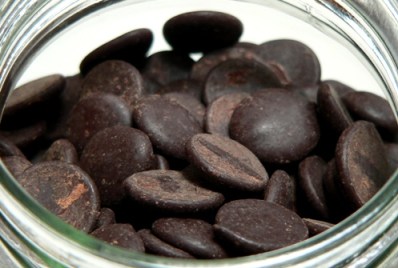
Here’s an easy and delicious dark cacao treat from Willie Harcourt-Couze.

The chocolate isn’t tempered in this recipe, so you’ll need to keep these bars in the fridge to stop them from blooming.  And as they’re made from 100% cacao with no added white sugar, flour or butter, I’m sure they must be quite healthy, right?

I amended the recipe slightly to include my intoxicated figs, but please feel free to use whatever dried fruit and nuts you have on hand.

  • 180g 100% cacao or unsweetened chocolate (see note)
  • 100g walnuts, hazelnuts or Brazil nuts, chopped (I used Brazil nuts)
  • 100g dried fruit, chopped (I used a mix of intoxicated figs and raisins)
  • 100g crystallised ginger, sugar shaken off, chopped
  • 1 teaspoon ground cinnamon
  • 2 teaspoons vanilla extract (I used homemade)
  • 1 Tablespoon honey, optional
  • Splash of rum or cognac

Note: I used Callebaut Cocoa Mass, but the recipe was designed for Willie’s Cacao.  If you don’t have either of these, you could try using 70% or 85% chocolate, and omit the honey.  Try to use the best you can though, as the cacao is the dominant flavour here.  Note that you won’t be able to substitute powdered cocoa in this recipe.

1. Line the base and sides of a 20cm square tin with parchment paper or cling film.

2. If the cacao is in a block, chop it roughly.  Place it in a large pyrex bowl and melt in the microwave in short bursts on high.  Heat only until mostly melted, then stir with a rubber spatula until smooth.  Take care not to scorch the cocoa mass or it will turn bitter and grainy.

3.  Add all the remaining ingredients and stir to coat well.  Scrape the mixture into the lined tin, smooth the top and refrigerate until firm, preferably overnight.

4. Remove from the tin and cut into bite-sized pieces.  Store in the refrigerator in a covered container.

Click here for a printable version of this recipe

Read Full Post »

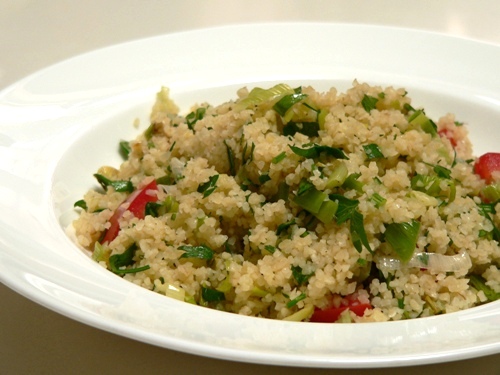
It’s Saturday morning, and I’ve been waiting all week to try this recipe by Bruce Weinstein and Mark Scarbrough, authors of The Ultimate Cookbook.

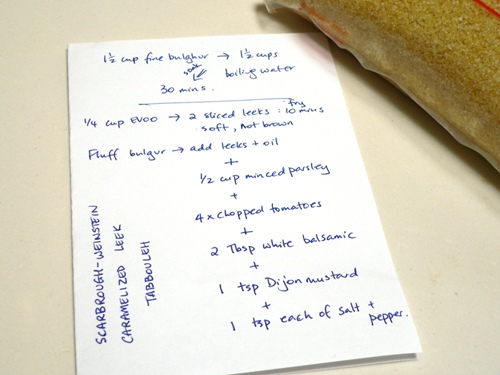
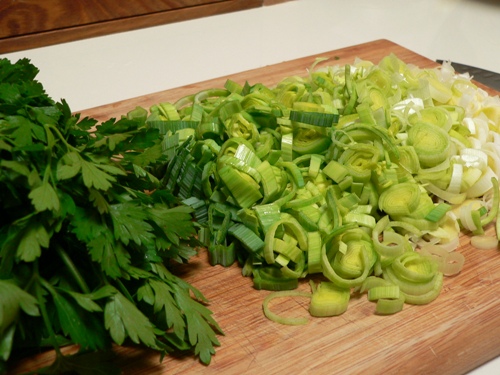
Here it is – although if you’d prefer sensible, easy to follow instructions rather than my crib notes, just stop by their blog, Real Food Has Curves.  I only used two tomatoes instead of four – the original recipe specified eight cherry toms, but I didn’t have any on hand.

The end result is a deliciously textured, flavoursome salad which will keep well in the fridge for several days.

One thing – I was speaking to my friend Dan from Tutus and Ladybeetles today, and she mentioned that she uses couscous in her tabbouleh rather than bulgur (or as it’s known here, burghul).  According to Wiki, the two cereals are actually quite similar, although bulgur is lower in GI and therefore probably a bit better for you.  But if you’re having trouble finding it, couscous would probably make an acceptable substitute (sorry, Bruce!).

Today’s lunch is tabbouleh with roasted chicken breast and  Pete’s marinated feta.  Simple and perfect!

Read Full Post »

A couple of weeks ago, I picked up a box of Tahitian limes at the markets – at $7 for nearly 60 limes, they were just too much of a bargain to pass up!

They were in great condition too – green and unblemished.  Of course, I promptly forgot all about them, so by the time I opened the box a week later they were looking a little sad – softer and yellower, and in need of using up in a hurry.  That wasn’t a bad thing, as they were also riper and juicier, and better suited to pickling.

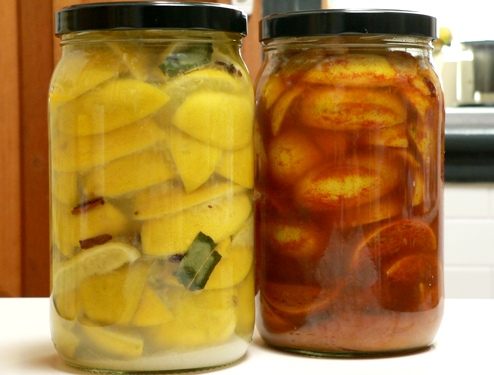
I’ve turned them into two large jars of lime preserves – on the left are traditional Moroccan style preserved limes, made by salting the quartered fruit and squishing them into a sterile jar with a few bay leaves, cinnamon sticks and cloves.  On the right is a sweet lime pickle, spiced with brown sugar, turmeric and salt.  Both recipes are from Stephanie Alexander’s cookbook, and  I haven’t tried either before.  I’ll let you know how they go!

Edit:  As a couple of people have asked for this, here is the preserved lemons recipe I used.  It comes from The Cook’s Companion by Stephanie Alexander.

  • 250g coarse kitchen salt (I used sea salt)
  • 10 lemons, scrubbed and quartered (I used 18 limes)
  • 1 bay leaf
  • 2 – 3 cloves
  • 1 stick cinnamon
  • extra lemon (lime) juice

1. Scatter a spoonful of salt into a 1 litre sterilised jar.  Tip the lemons into a large plastic tub with remaining salt and mix well, massaging the fruit vigorously.

2. Pack the fruit curved-side out into the jar, adding bits of bay leaf, clovers and pieces of cinnamon as you go.

3. Press down hard on the fruit to extract as much juice as possible, then scrape in any leftover salt from the tub.   Cover with extra lemon juice if required. (Stephanie points out that a wedge of lemon left exposed might develop a white mould, which she says is harmless.  That was enough to make me squeeze extra limes to ensure there was enough juice to cover it all!)

4. Wipe the rim and neck of the jar with a clean cloth dipped in boiling water and seal with an acid proof lid.  Let the lemons mature for at least 1 month in a cool place (not the fridge) before using.

Note: I haven’t tried this particular recipe before, but preserved lemons I’ve made in the past have occasionally fizzed a little during the first week.  Apparently that can happen as part of the preserving process – just loosen the lid occasionally to let the gas out.

Update: Here’s how they turned out!

Read Full Post »

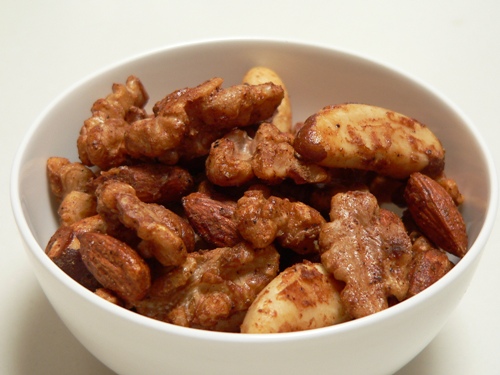
These spiced nuts are very moreish. I made them in large quantities last Christmas, and they were incredibly popular – we actually had friends  ringing to ask for more!

They’re based on a recipe by Hugh Fearnley-Whittingstall and are very easy to make, with the advantage of not requiring any added fat.  A lonely egg white leftover from last night’s dinner inspired me to make a fresh batch.

  • 500g (about 4 cups) mixed nuts – I used Brazil nuts, walnuts and almonds
  • 1 egg white
  • 25g (about 2 US tablespoons) brown sugar
  • 2 teaspoons Maldon or kosher salt flakes or 1 teaspoon fine sea salt
  • ½ teaspoon ground cumin
  • ½ teaspoon smoked paprika
  • ½ teaspoon chilli powder or cayenne pepper – I used chipotle powder

Note: I’ve added approximate imperial measures for my friends in the US.  This isn’t an overly precise recipe and you could use what you have on hand, although I have found the above combination of spices particularly appealing.

1. Preheat oven to 160C/325F with fan. Line a large baking tray with a sheet of parchment paper.

2. In a large mixing bowl, whisk the egg white until foamy, then whisk in all the other ingredients except the nuts.  Add the nuts, and stir well to coat completely in the spice mix.

3. Tip the nuts onto the lined tray and spread them out into a single layer.  Bake for 15 minutes, then remove the tray from the oven and stir the nuts to unstick them from the paper and break up any clumps.  Don’t burn yourself!

4. Return the tray to the oven for another 5 – 7 minutes, until golden brown.  Allow the nuts to cool on the tray, during which time they’ll harden up and go crunchy.  If you like, you could sprinkle over extra salt at this point.  Once the nuts are completely cool, store in an airtight container for up to three weeks.

Click here for a printable version of this recipe

Read Full Post »

« Newer Posts - Older Posts »