Feeds:
Posts
Comments

Archive for the ‘Recipes’ Category

Buttermilk Scones

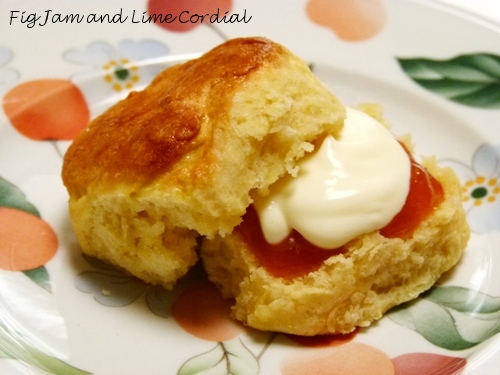
I made these scones on Australia Day, and learned two things in the process.

Firstly, buttermilk adds a delicious flavour to scones. Secondly, Small Man absolutely adores them.

As I couldn’t find my usual round cutter, I ended up making baby scones, and that mad child of mine ate about dozen of them over the course of the day. They were made with Pepe Saya buttermilk, and served with a sweetened dollop of Pepe’s creme fraiche.

  • 300g (2 cups) plain (AP) flour
  • 8g (2 generous teaspoons) baking powder
  • pinch of fine sea salt
  • 75g (5 US tablespoons) unsalted butter
  • 50g (¼ cup) caster (superfine) sugar
  • 125ml (½ cup) buttermilk
  • 1 large free range egg

1. Preheat the oven to 190C (375F) with fan. Line a baking tray with parchment paper.

2. In a large mixing bowl, whisk together the flour, baking powder, sugar and salt.  Rub in the butter with your fingertips until the mixture resembles coarse breadcrumbs.

3. In a small jug or large cup, beat the buttermilk and egg together until well combined. Pour off a little (a tablespoon or so) into a small bowl and reserve for later.  Make a well in the flour mixture and pour in the liquid ingredients.

4. Using a butter knife, mix the wet and dry ingredients ingredients. Be careful not to overwork the mixture.  Scrape the dough onto a well floured surface, sprinkle a little flour on top, and gently pat it out to a thickness of approximately 2½cm (1″).

5. Using a floured cutter, cut out as many scones as you can and lay them side by side on the baking tray. Be careful not to twist as you cut, or the scones won’t rise well.  Gently gather the remaining dough together and repeat.

6. Brush the tops of the scones with the reserved egg/buttermilk, and bake for about 20 minutes until golden.  Enjoy!
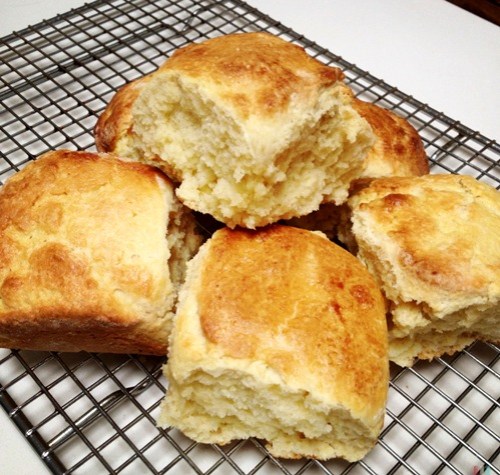
Addendum: On the following Monday, I taught Small Man how to make these scones.  By that time we’d found our round cutter, and he made six large scones from the dough.  We used Pepe Saya buttermilk that had been frozen and defrosted (it worked perfectly), and they took a few extra minutes in the oven. I think his scones tasted better than mine!  Here’s a photo of them…
Read Full Post »

Mum’s Pickled Chillies

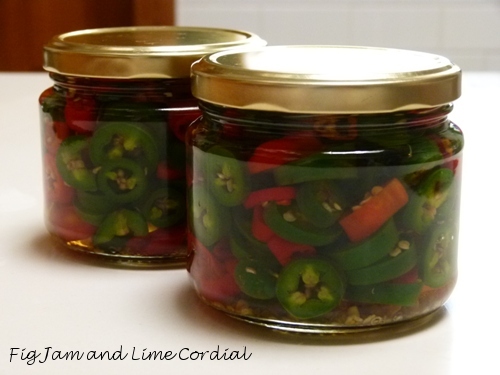
For as long as I can remember, my mother has kept a jar of these chillies in her fridge.

Unlike pickles designed for longer term storage, these aren’t heated in the pickling brine, but rather steeped in a cold vinegar-sugar-salt solution which diffuses the heat slightly and imbues the chopped chillies with a tangy edge.  We’ve always stored them in the fridge, and they’re usually eaten quite quickly, so I really can’t tell you how long they keep for.

Because of the way they’re made, the chillies retain their crunch. It’s the perfect accompaniment to Chinese dishes – a small bowl of these always graced the dinner table when I was growing up.

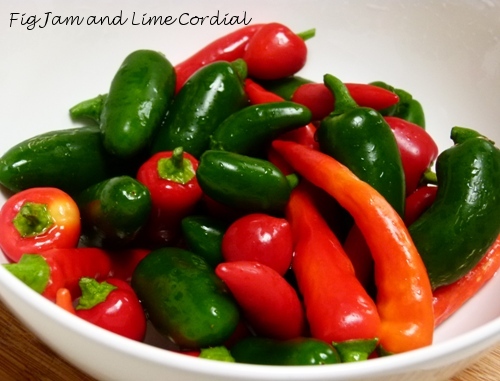
Chillies grow reasonably well in our garden, and this week I harvested a bowl of Jalapeños, several Serrano chillies, a few Cayennes, and the last of our mild Tasty Bites…

When I asked Mum for her recipe, she didn’t give me quantities for the pickling brine, but told me to make it “to taste”. Here are the amounts I used for this batch…

  • hot chillies (as seen in the photo above)
  • 2 cups vinegar (I used white wine vinegar)
  • 3 teaspoons fine sea salt
  • 3 teaspoons sugar

1. In a saucepan, combine the vinegar, salt and sugar and bring to a boil. Allow to simmer for 5 minutes.  Cool to room temperature.

2. Wash the chillies and slice then into rings (I wore latex gloves for this process).   Remove the seeds if preferred.  Tip the chopped chillies into a large bowl and pour boiling water over them.  Stir for about 10 seconds before draining into a colander.

3. Spoon the chillies into sterilised jars, and carefully pour over the cooled vinegar solution.  Store the jars in the fridge.  This quantity of chillies filled two 300ml jars.

I’m hoping to make more of these when the Bishop’s Crown chillies start fruiting!

Read Full Post »

Tromboncino Bhajis

Before this season, I would have said that we couldn’t grow cucurbits well in our garden.  While everyone else was overrun with zucchini and cucumber, our plants struggled to produce the odd fruit.

Linda assured me that it would happen one day – and that it was largely a product of the climate and the growing season more than anything else.  I think experience plays a big part though – we hadn’t realised the amount of space and water these plants needed.

This year, expecting only the low yield we’d had in previous years, we planted three Lebanese zucchini seedlings, four Lebanese cucumbers, and four tromboncinos.

And we’ve had a joyous abundance of produce!  The cucumbers have grown well in their pot, and the zucchinis and tromboncinos are producing daily pickings.  Still not to glut proportions, but more than enough for our daily eating.

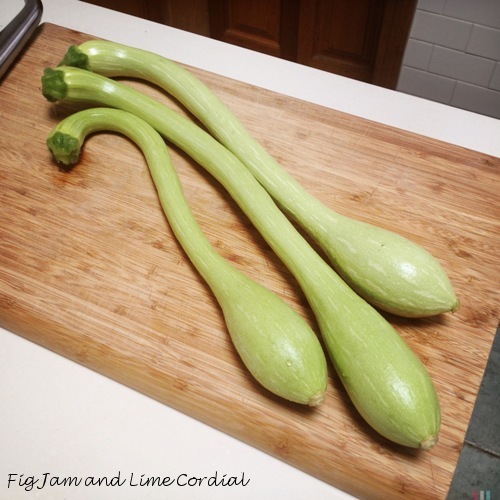
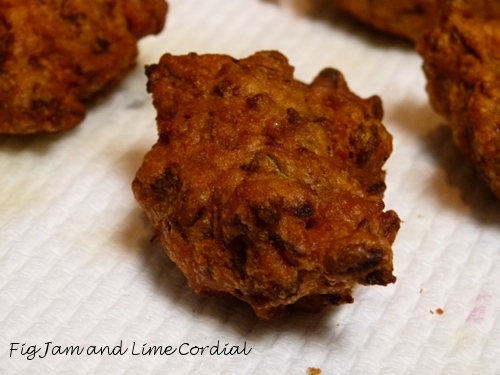
We’re now in the enviable position of trying to manage it all, and I have to be creative, or the boys will notice that they’re eating the same vegetable every night for dinner.  My latest attempt was tromboncino bhajis, which Pete and I really liked…

I grated one medium sized tromboncino (a zucchini would work too) and mixed it with:

  • besan (chickpea) flour (I didn’t measure accurately, but it was probably about ¾ cup)
  • 1 small grated onion
  • salt
  • cumin
  • coriander
  • a little turmeric
  • chilli powder
  • a little sifted bicarb of soda (baking soda)

After stirring all the ingredients together, I added water gradually to create a batter.  You don’t want it too sloppy, but if it’s too dry, the finished bhajis will be a little tough.

Preheat a neutral oil to 180C (deep fry temperature) and then drop in a scoop of the batter and deep fry until golden brown.  Taste the first bhaji, and adjust seasoning as required before cooking the rest of the batter…

I mentioned these to Linda who sent me the tromboncino seeds and who is herself overrun with them at the moment. She planned to make the bhajis and serve them with cucumber raita – a two cucurbit meal!

Read Full Post »

Nutella Chocolate

Maude’s sister Kylie (affectionately known as Fa-Fa) is lovable, generous, and…quirky.

Which explains why she gave Maude and her three petite daughters a five kilo jar of Nutella for Christmas. And since I have two strapping young lads who would happily eat hazelnut chocolate spread with a spoon, and I’m always happy to use it in cooking, Maude very kindly brought over a kilo for us to play with.

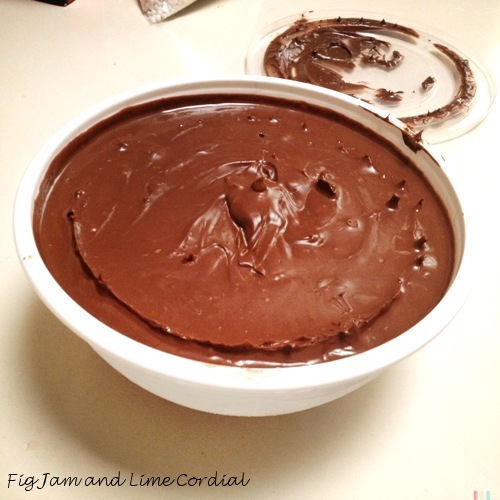
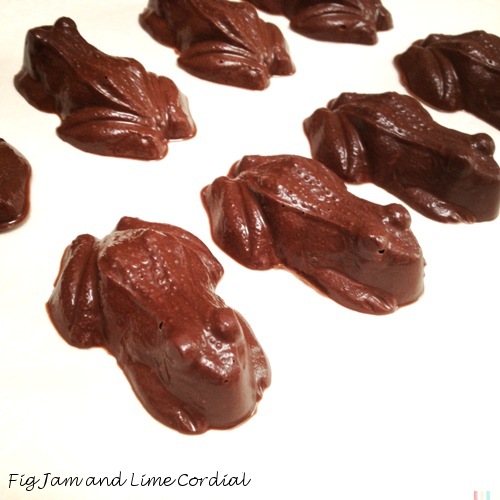
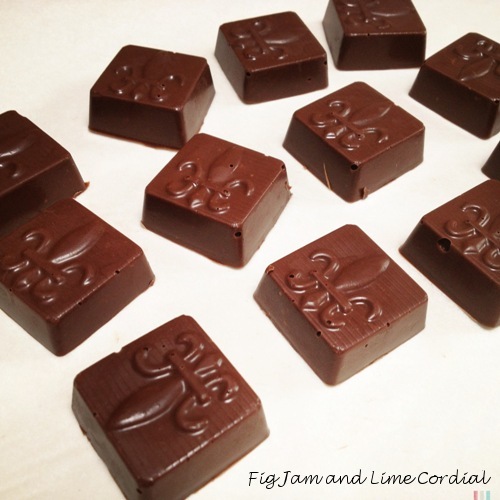
I’d made hazelnut chocolates before, but I thought it might be fun to try making a Ferrero Rocher inspired blend this time. It worked really well!  It’s less sweet than the original confectionery, but apart from that, the flavour is quite reminiscent.  I used a blend of dark and milk Belgian chocolate, Nutella spread, and a generous handful of pailleté feuilletine for crunch.

  • 275g Callebaut 811 (54%) chocolate callets
  • 275g Callebaut 823 (Milk) chocolate callets
  • 125g Nutella hazelnut chocolate spread, at room temperature
  • 100g pailleté feuilletine (French wheat wafer shards)

Temper the dark and milk chocolate together. Then, with the bowl on a heat mat, quickly stir in the Nutella first, followed by the feuilletine.  Ladle into moulds and refrigerate for a few minutes until set.

Compared to regular chocolate, these are slightly less robust in warm weather due to the large quantity of Nutella, and therefore need to be handled with a little care.  It might be necessary to keep them in the fridge if conditions get too warm.

Pete and the boys declared these to be most fine, and I’ve sent two bars over to Maude’s house. One for her girls and, of course, one for Fa-Fa!

Read Full Post »

Scrambled Eggs

A very quick post…

As I mentioned, when we were at the Youeni Foodstore in Castle Hill last week, owner and chef Chris Starke mentioned to me that he always cooked his scrambled eggs without milk or cream.  This was backed up by my friend Rebecca, the InTolerant Chef.

So this morning, I gave it a go.

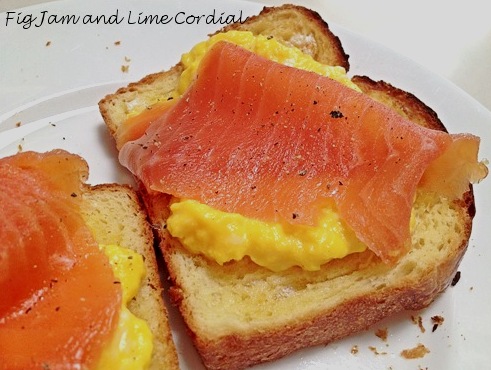
I feel like I’ve discovered a hidden secret!  The eggs were incredibly rich and creamy, and delicious with our faux brioche toast and smoked salmon.

I melted a knob of good salted butter in a non-stick pan and then poured in the well beaten eggs.  These were stirred constantly over a medium low* heat until soft creamy curds formed – I removed the pan while the mixture was still a little loose to allow the residual heat to finish the cooking process. The scrambled eggs were seasoned with a little salt and pepper before serving.

I know this is a very basic technique, but it’s new to me, and I was so excited that I had to share. As there aren’t any other ingredients, it’s important to use the very best eggs you can lay your hands on!

Hope you’re all having a fabulous weekend! ♥

*On the advice of both Chris and Doc in the comments below, I’ll be cooking these slowly over a low heat from now on!

Read Full Post »

« Newer Posts - Older Posts »