Feeds:
Posts
Comments

Archive for the ‘Recipes’ Category

Our Daily Bread

Give us this day our daily bread

. . . . .

A diary of yesterday’s breadmaking…

6.30am: I mixed up two batches of semolina sourdough in the early morning light – it was a lovely, gentle way to start the day.

The dough only needed a few turns and squelches to bring it together, and then the shaggy mass was covered and left to rest. It’s been years since I’ve kneaded a bread dough until it was smooth – I just don’t find it necessary any more…
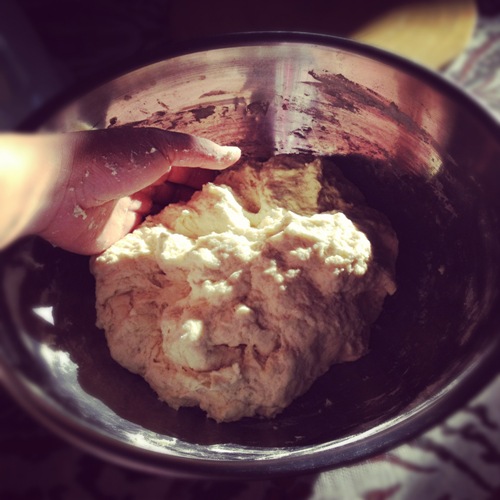
8:00am: Resting the dough after combining but before kneading allows the flours to hydrate and the enzymes to start working, which softens the dough and makes it more pliable. This process is known as autolysing.

I had meant to give the dough a brief knead at 7am, but completely forgot about it for an hour and a half.  I uncovered it and gave it a few quick folds before we headed into town for the day (love school holidays!)…

3:00pm: When we arrived home, both batches of dough were puffed and risen (remember they had only had a few minutes handling time thus far!). The dough was turned onto a lightly oiled bench, and shaped into rolls and baguettes.  This part of the process took 15 minutes. The shaped dough was allowed to rise for an hour or so, and then baked for 40 minutes…

5:00pm: The finished loaves were a little browner than I would have liked, but I was distracted and didn’t check on them while they were in the oven. There were four regular and two dragon tail baguettes, and twelve cheese and olive scrolls for school lunches…

Sunrise, sunset.

Many people find breadbaking stressful, or laborious, but for me, it’s a soothing, comforting process. That’s partly because I’m never terribly concerned about how the loaves will turn out. Don’t get me wrong, I want to bake tasty bread that my family will enjoy, but I’m happy to accept that the loaves will vary on a daily basis, depending on the weather, the flour, the activity of the starter and my frame of mind.

Sometimes the loaves will be full of big holes, other times the crumb will be quite tight.  Some days I’m careful to measure my quantities to the last gram, other days I’m a little more slapdash.  Occasionally a batch will refuse to brown up in the oven (which is usually a flour related issue).

Furthermore, as I’ve grown older, I find myself handling the dough less and less –  it’s much easier on my hands and shoulders that way.  I want to be able to do this for many years to come, so I needed to make procedural adjustments to ensure that I can.

Baking sourdough bread – it’s part of the rhythm and cadence of our lives.
Read Full Post »

Tonka Bean Shortbread

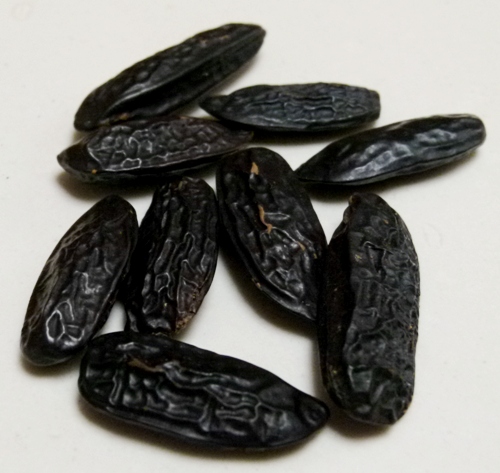
I’ve been experimenting with our tonka beans.

And while the results have been very interesting, none of us are convinced that it really makes a worthwhile alternative to vanilla.  The flavour is quite strong, with hints of vanilla, cinnamon and marzipan, and it lingers in the mouth for a long time.  I find it also has a cinnamon aroma which is quite distinctive.

Warning: Tonka beans are banned in certain countries because they can cause liver damage when taken in large quantities. Please exercise your discretion.  More information on these beans can be found here and here.

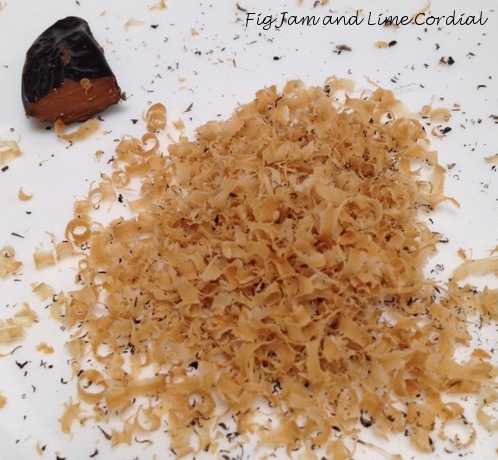
I grated just half a tonka bean for this recipe…

  • 250g (1 cup) unsalted butter
  • 195g (a little under 1 cup) white sugar
  • 2 large free range egg yolks
  • ½ grated tonka bean
  • ½ teaspoon fine sea salt
  • 375g (2½ cups) plain (AP) flour
  • crystallised or demerara sugar, for decorating

1. Beat the butter, sugar, salt and grated tonka bean in the large bowl of an electric mixer until light and fluffy. Add the egg yolks one at a time, mixing well after each addition.  Add all the flour at once, and mix on a low speed until just combined.

2. Turn the dough onto a large sheet of parchment paper, and shape into a thick log about 5cm (2″) in diameter.  Wrap well and chill until firm.

3. When you’re ready to bake the cookies, preheat oven to 160C (320F) with fan. Line a large baking tray with parchment paper.  Remove the dough log from the fridge and slice it into 1cm (½”) discs.  Lay them out on the baking tray and press a little crystallised sugar on the top of each cookie.   Bake for about 20 minutes, or until lightly golden brown.

These cookies were pleasant, and a good showcase for the tonka bean flavour, but…we didn’t really love them. It isn’t a “clean” flavour like vanilla, and the aftertaste hangs around for a bit longer than is pleasant.  It was great fun to experiment with, but we’ll probably stick to making our shortbread cookies with vanilla for the time being!

Read Full Post »

This chocolate sorbet is dairy free, very dark and very grown-up.

It’s based on a recipe from Smitten Kitchen, which was in turn adapted from a David Lebovitz recipe.

  • 560ml (2¼ cups) water, divided into two portions (see below)
  • 220g (1 cup) white sugar
  • 75g (¾ cup) Dutch-processed cocoa powder (I used Callebaut)
  • small pinch of salt
  • 170g (6oz) semisweet chocolate (I used Callebaut 811 54%)
  • ½ teaspoon vanilla extract (I used homemade)

Note: resist the urge to use darker chocolate – our first batch was made with Callebaut 70% and it was too dark even for us! These quantities make approximately one litre of sorbet.

1. In a large stew pot over a medium heat, whisk together 375ml (1½ cups) of water, sugar, cocoa powder and salt.  Continue whisking until the mixture boils. Still whisking, allow to boil for about a minute.

2. Add the chocolate and vanilla extract to the mixture and stir until smooth.  Stir in the remaining 185ml (¾ cup) of water.  Pour the mixture into a blender and blitz for a slow count of 15. Don’t be tempted to skip this step – I think it helps to ensure a smooth sorbet.  Resist drinking the mixture at this point (but do taste it – I thought it would make a lovely dairy-free hot chocolate!).

3. Pour the mixture into a metal mixing bowl, cover, and refrigerate until cold (we left ours overnight).  The mixture will set semi-solid as it cools – give it a good whisking to loosen it up, then pour it into an icecream maker to churn. Allow to set in the freezer for several hours before serving.

The sorbet freezes solidly, which is not a bad thing, as it makes it difficult to consume the whole tub in one sitting!  As you can see from the photo below though, we did make a fair dent on it while it was still semi-frozen…

Definitely the perfect fix for a serious chocolate craving!

Read Full Post »

I had a moment the other day.

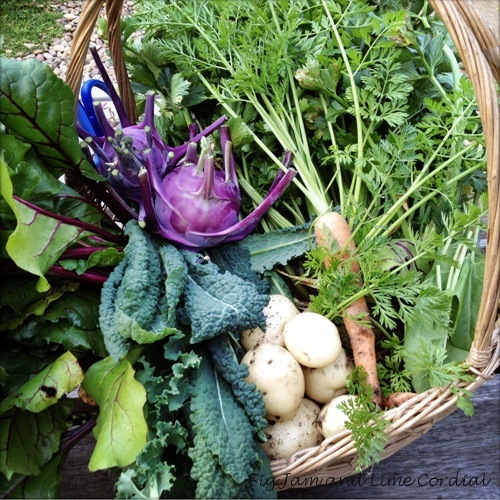
It’s probably just late my 40s hormones, but…we were outside harvesting vegetables for dinner, and we’d collected the enormous basketful above.  And I got all emotional and had a little cry. I honestly never imagined that we’d be at a stage in our lives when we could walk out the back door and bring in a huge basket of freshly grown goodies to feed our family.

A few years ago we stopped shopping at the supermarket and started buying all our fresh produce at the growers’ markets and specialty retailers. We were astonished at how much fresher the fruit and vegetables were – the supermarket equivalents were often several weeks’ older than what we were buying at Flemington.

And once we’d tasted this freshness, we were hooked.  We wanted to grow our own, and eat broccoli that had been raised without chemicals, harvested just minutes before cooking.  We wanted the experience of eating freshly dug potatoes before their skins and starches had a chance to harden, and peas straight off the vine.

The garden beds were built at the beginning of 2010, and it’s taken a couple of years for them to get to the stage where they’re producing consistently. The initial set up was labour and time intensive, but now that it’s up and running, it’s really quite easy to maintain, particularly with the chooks and worms on the job.

Our harvest included fat beets which seemed to pop out of the ground overnight, curly and Tuscan kale, the first carrots from the back bed,  kohlrabis which we’d thought were purple sprouting kale, sorrel and dill…

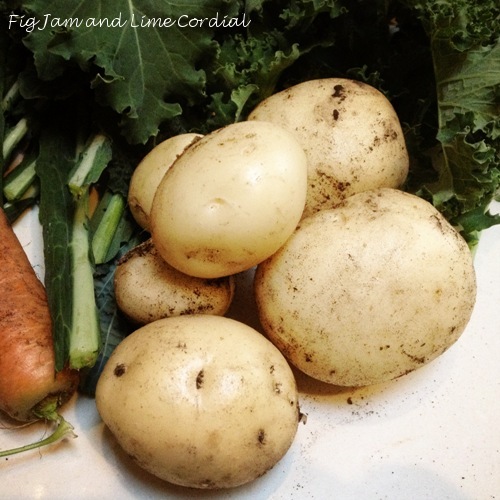
We bandicooted a few new potatoes from the oldest patch – until we grew our own, I never knew that freshly harvested spuds had a creamy texture when cooked…

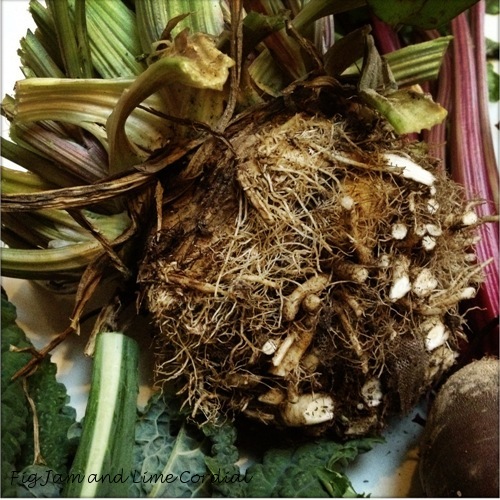
Our celeriacs have been growing forever, so we finally bit the bullet and dug one up. For a celeriac, it’s tiny (about the size of a softball) – by the time the huge roots were cut away, there was only a small portion left.  Nonetheless, it was delicious…

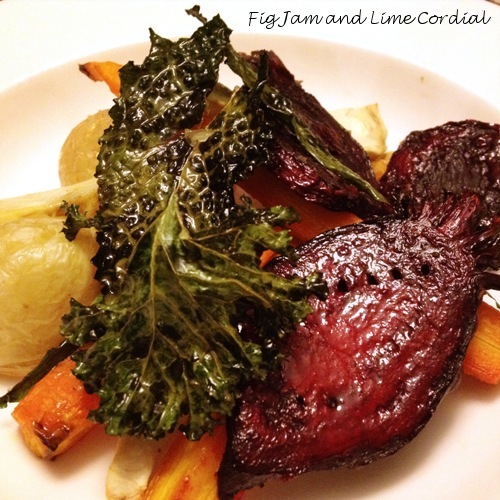
We made Lorraine’s kale chips, and the remaining vegetables were chopped, tossed in extra virgin olive oil and rosemary salt, then roasted in a hot oven.  The beetroots were peeled and sliced before roasting.

Inspired by a delicious meal we’d had recently at Youeni, we assembled a roasted vegetable salad, and served it with Italian sausages, homemade dill mayonnaise and sourdough ciabatta.

A truly joyous meal, and one that celebrated how far we’ve come on this journey!

Read Full Post »

Lemon and Lime Syrup Cake

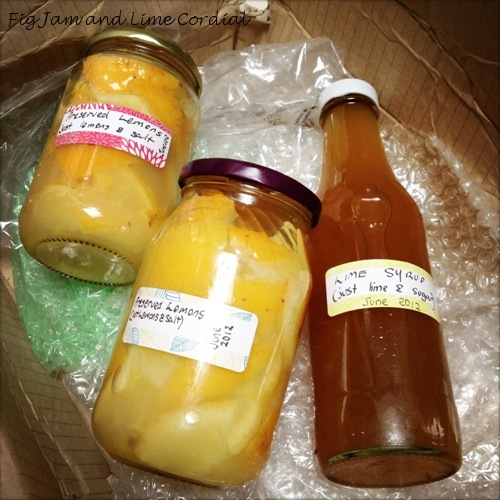
A few weeks ago, the postie delivered a lovely surprise package from our friend and garden mentor Linda Woodrow.

We haven’t tried the delicious looking preserved lemons yet, but the lime syrup was absolutely superb, sweet and sticky and chockful of flavour.  It made the best lime, soda and bitters we’ve ever tried, and the entire bottle disappeared within a few days.

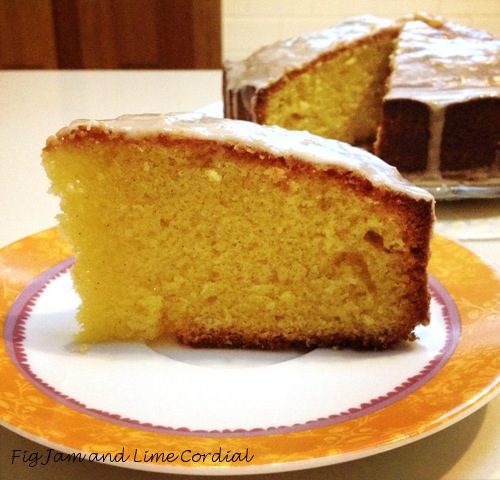
Before it was completely gone, I used a little of of it in this cake…

The recipe is a variation on our basic food processor pound cake and comes together in just minutes…

  • 250g (8oz) unsalted butter
  • 250g (8oz) castor (superfine) sugar
  • 175g (5½ oz)  self-raising flour
  • 75 (2½ oz) blanched almond meal
  • 1 teaspoon homemade vanilla extract
  • 4 large (59g) free range eggs
  • 2 teaspoons grated lemon rind
  • 100g icing sugar mixture (confectioners’ sugar)
  • 1 – 2 tablespoons lime syrup (or lime or lemon juice)

1. Have all the ingredients at room temperature before starting.  Preheat the oven to 160C (320F) with fan. Grease and line a 20cm (8″) round springform tin.

2. In the large bowl of the food processor, pulse together the butter, sugar and lemon rind until well combined and light in colour.  Scrape down the bowl.

3. Add the eggs one at a time and continue pulsing to combine. Add a spoonful of the flour each time (if required) to stop the batter from curdling.  Then add the remaining flour and almond meal, pulsing until just combined (do not overmix).

4. Scrape the batter into the lined tin and bake for about an hour (start checking at the 50 minute mark), until a cake tester inserted into the thickest part of the cake comes out cleanly. Baking time will vary if a different shaped tin is used. Allow to rest in the tin for 10 minutes before releasing the springform and transferring to a wire rack to cool completely.

5. Sift the icing sugar mixture into a bowl.  With a small whisk, gradually add the syrup until the icing reaches a spreadable consistency.  Spread over the cooled cake, and decorate the top with a few strips of lemon or lime zest.

Linda’s lime cordial recipe is here, and we’ll definitely be making it as soon as the fruits are in season again.  I suspect this will turn out to be Fig Jam and Lime Cordial’s new lime cordial recipe!

Read Full Post »

« Newer Posts - Older Posts »