Feeds:
Posts
Comments

Archive for the ‘Recipes’ Category

When eggplants were in season at the end of last year, I picked up a ten kilo box at the markets for $8.

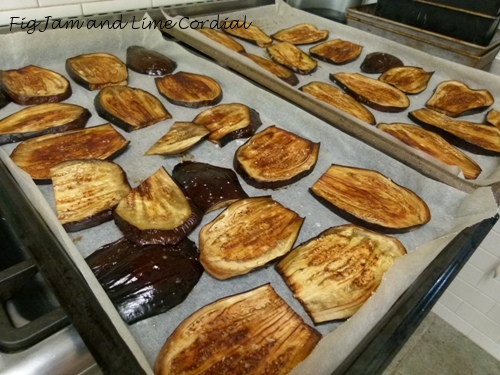
That’s a lot of eggplant!  After passing a few to my neighbour Maude, I cut the rest into long slices and brushed them (top and bottom) with a little olive oil.  These were then laid out on a parchment lined baking tray, sprinkled with a little sea salt, and baked until dark and caramelised.

We’d seen frozen char-grilled eggplant for sale, and thought it was worth experimenting to see if we could freeze our own. Slices were interleaved with a square of parchment paper and then packed into a small plastic container.
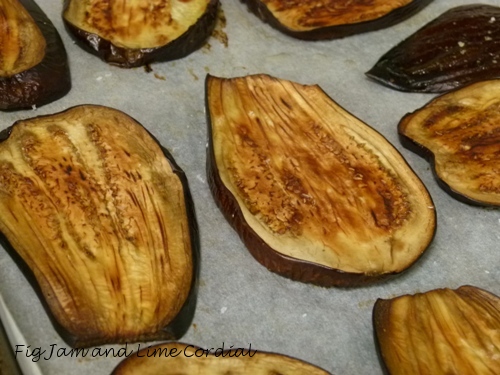
It’s now been a couple of months, and the freezing process has been a great success.  The whole container needs to be defrosted each time – the slices won’t separate without tearing otherwise.  I’ve used them to make eggplant parmigiana, pasta melanzane, as well as the beef brisket moussaka I blogged about recently…
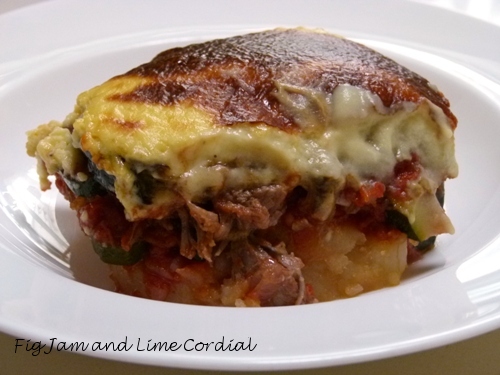
This isn’t a proper moussaka, or even really a proper recipe, but rather a simple layering of flavours.  Here’s how we make it…

Potatoes – boil or microwave peeled whole potatoes until tender but firm, then slice into discs.  Grease a large baking dish (I use a square ceramic one) and lay the potato slices out in a single layer.

Meat Filling – this was made with our slow cooked brisket, but could just as easily be made with mince.  If using mince, we usually add it to the pan after the onions and before the wine, ensuring that the meat is browned before the wine is added.

Heat butter and olive oil in a large pan, then slowly sweat a chopped onion until translucent and very soft. Add a little red wine, stir well, and allow to reduce.  Then add garlic, chopped zucchini (optional), fresh oregano and a tin or two of pulped tomatoes.  Season the sauce with salt and pepper, then stir in the cooked meat. Allow to reduce further if necessary, then spoon the filling evenly over the potato slices.

Eggplant –  lay the defrosted roasted eggplant slices over the meat.

White Sauce – Pete’s white sauce formula is as follows:

  • 50g butter
  • 3 cups milk (UHT, at room temperature)
  • ¼ cup flour
  • ½ cup grated pecorino cheese
  • 2 egg yolks

Melt the butter in a small saucepan, then add the flour, whisking to combine.  Continue whisking for a minute or so to cook the flour slightly, then add the milk and continue whisking until it just comes to a boil.  Remove from the heat, allow to cool slightly and then quickly whisk in the egg yolks, followed by the pecorino cheese.

Ladle the sauce over the eggplants, then bake in a preheated 180C (fan) oven for about 30 minutes or until golden brown.  Allow to rest for 10 – 15 minutes before serving.

Read Full Post »

Roast duck is a favourite with both of my sons, and I can never bring myself to throw out the leftover fat, especially when it retails for $10 a jar at the supermarket.

Yesterday I tried incorporating it into crispy bread sticks.  I was pretty chuffed at how well they turned out on the first attempt…

  • 500g bread flour
  • 130g duck fat
  • 200g water
  • 10g dried yeast
  • 7g salt
  • rosemary salt, or flaky sea salt, for dusting

1. In a large mixing bowl, stir together the flour, yeast and salt.  Add the water and duck fat and squelch together with a clean hand to form a fairly stiff dough.  Cover the bowl and allow to rest for half an hour.

2. Uncover the bowl, and give the dough a brief knead in the bowl to form a smooth dough.  Cover the bowl again, and allow to prove until at least double in size – the large amount of fat will slow the proving process down somewhat.

3. Preheat oven to maximum and line a couple of baking trays with parchment paper.  Turn the proved dough out onto a lightly oiled surface and fold a few times.  Cut the dough into small pieces and roll each one out into a long, thin snake.  Lay these out on the baking trays and sprinkle with a little rosemary salt (or other flavoured salt, or plain sea salt).

4. Reduce the oven temperature to 220C with fan, and bake the bread sticks for 15 – 20 minutes (depending on the thickness of your dough), rotating the trays halfway through to ensure even baking.

Big Boy and Small Man loved these, and made short work of them when they came home.  I managed to stash one away – it was the perfect dipper for my soft boiled egg this morning!

Read Full Post »

We’ve recently discovered how easy it is to make sorbet from frozen berries and jam!

Here’s the recipe for our latest batch, made with whatever we could find in the pantry and freezer.  The amount of jam needed will vary depending on the sweetness of both the preserve and the frozen berries. The ingredients can be varied to suit whatever you have on hand…

  • 250g frozen sour cherries, defrosted
  • 250g frozen raspberries, defrosted
  • ½ – 1 jar of jam (we used a full jar of Pete’s homemade blood plum jam)
  • 20ml (4 teaspoons) Grand Marnier (optional)

1. In a large food processor, or in two batches in a smaller food processor, blitz the berries and half a jar of jam together.  Taste the purée to see if it’s sweet enough, adding more jam if necessary and re-blitzing. Pete’s jams aren’t overly sweet, so extra was needed to balance out the sour cherries and raspberries. If using a commercial jam or sweeter berries, you probably wouldn’t need as much.

2. Pass the purée through a coarse sieve to remove the seeds, then stir in the Grand Marnier if desired.  Chill the mixture in the refrigerator if necessary – it should be cold before going into the ice cream maker.

3. Pour the mix into an ice cream maker and churn until set.  Allow to firm up for several hours in the freezer before serving.

We’ve also made this with fresh strawberries, strawberry jam and a little of Pete’s vanilla syrup – it really is a very flexible recipe!

Read Full Post »

Beef Brisket

Unlike the US, beef brisket isn’t a common cut of meat here in Australia.

In fact, I don’t believe I’ve ever seen it for sale in a butcher’s meat display or supermarket fridge. There has been a strong move over the past decade towards leaner cuts of meat, and brisket certainly isn’t lean. Nor is it expensive, but it can be hard to find.

I’d eaten it often enough – it’s commonly used in Chinese dishes – but I’d never tried cooking it myself until last week.  I was after cheap meat for stock, and Dave the butcher suggested I use a combination of brisket with soup bones.  After I’d made the stock, I was astounded by the flavour and tenderness of the leftover meat.

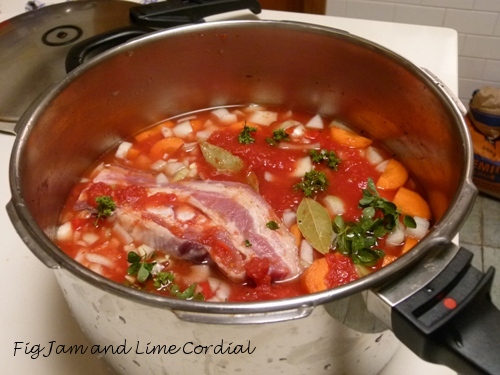
So I decided to experiment.  I laid two kilos of the meat into my pressure cooker and covered it with a tin of tomato pulp, water, carrots, onion, a couple of bay leaves, fresh oregano, and seasoned with salt and pepper.  I brought the cooker to full pressure, kept it there for twenty minutes, then turned the heat off and let it sit for a couple of hours.

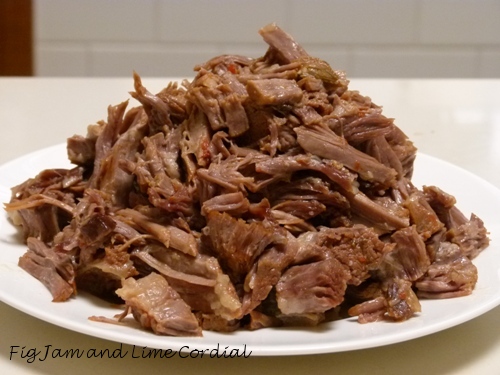
When I opened the pot, the brisket was literally falling off the bone.  I carefully removed all the fat and sinew, and shredded the meat.  The two kilos of raw product yielded about 600 grams of meltingly tender, incredibly flavourful cooked meat.

The cooking liquid was strained and refrigerated – once cold, I removed and discarded the hard layer of fat, then portioned the stock into containers for freezing.  It will make a wonderful base for future soups or paella.

The brisket meat offered a multitude of options – we considered turning it into a pasta sauce, or lasagne filling, or simply eating it pulled meat style in a sandwich.  In the end, we made a simple moussaka, recooking the meat with tomatoes, zucchini and oregano flowers and then layering it with sliced boiled potatoes, oven roasted eggplant, and topping with a white sauce…

I feel like I’ve discovered a new ingredient!  Next on the agenda – beef brisket meat pie!

Read Full Post »

Folks, I’m going to let you in on one of the Inner West’s best kept foodie secrets…

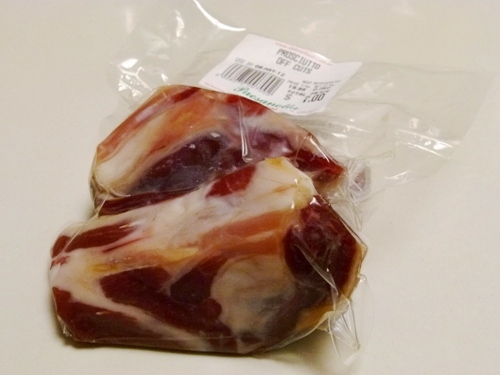
My friend Johnny runs DeliVer, a thriving, passionate business supplying high-end deli produce to restaurants and providores all across Australia.  Apart from a huge range of cheese, oils and antipasto, he also supplies premium small goods – San Daniele Prosciutto, Spanish Jamon, Bresaolo and the like – all carefully hand sliced and vacuum packed for distribution and resale.

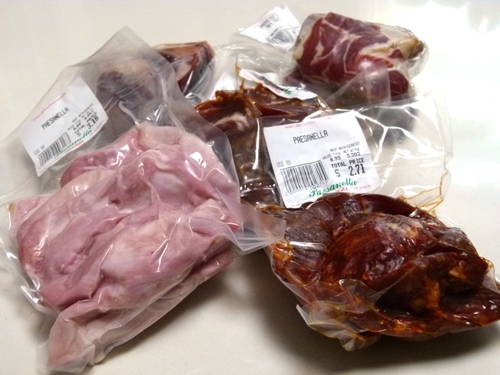
Johnny is very particular about what goes into each packet, and as a result there are often large quantities of leftovers and offcuts. These are sold at a discounted price through his retail cheese shop in Haberfield.  They’re seriously cheap – often up to 80% off their retail cost.

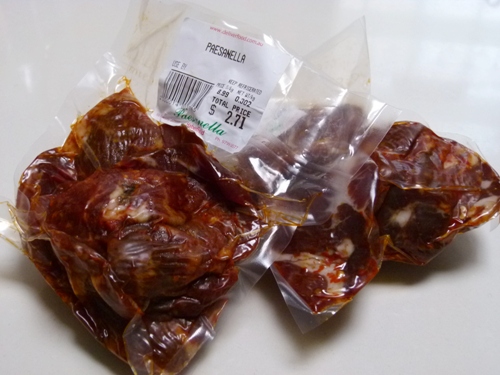
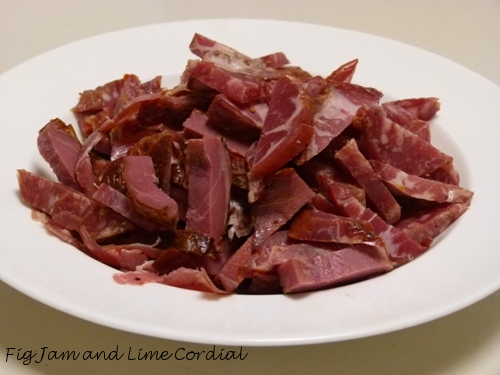
Let me give you a couple of examples – off the bone leg ham retails for $49.99/kg and Coppa, a traditional cured pork, for $39.99/kg – the offcuts of both are just $8.99/kg.  The bags of Coppa below cost me less than $3 each…

For $19.99/kg, I often pick up end pieces of San Daniele prosciutto (normally $79.99/kg) or Spanish Jamon ($89.99/kg)…

These are only available through the Haberfield shop and definitely worth looking out for if you get a chance to visit.

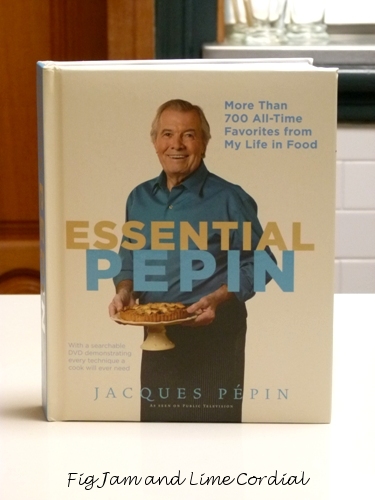
I normally use the meats in filled breads, pasta soups or as pizza topping, but I was delighted to come across this Jacques Pépin recipe which seemed a perfect foil for them.  It’s from his latest cookbook and television series…

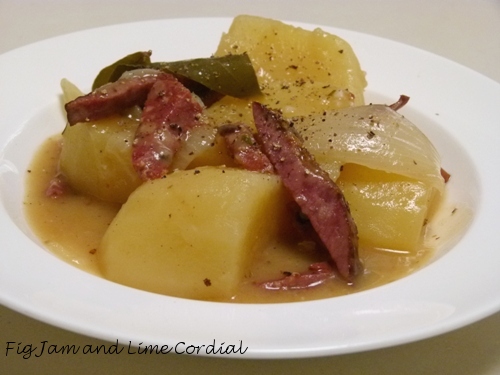
The potato ragout is, according to Jacques, a simple dish from his childhood.  It’s easy to prepare, and originally made with strips of rinsed salt pork or pancetta.  Jacques wrote that it could also be made with leftover ham or sausage, so it was simple to extrapolate  to Johnny’s offcuts…

I used 300g of mixed meats, chopped into strips…

Potato Ragout
(based on a recipe from Jacques Pépin’s Essential Pépin)

  • 300g pancetta or assorted cured meats
  • 1 tablespoon peanut oil
  • 2 large onions, cut into 8 wedges
  • 2 tablespoons plain (AP) flour
  • 1 tablespoon crushed garlic
  • 3 bay leaves
  • 1 sprig fresh thyme
  • 2 – 3 cups water
  • 1 kilo waxy pototoes, peeled and cut up if large

1. Cut the meat into strips.  Heat the oil in  a large saucepan or dutch oven and fry the meat until well cooked and crisp, stirring occasionally.  Add the onions and cook for a few minutes more, until lightly browned.

2. Add the flour and stir well, cook briefly until brown, being careful not to burn it.  Add the garlic, bay leaves, thyme and water, stir and then bring to a boil.

3. Add the potatoes and bring back to a boil, then turn the heat down and simmer, covered, for about an hour, or until the potatoes are soft and well cooked.  Taste for seasoning and adjust if necessary.

A comforting, easy to eat dish which, thanks to a healthy supply of Johnny’s offcuts in the fridge, I can now make at a moment’s notice!

Read Full Post »

« Newer Posts - Older Posts »