Feeds:
Posts
Comments

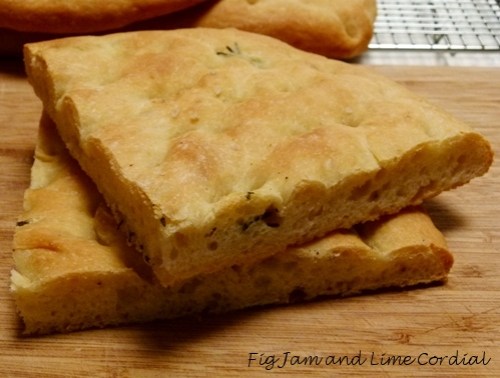
Focaccia is a regular weekend treat at our place, and I usually bake a gigantic tray for sharing with the neighbours.

Last week, a bowl of leftover duck fat and a rampant rosemary bush inspired me to try something different.  This savoury loaf was absolutely delicious, and made for a quick and easy Sunday lunch…
  • 200g low hydration sourdough starter (80% – fed at a ratio of 80g water to 100g bakers flour). Starter should be ripe and bubbly before you start.
  • 330g water
  • 50g duck fat (if you don’t have duck fat, substitute 50g extra virgin olive oil)
  • 30g extra virgin olive oil
  • 500g bread/bakers flour
  • 2 sprigs rosemary, leaves only
  • ¾ teaspoon dried yeast
  • 10g fine sea salt
  • Extra virgin olive oil, for drizzling
  • Rosemary salt (or other flake salt) for scattering on top

1. In a large wide mixing bowl, mix together the starter, yeast, water, duck fat and olive oil. Add the flour, salt and rosemary leaves.  This is a very wet dough – just squelch it all together well, don’t try to knead it.  Scrape off your fingers and cover the bowl with cling film or a shower cap.

2. After an hour, come back and give the dough a few folds, leaving it in the bowl.  Repeat this twice more over the next two hours (at roughly 45 minute intervals). I usually let this dough rise for three hours in total (a bit longer in winter), by which time it should be puffy and well-risen.

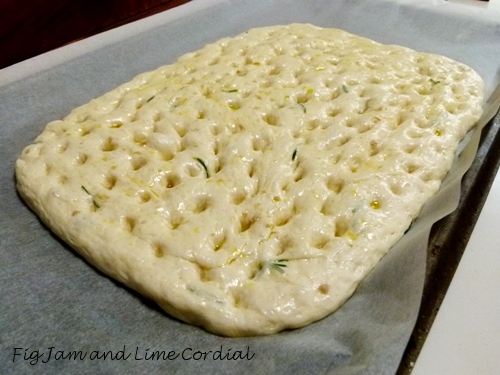
3. Line a baking tray with parchment paper and scrape the dough onto it. Oil your hands and flatten out the dough to a 40 x 26cm (16 x 10″) rectangle.  You will probably need to get your fingers under the ends of the dough and give it a gentle pull to get it into shape.

4. Preheat fan-forced oven to 240C (460F).  Drizzle olive oil over the dough and spread it with your fingers, then scatter on the rosemary salt.  Allow the dough to rest for a further 15 minutes or so while the oven heats up.

5. Dimple the top of the dough with your fingers, pushing all the way down to the bottom. Reduce the oven temperature to 220C (425F) with fan and bake for 25 – 30 minutes, until golden brown.  Transfer to a wire rack to cool (if you can – otherwise, scoff it warm).

. . . . .

If sourdough isn’t your thing, you might like to try our simple yeasted focaccia, or one of the filled versions:

Pete always refers to focaccia as “homemade junk food”, and in a way he’s right – it’s like a cross between fried bread and hot chips.  We tend to eat it plain or dipped in a good olive oil, but it also makes delicious filled sandwiches for school lunches.

It’s the perfect bread for festive season entertaining!

Pop!

Oh no…

Pop! Pop!

Oh no oh no oh no…

POP!

Bugger.

I had the batter in the cake tin when the fan elements in the oven blew.

I’d wanted to try this David Lebovitz recipe for the longest time – ever since reading about it in his Ready for Dessert cookbook. After all, how can one resist a recipe that was copied off the wall of the men’s restroom? And could such a thing possibly exist anywhere other than in Paris?

I’d carefully folded the light and airy six-egg batter together, gingerly poured it into the springform tin…and then the oven blew. So I had to reheat the oven using the top and bottom elements. Since the bottom element was covered with baking stones and trays (which were too hot to get out by this stage), it didn’t really bake as evenly as it normally would. And, of course, the batter sank as it sat on the bench, and the finished cake came out flat and a little squashed.

I was seriously tempted not to blog about it, and then I ate a slice. And then I ate another. It was very dark and moreish, with a silky, creamy texture.

The cake uses six eggs, a bucketload of chocolate, just half a cup (125g) of butter, and a relatively small quantity (85g) of sugar.  It’s topped with chocolate nibs (optional), which adds crunch and a slight bitterness to the finished product. It’s not particularly sweet – it’s almost a little savoury – and I find it absolutely irresistible. As an added bonus, it’s gluten-free as well.

I substituted instant coffee for the espresso, unsalted butter for the salted (as it was all I had), and used a mix of bittersweet and semisweet chocolate…

  • 140g (5oz) semisweet (dark) chocolate (I used Callebaut 811 54%)
  • 140g (5oz) bittersweet (dark) chocolate (I used Callebaut 70%)
  • 125g (½ cup) unsalted butter
  • a pinch of fine sea salt
  • 1 Tablespoon strong coffee (I used instant, Lebovitz recommends espresso)
  • ½ teaspoon vanilla extract (I used homemade)
  • 6 large (59g) free range eggs, separated, at room temperature
  • 55g (¼ cup) white sugar, plus 30g (2 Tablespoons) white sugar
  • 20g (2 Tablespoons) cacao nibs (optional)
  • Icing sugar for dusting the cake (optional)

1. Preheat the oven to 175C (350F) or 160C (320F) with fan (if your fan force element is working!).  Spray a 23cm (9″) springform time with vegetable oil and line the base with a circle of parchment paper.

2. In a large pyrex mixing bowl, melt together the chocolate, butter and salt in the microwave. Use short bursts on high, stirring well after each one.  Stir in the coffee and vanilla.

3. Using an electric mixer, beat together the egg yolks and 50g (¼ cup) sugar until creamy, which should take about a minute.  In a clean mixing bowl, beat the egg whites until they start to puff up, then add the remaining 30g (2 tablespoons) of sugar, and beat on high until the egg whites form soft peaks.

4. Fold the egg yolks into the chocolate mixture. Next, stir in a large spoonful of egg white, then gently fold the remaining egg white into the batter, being careful not to bash the air out of the mixture.

5. Pour the batter into the prepared tin and scatter over the cacao nibs.  Bake until just set in the middle, about 25 minutes.  Be careful not to overcook the cake.  Allow to cool completely before removing the springform ring. Dust with icing sugar if desired.

Cakes of this nature often fall into the trap of tasting a little eggy. Surprisingly, despite the large number of eggs in this recipe, that isn’t the case here.

Lebovitz recommends serving the cake with whipped cream or ice cream, but I’ve found it very addictive just as it is, with a hot cup of tea.

PS. The oven’s been repaired – had to get it fixed asap with Christmas just around the corner!

In my kitchen…

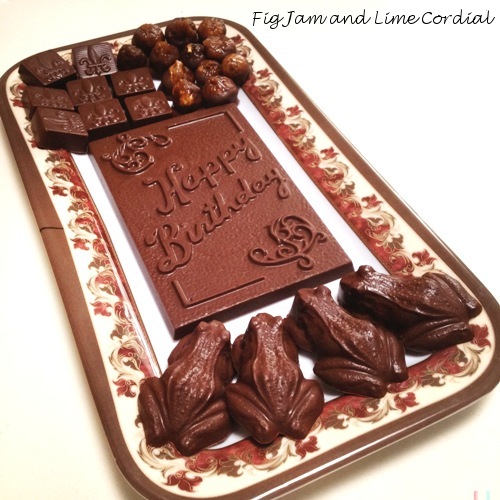
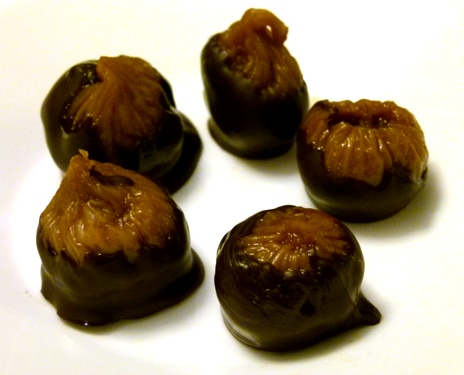
…is a platter of chocolate treats for Karen’s 50th birthday – I tempered a combination of 250g each of Fairtrade Callebaut 811 (54%) and 823 (Milk) and moulded the blend into cane toads, a birthday card and fleur de lys squares. I then dipped Drambuie-soaked Persian figs in the leftovers…

In my kitchen…

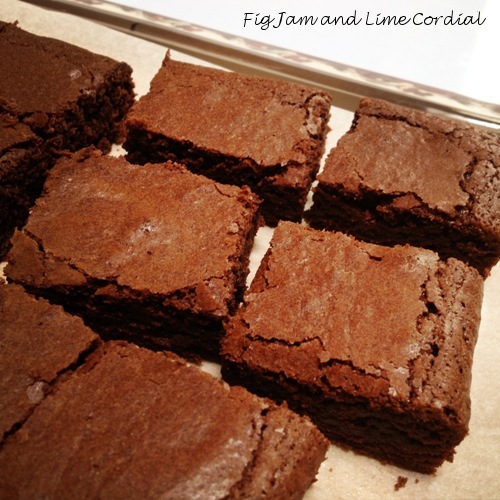
…are treats for the school drama club…a large batch of Supernatural brownies

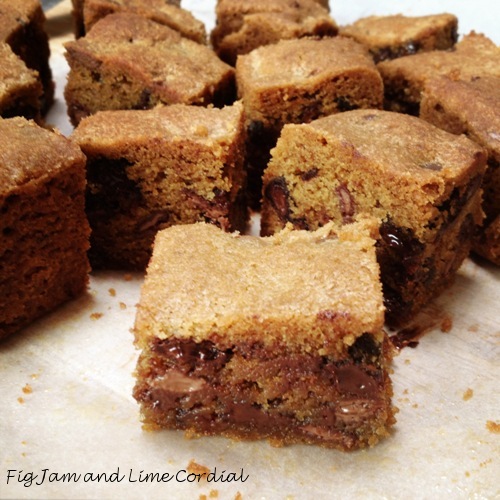
…and our ever reliable butterscotch bars

In my kitchen…

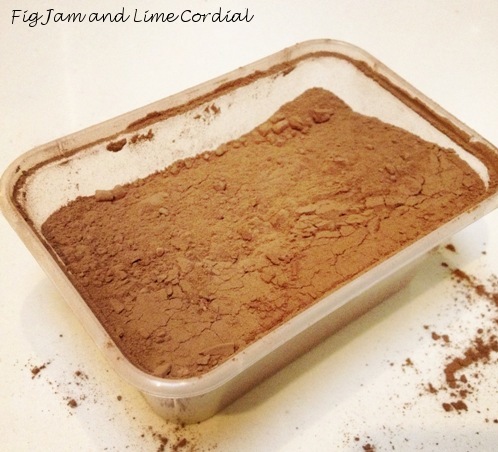
…is a container of organic cocoa, a gift that lovely Jo from Queensland surprised me with…

I used some of it to make two Tiger cakes

…one of which went with us to Uncle Steve’s place for lunch…

In my kitchen…

…is my latest succulent experiment. I’ve planted surplus cuttings in old tea light holders and found them a spot on the sunny kitchen windowsill…

I’m not sure how well they’ll manage without drainage holes, but they’ve certainly brightened up the kitchen…

In my kitchen…

…are heart shaped sourdough rolls, sliced for breakfast toast…

In my kitchen…

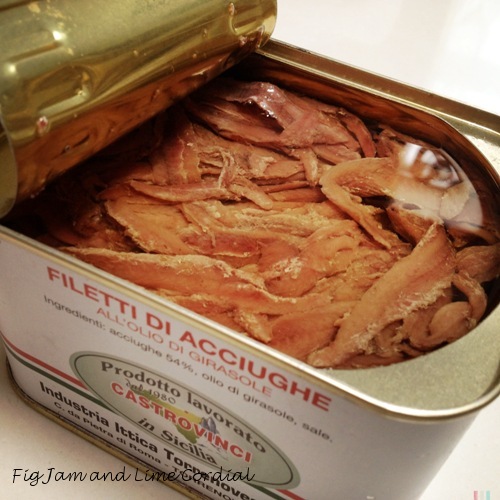
…is a huge tin of amazing Italian anchovy fillets. As I mentioned to Greg and Katherine recently, I think anchovies are a gift from God…

In my kitchen…

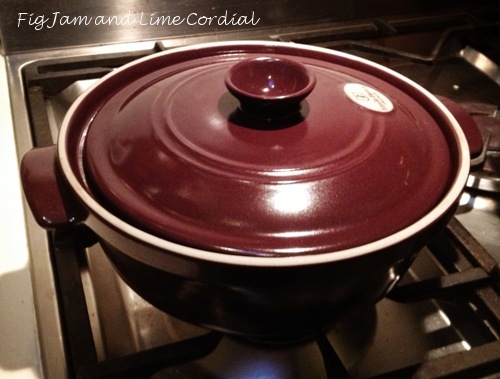
…with thanks to all my friends who emailed me frantically to tell me about the Peters of Kensington deal of the day, is a baby Emile Henry risotto pot. It’s much smaller than my other one, and cost just $34…

The first thing I cooked in it was a baked version of our chicken and chestnut rice

In my kitchen…

…are June’s Hungarian cabbage rolls. They’re soooo good and I was such a pest about them that she finally made a batch just for me…

Finally, in my kitchen…

…is a bottle of 1999 Clare Valley riesling. I took the arty Hipstamatic photo below after we’d had a glass or two.

Aged riesling is one of the great secret (I believe) of Australian wine. We buy riesling from the Clare or Eden Valleys in South Australia (they’re usually very reasonably priced) and stash them under the house for ten years or so, during which time they turn into luscious, golden treasures…

 . . . . .

Tell me, what’s happening in your kitchen this month?

If you’d like to do an In My Kitchen post on your own blog, please feel free  to do so. We’d love to see what’s happening in your kitchen this month!  Please link back to this blog, and let us know when your post is up, and we’ll add it to our monthly listing.

Here are this month’s posts…

Siobhan @ Garden Correspondent

Christine @ Food Wine Travel

Mel @ The Cook’s Notebook

Lara @ A Life on a Plate

Johanna @ Green Gourmet Giraffe

Amanda @ Lambs’ Ears and Honey

JJ @ 84th & 3rd
(first IMK post!)

Tandy @ Lavender and Lime

Claire @ Claire K Creations

Sue @ Sous Chef

Lizzy@ Bizzy Lizzy’s Good Things

Pam @ Grow Bake Run

Mandy @ The Complete Cookbook

Ozoz @ The Kitchen Butterfly

Anne @ Life in Mud Spattered Boots

Jane @ The Shady Baker

Linda @ The Orange Bee

Pamela @ Spoon Feast

Brydie @ CityHippyFarmGirl

Heidi @ Steps on the Journey

Zirkie @ Pink Polka Dot Food

Emilie @ The Clever Carrot

Charlie @ Hotly Spiced

Mrs Mulberry @ Mulberry & Pomegranate

Glenda @ Passion Fruit Garden

Rebecca @ The InTolerant Chef
(late November post)

Kari @ Bite-Sized Thoughts
(late November post)

These wholesome cookies are very popular at our house!

They come together quickly in the food processor, and the chocolate finish is optional, but delicious. The recipe comes from Jacques Pépin Celebrates and was also featured in one of his television programs.

  • 125g (½ cup) unsalted butter, slightly softened
  • 55g (¼ cup) white sugar
  • 1 teaspoon baking powder
  • 100g (2/3 cup) plain (AP) flour
  • 85g (1 cup) rolled oats
  • 60g (1/3 cup) dried currants
  • tempered or melted dark chocolate

1. Preheat the oven to 180C (360F) with fan. Line a baking pan with parchment paper.

2. In the large bowl of the food processor, blitz together the flour, baking powder, sugar and butter until it just starts to form a ball.  Tip into a large mixing bowl, and squish in the oats and currants until well combined.

3. Roll small pieces of dough into 7.5cm (3″) logs and place them on the lined tray.  Flatten each log slightly to create oval shaped cookies,  then bake for 18 – 20 minutes until golden brown. Transfer to a wire rack to cool.

4. Temper a small bowl of dark chocolate (or simply melt it very gently), and spread the flat side of each cookie with a small quantity. Place the cookies, wet chocolate side down, onto a flat tray lined with parchment paper, pushing down firmly to flatten out the chocolate coating.

5. Allow the cookies to set (Pépin suggests putting them into the fridge or freezer for a few minutes), then store in an airtight container.

I always end up with more tempered chocolate than planned, so I used the excess to dip my rum soaked Persian figs.  They’re the perfect nightcap!

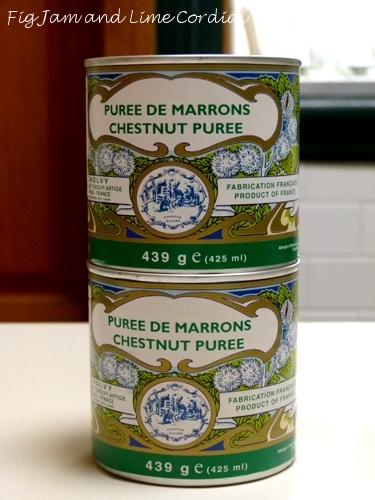
I adore chestnuts.

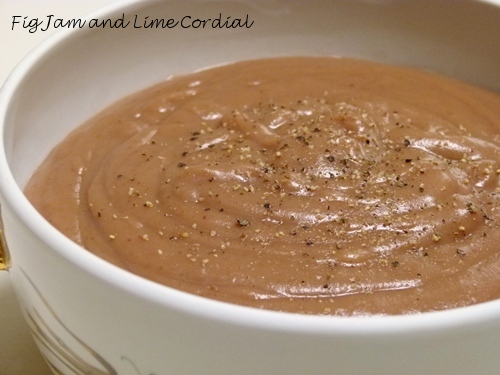
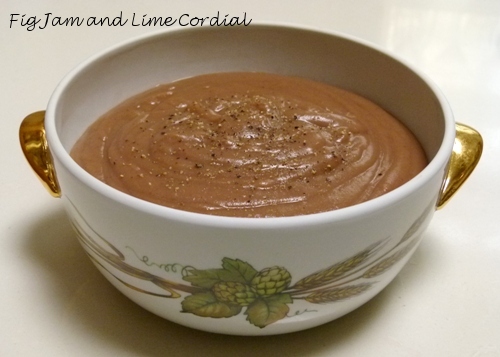
This soup recipe is thick and satisfying, and very simple when made with tinned chestnut puree

  • 1 large potato, peeled and cut into chunks
  • 1 large or two small onions, peeled and chopped
  • 2 cloves of garlic, peeled and chopped
  • 2 – 3 cups (500ml – 750ml) stock (I used homemade chicken stock)
  • 1 tin chestnut puree
  • vegetable oil
  • extra water (if required)
  • salt and pepper

1. In a large pot, heat a little oil and fry the onion and garlic until soft.  Add the potato and stir well to coat.  Add the stock and bring to a gentle simmer.  Cover and cook until the potato is soft.

2. Add the chestnut puree and stir to incorporate.  Cover the pot again and continue to simmer gently for a few minutes more.  Then remove the lid and blitz the soup with a handheld immersion blender until smooth.  If the soup is too thick, add a little water and reheat to combine.  You could also add cream at this stage if desired. Season with salt and pepper to taste.

The soup thickens as it cools, so I add a little water when reheating. It’s delicious and very filling!