Feeds:
Posts
Comments

I had a moment the other day.

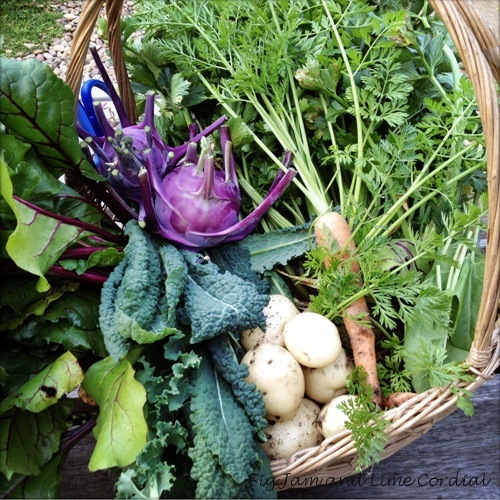
It’s probably just late my 40s hormones, but…we were outside harvesting vegetables for dinner, and we’d collected the enormous basketful above.  And I got all emotional and had a little cry. I honestly never imagined that we’d be at a stage in our lives when we could walk out the back door and bring in a huge basket of freshly grown goodies to feed our family.

A few years ago we stopped shopping at the supermarket and started buying all our fresh produce at the growers’ markets and specialty retailers. We were astonished at how much fresher the fruit and vegetables were – the supermarket equivalents were often several weeks’ older than what we were buying at Flemington.

And once we’d tasted this freshness, we were hooked.  We wanted to grow our own, and eat broccoli that had been raised without chemicals, harvested just minutes before cooking.  We wanted the experience of eating freshly dug potatoes before their skins and starches had a chance to harden, and peas straight off the vine.

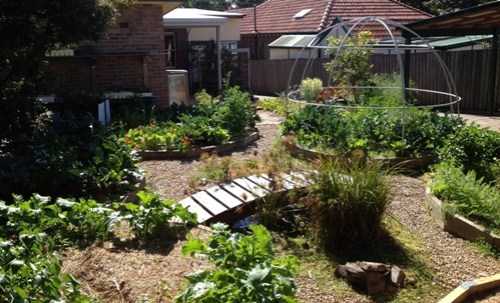
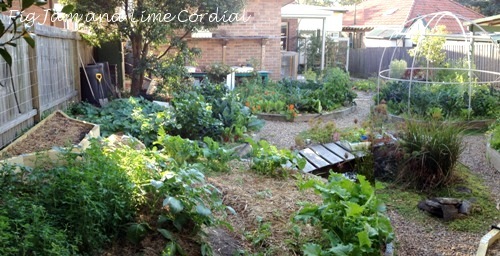
The garden beds were built at the beginning of 2010, and it’s taken a couple of years for them to get to the stage where they’re producing consistently. The initial set up was labour and time intensive, but now that it’s up and running, it’s really quite easy to maintain, particularly with the chooks and worms on the job.

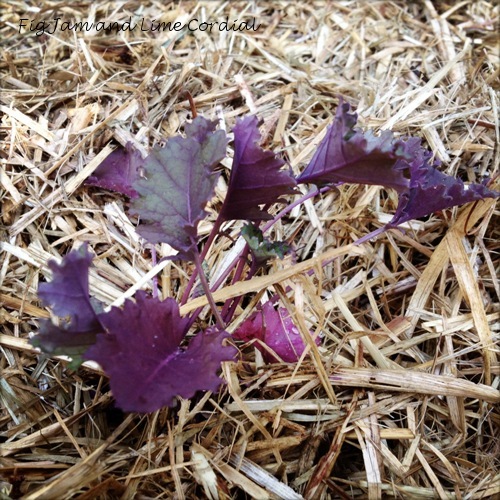
Our harvest included fat beets which seemed to pop out of the ground overnight, curly and Tuscan kale, the first carrots from the back bed,  kohlrabis which we’d thought were purple sprouting kale, sorrel and dill…
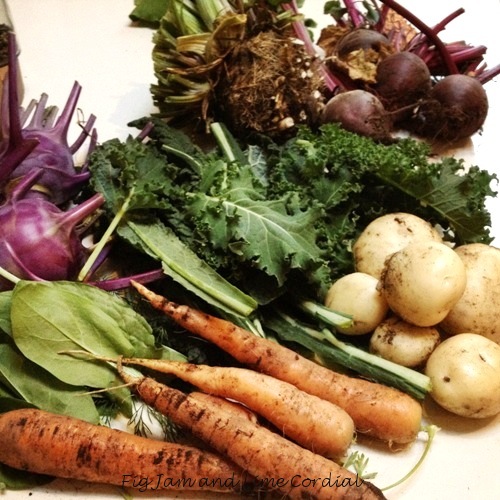
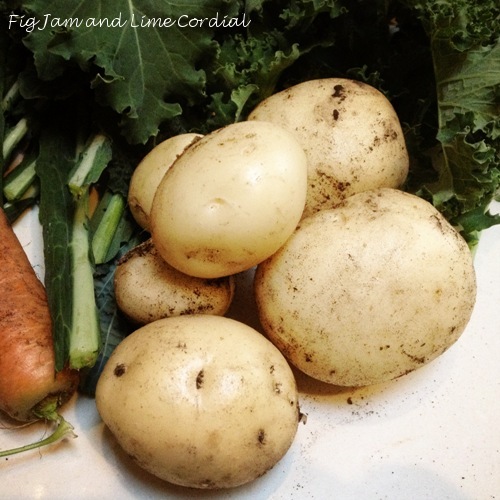
We bandicooted a few new potatoes from the oldest patch – until we grew our own, I never knew that freshly harvested spuds had a creamy texture when cooked…
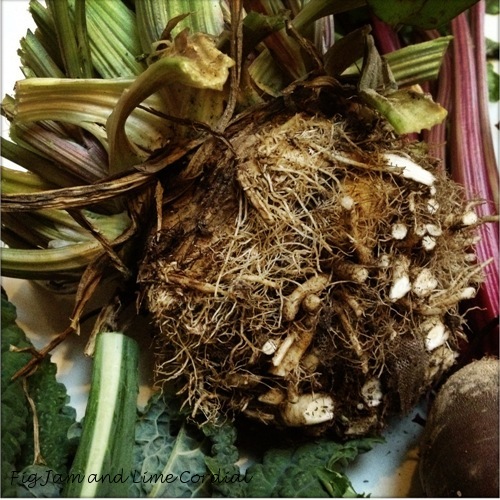
Our celeriacs have been growing forever, so we finally bit the bullet and dug one up. For a celeriac, it’s tiny (about the size of a softball) – by the time the huge roots were cut away, there was only a small portion left.  Nonetheless, it was delicious…
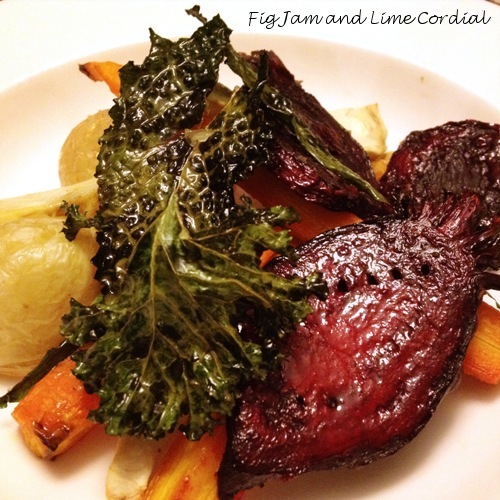
We made Lorraine’s kale chips, and the remaining vegetables were chopped, tossed in extra virgin olive oil and rosemary salt, then roasted in a hot oven.  The beetroots were peeled and sliced before roasting.

Inspired by a delicious meal we’d had recently at Youeni, we assembled a roasted vegetable salad, and served it with Italian sausages, homemade dill mayonnaise and sourdough ciabatta.

A truly joyous meal, and one that celebrated how far we’ve come on this journey!
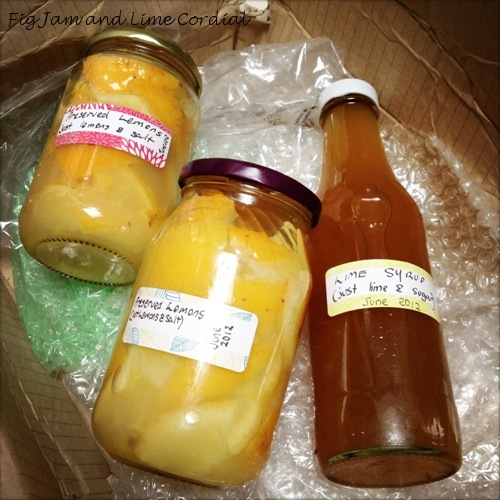
A few weeks ago, the postie delivered a lovely surprise package from our friend and garden mentor Linda Woodrow.

We haven’t tried the delicious looking preserved lemons yet, but the lime syrup was absolutely superb, sweet and sticky and chockful of flavour.  It made the best lime, soda and bitters we’ve ever tried, and the entire bottle disappeared within a few days.

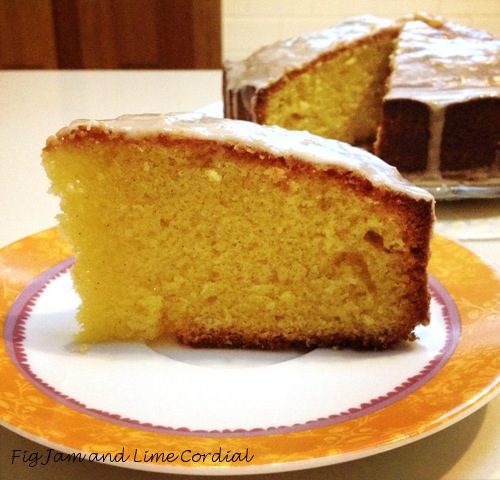
Before it was completely gone, I used a little of of it in this cake…

The recipe is a variation on our basic food processor pound cake and comes together in just minutes…

  • 250g (8oz) unsalted butter
  • 250g (8oz) castor (superfine) sugar
  • 175g (5½ oz)  self-raising flour
  • 75 (2½ oz) blanched almond meal
  • 1 teaspoon homemade vanilla extract
  • 4 large (59g) free range eggs
  • 2 teaspoons grated lemon rind
  • 100g icing sugar mixture (confectioners’ sugar)
  • 1 – 2 tablespoons lime syrup (or lime or lemon juice)

1. Have all the ingredients at room temperature before starting.  Preheat the oven to 160C (320F) with fan. Grease and line a 20cm (8″) round springform tin.

2. In the large bowl of the food processor, pulse together the butter, sugar and lemon rind until well combined and light in colour.  Scrape down the bowl.

3. Add the eggs one at a time and continue pulsing to combine. Add a spoonful of the flour each time (if required) to stop the batter from curdling.  Then add the remaining flour and almond meal, pulsing until just combined (do not overmix).

4. Scrape the batter into the lined tin and bake for about an hour (start checking at the 50 minute mark), until a cake tester inserted into the thickest part of the cake comes out cleanly. Baking time will vary if a different shaped tin is used. Allow to rest in the tin for 10 minutes before releasing the springform and transferring to a wire rack to cool completely.

5. Sift the icing sugar mixture into a bowl.  With a small whisk, gradually add the syrup until the icing reaches a spreadable consistency.  Spread over the cooled cake, and decorate the top with a few strips of lemon or lime zest.

Linda’s lime cordial recipe is here, and we’ll definitely be making it as soon as the fruits are in season again.  I suspect this will turn out to be Fig Jam and Lime Cordial’s new lime cordial recipe!

A lot has happened in our garden over the past week!

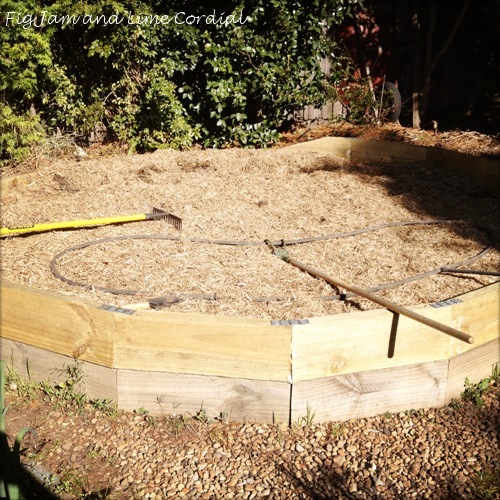
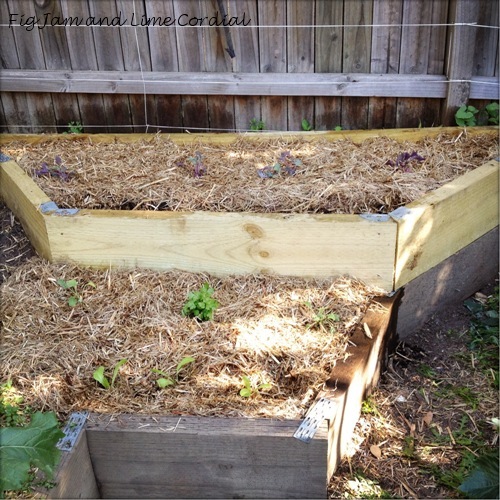
Uncle Steve (Pete’s brother) has built us a new garden bed, and refurbished an old one.  Our back bed has always performed poorly – it’s close to the fence and a couple of large, nutrient-sucking trees. Pete felt the solution was to raise the bed and increase its organic matter.

The bed is filled with a mixture of the existing soil, compost and mulched prunings.  We’re not sure how well things will grow this season, but we’ve optimistically planted it out nonetheless, with purple potatoes, dwarf beans, cos lettuce, broccoli rabé, basil, jalapeno chillies, eggplant and parsley…

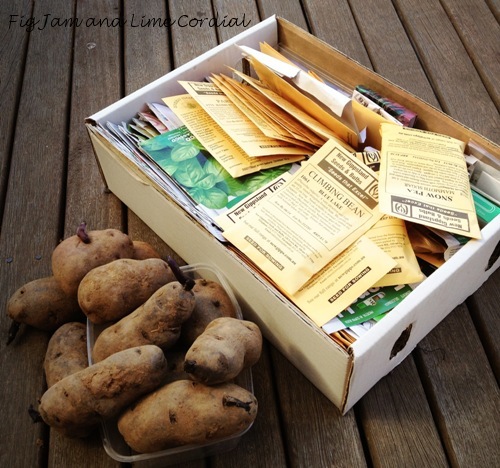
The purple potatoes are a bit of a punt, as they’re not virus-free seed potatoes, but rather sprouting kitchen spuds.  Having said that, I bought them from the organic growers at Eveleigh Markets, so hopefully they’ll be ok.

A potato grower on Gardening Australia a couple of weeks ago recommended keeping just one strong shoot on each potato, and we’ve followed his advice…

There was an unproductive patch in between the side beds which was always flooded with run-off from the neighbour’s concrete drive.  Uncle Steve built us a proper little raised bed – isn’t it sweet?

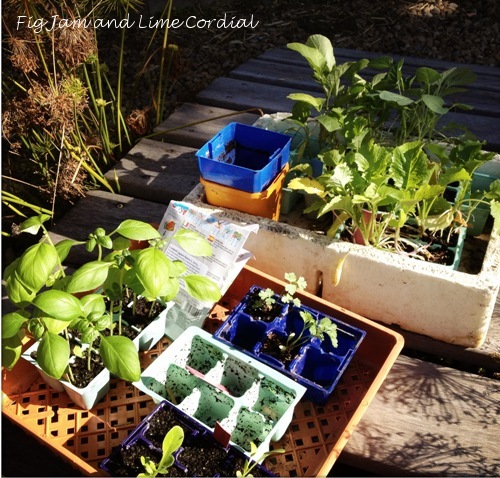
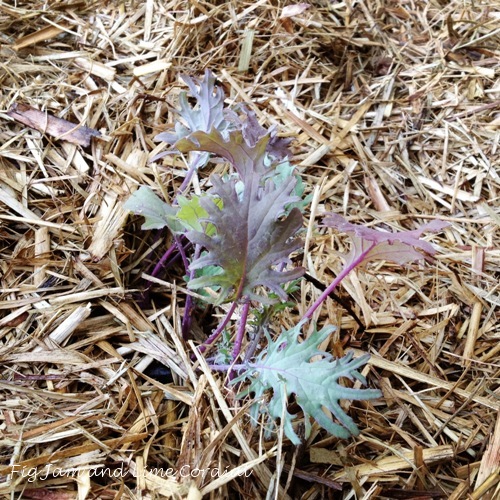
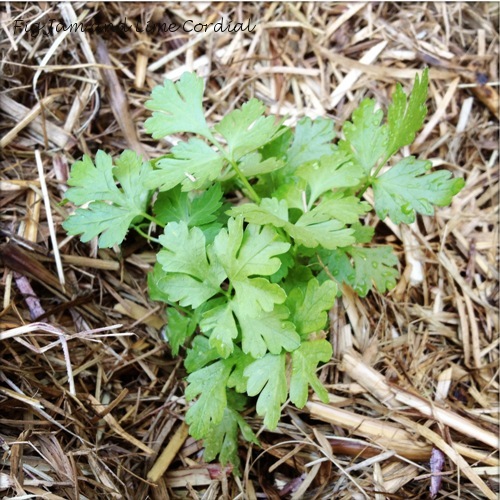
We’ve planted climbing beans and snow peas at the back, with kale, carrots, Hamburg parsley and cos lettuce in front.  There are three different varieties of kale, but unfortunately we can’t remember what they are (the seedlings were started over a month ago)..

The Hamburg parsley should form a large, turnip-like root…

All done, and the garden is looking neat and tidy again!

Hope you’re all having a great weekend! xx

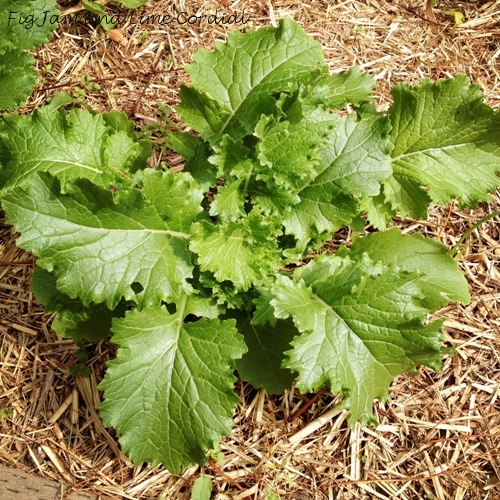
As I mentioned last week, broccoli rabé is growing vigorously in our garden.

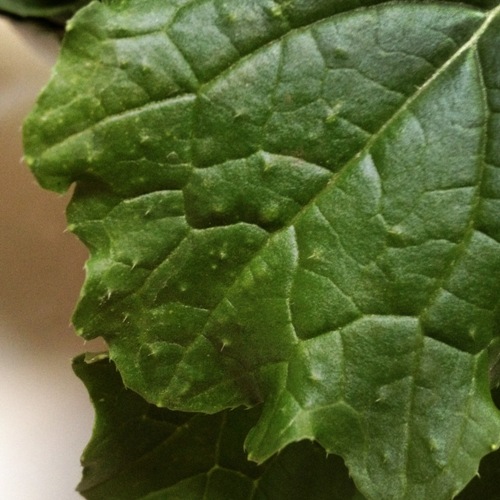
Also known as rapini, broccoli raab, and broccoletti, these bitter leaves and flowers are widely used in Mediterranean cooking.  We’ve never grown them before, but were enticed to do so by promises that the entire plant was edible, with a broccoli-like flavour.

We harvested some leaves for the first time a couple of days ago, and brought in a head of broccoli, cos lettuce and a handful of peas as well, in case the rabé didn’t pass muster with the boys…

I was somewhat put off by the small stinging spikes on the tips of the leaves.  Interestingly, these seemed to disappear a short while after harvesting…

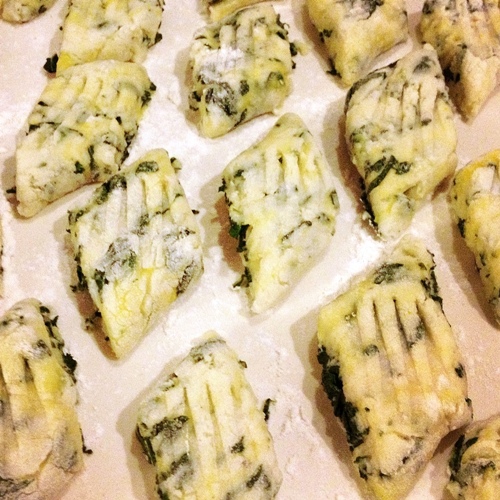
The prickles reminded me of Joanna and Carl’s nettle and potato gnocchi, which I’d been wanting to try for ages.  It seemed like a great first use of our rabé!

I followed the recipe closely, substituting the following ingredients:

  • 100 grams of broccoli rabé leaves – I removed and discarded the stalks, chopped the remaining leaves up coarsely, poured boiling water over them, and let them sit for a few minutes.  After draining, these were allowed to cool and then the water was squeezed out of them.
  • 600g (2 large) white sebago potatoes, peeled, chopped and microwaved until soft, then mashed through a ricer
  • 1 large egg, lightly beaten
  • 1 teaspoon of fine sea salt
  • Ground black pepper, a generous few twists
  • 150 grams (1 cup) plain (AP) flour

The drained, blanched leaves should be chopped as finely as possible – mine were a little coarse, which gave the gnocchi untidy edges.  The finished pasta should probably also have been smaller, but I had trouble rolling the dough any thinner…

Despite their rustic appearance, these were absolutely delicious! We served them simply with Pepe Saya butter, extra virgin olive oil, salt, pepper and  Nerone Grana Padano cheese.  We also made broccoli pasta – a firm favourite with our sons – but struggled to convince them to eat it instead of the gnocchi…

We’ll definitely be making this again! Thanks Joanna and Carl for such a great (and adaptable) recipe.  Best of all, we’ve figured out that the broccoli rabé which grows so easily and well in our garden is not only edible – it’s delicious!

The River (2012) by Monika Grzymala

I’ve discovered that I adore contemporary art.

Traditional art forms have never really held my interest  – don’t get me wrong, they’re wonderful to look at and I always marvel at the skill of the artist – but contemporary art moves me emotionally.

I would never have discovered this if Roz and John hadn’t come to Sydney earlier this year and taken Pete and I to the small Biennale exhibit at Carriageworks.  Roz encouraged us to visit the other Biennale spaces, and we have – we spent an afternoon at the Museum of Contemporary Art last month and, just this week, a full day meandering through the large installations on Cockatoo Island.

The island is an amazing place, and I’ll be writing a post about it shortly, but I wanted to share with you the photos that we took of the artworks there, in the hope that it will encourage any of you who are thinking about visiting to do so. The Biennale ends this Sunday, and there won’t be an opportunity like this again for another two years.

Many of the art installations are enormous, and it just wasn’t possible to capture them fully in a photo.  In addition, there are many multi-faceted works, which incorporate sight, sound and space.

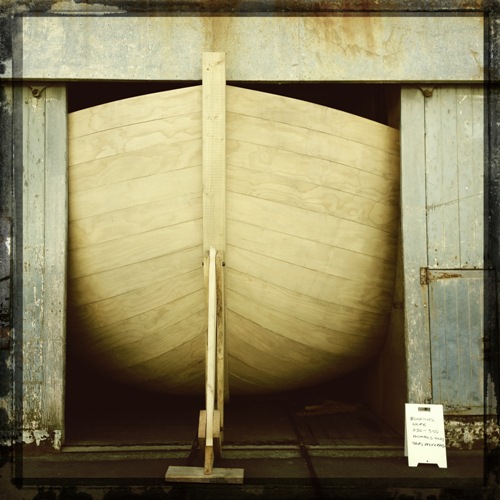
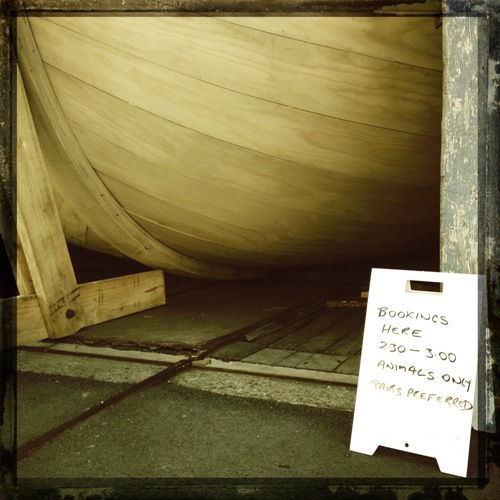
This beautifully crafted piece was Pete’s favourite. Rehearsing Catastrophe: The Ark in Sydney by Australian artist Lyndal Jones is an ark under construction, complete with building sound effects, workshop and audiovisual presentation…

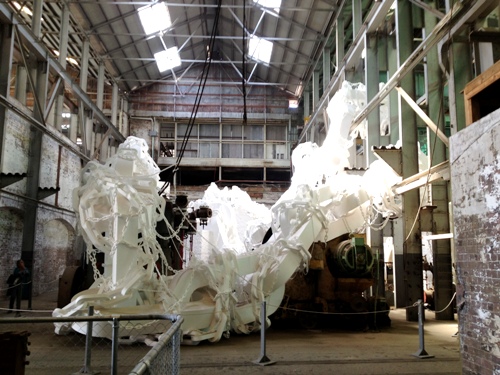
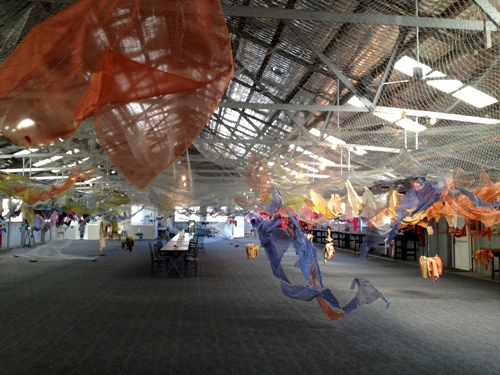
I loved this huge installation of polystyrene chains wrapped around the old machinery of the island (a former shipyard). Snow Ball Blind Time by New Zealand artist Peter Robinson

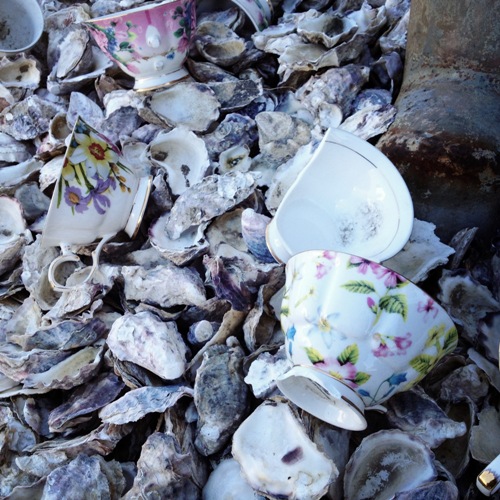
Just a tiny section of Jonathan Jones’ untitled piece incorporating a small hill of oyster shells and broken china cups, which the artist says is “his monument to discursive engagement… a comment on the mixing and crashing together of Asian, European and Aboriginal cultures”

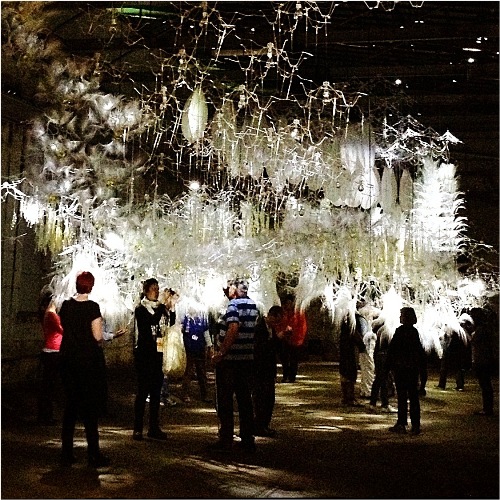
Philip Beesley’s Hylozoic Series responds to human presence. It was magical…and crowded!

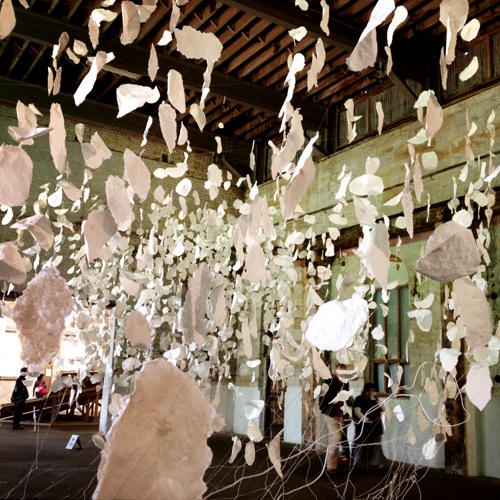
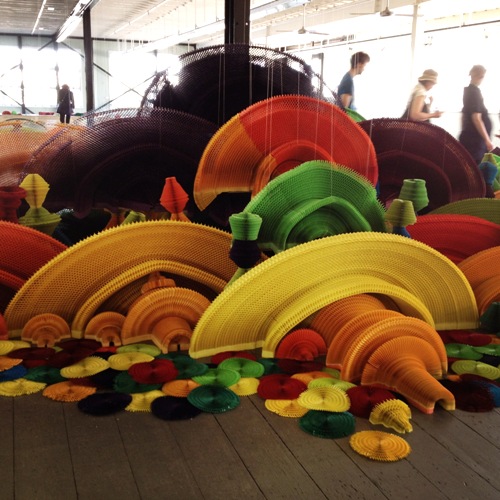
Chinese artist Li Hongbo’s Ocean of Flowers filled an entire floor with hand glued papercrafts…

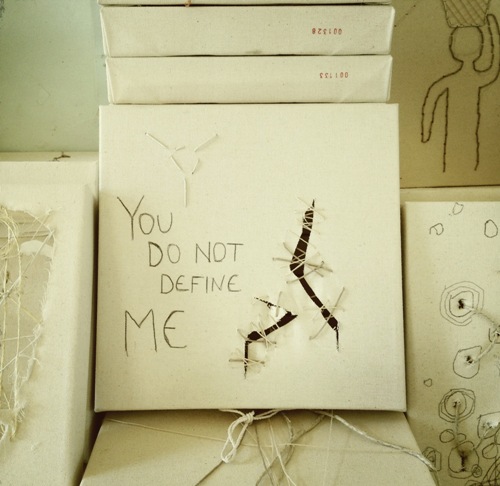
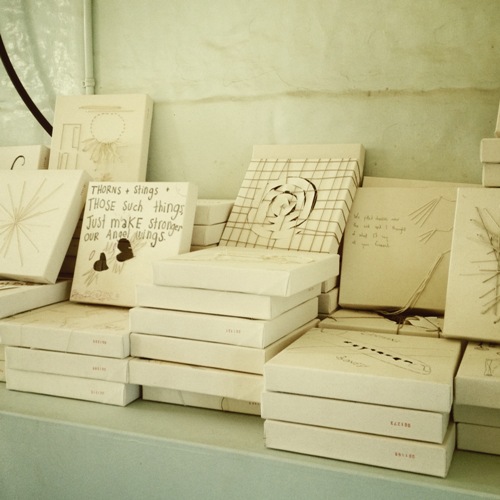
Canadian artist Nadia Myre’s The Scar Project is a moving, often sad and insightful work of art, created collaboratively. People were invited to stitch representations of their scars, and then write the stories of how they got them, and the impact they had on their lives…

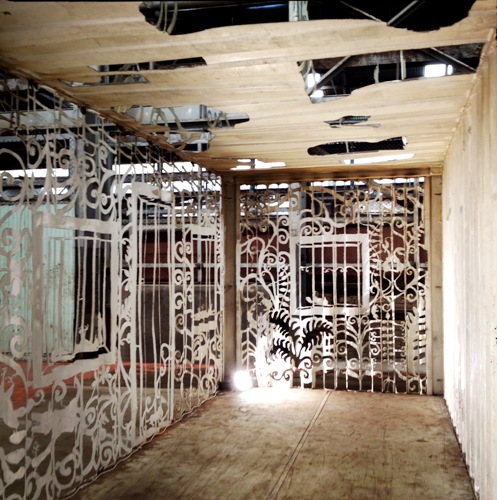
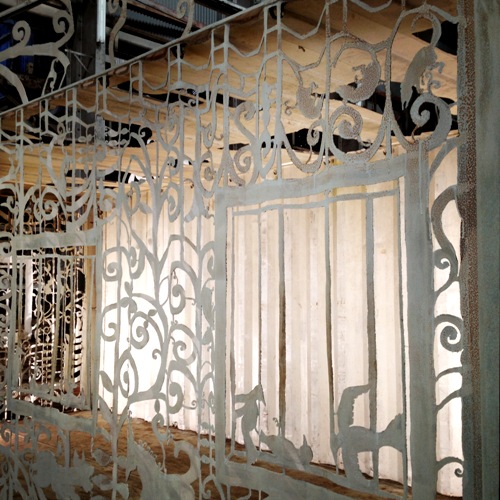
Canadian artist Cal Lane’s Domesticated Turf is absolutely wonderful – from a distance it looked like a paper cut out rather than a corrugated metal shipping container, carved into delicate and decorative lacework…

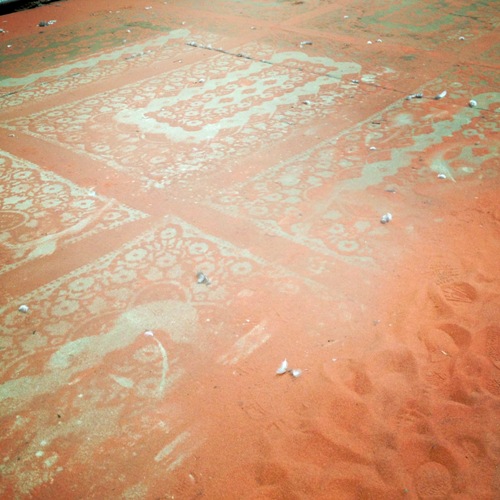
The installation includes a red sand stenciled surround…

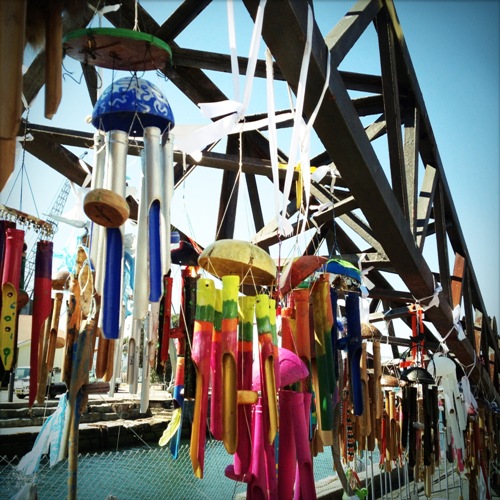
Tiffany Singh’s Knock on the Sky Listen to the Sound is an interactive piece that invited visitors to take a wooden chime home, decorate it, and bring it back. The results are brightly coloured and rang cheerfully in the open air…

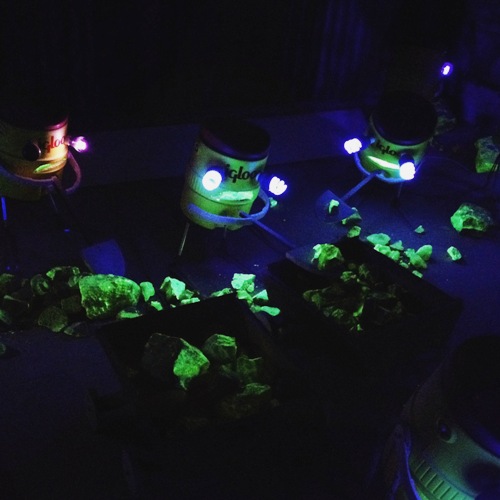
Jon Pylypchuk’s Spend the rest of your life mining this death and it will only bring you despair is situated in a cave within the Dog Leg tunnel…

Stitching Time – A Collective Fashioning by Erin Manning was created with the help of a large project team, which included three Australian universities…

Junling Yang’s Class in the Class is set up as an old fashioned classroom, with desks, chairs, pencil cases and exercise books.  Over three of the tables were projectors, telling stories…

The 18th Biennale of Sydney has been an extraordinary experience!  Please visit their website for more information. There’s still time to catch it before it ends!