Feeds:
Posts
Comments

Our friend Chris turned 40 recently and to celebrate, his Chilean inlaws threw him a party. We were honoured to be invited, and excited to be part of the festivities!

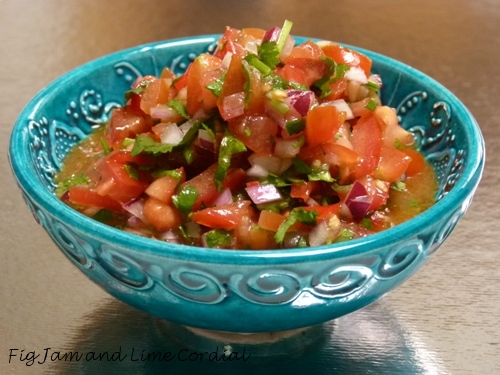
On the lunch table, accompanying the prawns, amazing pumpkin soup, huge hunks of meat and tasty salads, were pots of pevre, a Chilean salsa.  This delicious sauce was spooned generously over every dish.

Now, recipes are closely guarded secrets within the host family, so I and the handsome Polish boys, Sebastian and Maciej, sat huddled at our end of the table, deconstructing the recipe sotto voce and taking notes on my iPhone…
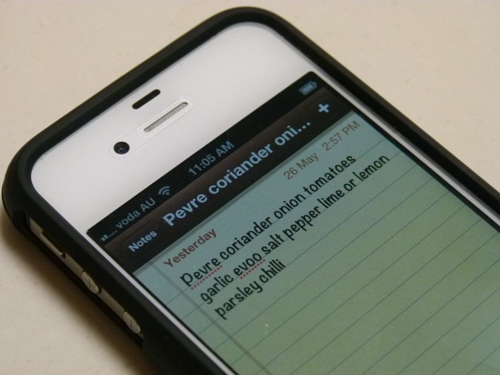
The following day, I went straight out and stocked up on the necessary ingredients.  I went overboard with the lime juice on my first attempt, but the second batch was a winner…

  • 500g tomatoes
  • ½ Spanish onion
  • ½ bunch coriander, leaves and stems
  • ½ clove garlic, minced
  • 2 small chillies, deseeded and chopped finely
  • salt
  • pepper
  • extra virgin olive oil
  • 2 teaspoons lime or lemon juice (or to taste)

1. Pick gorgeously ripe tomatoes (not an easy task in late Autumn!) and chop them up finely. I used a mix of truss tomatoes and Bella Rosas…
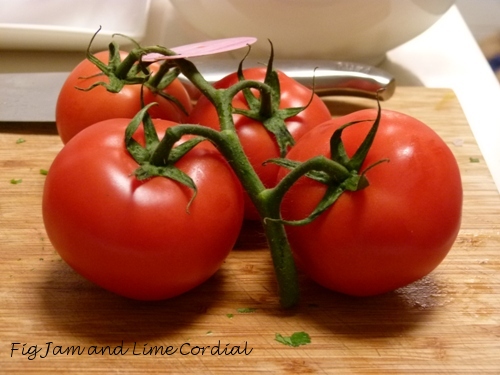
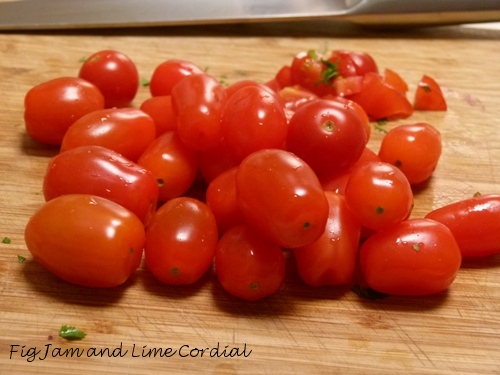
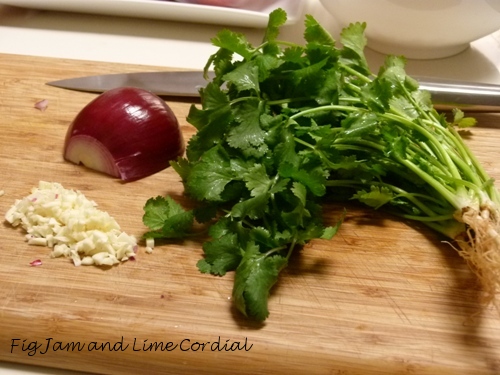
2. Finely dice the Spanish onion and taste a little of it.  If it’s too sharp, scrape it into a sieve and pour boiling water over it to mellow the flavour a little.  Drain well.  Finely chop the coriander.  Combine the onion, coriander, tomatoes and garlic together in a large bowl.  I only used a tiny bit of the garlic from the photo below…
3. Season the mixture well with salt and pepper, then add the lime or lemon juice and a generous glug of olive oil.  Taste and adjust as necessary.  Cover the bowl in clingfilm and rest it for a couple of hours in the fridge to allow the flavours to meld.  Taste again and adjust seasonings if necessary.

Our pevre is perfect on sourdough ciabatta toast…
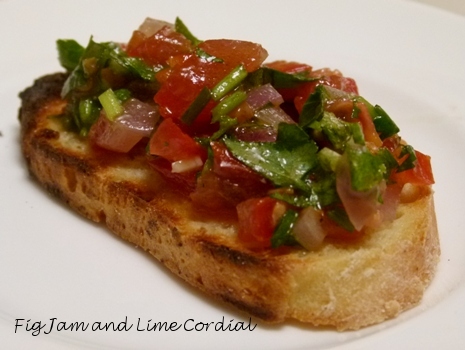
…and dolloped into roast butternut pumpkin soup…
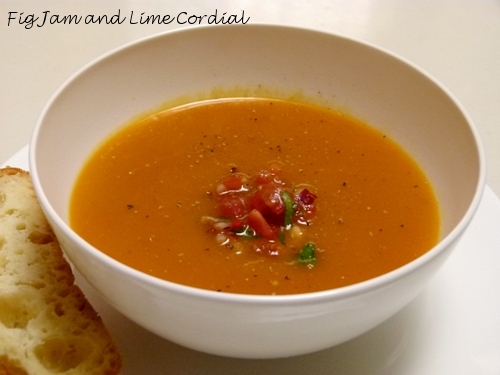
And you’ll be pleased to know that I didn’t waste the failed first attempt – I whizzed it up in the blender with stale sourdough (crusts removed, soaked briefly in cold water and then squeezed dry), a little bottled passata and a splash of sherry vinegar. Instant gazpacho soup!
Italians are tough.

When I mentioned to one recently that I’d watched Stefano Manfredi make pasta from scratch in fifteen minutes, she replied, “Fifteen minutes?  He took five minutes too long!”

This astounded me, because pasta has always been our culinary bugbear.  Pete and I have tried to make it on several occasions, and always ended up with a kitchen covered in flour and a pasta machine clogged up with dough.

It now seems that (surprise, surprise) we’ve been overthinking the whole process.  We’ve tried with continental flour, then remilled semolina flour, then added oil, boiling water and so forth, and each time we’ve ended up with a clumpy mess.

So we decided to try again using Steve Manfredi’s method. After all, it’s hard to argue that something is impossible when we’ve witnessed it with our own eyes.

I tipped 400g of plain (AP) flour into a large mixing bowl and cracked in four fresh eggs.  The amount of flour will depend on the day – factors such as humidity, the hydration of the flour and ambient kitchen conditions will all impact on the finished dough.  Manfredi suggests starting with slightly less flour and adding more as needed (I, of course, forgot that bit).

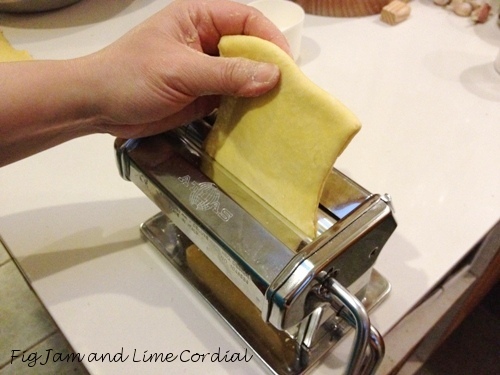
I squelched the flour and eggs together until combined, but didn’t knead it.  Then I cut the dough into quarters and started feeding it through the thickest setting on the pasta machine.  This kneads and conditions the dough – feed it through the rollers, fold it in half and feed it through again, and keep repeating until the dough is smooth and pliant. Fold the dough in whichever way is necessary to fit your pasta maker – our machine is small, so we alternated between folding it lengthwise and crosswise. Dust with flour if necessary to stop the dough sticking, and resist the urge to narrow the rollers before the dough is well kneaded.

Once the dough is flexible and smooth, start reducing the roller setting and feed the pasta through until it reaches the thickness you’re after.  Keep dusting with flour as you go.  We put ours through until it reached the number “6” notch on our machine.

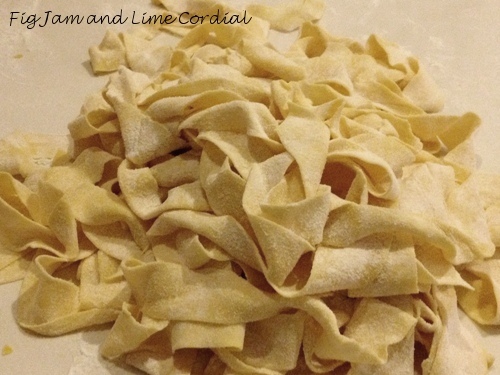
We found this easier to do with two sets of hands – Pete cranked the handle and I manoeuvred the dough as it grew longer and longer with each pass. The finished sheet was dusted with flour, rolled up loosely, and cut into thick tagliatelle.

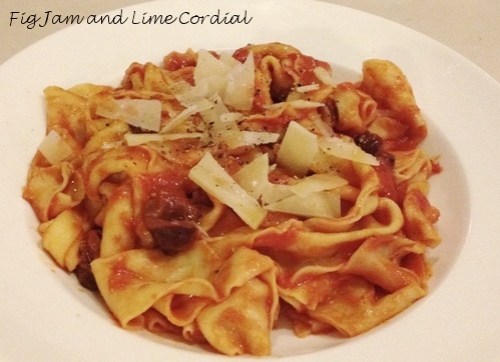
We cooked the pasta immediately – no drying or resting time required – and as it was so fresh, it only needed a minute in salted boiling water (Manfredi suggests just thirty seconds!). We served it with a simple black olive and tomato sauce, and it was sublime

The whole process was ludicrously easy and surprisingly tidy.  Plain (AP) flour was much easier to work with than the stronger semolina or continental flours.  However, we didn’t manage to put dinner on the table within the prescribed thirty minutes – I think it was closer to forty and it took the combined efforts of both of us.

Just as well we’re not Italian!

Our seven year old neighbour was tasked with preparing a school report on a backyard ecosystem, and chose to base it on ours.  I thought you might enjoy his work as much as we did!  I particularly like the worm close-up on the  bottom right…

Our garden is based on a plan from Linda Woodrow’s fabulous book, The Permaculture Home Garden.  Now that the infrastructure is well established, it’s really quite easy to maintain.  As Little D points out, the chooks and the worms do most of the work for us!

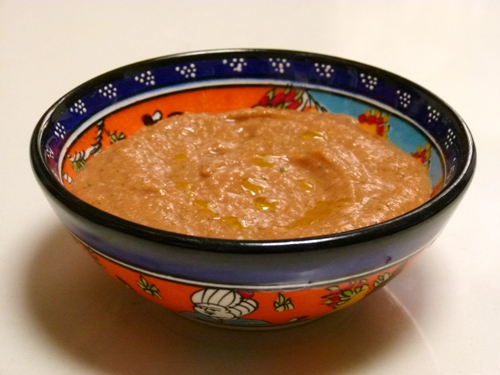
I adore taramosalata.

I’ve always made a version with potatoes instead of breadcrumbs, but my original recipe makes an enormous quantity – far more than should be eaten at the one time.  And that’s  the problem with taramosalata – it’s hard to stop eating it until it’s all gone.

Over the years I’ve fiddled with the recipe, reducing the added oil as much as I can without compromising the flavour too much.  I’ve also increased the lemon juice, as I find the acidity helps cut through the richness of the fish roe.

These days I make a small batch of taramosalata, just for me.  It’s the right amount to satisfy a craving!

  • 1 large white-fleshed potato
  • 50g tarama paste (roe)
  • 2 tablespoons (8 teaspoons) extra virgin olive oil
  • 2 teaspoons lemon juice
  • 1 teaspoon white vinegar
  • ½ small white onion, chopped
  • Boiling water

1. Peel the potato, cut it into chunks and microwave until tender (this should only take a few minutes).

2.  In the small bowl of the food processor, blitz together the onion, tarama paste, lemon juice, white vinegar and olive oil.  Pulse until relatively smooth.

3. Add the potato chunks, a few at a time, adding a little boiling water as you go, pulsing to combine. Add the rest of the potatoes and as much boiling water as needed to ensure the finished dip is smooth and quite runny – it will firm up a little in the fridge.  The amount of water needed will depend on the type of potato you use – some absorb more liquid than others.

Note: the original recipe used twice as much olive oil as water, which definitely made for a more luscious dip!  These quantities make approximately a cup and a half of taramosalata.

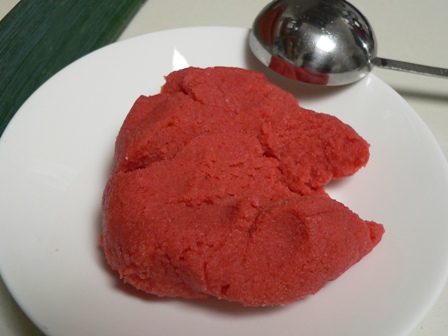
PS. For all the folks who have asked below, here’s what the tarama roe looks like. Over here, it’s usually available at Greek or Continental delis…

Sheesh.  I’ve had a hell of a week.

My credit card details were stolen, Small Man was frantic at school, then Sydney Water cut off our mains supply while the dishwasher was on, and it jammed on the draining cycle.  And that was just the small stuff.  I woke up on Sunday morning with my jaw locked tight from gritting my teeth in my sleep.

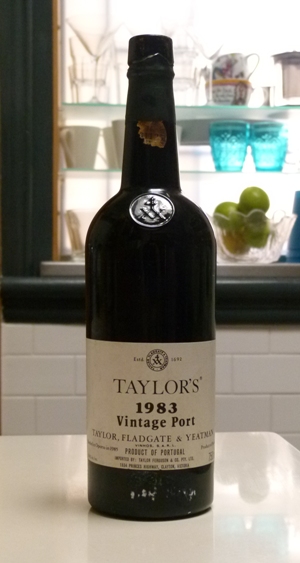
So…I opened a bottle of vintage oporto (at times of stress, default to alcohol).  I have a case or so leftover from my wine drinking days, and at 29 years young, this bottle of Taylor’s was due to be drunk. Like all fine Portuguese vintage port, it needed ten hours or so to breathe before drinking…

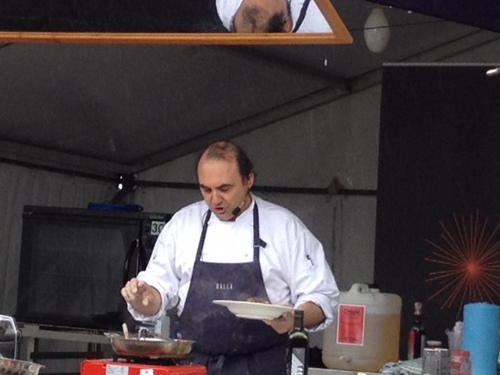
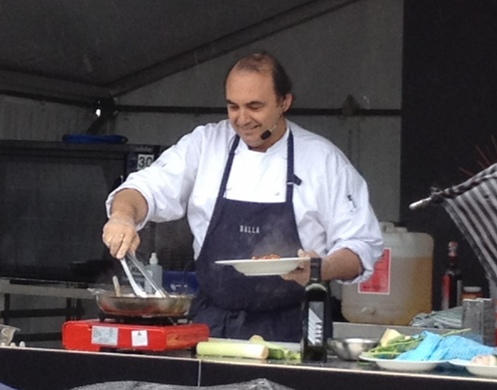
Around lunch time, I heard on the grapevine (aka Twitter) that Stefano Manfredi, one of the really good guys in Australian food, was giving a pasta making class at Pirrama Park in nearby Pyrmont.  Pete and I traipsed out in the rain and watched him turn plain flour and eggs into cooked pasta in under 15 minutes…

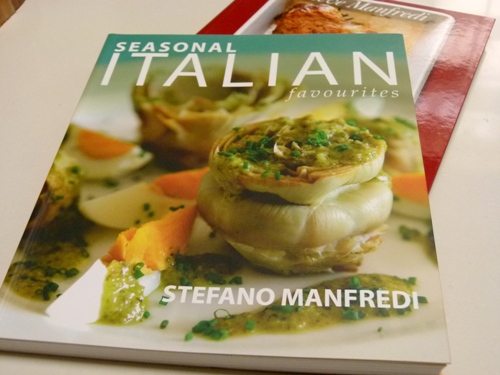
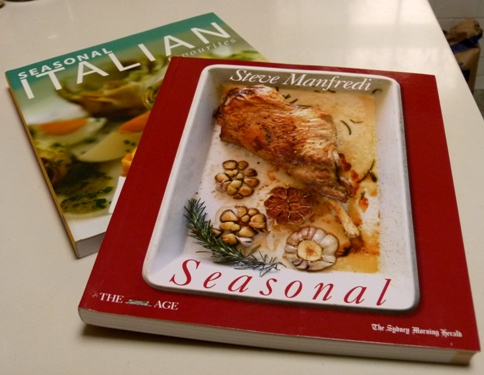
We bought a couple of Stefano’s cookbooks, and he was kind enough to sign them for us – the red one appears to be a compilation of his Sydney Morning Herald articles.  The recipes are approachable, flavour focused and, happily for those of us who live here, the ingredients are readily available…

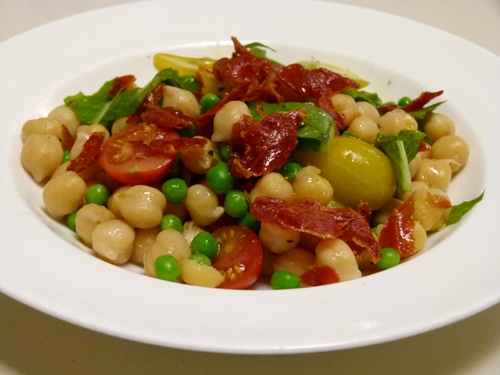
I made his simple and tasty chick pea, pea and prosciutto salad, using frozen baby peas, chick peas that I’d soaked and boiled earlier, self-sown cherry and pear tomatoes from the garden, and San Daniele prosciutto…

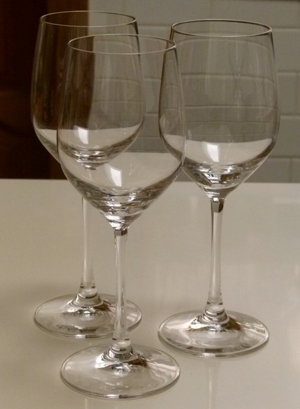
After dinner, I texted the neighbours, and they met us at their front gates with empty stemware as we wandered down the street, pouring out vintage port…

Then I came home and enjoyed my (very full) glass while video chatting with my beloved friend Joanna of Zeb Bakes

What can I say?  It ended up being a great day after all!