Feeds:
Posts
Comments

♥ A recipe for my friend C at Cake, Crumbs and Cooking

When I was growing up, my mother didn’t bake cakes.

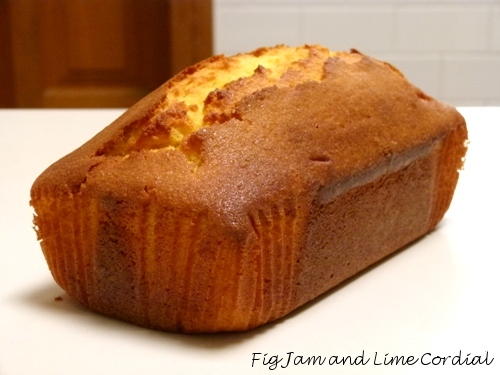
She was a fabulous cook but, being Chinese, she hadn’t grown up with baked goods as a household staple. So the cakes we ate were usually bought from the supermarket. My sister and I loved the little jam rolls, but mum’s favourite was the Madeira cake which she bought from either Woolworths or Coles. It was always rectangular, with a dense, squishy crumb.

I felt quite nostalgic when I spotted the Madeira cake recipe in Pam Corbin’s Cakes.  Unfortunately, my first attempt at the recipe was quite disappointing – heavy and brick like, although rescued somewhat by the addition of a jam filling and lots of icing.

I rejigged the recipe – increased the total batter size, reduced the quantity of lemon zest, increased the proportion of baking powder, and switched the granulated sugar to caster sugar. I was pretty happy with the amended version!

This isn’t a soft, fluffy cake. It has a distinctly old-fashioned feel to it – it’s not overly sweet and its firm, close crumb definitely needs icing or jam (or both) to finish it off. I think it would make an ideal base for petit fours or jam sandwiches, or served simply for afternoon tea with a glass of Madeira, as was originally intended…

Madeira Cake
(adapted from a recipe in Pam Corbin’s Cakes)

  • 250g plain (AP) flour
  • 1½ teaspoons baking powder
  • 185g unsalted butter, softened
  • 185g caster sugar (superfine sugar)
  • finely grated zest and juice of one lemon (about 40ml juice)
  • 5 large free range eggs
  • 200g icing sugar mixture (confectioner’s sugar)
  • additional lemon juice (for icing)

1. Preheat the oven to 175C (350F) with fan. In a medium sized bowl, whisk together the flour and sifted baking powder.

2. In a large bowl and using an electric mixer, beat together the butter, lemon zest and caster sugar, stopping frequently to scrape down the bowl.  Beat until the mixture is light and fluffy.

3. Add the eggs one at a time and beat until combined after each addition. Add a little of the flour if the mixture starts to curdle.  Using a folding action and a wooden spoon or spatula, gently stir in the remaining flour, followed by the lemon juice.  Scrape the thick batter evenly into a greased and lined loaf tin measuring 22cm x 11cm (8½” x 4½”). I used the Tala tin liners I found last month.

4. Bake for approximately 50 minutes (start checking after 40 minutes) or until the top is well risen and brown, and a cake tester inserted into the thickest part of the cake comes out cleanly.  Allow to rest for ten minutes in the tin, then remove and cool completely on a wire rack.

5. Icing: Sift the icing sugar mixture (you really do have to sift this time, or you’ll end up with lumpy icing) into a large bowl and gradually whisk in the additional lemon juice until it forms a thick paste.  Spread over the cooled cake and allow to set before serving.

Click here for a printable version of this recipe

. . . . .

This sturdy cake would be an ideal lunch box treat or after school snack…

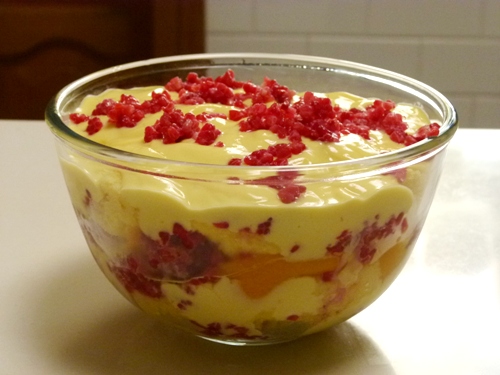
It was also a wonderful base for our raspberry and peach trifle!
When eggplants were in season at the end of last year, I picked up a ten kilo box at the markets for $8.

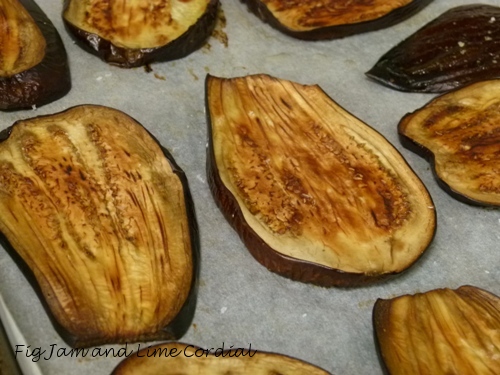
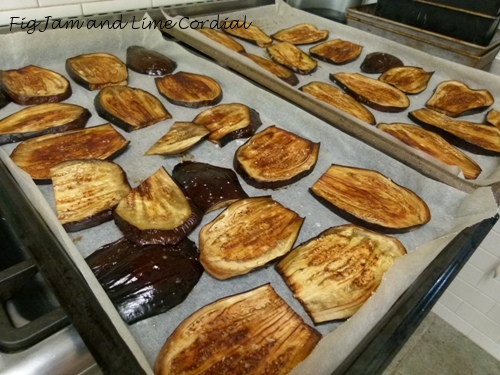
That’s a lot of eggplant!  After passing a few to my neighbour Maude, I cut the rest into long slices and brushed them (top and bottom) with a little olive oil.  These were then laid out on a parchment lined baking tray, sprinkled with a little sea salt, and baked until dark and caramelised.

We’d seen frozen char-grilled eggplant for sale, and thought it was worth experimenting to see if we could freeze our own. Slices were interleaved with a square of parchment paper and then packed into a small plastic container.

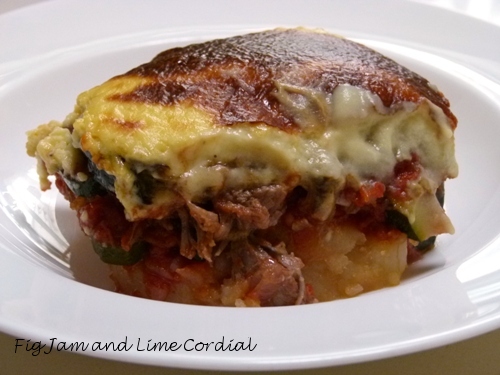
It’s now been a couple of months, and the freezing process has been a great success.  The whole container needs to be defrosted each time – the slices won’t separate without tearing otherwise.  I’ve used them to make eggplant parmigiana, pasta melanzane, as well as the beef brisket moussaka I blogged about recently…

This isn’t a proper moussaka, or even really a proper recipe, but rather a simple layering of flavours.  Here’s how we make it…

Potatoes – boil or microwave peeled whole potatoes until tender but firm, then slice into discs.  Grease a large baking dish (I use a square ceramic one) and lay the potato slices out in a single layer.

Meat Filling – this was made with our slow cooked brisket, but could just as easily be made with mince.  If using mince, we usually add it to the pan after the onions and before the wine, ensuring that the meat is browned before the wine is added.

Heat butter and olive oil in a large pan, then slowly sweat a chopped onion until translucent and very soft. Add a little red wine, stir well, and allow to reduce.  Then add garlic, chopped zucchini (optional), fresh oregano and a tin or two of pulped tomatoes.  Season the sauce with salt and pepper, then stir in the cooked meat. Allow to reduce further if necessary, then spoon the filling evenly over the potato slices.

Eggplant –  lay the defrosted roasted eggplant slices over the meat.

White Sauce – Pete’s white sauce formula is as follows:

  • 50g butter
  • 3 cups milk (UHT, at room temperature)
  • ¼ cup flour
  • ½ cup grated pecorino cheese
  • 2 egg yolks

Melt the butter in a small saucepan, then add the flour, whisking to combine.  Continue whisking for a minute or so to cook the flour slightly, then add the milk and continue whisking until it just comes to a boil.  Remove from the heat, allow to cool slightly and then quickly whisk in the egg yolks, followed by the pecorino cheese.

Ladle the sauce over the eggplants, then bake in a preheated 180C (fan) oven for about 30 minutes or until golden brown.  Allow to rest for 10 – 15 minutes before serving.

Roast duck is a favourite with both of my sons, and I can never bring myself to throw out the leftover fat, especially when it retails for $10 a jar at the supermarket.

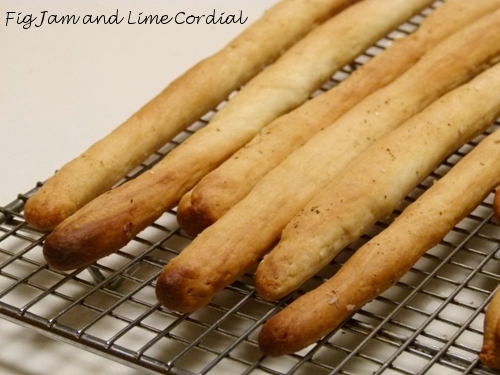
Yesterday I tried incorporating it into crispy bread sticks.  I was pretty chuffed at how well they turned out on the first attempt…

  • 500g bread flour
  • 130g duck fat
  • 200g water
  • 10g dried yeast
  • 7g salt
  • rosemary salt, or flaky sea salt, for dusting

1. In a large mixing bowl, stir together the flour, yeast and salt.  Add the water and duck fat and squelch together with a clean hand to form a fairly stiff dough.  Cover the bowl and allow to rest for half an hour.

2. Uncover the bowl, and give the dough a brief knead in the bowl to form a smooth dough.  Cover the bowl again, and allow to prove until at least double in size – the large amount of fat will slow the proving process down somewhat.

3. Preheat oven to maximum and line a couple of baking trays with parchment paper.  Turn the proved dough out onto a lightly oiled surface and fold a few times.  Cut the dough into small pieces and roll each one out into a long, thin snake.  Lay these out on the baking trays and sprinkle with a little rosemary salt (or other flavoured salt, or plain sea salt).

4. Reduce the oven temperature to 220C with fan, and bake the bread sticks for 15 – 20 minutes (depending on the thickness of your dough), rotating the trays halfway through to ensure even baking.

Big Boy and Small Man loved these, and made short work of them when they came home.  I managed to stash one away – it was the perfect dipper for my soft boiled egg this morning!

Here are five items that have made life just that little bit easier in our kitchen…

. . . . .

We found this stainless steel fat separator at Chefs’ Warehouse recently, and it works brilliantly.  After roasting a cut of meat, we pour the pan juices into the jug and allow them to settle.  The stock will sink and the fat will float, allowing the former to be poured off through the small hole at the bottom.  Best of all, it’s stainless steel, which means it can go straight into the dishwasher…

. . . . .

Another Chefs’ Warehouse find is this coarse sieve, which has made sifting clumpy ingredients such as almond meal and icing sugar a breeze.  For some reason, most sieves these days are superfine, which makes sifting a laborious and often avoided process.  My cakes and frostings are far less lumpy these days…

. . . . .

This little plate whisk was a gift from a friend – it’s perfect for whisking eggs in a flat dish for French toast, or stirring a small container of sourdough starter…

. . . . .

I resisted buying these for ages – after all, who wants to pay money for a cake tester when a toothpick will do?  But in the end, driven by guilt over the number of wooden skewers that would invariably go to waste whenever a cake was baked, I spent the $3 to buy these, and have used them ever since.  They actually work much better than a wooden skewer, as they don’t splinter or leave large holes in the cake…

. . . . .

And finally, I know I’ve waxed lyrical about these on numerous occasions before, but my welding gloves are in use almost daily as oven gloves. They really are the best thing – the length provides cover to my wrists and forearms, and they’re perfect for pulling hot pans or loaves of bread out of the oven.

The gloves afford a good grip (as opposed to silicone mitts) and they’re pretty cheap to buy at most hardware stores. They’re not waterproof and they do get hot with extended use, but they once saved me from burning down the kitchen, so I’m a complete convert. Here are my previous posts on them:

I’ve never tried to clean them, but my friend Anna in Paris used hers to manhandle a roast turkey, and then popped them into the washing machine.  She insists they were completely fine…

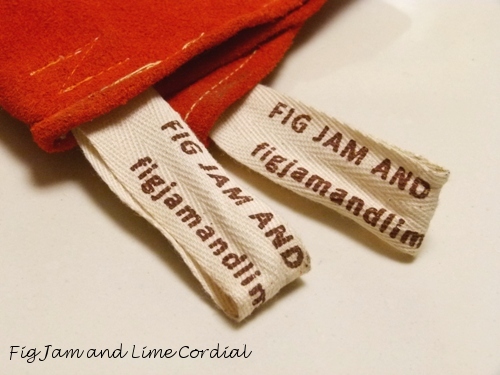
I bought several pairs in a bright orange colour and sewed bespoke (in this case, homemade) hanging loops onto them…

. . . . .

Have any little kitchen things made a difference to your cooking?

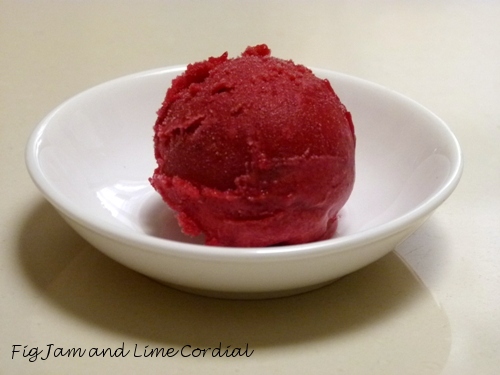
We’ve recently discovered how easy it is to make sorbet from frozen berries and jam!

Here’s the recipe for our latest batch, made with whatever we could find in the pantry and freezer.  The amount of jam needed will vary depending on the sweetness of both the preserve and the frozen berries. The ingredients can be varied to suit whatever you have on hand…

  • 250g frozen sour cherries, defrosted
  • 250g frozen raspberries, defrosted
  • ½ – 1 jar of jam (we used a full jar of Pete’s homemade blood plum jam)
  • 20ml (4 teaspoons) Grand Marnier (optional)

1. In a large food processor, or in two batches in a smaller food processor, blitz the berries and half a jar of jam together.  Taste the purée to see if it’s sweet enough, adding more jam if necessary and re-blitzing. Pete’s jams aren’t overly sweet, so extra was needed to balance out the sour cherries and raspberries. If using a commercial jam or sweeter berries, you probably wouldn’t need as much.

2. Pass the purée through a coarse sieve to remove the seeds, then stir in the Grand Marnier if desired.  Chill the mixture in the refrigerator if necessary – it should be cold before going into the ice cream maker.

3. Pour the mix into an ice cream maker and churn until set.  Allow to firm up for several hours in the freezer before serving.

We’ve also made this with fresh strawberries, strawberry jam and a little of Pete’s vanilla syrup – it really is a very flexible recipe!