Feeds:
Posts
Comments

Archive for October, 2011

Pie is one of those suggestible foods.

Once mentioned, it worms itself into my brain and won’t come out until I finally get my fill of it.

That’s what happened when Lorraine posted about The Pie Tin in Newtown a couple of weeks ago.  Pete and I went there for lunch the following day, but that wasn’t enough to satisfy my cravings.

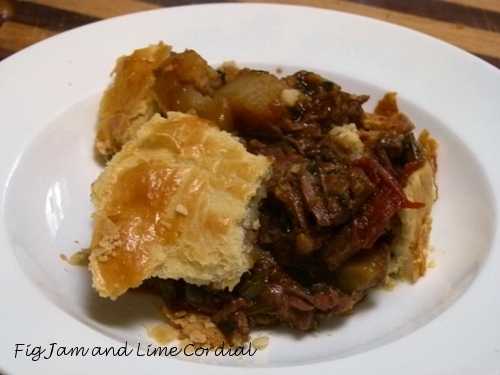
So when I uncovered a bag of ice-encrusted steak in the freezer, I decided to make mystery meat pie for dinner.   It was a big hit with the boys, and a great way to use up bits and pieces in the fridge.

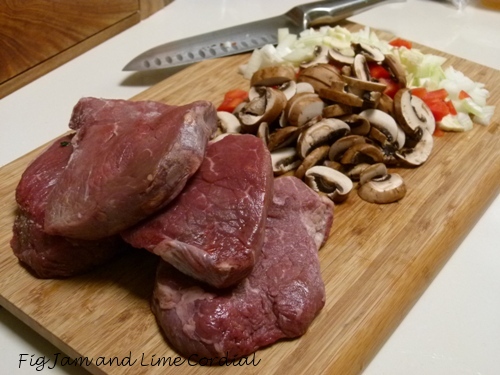
I think the slightly freezer-burnt steaks were Angus rump, but as I’m a bit sloppy with both packaging and labeling, I can’t be completely sure.  I also had an onion, some leftover capsicum strips from the dinner before, a handful of Swiss brown mushrooms, and a couple of cloves of garlic…
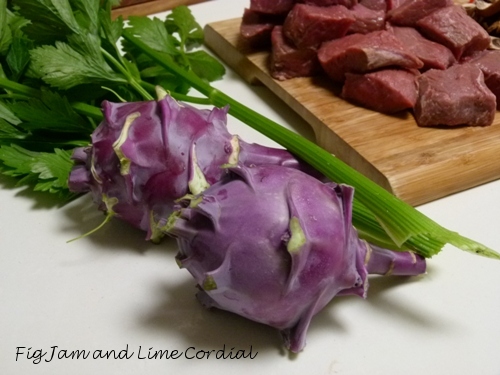
From the garden, I brought in a couple of kohlrabi and a few sticks of young celery, as well as a sprig each of rosemary and thyme.  The meat was cut into large chunks, and the vegetables peeled (as required) and chopped…
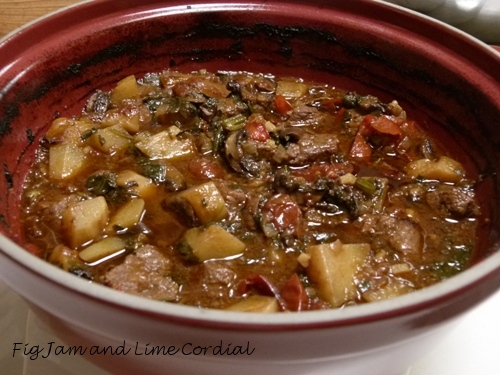
In my Emile Henry risotto pot, the meat was browned in a little oil, then set aside. The vegetables were fried briefly, and then the meat was returned to the pan, along with the rosemary and thyme leaves (stripped from their stalks), a half can of Guinness beer, some homemade beef stock, a tin of baby Roma tomatoes and a generous seasoning of salt and pepper.  The pot was covered and brought to a simmer, then baked in a preheated 175C (with fan) oven for approximately two and a half hours.

Halfway through the cooking time, I uncovered the pot to allow the sauce to reduce.  After removing from the oven, a cornflour slurry (cornflour in a little cold water) was added to thicken the sauce further.
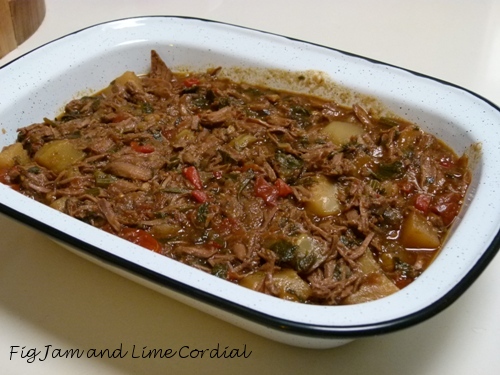
The chunks of meat were fork tender by this stage, so I removed the pieces, shredded them, and returned the meat to the sauce.  This was then ladled into a pie dish…
…and topped with pastry…

Pâte Brisée

  • 170g cold unsalted butter
  • 320g plain (all-purpose) flour
  • ½ teaspoon salt
  • 2+ tablespoons cold water

In a large mixing bowl, combine the flour and salt, then rub in the butter.  Add the water as needed to form a workable dough – the amount needed will vary depending on the ambient temperature and the moisture content of the flour and butter.
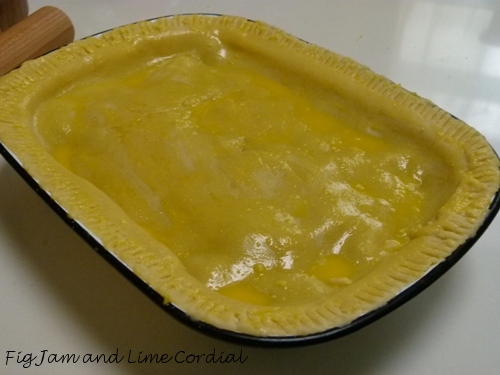
The pie was brushed with a beaten egg and baked in a preheated 200C (with fan) oven for about 20 minutes, until golden brown.
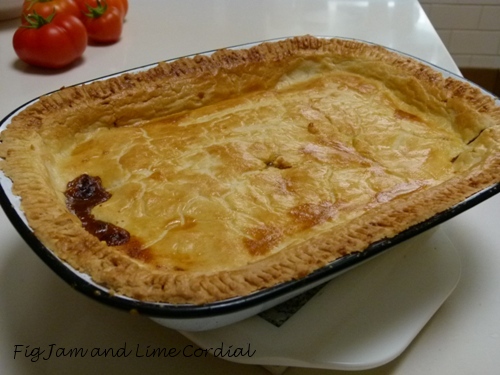
My hungry wolves loved this, particularly Pete.  And I’ve finally sated my craving – at least until the next time someone mentions pie!

Read Full Post »

As you might recall, at the end of July, we planted tomato seedlings in pots inside our enclosed verandah.

At the time we were hoping to overcome problems with verticillium wilt and fruit fly in the garden. But we were never confident that the plants would actually ripen indoors. A couple of weeks ago we had large, bright green toms that appeared to have stagnated.

Then last week, amidst the overcast, cool Spring that we’re having in Sydney this year, we had two hot days – on  Friday the outdoor temperature hit 34C.

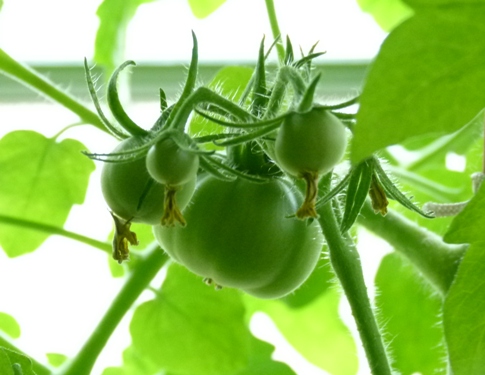
Bingo!  The tomatoes started ripening before our eyes!  I took these photos a couple of days ago – the ones above and below are from the big Apollo plant near the window, which gets the most sun…

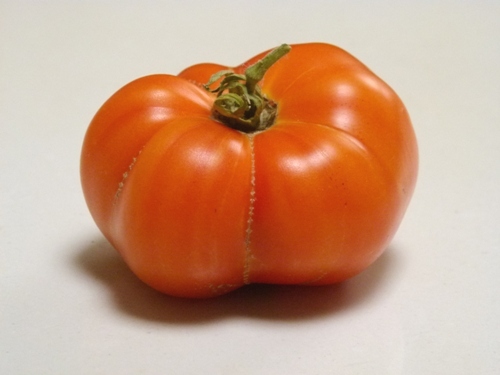
This tomato is in a container full of Grosse Lisse plants – a variety which fruits very heavily, and needs lots of support…

The Black Russian seeds that my friend Christine sent me are growing well and just starting to fruit…

A couple of weeks ago, we harvested one of the green Grosse Lisse toms and left it on a windowsill to see if it would ripen.  It did!  Hooray!

(As you can tell, we’re very excited about our tomatoes)

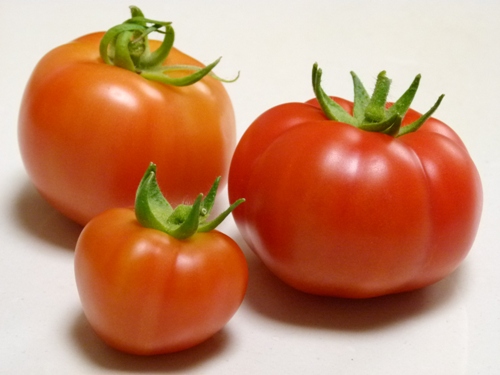
This morning, Pete harvested the ripe tomatoes – the  bright red one and the small one are from the Apollo plant in the corner, and the other one is from the Grosse Lisse plant.  We’ll let them ripen up a little more before eating…

If anyone is thinking about growing tomatoes indoors in pots, do give it a go!   You’ll need a sunny aspect, an electric toothbrush to pollinate them, and some decent potting mix. The plants won’t produce nearly as much fruit as they would outside, but it’s certainly doable. And it’s been such a joy to watch them grow from tiny seedlings to enormous productive plants in just thirteen weeks!

Addendum: I was having a discussion yesterday with Pete about why we have so many problems with fruit fly in our backyard.  He believes that it’s because we live in a suburb with lots of established fruit trees – the neighbours on the left have fig, papaya and citrus trees, and the folks on the right grow mangoes.  As we’re unwilling to use pesticides or tomato dust, it makes it very difficult to grow uninfested fruit.  Thank goodness for the enclosed verandah!

Read Full Post »

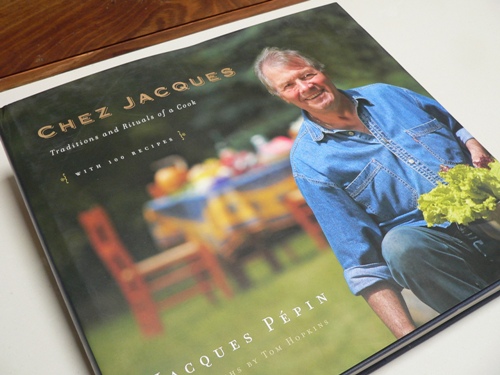
If you’ve been reading our blog for a while, you’ll know that we’re big Jacques Pépin fans.  His recipes have never let us down!

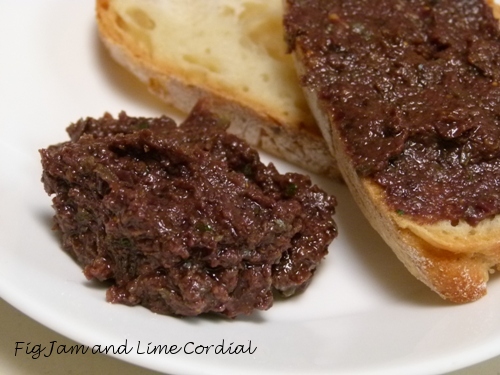
This tapenade recipe, from Chez Jacques, Traditions and Rituals of a Cook, was simple to make and absolutely delicious.  It’s an unusual twist on the straight olive version. Pépin mentions that in the south of France, tapenade is often known as the “butter of Provence”…

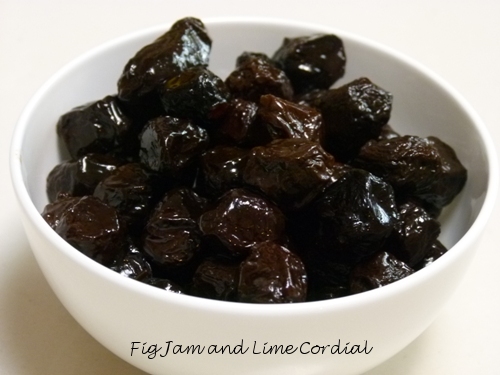
For this recipe, I used a mix of Kalamata olives and these  shriveled dried black Italian olives (which are normally pan-fried or roasted). Both were bought whole and pitted before use.

  • 300g (1½ cups) pitted olives
  • 2 tablespoons capers, drained
  • 2 cloves garlic, peeled and crushed
  • 8 anchovy fillets, in oil
  • 3 dried figs, quartered
  • 8 mint leaves
  • freshly ground black pepper
  • ¼ cup extra virgin olive oil

Note: As my figs were very dry, I began by soaking them in hot water first.

Place all the ingredient into a food processor and pulse until well combined.  Pépin prefers his tapenade fairly coarse, but I made mine a little finer.  The figs and mint add an extra dimension to the salty olives and anchovies.

Serve on slices of toasted sourdough, with a cold glass of wine.

. . . . .

Read Full Post »

Please don’t judge me.

I know I’m a weak woman.

I know I don’t need anymore Emile Henry.

Sigh…

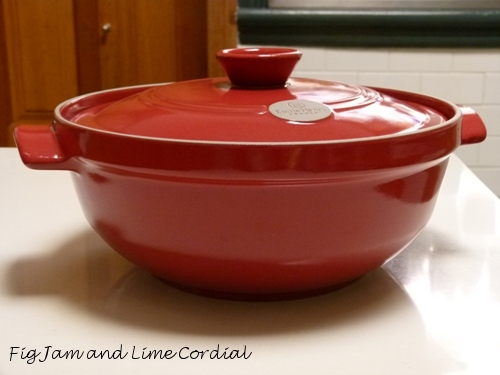
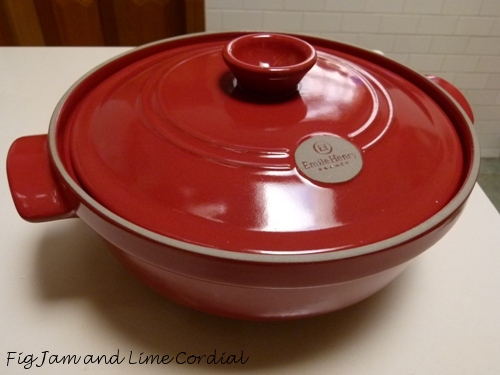
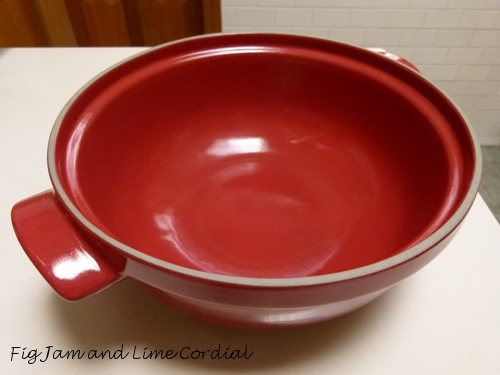
All my resolve and self-control disappeared when I saw this new risotto pot.  It’s just so gorgeously curvaceous. Its shape is reminiscent of the old Chinese clay pots that my mother used to cook in when I was a child.  Only it’s much, much bigger.

As you know, I’m a big fan of the Emile Henry Flame Top cookware, and I’ve waxed lyrical about their brilliance in an earlier post.  For some reason, we seem to be able to buy EH products in Australia for less than they cost anywhere else in the world.

Like all the Flame products, the risotto pot can be used on a gas, electric or halogen hob (not induction), or in a conventional or microwave oven.  It goes straight into the dishwasher for cleaning, and weighs 30% less than comparable cast iron.

The new shape has an unusual sunken lid, which I was a bit dubious about at first.  I’ve found it works well though, and the pot is less likely to boil over than a regular dutch oven, as there’s a little ledge to catch any overflow…

The interior is a completely smooth curve, which facilitates easier stirring…

In the few weeks that we’ve had this pot, we’ve used it for risotto, corn chowder, chermoula chicken stew, and a vegetarian sweet potato curry.

It’s proving to be a great all-purpose cooking vessel!

PS. For my fellow Aussies, the cheapest place I’ve found to buy this pot was online from Le Domaine.  No affiliation, yada yada.

Read Full Post »

Sometimes I come across a recipe which is just so simple and so perfect that I have to run straight into the kitchen to try it out.

Last week, this happened twice!

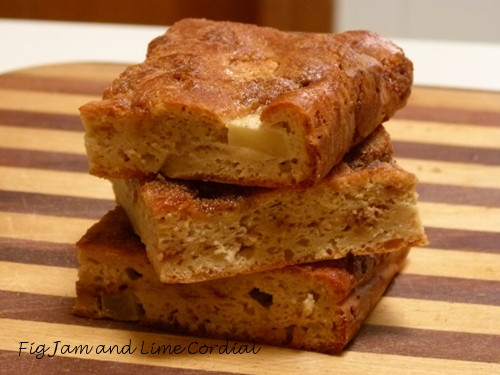
First was Emily’s delicious Wholegrain Double Apple Breakfast Cake.  This one demanded immediate action –  I was literally pulling the cake out of the oven within an hour and a half of reading the recipe.  The batter was baked in a lined roasting pan and Em’s instructions were dead simple (mix the wet stuff together, then add the dry).  Best of all, it gave me an opportunity to use up some of the apple butter that we’d made a couple of years ago.

The combination of bicarbonate of soda (baking soda) and yoghurt caused the batter to honeycomb, giving the finished cake a spongy texture somewhere between a thick pancake and an apple Danish.

Oh, how my boys loved this one!  Big Boy took a giant slab to uni for lunch, and I caught Pete nibbling on it all the next day.  The recipe and instructions are here, and I substituted apple butter for the applesauce, and plain (AP) flour for the sorghum and wholemeal. Emily suggested that any leftovers would make a great bread and butter pudding!

. . . . .

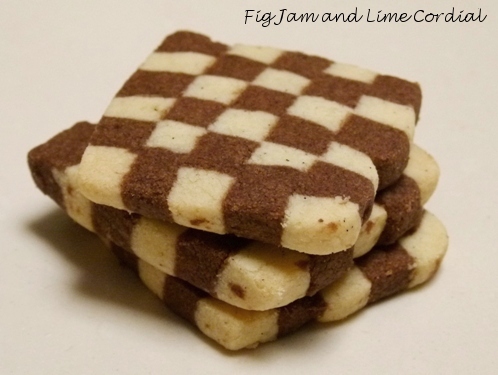
The second thing that had me charging into the kitchen was this gorgeous shortbread recipe by Dan Lepard.  I’ve been calling them Alice in Wonderland cookies, and they were great fun to make, albeit a little fiddly.

I made the two doughs in the food processor, but ended up making the stripes thinner than Dan recommended, which made them a little harder to work.  Most of them turned out quite well…

…but I did end up with a couple of “Picasso” cookies…

My darling friend Joanna has done a much neater job with them here.

Thanks to Dan and Emily for such great recipes.  I’ll definitely be making both of them again soon!

Read Full Post »

Older Posts »