Feeds:
Posts
Comments

Archive for the ‘Food & Friends’ Category


There’s not a lot that Jonathan won’t have a crack at.

Pete’s baby cousin, who has never abseiled before in his life, recently announced that he was going down the side of the 28-storey AMP building at Circular Quay. And with typical Jono panache, he did so in a lycra Spiderman costume.

He then told me in no uncertain terms that such bravery should not go unrewarded, so last week he invited himself and the lovely Laura over for dinner.  He’ll squeal in protest when he reads that and, truth be told, we’re always delighted to have the opportunity to share a meal with them (particularly Small Man, who likes to bend Uncle Jono’s ear about golf).

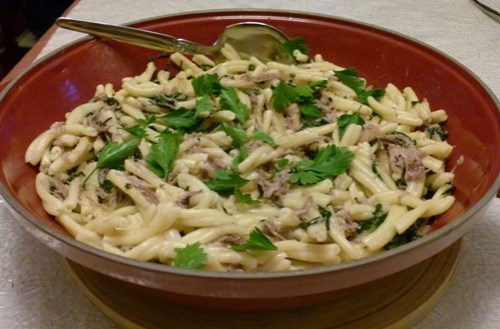
We served Mystery Meat Pie (although I knew what the meat was this time), and Pete’s dinner party speciality – duck ragu pasta.
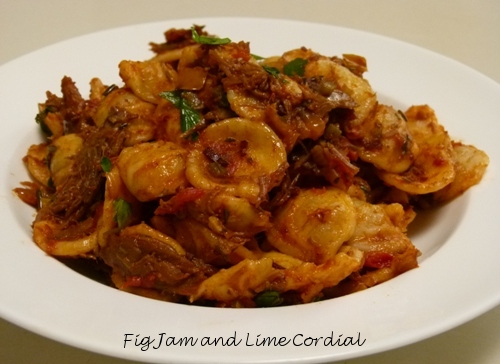
The day before, I roasted four duck marylands for a couple of hours in the oven until brown and crispy. I fed one to Big Boy who was home for lunch, and stripped the meat from the other three, discarding the bones and skin.

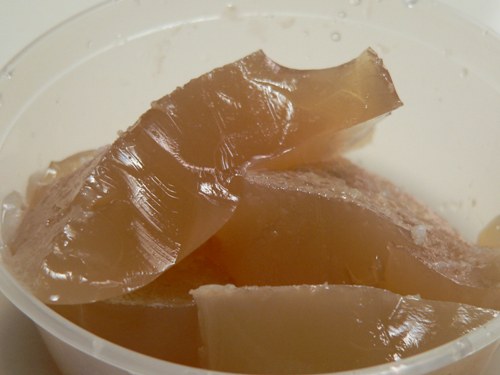
The roasting process produced a large quantity of duck fat and juice, which I poured into a bowl and popped into the fridge.  Once cold, the fat lifted cleanly off the top (and was stored in the freezer), leaving behind a small quantity of jellied stock which was used in the pasta dish.
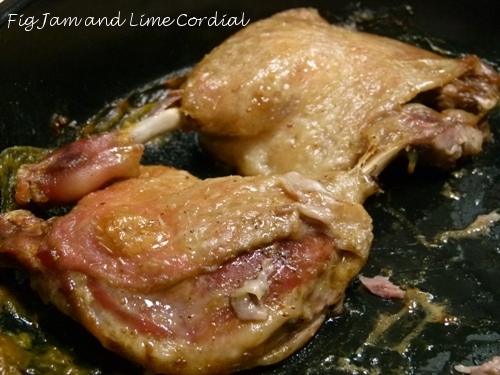
Duck Ragu Pasta
(adapted from a recipe in Jamie Oliver’s Cook With Jamie)

  • shredded duck meat from three roasted marylands (thigh and drumstick portion)
  • olive oil
  • 6 slices of pancetta, finely chopped
  • 1 onion, finely chopped
  • 1 yellow capsicum, seeded and chopped
  • ½ red capsicum, seeded and chopped
  • 2 sticks celery, finely diced
  • 6 sprigs fresh rosemary,  leaves picked and finely chopped
  • 1 stick cinnamon
  • 4 cloves garlic, peeled and finely chopped
  • 2 x 400g tins of San Marzano peeled tomatoes
  • ½ bottle fruity young red wine (we used an Ashton Hills Pinot Noir)
  • leftover duck stock from roasting
  • 500g pasta (we used orecchiette, but Jamie recommends occhi di lupo)
  • 50g salted butter
  • flat leaf parsley for garnish
  • 4 teaspoons of chardonnay vinegar
  • 2 teaspoon of sherry vinegar
  • 1 – 2 teaspoons sugar
  • salt to taste

1. In a large saute pan, heat a little olive oil and fry the pancetta until brown, then add the onion, capsicums, celery, rosemary, cinnamon and garlic.   Fry until softened, about 10 minutes, then add the tomatoes and red wine.  Lower the heat and allow to simmer for about 30 minutes.

2. Add the shredded duck and duck stock, and simmer for another half an hour, adding water if required. Put a large pot of salted water on to boil for the pasta.

3. Remove the cinnamon stick and add the vinegars, sugar and salt, all to taste.  The purpose of the vinegars and sugar is to give the dish a sweet/sour taste.  Jamie’s original recipe specifies orange juice and zest, combined with red wine vinegar.  Heat for a few minutes more to amalgamate the flavours, then add the butter and allow to melt into the sauce.

4. Boil the pasta until al dente, then drain well and add to the sauce.  Serve with a scattering of chopped parsley and grated Parmesan cheese.

. . . . .

We finished the meal with Small Man’s Treacle Pudding and a large bowl of microwave custard.  Having eaten himself into a food-induced coma, Spiderman fell asleep on the floor shortly thereafter!
Read Full Post »

A couple of recent baking experiments…

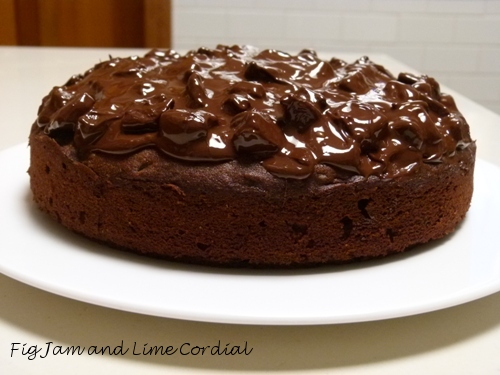
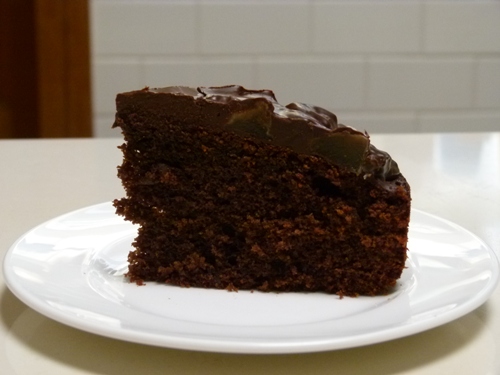
I made this chocolate ginger cake from the Green and Black Unwrapped cookbook.  The recipe is available online here, and I substituted Rochester Ginger for the ginger syrup.  Pete describes it as cake topped with a ginger chocolate bar!  One tip – the mixture might curdle before the addition of flour, but don’t panic, it all comes together in the end…

And here are some photos of tapenade scrolls I made using the olive, anchovy and fig tapenade from last week.  I used my shaping dough recipe and made two dozen rolls – half Kalamata olive and King Island cheddar for Small Man’s school lunches, and half tapenade…

If you’d like to give these a go, the dough recipe is here, and there are some basic instructions on shaping scrolls here.

Hope you’re all having a great week!

Read Full Post »

When I found myself drinking eight cups a day, sleeping only six hours a night and feeling perpetually agitated, I decided it was time to give up coffee.

And stop I did, cold turkey.  The pounding headache – the one where the back of your eyeballs hurt – took two weeks to subside.

That was nearly ten years ago, and since that time, I’ve weaned myself off caffeine completely – last year I finally cut caffeinated tea and the occasional Diet Coke out of my diet.

I still enjoy a hot drink, and have discovered that there’s a whole world of fascinating herbal teas that I never knew existed.  When I was a coffee and black tea drinker, the only herbal teas I’d ever heard of were peppermint and chamomile.  But since discovering Turkish apple tea earlier this year, I’ve been on a quest to see what other varieties are available.

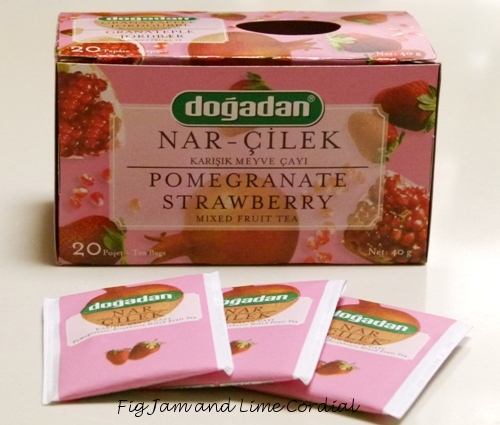
My current favourite is this magnificent pomegranate and strawberry fruit tea, which turns a deep red hue when brewed…

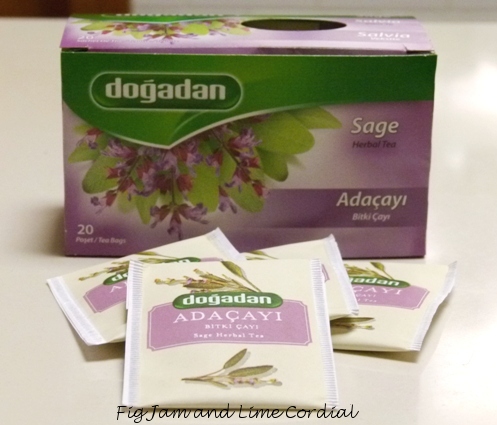
Sage tea is obviously very popular in Turkey, as during my last visit to the Turkish deli in Auburn, I found it in both bag and loose leaf form.  It’s a lovely gentle drink, and I absolutely adore the paper tea bag covers.  I can’t bring myself to throw any out, so there are boxes of them all over the house now…

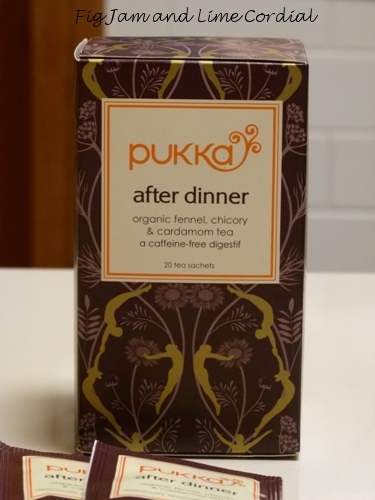
This delicious tea was a gift from friends – the combination of organic fennel, chicory and cardamom is surprisingly soothing after a heavy meal…

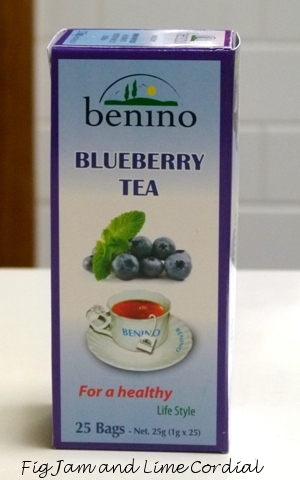
I found blueberry tea during my last visit to Harkola…

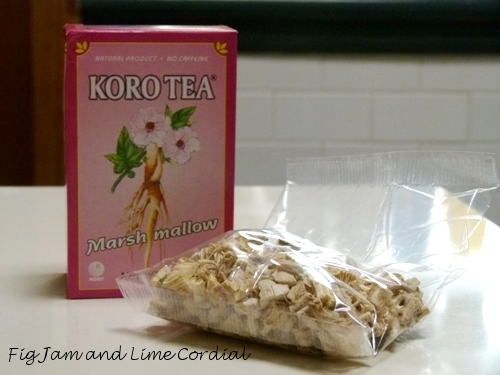
…as well as this marsh mallow tea, which is supposedly good for sore throats (can’t say I love the flavour, though) …

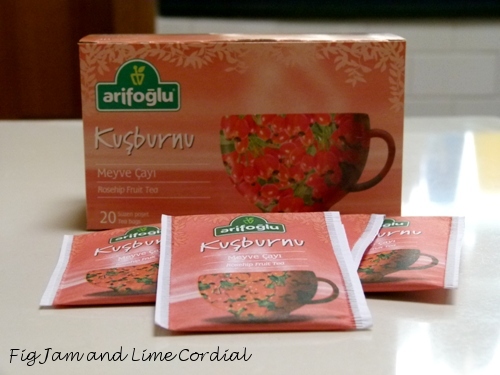
Finally, I adore this gorgeous Turkish fruit tea, a blend of rosehip and hibiscus.  It has a slightly tangy, slightly sweet flavour, and the prettiest packaging ever!

I’d love to know if there are any interesting herbal teas I should look out for – do you have any suggestions?  Thanks…

Read Full Post »

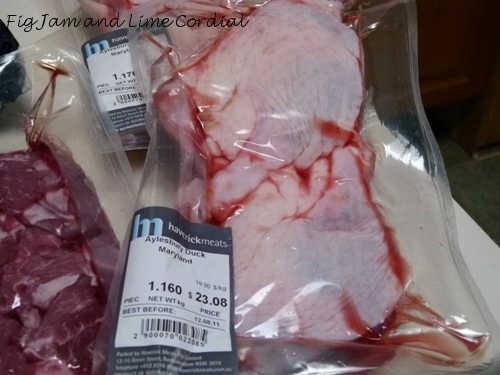
Since discovering that we could buy fresh Aylesbury marylands (drumstick and thigh portion) at Haverick Meats, duck has become a staple food in our house.  It’s surprisingly good value – the meat is so rich that just a couple of pieces are enough to feed my entire family!

Edit: Good news! I’ve just been told by the handsome Pave at Haverick’s that the duck marylands are coming from Thirlmere Poultry (whose ducks are all free-range).

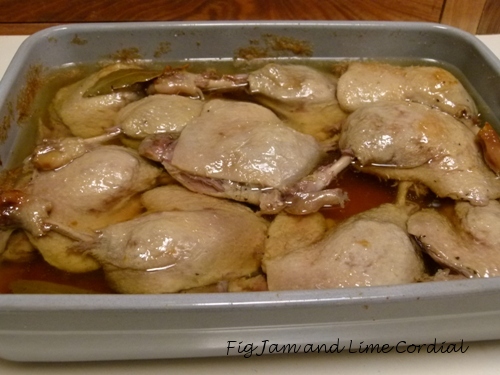
I confitted ten marylands using this recipe by Maggie Beer…

  • 10 duck marylands
  • 200g fine sea salt
  • 3 tablespoons each fresh rosemary and thyme leaves
  • 5 bay leaves
  • enough rendered duck fat to cover – about a litre (or olive oil)

1. In a small food processor or blender, blitz the salt, herbs and bay leaves together. Rub this all over the duck pieces and refrigerate for 4 – 6 hours – the original recipe suggests overnight, but I find that makes the duck too salty for our liking.  I prepped my duck at lunchtime, and then put them into the oven after dinner.

2. Rinse the duck pieces well and dry them with a paper towel.   Preheat oven to 90C (not fan forced).  Pack the duck pieces as closely together as possible in a baking dish or casserole – Maggie says you can layer them up to two deep.

3. Heat the duck fat very gently in a saucepan until just melted, and pour over the duck pieces until they’re completely covered. If you like, tuck a couple more bay leaves and sprigs of rosemary into the oil.  I used a ceramic roasting pan, but next time I’ll use my large casserole pot, as it was impossible to get the roaster out of the oven without sloshing duck fat everywhere!

4. Cover the dish – I used foil – and bake for 10 hours (overnight), after which time the meat will be extremely tender and falling off the bone.  If you wanted to serve the pieces whole, you might wish to reduce the cooking time substantially (Raymond Blanc suggests 3 hours).

5. Carefully ladle out the clear duck fat, taking care to avoid any coloured stock settled at the bottom of the pan. To store the marylands, scatter a little salt at the bottom of a large casserole dish (to stop the juices going rancid), then pack the pieces in as tightly as possible.  Completely cover with the clear duck fat and store in the fridge.  As an aside, I asked my food chemist friend Lee about storing confit duck – here is his reply.

6. Carefully pour the remaining fat and juices into a bowl and pop it into the fridge.  After a few hours, the fat will set at the top and can be scooped off and stored, and a jellied stock will be left at the bottom of the bowl. This is gold. Unlike regular stocks which are made with water, these are the concentrated juices of the cooked duck.  I store mine in small containers in the freezer (you’ll only need a little bit to flavour a whole dish) .

Duck Rillettes

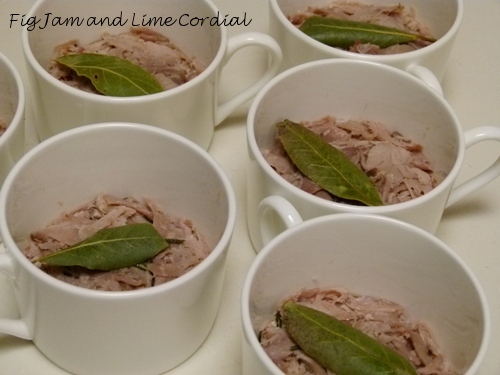
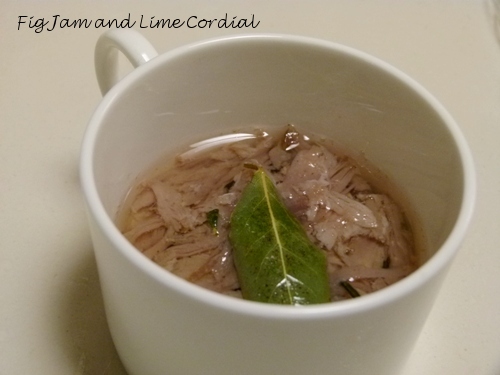
I stored six of the marylands whole and used the remaining four to make Maggie’s Duck Rilletes.  The skin and bones were discarded, and the meat finely shredded. An extra tablespoon of chopped rosemary fried in a little duck fat was stirred through the meat, which was then packed tightly into tea cups and topped with a bay leaf.

A thin layer of melted duck fat was poured over the top of each serve to seal it.  The Rillettes were stored in the fridge, and the fat scraped off before serving.  They were delicious served with a crusty sourdough and bread and butter pickles.

My friend and neighbour Maude created an amazing pasta dish using the Rillette that I gave her – she fried chopped Tuscan Kale and garlic in olive oil, then combined it with the shredded duck meat and stirred it through hot pasta.

I made a variation of this for dinner last night using chopped spinach from the garden and a couple of skinned and shredded marylands, as we’d eaten all the Rillettes. I also added a spoonful of the jellied duck stock, which intensified all the flavours.  As we already had confit duck in the fridge, we were able to turn out a delicious meal in the time it took the pasta to boil!

Read Full Post »

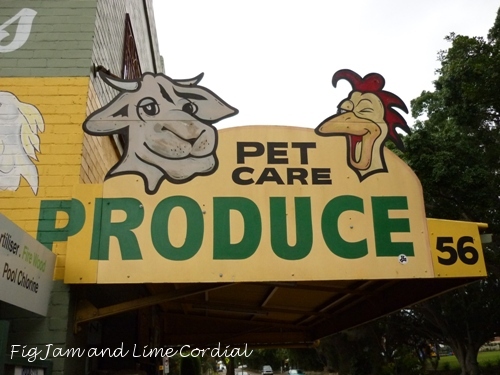
Enfield Produce

The older I get, the less my purchasing decisions are based purely on dollars.  Often the promise of a bargain will entice me to visit a particular store, but usually I’ll  only return if I like the people who run the place.

I really, really like the folks at Enfield Produce.

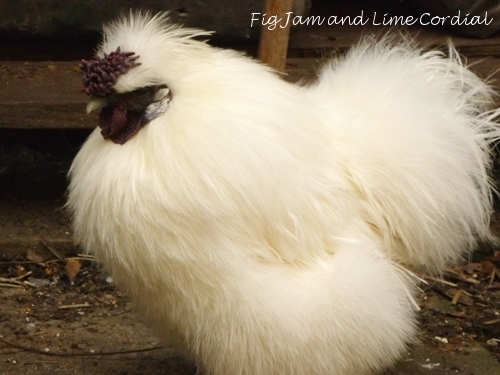
When we were there last Saturday, I couldn’t resist pulling out my camera to take a photo of this Silkie rooster who was strutting around amongst the fruit trees…

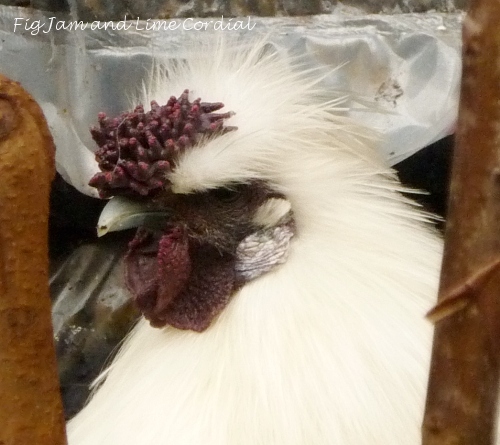
He had a most impressive comb…

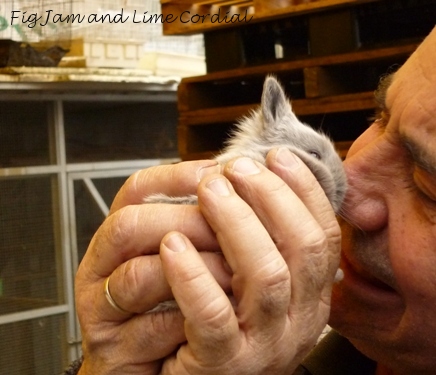
The owner walked past, saw what I was doing and suggested I take a photo of this incredibly cute three week old dwarf rabbit…

The folks here care deeply for their animals, and it shows…

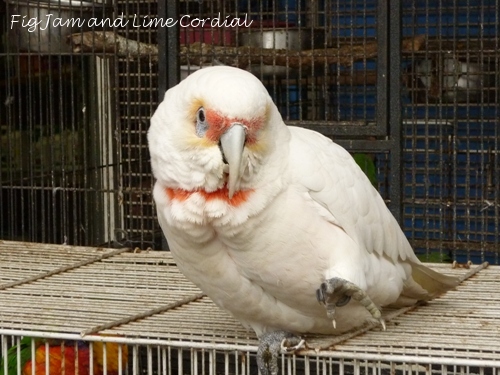
This old long-beaked corella was climbing about, trying to chat up the girls.  Apparently he’s not a fan of men, but will be completely charming with the ladies…

Enfield Produce sells manure, potting mix, worm farms, hay, mulch, fruit trees, grain mixes, layer mash, seeds, chickens, rabbits, birds, mice, snake food, seedlings, garden tools and almost anything else you can think of for the backyard.  And if you want to buy bags of compost, you’ll have to move the glossy white house cat who seems to enjoy sleeping on top of them.

We came home with a Glengarry apricot tree…

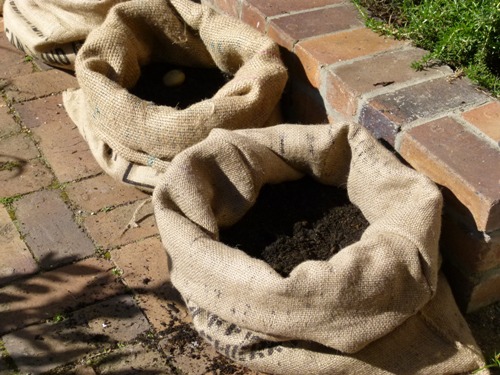
… and some potting mix and pea mulch to plant out our seed potatoes in hessian bags…

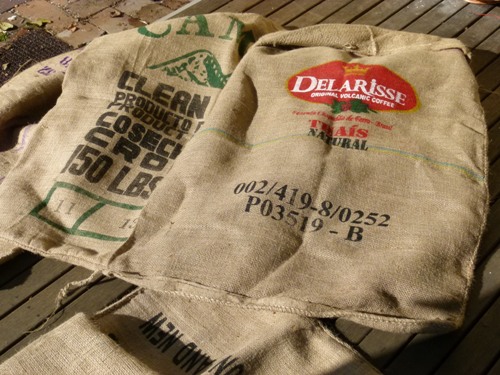
These used coffee sacks came from The Sydney Coffee Centre – they cost $3.50 each and all the money goes to the Starlight Foundation.  I thought the ones we bought were pretty cool (they came from Brazil, Sally!)…

Finally, a quick update on the chooks, all of whom were purchased from Enfield Produce nearly a year and a half ago.  They’ve just been moved to a new bed, and are thoroughly enjoying the rich pickings.   There isn’t a lot of dust in there yet, so we put in their bathtub, and everyone tried to get in at the same time!

Read Full Post »

« Newer Posts - Older Posts »