Feeds:
Posts
Comments

Archive for the ‘Frugal Living’ Category

Debra of Bagni di Lucca and Beyond asked me recently how our chickens were travelling…

All six of our lovely ladies are very well – they’ve had two bed rotations since the previous post and are really enjoying their new position, which offers more shade than the previous spots.   Since the heatwave a month or so ago, they’ve been laying an average of five eggs a day, although today they delighted us with a full complement of six before lunchtime!  I rewarded them with leftover roast pork (free range of course, nothing but the best for our hardworking girls).

As a point of interest – the large egg at the front left was laid by Queenie, and the little dark speckled one to the right of it by Francesca.  Queenie continues to dominate the others, and always has first dibs at the higher protein food that goes into the enclosure, be it meat scraps or a wandering lizard.   Frannie on the other hand is the baby of the flock, and her delicate eggs reflect both her size and darker colouring.

I took the following video while we were making pickles – some of Di’s cucumbers were very large, so I removed the seeds prior to processing.  The chooks adore them, and I adore not having to throw them out!

Read Full Post »

I don’t bake and cook things at home to save money.

It’s not that I don’t like to save money, but rather that it’s never been my primary goal.  What motivates me is a desire to feed my family well, to cut down on all the hidden unknowns in packaged foods, and to minimise waste.

But as I’ve mentioned before, the huge bonus from our push to make as much from scratch as possible is that we’ve cut our living expenses dramatically.  And sometimes it’s nice to crunch the numbers, just to see how much of a saving this lifestyle really affords us.

Last weekend I baked rolls for the boys.  Here’s the breakdown:

A bag of leg ham offcuts from Paesanella…$1.86

Kalamata olives… $3.84

Sundried tomatoes (30g)…$0.80

Picasso sheeps cheese…$4

Sourdough bread dough (2kg)…$2

Oven electricity…$0.50

. . . . . . . . . .

Total cost for 24 rolls = $13

Lunch per starving wolf-child per day = $1.08

. . . . . . . . . .

I really can’t ask for more than that!  The bread stores well in the freezer, and our sons take two low GI sourdough rolls each day – Small Man’s are stuffed with olive and sheeps’ cheese; Big Boy’s with off the bone leg ham, cheese, homemade quince paste and sundried tomatoes.

Apart from the nitrites in the ham (which I grit my teeth and accept) and the salt in the olives, there aren’t any other preservatives in the meal – no hidden chemicals or food additives with strange numbers.  The ingredients are all topnotch and I’ve reduced the salt in my standard dough, resulting in bread which is 30% less salty than commercial loaves.  I know it’s not a big deal in a roll stuffed with ham and olives, but every little bit helps.

Sometimes it’s hard to find the time to make things at home, but in this case, a Saturday morning’s work saved me a week of packing sandwiches at 7am, and $50 in bought lunches!

Read Full Post »

We don’t have a lot of surplus vegetables in the garden.

Our aim is to grow a small quantity of a large variety of produce – sufficient for our daily consumption – rather than large quantities of just a few.  As a result we’re unlikely to have a glut of cucumbers, but we’re usually able to put three or four different veg on the table each night for dinner.

Having said that, we’ve had enough to do some small scale preserving, and it’s been very rewarding!

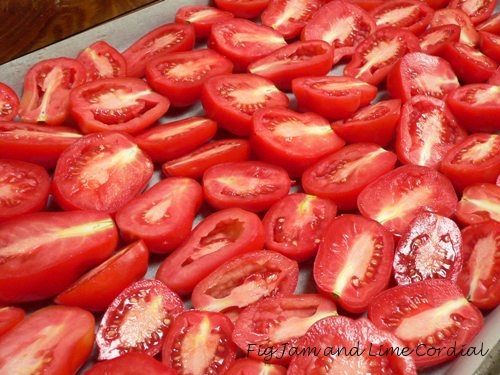
We harvested about six kilos of roma tomatoes in total – after cooking and eating, there was enough left over for a  small batch of passata and a bottle of roasted tomato ketchup

Capsicums have been a poor performer in our garden – we’ve only had a few little green ones that never turned red, but the Japanese eggplants have been fantastic!  I turned a kilo of our homegrown crop into three and a half jars of eggplant pickle

Finally, I was keen to try Pam the Jam’s piccalilli following the recipe here.  Most people make preserves when they have garden surplus, but I  did the reverse – I came across the recipe first and then went hunting in the garden to see what I could find.  In the end, I was able to cobble together a kilo of crisp vegetables, including a couple of straggly beets, some Lebanese cucumbers, celery, green tomatoes, an assortment of multi-coloured carrots and the aforementioned green capsicums…

The piccalilli (top photo) was very easy to make and is currently maturing in the pantry.  Great stuff!


Read Full Post »

We’re growing some unusual edible plants in our backyard.

Having said that, they’re unusual to us, but they’re also some of the most commonly eaten crops in the world!

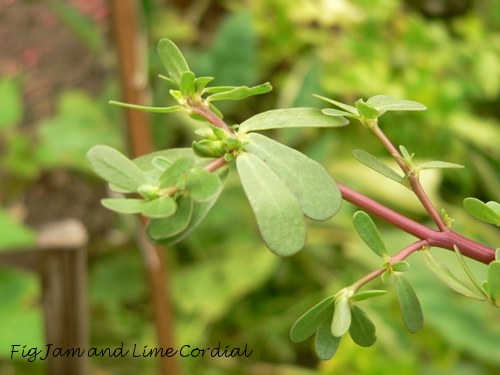
Above is a photo of common purslane, which has been growing in our yard for years as a weed.  We’re hoping to plant them in a more controlled fashion, once we’ve been able to collect some seed.  It’s widely eaten by many cultures, including the Italians, Lebanese and Chinese.  It’s an essential ingredient in Lebanese fattoush, and my mother knows it as both “mouse ear plant” and “horse tooth plant”.
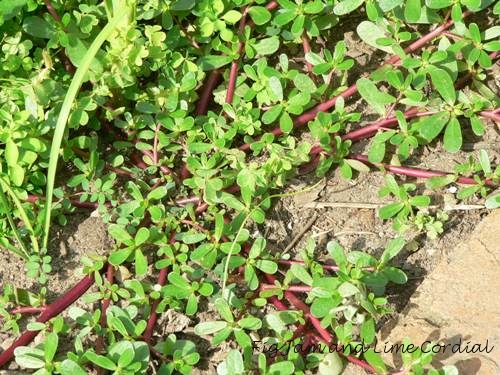
When freshly picked, this annual succulent has a mild, pleasantly sour tang and more omega-3 fatty acids than any other leafy vegetable!

. . . . .
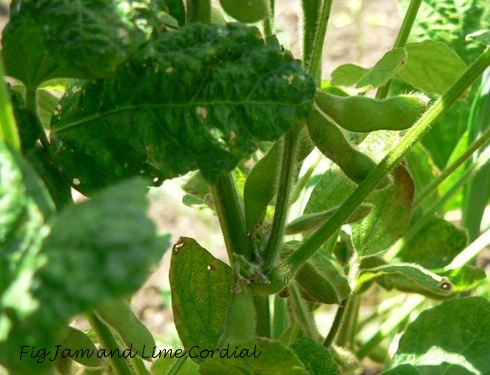
If you’ve ever ordered a bowl of endamame in a Japanese restaurant, you’ll know how addictive these little soy bean pods can be.  What you might not realise though, is that almost all endamame in Australia comes frozen from China.

So it was with great excitement that we discovered that the Diggers Club were selling endamame seeds – fellow Aussies, if you’re interested in trying to grow them, they’re sold as “Soy Bean (Beer Snack)”.  We haven’t harvested any yet  as they’ve taken quite a long time to mature – but our three plants are laden with small pods and enormous promise!

. . . . .
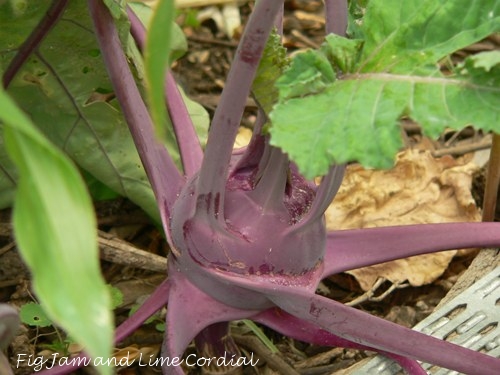
Kohlrabi are a new vegetable to me – Wikipedia tells me they’re a member of the turnip family, although I find them a good substitute for broccoli stems (which I love).  They grow very easily and the chickens adore the leaves!

. . . . .
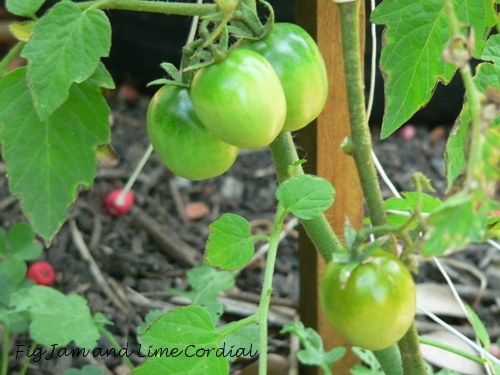
Even though we’d resolved to only grow roma and cherry tomatoes, we couldn’t resist trying just a few plants of these Principe Borghese tomatoes.  An heirloom Italian variety, they form delicate oval heart-shaped fruit.  We haven’t had any ripen enough to pick yet, but even the green ones are looking gorgeous.  They’re dry, fleshy tomatoes which are apparently well-suited to sauces and drying.

. . . . .

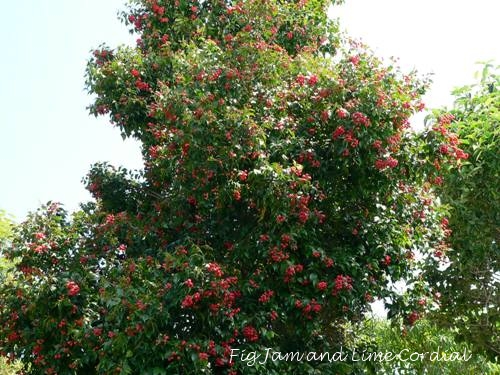
In our backyard, we have a very large lilly pilly tree.  Also known as riberries (which is enough to convince my Pete that they might have been the original fruit used in Ribena), this Australian native fruits prolifically, although we have never had as substantial a crop as this year’s.   Perhaps it’s a combination of all the rain we’ve been having, and the increased number of bees in the yard.

The fruit of the lilly pilly tree is extremely versatile for cooking.  It’s not great for eating raw, but we’ve turned it into lilly pilly jelly, which we’ve then used as a glaze on roast meats and in our onion marmalade. Maude recently made a very nice lilly pilly cordial as well.  I have a few more ideas to play with…will let you know how I go.

. . . . .
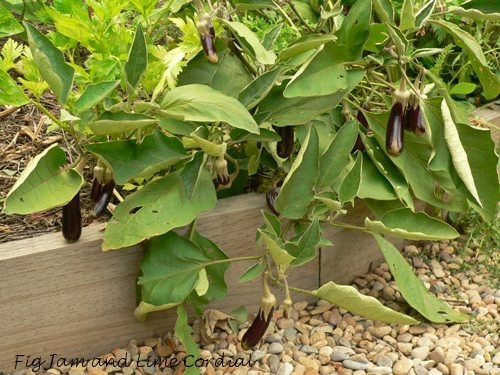
I’ve always known these long skinny eggplants as Japanese eggplants, but the seeds we bought were marked as “Lebanese”.  Either way, the four plants in our garden have produced a wonderful crop over a long period of time – we’ve already harvested several kilos off them, and as you can see, they’re still producing prolifically.

The small fruit are sweeter and tenderer than their large counterparts, and the seeds less bitter.  They’re a great addition to a curry or stirfries.

. . . . .
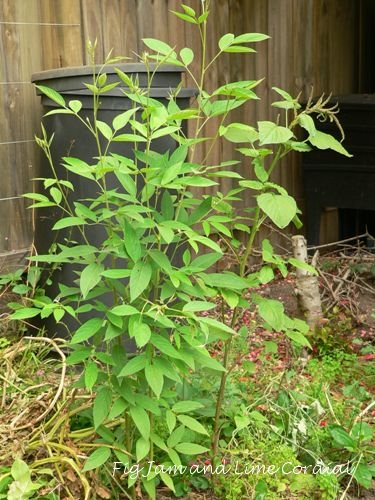
These are pigeon peas – a completely new variety to me, but apparently one of the most widely eaten plants in the world.  Known also as toor dal, they are high protein, drought resistant and widely cultivated and eaten in India, Eastern Africa and Central America.

. . . . .

A few more – we’ve tried to grow horseradish, but to no avail, as something “stole” our plant – we went out one morning to find it completely gone, from the root up!  Also, we’re hoping to grow turmeric and asparagus, once we’ve found a permanent spot for them in the yard.

Are you growing any unusual edibles in your garden?  We’d love to know  of any suggestions you might have!

Read Full Post »
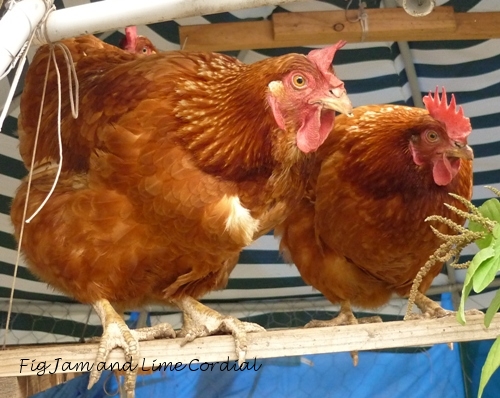
A quick post to update you on the chooks…

They’ve now been on their new bed for about a week, and in that time they’ve eaten, dug up and pretty much cleared out all the vegetation.  Linda left us a comment in the previous post, suggesting that we keep the  supply of organic material up in the coming weeks, to continue improving the soil quality for the next round of planting.  So today we weeded (something we rarely ever do) and the chickens feasted!  I took yet another video…

While I was outside, I finally snapped a photo of the red dragonfly that frequents our garden – it’s much larger than the  damselflies…

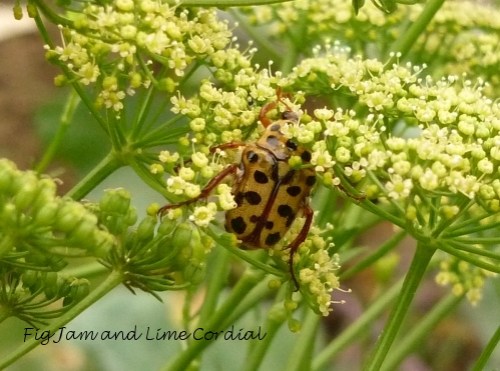
The celery is flowering prolifically, and today there was a new visitor that I’d never seen before.  Does anyone know what this flying beetle is? Edit: Mystery solved, it’s a Spotted Flower Chafer (Neorrhina punctatum). Thanks Moo!

Read Full Post »

« Newer Posts - Older Posts »