Feeds:
Posts
Comments

Archive for the ‘Recipes’ Category

Oh Amazon, thou art a wicked temptress!

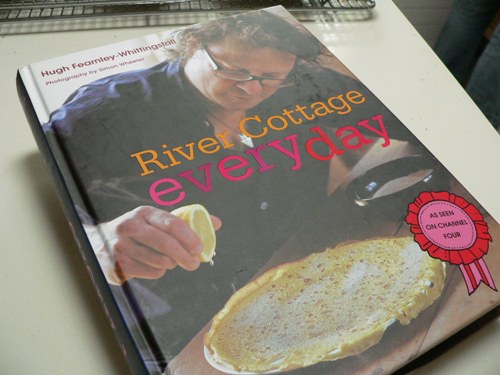
“Free shipping!” said the email and I, unable to resist a bargain, went cookbook shopping.  It wasn’t really an impulse purchase – I’d had my eye on the latest River Cottage book for quite a while.

I’m a big fan of the series, but when my dear friend Joanna raved about the book, I knew it had to be a winner.

It has a very approachable feel to it, reminiscent of some of the early Jamie Oliver cookbooks – simple, wholesome food which we really could eat every day.

The book arrived less than a week ago and I’ve already made several recipes from it – a good indication that this will be a well-used resource in our kitchen.  Here are a couple of dishes that have gone down particularly well with the tribe!

. . . . .

Tupperware Mexican Chorizo

This is a genius recipe.

The basic idea is to make a seasoned mince, which is left to mature in the fridge, and dipped into periodically to create various meals.  Definitely the sort of thing that appeals to me, although I didn’t have the nerve to store it in the fridge for two weeks as HFW suggests!  My variation is listed below, with the original ingredients in brackets:

  • 750g coarsely minced pork shoulder, preferably free-range
  • 1 tablespoon sweet paprika (1 tablespoon smoked sweet paprika)
  • 2 teaspoons smoked sweet paprika (2 teaspoons hot smoked paprika)
  • 1 teaspoon chipotle chilli powder (¼ teaspoon cayenne pepper)
  • 1½ teaspoons fennel seeds
  • 2 garlic cloves, finely minced
  • 10g /2 teaspoons fine sea salt
  • 50ml red wine
  • freshly ground black pepper

Put all the ingredients in a large mixing bowl and squelch everything together with your hands until evenly combined.  Hugh suggests frying a little of the mix in oil to taste for seasoning – we did this by microwaving a tiny patty for just a few seconds until it was cooked.

The mix starts off quite salty to begin with, but as it matures, the flavours mellow out and integrate.  Remember though that the salt is necessary to preserve the meat, and Hugh suggests covering the mixture and storing it in the fridge for at least 24 hours to begin with, and for up to two weeks in total.

Edit: I asked Lee, who is a food chemist, whether or not he would be happy with keeping the raw chorizo mince for two weeks, and this was his reply:

No, I wouldn’t be happy with it. The only protection is temperature. The salt will not be enough, the spices may have some protective effect but I wouldn’t rely on them. The meat is diced/chopped so plenty of opportunity to get ‘seeded’ with bacteria. The saving grace is that all recipes cook the meat well.

Please use your discretion – I know that on Lee’s advice, I now won’t be keeping the mixture for more than a few days, and I might start making half batches from now on.
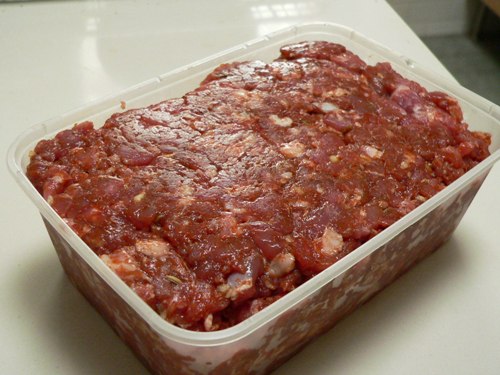
Over the course of the next four days, we turned this 750g mixture into…

…mini meatballs, and served them in our roasted tomato passata, tapas-style…

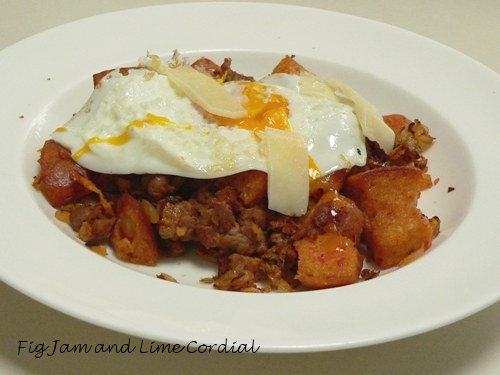
…five plates of Migas, each topped with a freshly laid egg and Picasso sheeps’ cheese…
…and the ultimate meatlover’s pizza!

There was something fabulous about having a container of raw savoury mince in the fridge, waiting to be turned into an instant meal. This is a recipe we’ll be making regularly!

. . . . .

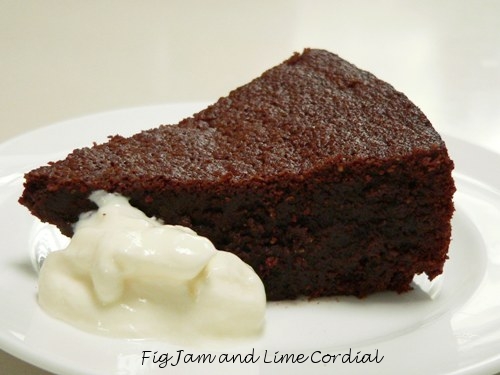
Easy Rich Chocolate Cake

This was the recipe that convinced me to buy the book, after Joanna posted about it on her blog!

  • 250g (8.8oz) dark chocolate (70% cocoa – I used Callebaut callets)
  • 250g (1 cup) unsalted butter, cut into pieces
  • 4 medium free-range eggs, separated
  • 150g (5.3oz) caster (superfine) sugar and 50g (1.75oz) light brown sugar (or use 200g/7oz ordinary caster sugar)
  • 50g (1.75oz) plain (AP) flour
  • 50g (1.75oz) ground almonds

1. Grease a 20cm/8″ springform cake tin and line the base with parchment paper.  Preheat oven to 170C/340F or 160C/320F with fan.

2. In a large pyrex bowl, melt together the chocolate and butter in the microwave using short bursts, being careful not to scorch the chocolate.  Stir until smooth and combined.

3. In a large mixing bowl, whisk together the egg yolks and sugar to form a paste, then stir in the melted chocolate and butter.  Carefully fold in the flour and almonds.

4. In a separate bowl, whisk the egg whites until stiff.  Stir a large spoonful into the chocolate mixture to lighten it, then carefully fold the remaining egg white in with a large spatula or metal spoon, trying to keep as much of the air in the mixture as possible.

5. Pour the batter into the prepared tin and bake for 35 minutes, until  just set.  The original recipe specified a 23cm/9″ tin and 30 minutes baking time, but I found my smaller tin (and therefore taller cake) needed a few more minutes to set.   The cake will still be a little wibbly in the middle – resist the urge to bake it until solid.  Allow to cool in the tin for about 15 minutes on a wire rack before opening the springform.
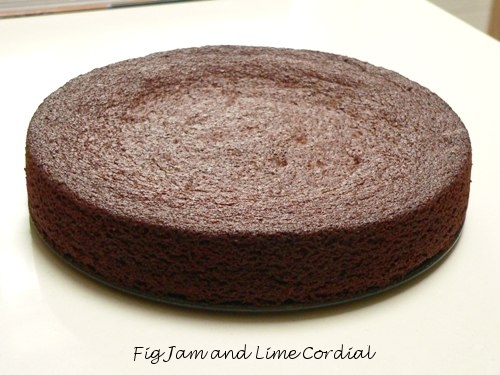
I’ve made this recipe twice in the last week, and both times it’s been demolished within 24 hours by family and visiting friends.

River Cottage Everyday – definitely a cookbook that suits how we  like to eat, every day!
Read Full Post »

This is one of those recipes.

When I was kneading the dough, the texture was so silky and bouncy that I just knew it was going to be most fine.  I was so confident about this that I made another batch while the first was rising!

The recipe comes from Dan Lepard’s The Handmade Loaf –  I amended it slightly to use yoghurt and water instead of the specified whey, and the resultant loaves were tangy and delicious as a result.

The dough is made with an interesting mix of flours – Italian 00, maize flour and bakers (bread) flour. The crumb is quite tight and chewy – a young friend pointed out that this would be the perfect bread to have with a cheese fondue, and I think she might be right!

Read Full Post »

Small Man’s latest passion is Gin Rummy.

I’ve had great fun playing with him – we try to sneak in a game whenever we can find a spare moment.  It reminds me of university, when we used to play a hand of cards in the five minutes between lectures.

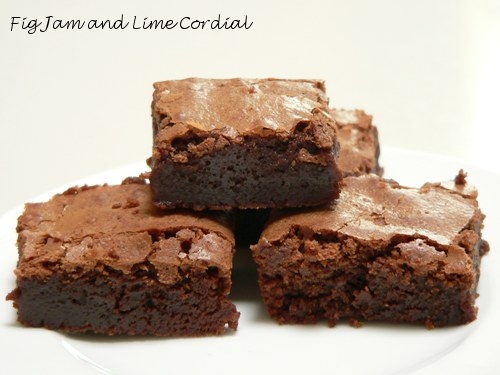
Today, he was keen to play before school, but I needed to bake a large batch of brownies and time was short.  As I often do when I’m in a rush, I made Nick Malgieri’s supernatural brownies.  These use two mixing bowls, a whisk and a spatula – there’s no need to drag out the Kenwood or KitchenAid.

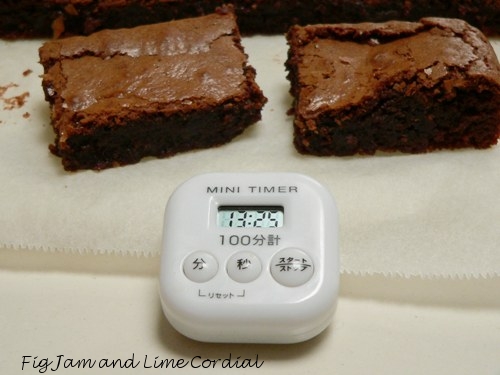
Out of curiosity, I set the timer to see how long the whole process would take.  There was no cheating – I included the time it took to get the ingredients out of the fridge and pantry, line the baking tray and preheat the oven.  Of course, I had everything on hand – I didn’t have to run down to the shops for butter, or harass the chickens (when I make chocolate mousse and want super-fresh eggs, I’ve been known to stand by their coop and implore them to lay).

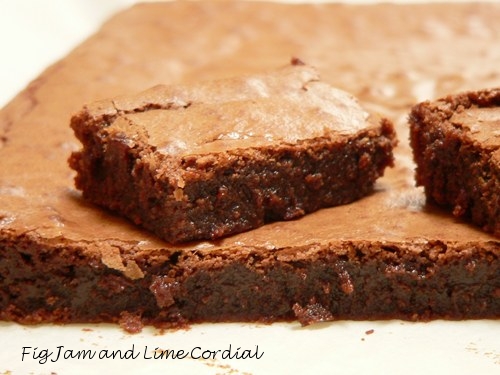
All up, from start to putting the baking pan in the oven, the process took a leisurely 13 minutes and 25 seconds, excluding washing up.  It then needed another 35 minutes of baking time (but only got 30) and time to cool on the bench before slicing.  Mine were a little undercooked today, as I had to pull them out early as we were leaving for school.  They’re slightly less set than I would have liked, although they did firm up as they cooled (top photo). Pete’s just told me he prefers them this way!

I’m sure I have faster brownie recipes – some of the saucepan brownies are particularly speedy – but this recipe makes a large quantity, which was specifically what I was after today.  Best of all, everyone loves them, and Small Man and I managed two hands of gin rummy before school!

Click here for the recipe for Supernatural Brownies

Read Full Post »

Waste not, want not…

I had quite a bit of  pickling liquid left over from our last batch of cucumber pickles, and  I was loathe to just throw it out (after all, it was good white wine vinegar and brown sugar).

Thankfully, Dan Lepard dislikes wasting things as much as I do.  In The Handmade Loaf, he offers a selection of recipes for reusing leftovers in various loaves.  Dan has breads which use the whey from cheese making, excess cooked rice, the glass of wine left in the bottle, and best of all on this occasion, leftover pickling liquid.

Dan’s original recipe isn’t really for a sweet pickling solution like the one we used, but I decided to try the loaf anyway.  Here’s the formula I used:

  • 200g dark organic rye flour
  • 300g white bakers/bread flour
  • 350g pickling liquid (strained)
  • ¾ teaspoon fine sea salt
  • 10g dried yeast

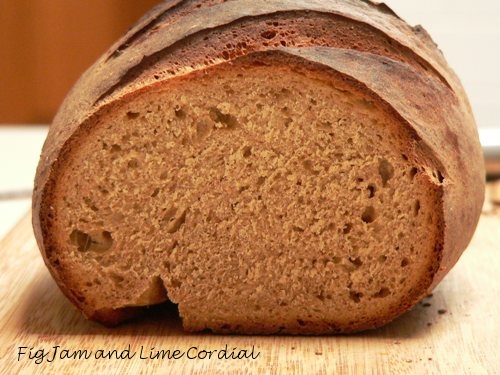
The resultant bread is a sweet, tangy, very dense rye loaf, reminiscent in flavour of the pumpernickel rounds my mum used to serve hors d’œuvres on when I was a child.   It was delicious with butter and, not surprisingly, our cucumber pickles.  Pete also thought it would be excellent with cream cheese.

I had it toasted for breakfast with Linda’s recipe for button squash egg-in-the-nest. The pickle bread made very tasty but unusual dipping soldiers!

Read Full Post »

I’m a bit of a pickle fiend, so when Diana gave me surplus cucumbers and zucchinis from her garden, it seemed like the perfect opportunity to try my hand at making some at home.

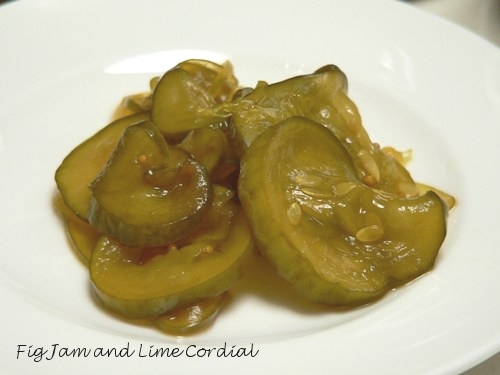
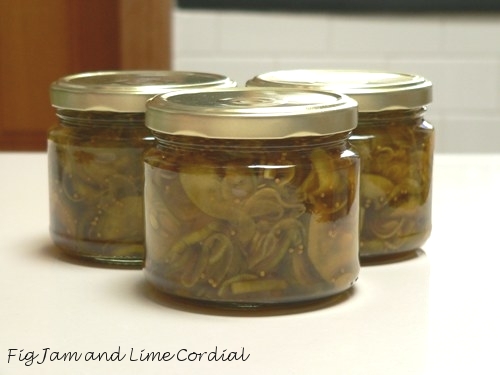
Linda emailed me her fabulous bread and butter cucumber pickle recipe (which in turn came from a lady named Margaret) and so far I’ve made eight jars.  Linda tells me they’ll keep for ages on the shelf, although I doubt they’ll last a month in our house!

In a large mixing bowl, combine:
  • 6 cups thinly sliced cucumber
  • 500 grams (1.1 lbs) of peeled and thinly sliced onion
  • 1 shredded green capsicum
  • ¼ cup of fine sea salt

Allow to stand for three hours, then rinse well with several changes of cold water.  Note: I used a mandoline to slice the onion and capsicum, but thinly cut the cucumber by hand.

In a large stainless steel pot, combine:

  • 2 cups (420g) brown sugar
  • 2 cups (500g) of mild vinegar (I used white wine vinegar)
  • 2 dessertspoons (15g) of mustard seed
  • 1/2 teaspoon turmeric powder, or a teaspoon of grated fresh
  • a pinch of ground cloves
Heat gently until the sugar is dissolved, and then bring the mixture to the boil for five minutes.  Reduce the heat and add the well-rinsed cucumber, onion and capsicum.  Heat gently to just below boiling point, stirring gently from time to time.  Be careful not to allow the pickle to boil.

Sterilise four 300ml jars and carefully fill with the pickle, ensuring the cucumbers are completely covered in pickling solution.  Seal while hot.

. . . . .

This giant golden zucchini…

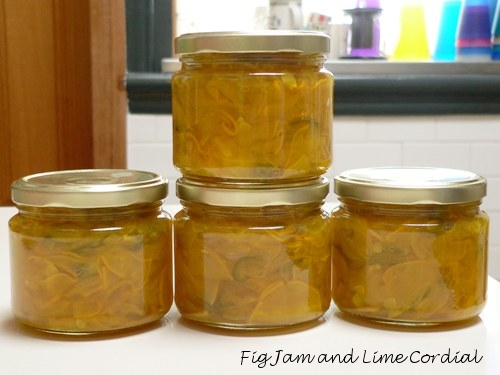
…produced five jars of delicious pickle. Only four are shown below, as I’d already given one to Maude before the photo was taken.

I followed Sally Wise’s recipe (the link is here), using white wine vinegar and all of the giant zucchini above. The sweet mustard pickle is a little reminiscent of corn relish in flavour, and matched perfectly with  fresh ricotta, cheddar cheese and prosciutto for lunch today!

Read Full Post »

« Newer Posts - Older Posts »