Feeds:
Posts
Comments

Archive for the ‘Recipes’ Category

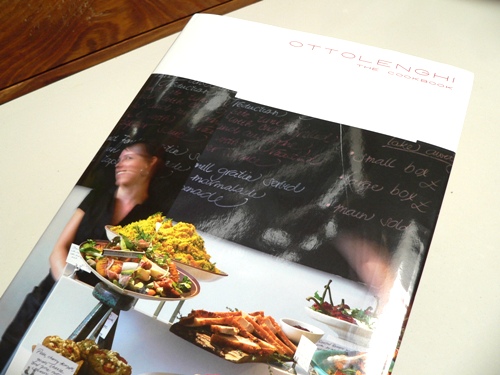
Auntie Lisa, as my boys know her, bought me the Ottolenghi cookbook for my birthday.  Based on the food served at the iconic London restaurant, it has a wide selection of recipes, with some particularly appealing vegetarian offerings.

Yotam Ottolenghi writes a column for the Guardian newspaper, focusing specifically on vegetarian cuisine, with interesting, different recipes – a nice change for folks who are so often relegated to eating side dishes.
As Small Boy is still sick, I made these olive oil crackers, in the hope that the salt and crunch might rejuvenate his appetite.  Very easy, and very delicious and he did eat several of them quite happily (thank you, Auntie Lisa!).

  • 250g plain (all purpose) flour, plus extra for dusting
  • 1 tsp baking powder
  • 115ml water
  • 25ml extra virgin olive oil, plus extra for brushing
  • ½ teaspoon fine sea salt
  • 1 teaspoon paprika (I used smoked)
  • ¼ teaspoon black pepper
  • Maldon flaky salt for sprinkling

Note: the original recipe had ¼ teaspoon of cayenne pepper as well, but I left that out as I needed this batch to be child-friendly.

1. In a large bowl, mix together all the ingredients except the Maldon salt.  Squelch the mix between your fingers to get it all combined.  Then turn the dough out onto a clean workbench and knead it briefly until smooth.  Wrap in cling film and leave it to rest for an hour in the fridge.

2. Preheat the oven to 220°C (or 210°C with fan).  On a well floured surface, use a rolling pin to roll walnut-sized pieces of dough into what the book describes as “long, oval tongues, almost paper thin”.  It’s a very appropriate description!  Use lots of flour to ensure the dough doesn’t stick to the bench.

3. Place the crackers on a tray lined with parchment, brush the tops generously with olive oil, then sprinkle on the Maldon salt flakes.  Bake for 6 – 7 minutes, until crisp and golden brown.  Store in an airtight container.

Click here for a printable version of this recipe

Read Full Post »

As promised, a follow-up…

A couple of months ago, I wrote a post on peppermint creams, and at the end of it mentioned that we were attempting to make our own mint extract.  We did this by filling a tall jar with fresh spearmint leaves and topping it up with vodka.

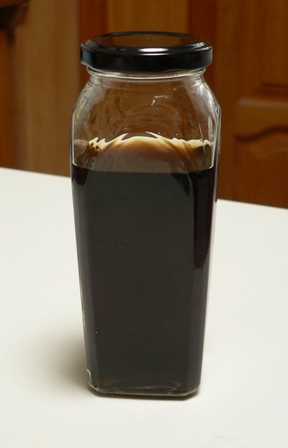
Here’s what the bottle looked like mid-January of this year:

It was left to brew in the pantry, over which time the spearmint leaves aged and darkened. I strained the extract and was quite surprised by the colour – it looks like dark brown, but is actually a very deep shade of olive green…

The extract is distinctly spearmint rather than peppermint, and a lot less potent than the commercial versions.  I had to use quite a bit to get the flavour I was after, which resulted in a softer filling that was a little harder to work.  Surprisingly, and happily, the fondant didn’t turn green, and the finished mint creams are delicious!

Read Full Post »

I’ve written about our pasta soup before, but since we eat it at least once a fortnight (and often, once a week), I thought it was worth a revisit.

It really is survival soup, put together from all the bits and pieces left over in the fridge.  We often make it on a Thursday or Friday night, prior to going to the markets, to use up all the odds and ends in the vegetable drawer.  As a result, it varies from week to week, which keeps it interesting.

The soup is constructed from pantry ingredients that we always have on hand.  Here’s a breakdown of what we use:

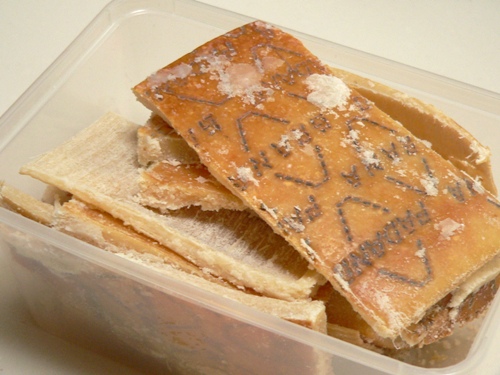
1. Something to flavour the stock. Normally ham bones that our friends at Paesanella save for us, but you could also just use packaged stock, or even, at a pinch, stock powder.  If you’re buying stock, get a one litre carton – don’t buy the salt reduced, as we normally dilute it down by 50% with water anyway.  Lately, I’ve also been adding parmesan rinds to my soups – another gift from Paesanella.  That’s the tripe looking thing in the bowl of soup above, and a couple of pieces can add a surprising amount of flavour to the soup.

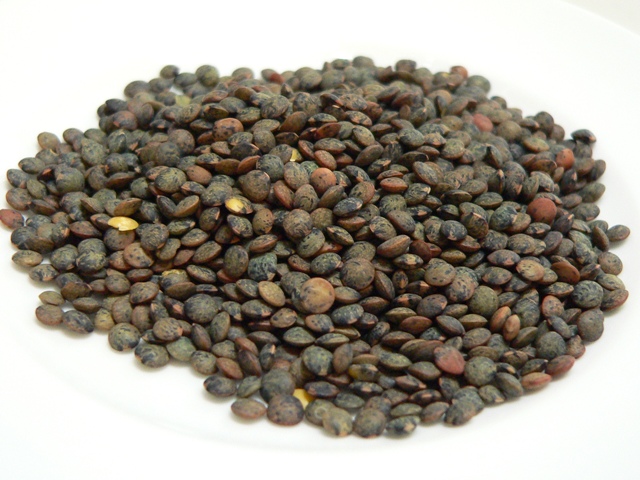
2. Lentils.  I always keep four types of lentils in the fridge, including these Australian blues, which are now readily available.  I try and use a mix of red or green lentils (which melt into the soup) and blue ones (which keep their shape during cooking).  If you can’t get lentils, you can always use tinned beans (well drained), boiled chick peas, or any other sort of legume that takes your fancy.

3. Pasta.  This can be any sort, although we prefer smaller pasta to larger shapes.  Today, we were all out of soup pasta, so I broke up nests of egg noodles which were hiding in the back of the pantry.  You could also break spaghetti into little pieces, or even use filled pasta if you like.  We’ve made this soup with all those options and more.

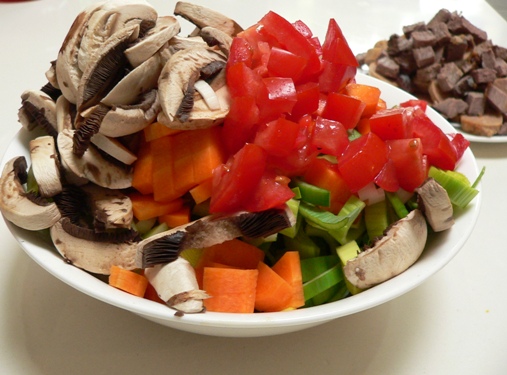
4.  Any vegetables or leftover meats you can find. This is the best bit of the soup – it allows you to clear out the fridge and use up leftovers.  Our dinner tonight had tomatoes, carrots, a leek (including the green bits), and some old Swiss brown mushrooms, as well as two leftover sausages and a couple of slices of last night’s roast beef.  Everything is optional here, so use whatever you have on hand.

The cooking process is simple.

Put the ham bones in a large pot, cover them with water, and bring to a boil.  After half an hour or so, de-fat the hot stock.  If you don’t have ham bones, you can also achieve a delicious flavour with smoked bacon bones (rib bones) or even a bacon hock.  Or just open a one litre carton of stock and pour it into the pot (if you do that, add a litre of water as well).

Next, rinse the lentils and check them for small stones, before adding to the soup with the parmesan rinds and vegetables.  Simmer uncovered,  until the lentils soften.  Add more water if necessary.  Taste the stock to see if it needs any seasoning.   Sometimes we add flavourings at this point – a little Herbie’s Chermoula Spice mix is our usual addition, but you could add any herbs or spices you prefer. Once the soup tastes good and the lentils are cooked, pull out the bones and salvage any edible bits off them and return these to the pan with any other meat you might have (in our case, the sausage and leftover beef).

Bring the whole thing to a boil, then add the pasta, and cook until the noodles expand and soften.  Ladle into bowls and serve with a little grated Parmesan and a grinding of black pepper.

This soup is surprisingly appealing to children, and quite a good way to get lots of vegetables into them.  Small Man’s record is six bowls in one sitting!

Read Full Post »

My friend Ellen has joined a cult.

I tried to tell her that all schools were the same, but receiving four notes about fundraising within the first week of her child starting kindergarten has her completely convinced.  She can see herself standing on street corners next, jingling a collection tin.

One of the missives requires her (it was an imperative, not a request) to produce a baked item for the school’s cake stall.  El felt that her latest attempt – a date loaf which she unfortunately decided to bake in mini-muffin pans, prompting her youngest son to dub them “poo cakes”  – might not be a best seller.  She asked me yesterday for an easy, pretty recipe and I promised her I’d post this one up.

This dead simple recipe comes from an old Women’s Weekly cookbook, and it was almost the first cake I ever learnt to bake.

Why is it so great?  Because it uses very few ingredients, there’s no sifting involved, and the cream cheese produces a fine crumb that is moist and tender every time.  The ingredients are readily available, the batter is made in mere minutes, and the cake  keeps well for several days.

When I’m weary, this is the recipe I turn to.  It’s universally popular, adaptable and bakes consistently well every time.

  • 125g (4.5oz) cream cheese (I used Philadelphia), at room temperature
  • 250g (1 cup) unsalted butter, at room temperature
  • 2 teaspoons grated lemon rind (about the rind of one lemon)
  • 320g (1½ cups) caster (superfine) sugar
  • 3 large (59g) eggs
  • 225g (1½ cups) plain (all purpose) flour
  • icing sugar (for serving)

1. Preheat oven to 175C (350F) with fan.

2. Beat the cream cheese, butter and lemon rind together until smooth, add the sugar and beat until light and fluffy.

2. Beat in the eggs one at a time, then stir in the flour in two batches, stir lightly until smooth.  Spoon into a well greased 20cm (8″) ring tin or baba pan.  Note: I used a Wilton bundt pan, which was a bit too large for this amount of batter.

3. Bake the cake for 30 minutes at 175C (350F) with fan, then reduce the oven temperature to 150C  (300F) with fan and bake for a further 20 – 30 minutes, or until a skewer inserted in the middle of the cake comes out clean.  Cool the cake in its tin for 10 minutes, before turning onto a wire rack to cool completely.  Dust the cake with sifted icing sugar before serving.

PS. A note on cream cheese – I’ve made this with  nearly every permutation of Philly cheese – from the original solid block to the light spreadable.  It’s worked well every time!

Read Full Post »

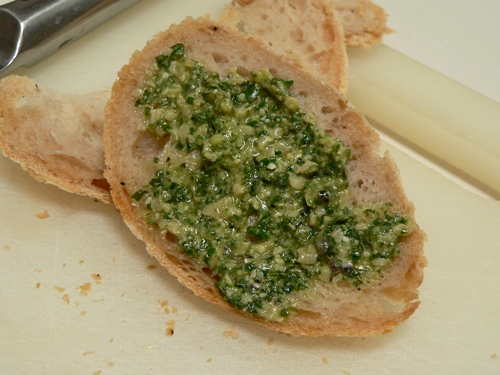
Traditionally made with basil, pinenuts, garlic and parmesan,  pesto is now available in a multitude of different flavour combinations.

I’ve tried it with rocket, garlic scapes and sage in place of basil, almonds instead of pinenuts, and pecorino cheese instead of parmesan.  All were delicious in their own unique way.

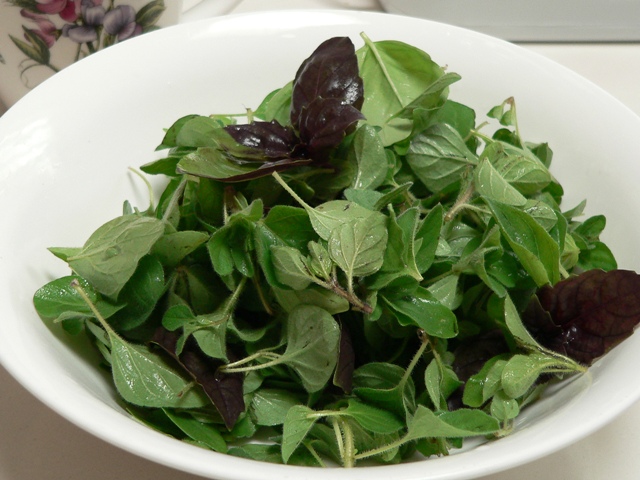
Our recent herb glut left us with an assortment of greens, so we decided to try a mixed herb pesto.  It was a simple process – Pete gave the oregano a haircut, and I pinched off some lemon basil, purple basil and a couple of sage leaves – all of which were de-stemmed and rinsed.

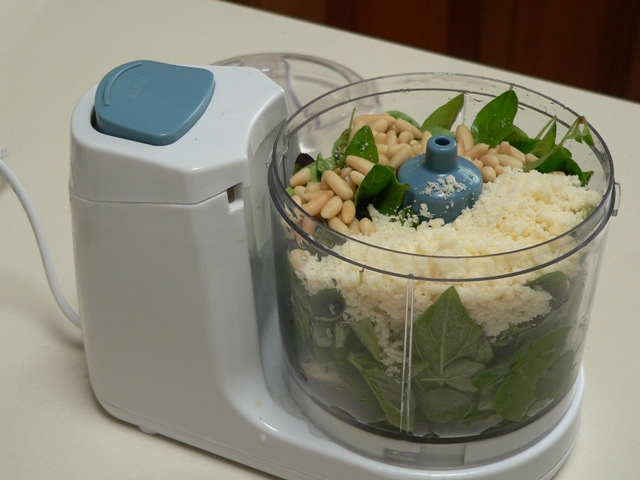
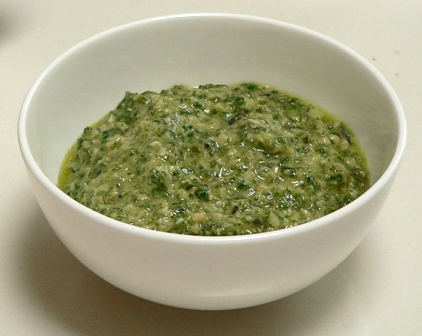
These were then pulsed in the mini food processor with a single clove of garlic, pinenuts, parmesan and a little extra virgin olive oil.    The  mix was mostly oregano, which gave the pesto a very different flavour to the usual basil version.

I’ve stored the pesto in the fridge, covered with a little oil, but you could also freeze it in small ziplock bags (make sure you squeeze out as much air as possible).   A great way to lock up a little bit of the garden for those cold winter months!

Read Full Post »

« Newer Posts - Older Posts »