Feeds:
Posts
Comments

Archive for the ‘Recipes’ Category

Pete’s Plum Sauce
(adapted from a recipe in Jams and Preserves, published by Murdoch Press)

  • 1.5kg sour plums, stoned and halved (we used the President plums that we bought last week)
  • 500g brown sugar
  • 375ml white wine vinegar
  • 2 cloves garlic, chopped
  • 1 onion, peeled and grated
  • 2 small red chillis, seeded and chopped
  • 1 large apple or two small ones, peeled, cored and chopped
  • 60ml dark soy sauce
  • 2 tablespoons of homemade ginger jam (original recipe used 2 tablespoons peeled and chopped fresh ginger)
  • 125ml water

1. Put the chopped, peeled apple into a large stock pot and cover with 125ml water.  Cover and simmer for about 10 minutes, or until the apple is soft.

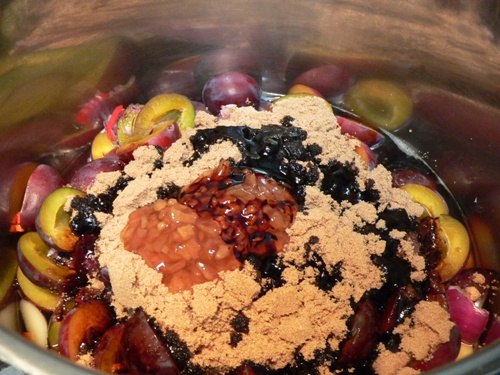
2. Add all the remaining ingredients and bring the mixture to a boil.   Simmer for about 45 minutes over a low to medium heat until the sauce is thick and pulpy, stirring frequently.
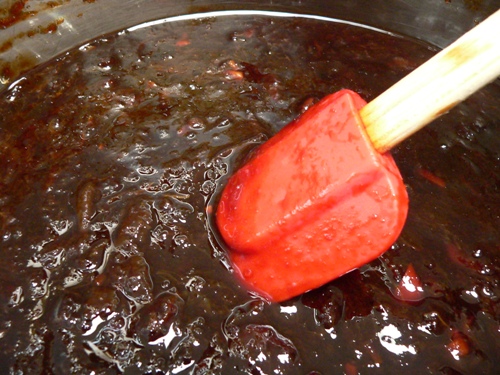
3. Pass the mixture through a food mill or press it through a coarse sieve.  If you’re using a tomato juicer as we did, allow the mix to cool a little prior to processing.
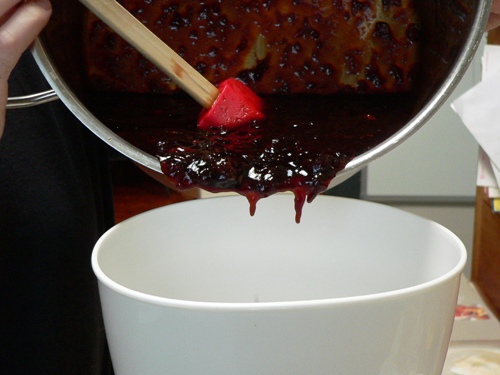
4.  Wash the cooking pot, and put the strained sauce back into it.   Taste the sauce to see if you’d like it sweeter or more acidic, and adjust accordingly. Simmer over a medium heat, stirring constantly, until the sauce thickens to your liking.

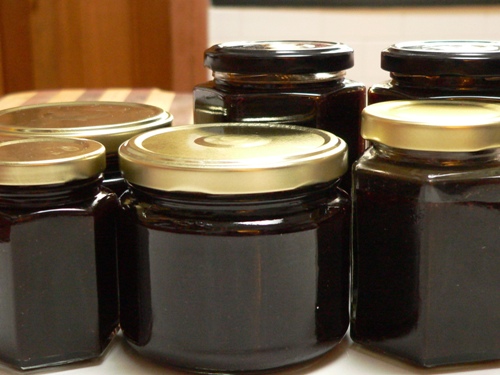
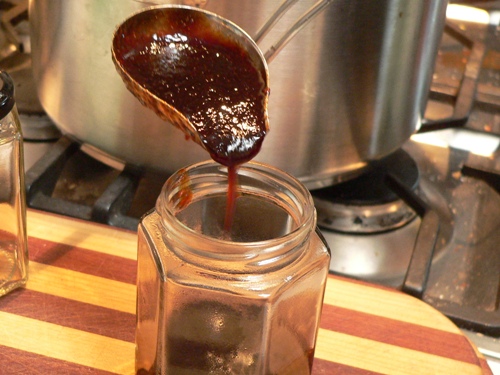
5.  Ladle the sauce into sterilised jars, seal well and process in a hot water bath for 10 minutes.  Please see our Jam Making Primer for more information.  The original instructions suggest that you let the sauce mature for a month before eating, to allow all the flavours to meld.

These quantities make enough plum sauce to fill five to six 300ml jars.
Read Full Post »

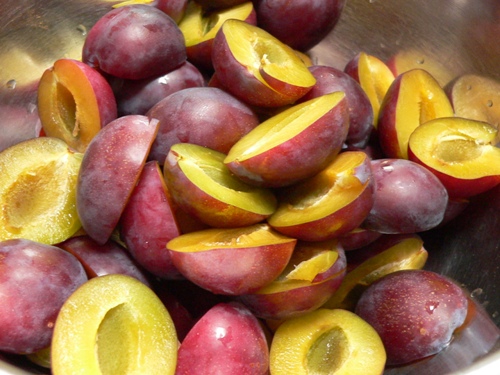
We picked up a box of magnificent President plums at the markets last week.  They’re very tart and firm, which makes them perfect for cooking.

After freezing twenty-four plums (stoned and halved, vacuum-sealed), Pete had enough left over for a couple of batches of jam.  His first was a delicious plum and pluot blend, but this second one is even better – sweet, but tart, with a wonderfully complex flavour.  It will make a great staple in our larder for the year to come.

1. Put the quartered plums in a large wide stock pot.  Ensure the pot is big enough to allow the jam to rise up as it boils.  Add the lemon juice and pectin, cover and bring to a boil.  Don’t add the sugar yet.

2. Stew gently until the plums are softened, about 15 – 20 minutes.  Note that the plum skins won’t soften any further once the sugar is added.

3. Add all the sugar and vanilla extract and bring the mixture to a gentle boil.  As the sugar dissolves, foam will appear on the surface of the jam – skim this off carefully.  Put a small saucer in the freezer so you can test the jam for set.

4. Once the jam is clarified, raise the temperature and bring the pot to a rolling boil.  Cook until the jam has thickened, then place a spoonful on the cold saucer and allow it to cool.  If it has set properly, it will wrinkle when pushed.

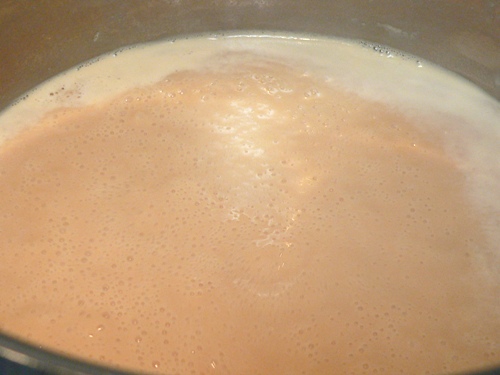
Plums, if they’re not too ripe, have a high natural pectin content, so they usually set very well.  Here is a photo of the pot once it had cooled slightly.

5. Ladle the jam into sterilised jars, seal tightly and process in a boiling water bath for 10 minutes.  For more instructions, please refer to our Jam Making Primer.

Read Full Post »

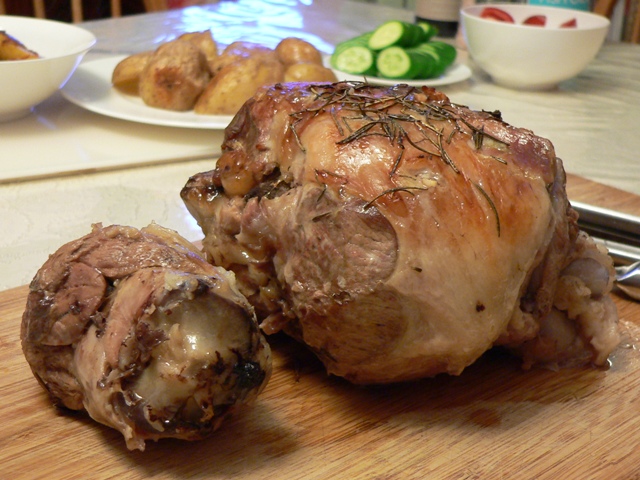
Following on from yesterday’s post – here’s our first attempt at roast lamb in the Römertopf clay baker!

We rubbed our two and a half kilo leg of lamb with a little extra virgin olive oil, fresh rosemary and salt, then studded it with small pieces of garlic.  In order to fit it into the presoaked clay pot, we had to cut the leg into two pieces (there is a convenient joint where the shank connects to the upper part of the leg).  Once divided, the lamb fit neatly into the Römertopf over a bed of potatoes.

The covered baker went into a cold oven, which was then set at 200C with fan.  It was baked for two hours with the lid on, and then uncovered for a further half an hour to allow the meat to brown.  As the pot is presoaked  prior to use, the lamb is both steamed and roasted as it bakes.  The pot allows a little flexibility with cooking times and, as an added bonus, the oven stays nice and clean.

The end result was a tender, moist, well done leg of lamb (Pete’s too old school for pink lamb) which provided both dinner that night, and shepherd’s pie the following day!

Read Full Post »

When I posted recently about making dulce de leche from condensed milk, Adriana and Rebecca were kind enough to give me recipes for cooking it from first principles using full cream milk and sugar.  How could I resist?

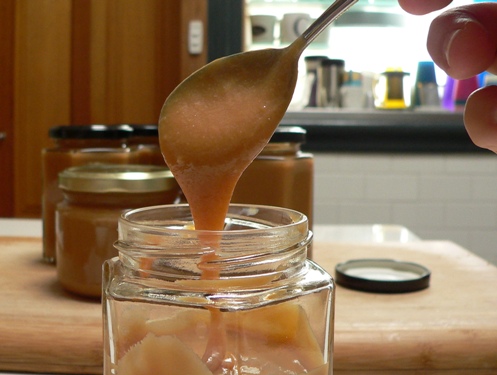
It’s a long process, but an easy one, particularly if you have to be in the kitchen for a few hours anyway, as I did last night.  And the end result is very different to the microwave version – it’s soft, silky and deep caramel brown – the long cooking time imbues it with a richness in colour and flavour that can’t be achieved by the quicker process.  Both have their place, but oh my, this slow cooked milk jam was really something else…

  • 4 litres full cream milk (I used UHT)
  • 1 kilogram white sugar
  • 1 teaspoon bicarbonate of soda (baking soda), sifted
  • 2 teaspoons vanilla extract (we used homemade)

1. In a very large stock pot, pour all the ingredients and bring to boil over a high heat.  Make sure it’s a big pot, as four litres of milk rising up in a rolling boil can be quite intimidating otherwise! Don’t go anywhere, you’ll need to make sure it doesn’t boil over.  At the beginning you’ll need to stand there and adjust the heat up and down as required, while you stir, to ensure the pot doesn’t overflow, but after a while the milk will settle into a regular boil.

2. Boil until the milk changes colour and reduces in volume.  The instructions here were a little vague, but we basically boiled the pot over a high heat until it had reduced by half, which took about an hour.  Over that time, the colour gradually darkened to a light milk coffee shade.

3. Turn the heat down and cook the milk over medium to medium-low until it darkens even further and thickens, watching it carefully and stirring often to ensure it doesn’t catch on the bottom.  If you’re not able to be diligent, it’s probably best to turn the heat down to  very low at this point, making sure you come back to stir it regularly.  This stage took another ¾ hour.

4. Once it starts to thicken, turn the heat down to very low, stirring frequently, until the dulce de leche turns a medium to dark caramel brown.  It needs to be fussed over at this point, to ensure it doesn’t scorch and burn.  The finished product is very hot (don’t ask me how I know) and has a thick pouring consistency.  It will set up further as it cools.  Total cooking time was about 2½ hours.  Rebecca suggests that you stir in a few tablespoons of honey at this point, but Pete’s not a particular fan, so we left it out.

5. Finally, fill the sink with a few inches of cold water, and sit the pot into it, being careful not to splash water into the caramel.  Stir the mixture for a few minutes – Adriana’s recipe says that this thickens the mixture, but I suspect the main aim is to stop it from cooking further and burning (as I said, at this stage, it’s very hot!).

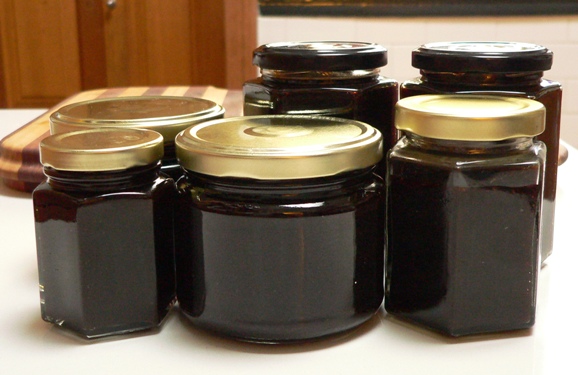
Our four litres of milk produced five and a half jars of wickedly good dulce de leche .  One jar has gone to Maude, another to Patrick, and the remainder are tucked away safely in the fridge.  Now the fun starts – planning what to do with it!

Read Full Post »

Dulce de leche, which means milk jam in Spanish, is a sweet, caramelly concoction made from boiling and concentrating condensed milk.  Nothing is added to the milk, but the cooking process imbues it with a rich sweetness well suited to cakes and confectionary.

My first attempt at this recipe was a complete disaster, and I’d been a little gunshy ever since.  Then my friend Ozoz, the Kitchen Butterfly, posted her recipe for making dulce de leche in the microwave.  Since I had three cans of condensed milk in the pantry, I thought it was worth a second attempt.

I emptied two cans of condensed milk (one skim, one full fat) into a large pyrex bowl.

This went into my 1100 watt microwave for :

  • 6 minutes at 50% power, whisking every two minutes, then
  • 14 minutes at 30% power, whisking every one to two minutes, or whenever the milk threatened to boil over.

Be prepared to stand by the microwave and watch this – it’s not a set and leave dish, as it can boil over in a heartbeat!

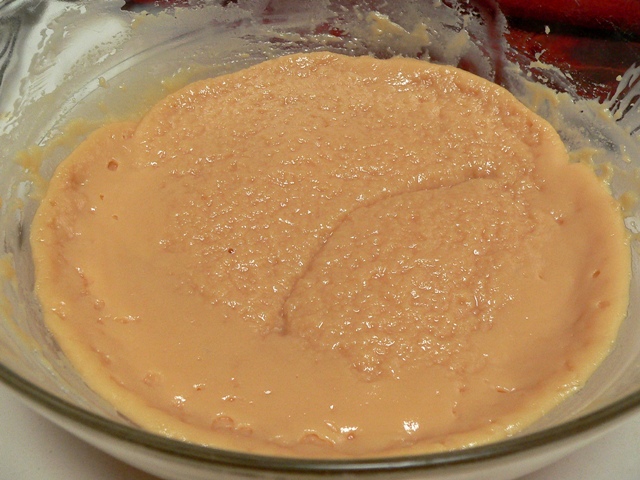
The finished dulce de leche came out of the microwave lumpy, but whisked into a smooth and silky caramel, which we spooned into sterilised glass jars and stored in the fridge.

. . . . .

The following day, I made dulce de leche truffles, dropping spoonfuls of the cold caramel into tempered chocolate.  These were pleasant, but the balance of flavours wasn’t quite right.

. . . . .

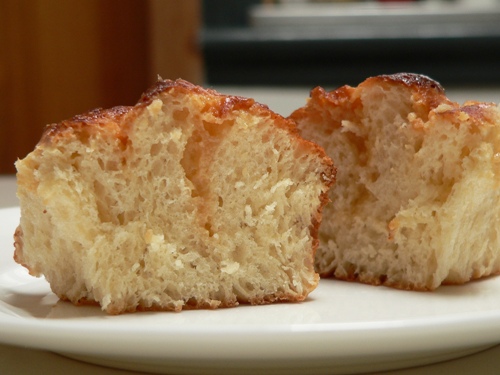
I also made dulce de leche scrolls, which were absolutely delicious – Big Boy loved these! I followed the methodology for nutella scrolls, using the sweet dough from the Pain Viennois recipe.  The dulce de leche worked particularly well with the sweet milk dough.  Prior to baking, I brushed the tops of the risen buns with eggwash and scattered over a little demerara sugar for added crunch.

. . . . .

Since the oven was on all morning, I decided to try David Lebovitz’ recipe for dulce de leche with  my last remaining tin of condensed milk.  This entailed pouring the milk into an ovenproof dish and covering it with foil, then baking it in a water bath for an hour or so at 220C.  The milk set in the oven like a soft baked custard, but was easily transformed into creamy dulce de leche with a little whisking.

What a fantastic ingredient! Maybe I need to try a Chilean Torta De Hojas next…

Edit 26/2: I was inspired by the comments below to try making dulce de leche from scratch.  Have a look here – seriously chuffed with the results!

Read Full Post »

« Newer Posts - Older Posts »