Feeds:
Posts
Comments

Archive for the ‘Recipes’ Category

Maude, whom I’ve known for nearly twenty-five years, is my BBB (Bestest Baking Buddy).  She lives directly across the road, and many of our daily discussions revolve around food.  Between us, we own nearly every Nordicware cake pan, and if I now have an addiction to Chicago Metallics bakeware, it’s Maude’s fault.  We also follow the same food blogs and our conversations often begin with “Did you see what Dan (Lepard) made today?”  or “Dorie Greenspan’s new recipe looks nice”…

Yesterday, Maude asked me if I’d tried “David’s sherbet”. I had indeed tried it, and it was indeed very good.  I’ve had to make it again today, since the taste of it is now in my head and won’t come out.  It’s a cool, dark chocolate hit, perfect when you want a treat without the richness of regular icecream.

David Lebovitz Chocolate Sherbet

  • 500ml (2 cups) milk (I used UHT, 1 cup full cream and 1 cup skim)
  • 100g sugar
  • pinch salt
  • 50g cocoa powder (I used Callebaut Dutch)
  • 115g dark chocolate (I used Callebaut 70%, although I often use the 54% for a slightly more child-friendly version)
  • ¼ teaspoon homemade vanilla extract
  • 2 tablespoons Kahlua

1.  Heat half the milk in a saucepan with the sugar, salt and cocoa powder.  Whisk constantly until boiling, then reduce the heat and simmer gently for 30 seconds.

2. Remove the saucepan from the heat, and add the chocolate, vanilla and Kahlua.  Then stir in the remaining milk, whisking constantly until smooth.  Lebovitz suggests that if the mix is grainy, you can puree it in a blender, but I’ve never needed to do this.  Try not to drink it all at this stage.

3. Refrigerate until cold, then pour the mixture into an ice cream maker and freeze until set.

Read Full Post »

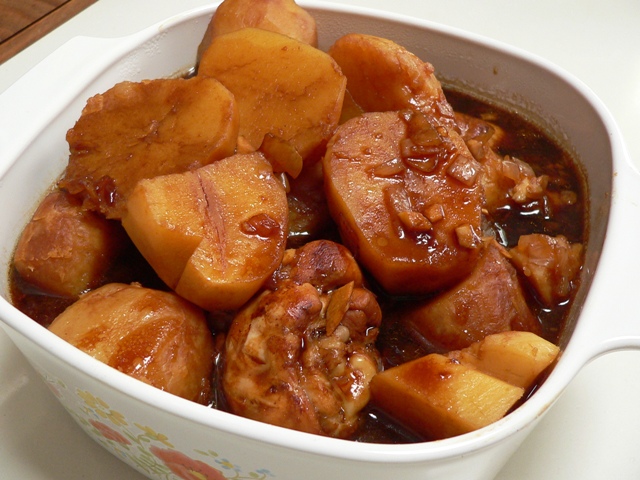
I don’t cook a lot of Chinese food, much to my mother’s chagrin, but one dish that I do make regularly is her soy sauce chicken and potato stew.

Mum, or Mah-Mah as she’s known to the boys, has been cooking this dish for as long as I can remember.  It was always served in a square Corningware casserole dish, and my sister and I always fought over the potatoes.  Now when I cook it, I add massively more potatoes than anyone can eat, just to make sure there’s plenty to go around!

Like all recipes of this ilk, there aren’t fixed quantities to the ingredients used.  My mother always eyeballed the amounts, and then tasted before serving to see if everything was in balance.  It was always perfect.

  • 1 – 1½ kg free range chicken pieces, preferably drumsticks or thighs
  • Sweet dark soy sauce
  • Kikkoman Teriyaki Marinade, or light soy sauce
  • 1 onion, chopped
  • 2 large garlic cloves, chopped
  • lots of potatoes, peeled and cut into large chunks
  • ground pepper
  • oil for frying
  • cornflour (optional)

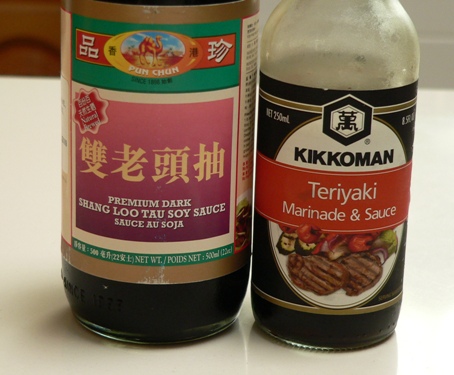
1. In a large mixing bowl, marinate the chicken pieces in a generous splash of sweet soy, a little Teriyaki sauce and ground pepper.  Below are the brands my mother and I use, but feel free to substitute your own.  Leave the chicken to soak for about half an hour.

2. In a large pot (I use a wok), heat the oil and fry the onion and garlic briefly, then lift the chicken pieces out of the marinade (don’t throw it out!) and add them to the pan.  Fry until the chicken is slightly crisp on the outside.  Add water to the remaining marinade and pour it over the chicken. You want quite a lot of liquid in the pot.

3. Add the potatoes, and stir to coat them in the sauce. Bring  to a boil, then reduce the heat and simmer, covered,  until the chicken is cooked, and the potatoes are fork tender.  Taste the sauce, and if necessary add more dark soy if it needs sweetness, or Teriyaki if it needs more salt.

4. Once cooked, remove the chicken and potatoes with a slotted spoon and place them in a square Corningware pot (ok, you could use any serving dish you choose).  Heat the sauce to reduce it slightly, then pour over the chicken and potatoes and serve. Alternatively, mix a little cornflour with cold water, stir it into the sauce, and bring it to the boil again before pouring over the other ingredients.

We usually serve this with basmati rice and  stir fried greens. And I’m completely content, because there’s always a potato or two left over.

Read Full Post »

Tah-dah!

Mark and Bruce at Real Food Has Curves (what an irresistible name!) wrote a three-post recipe for Paris-Brest, a French pastry traditionally made to celebrate and nourish athletes at the end of the long Paris to Brest bike race.  Created in 1891, the wheel-shaped ring of choux pastry is filled with crème pralinée and sweetened whipped cream.

I had to walk to the shops twice to buy necessary ingredients – not quite the 1200km between Paris and Brest – but I figured that justified me eating a generous slice nonetheless.

The guys have written the best instructions I’ve come across yet for choux pastry, and I’m confident that it’s something I’ll be baking regularly from now on.  I won’t repost their recipe here, but will instead refer you directly to their first post: Paris-Brest, Part 1.

I followed their instructions to the letter to make the nougatine and choux pastry, but substituted my own recipe for crème pâtissière (forgive me, Bruce!), which is made in the microwave in just a few minutes.

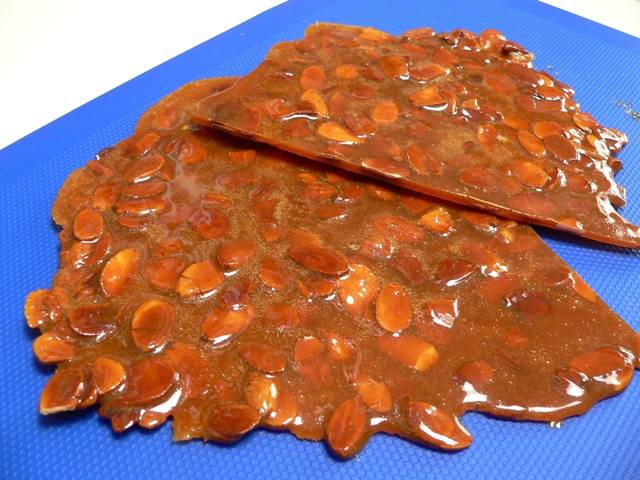
The nougatine, also known as almond praline, was remarkably simple to create  from icing sugar mixture and flaked almonds.  Yet another useful addition to my dessert répertoire! Here’s a photo of it before it was pulverised and added to the pastry cream…

Some assembly photos :

Choux pastry ring cut open for filling…

Crème pralinée, made by folding the crumbled nougatine through the pastry cream, was spread over the base, then topped with sweetened whipped cream, piped in a swirly pattern…

Here’s the  finished pastry, dusted with icing sugar…

I let this set up in the fridge for a couple of hours before attempting to cut it, as the cream was quite soft. It sliced beautifully after that.

Now, time to ring the neighbours and share the love around!


Read Full Post »

I saw this technique on Wild Gourmets in Spain, a cooking show currently screening on our local SBS television station.

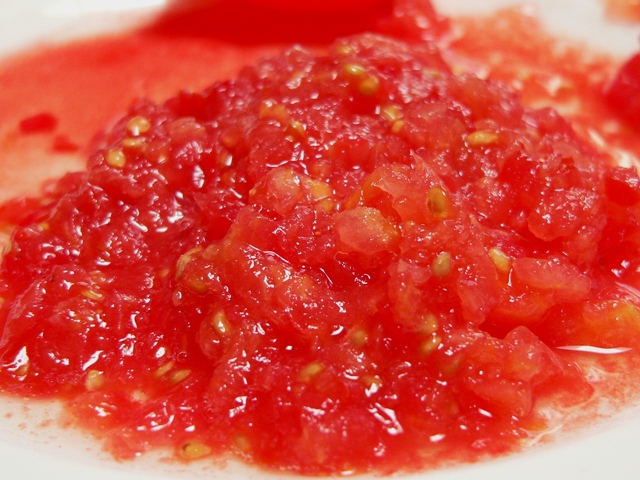
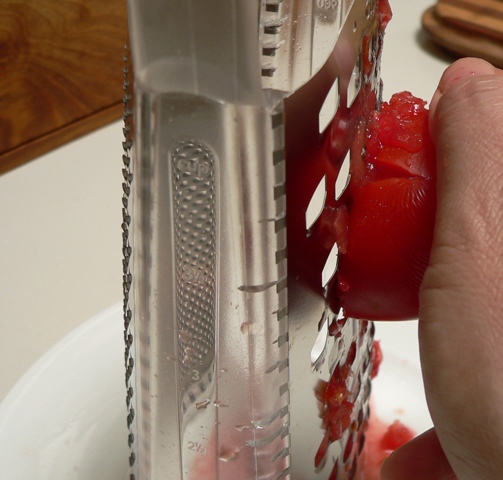
It’s a brilliant idea, and such an easy one – when you need tomato pulp in a hurry, and you can’t be bothered to blanch and then peel them, just shred the tomatoes through a large holed grater.

What you see above is the product of two fairly firm Roma tomatoes and literally just a minute’s work.

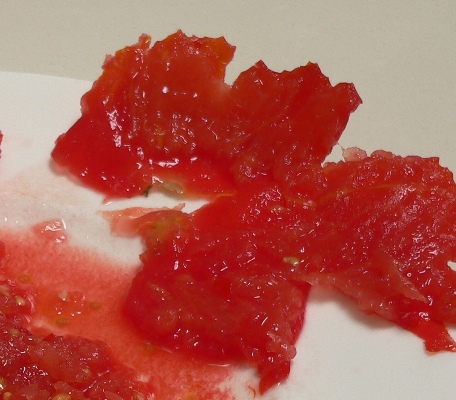
And here’s the leftover skin…

It’s wonderful how a simple technique like this can open up a whole world of recipes and ideas.  Next step, a Berber tagine omelette!

Read Full Post »

Harissa

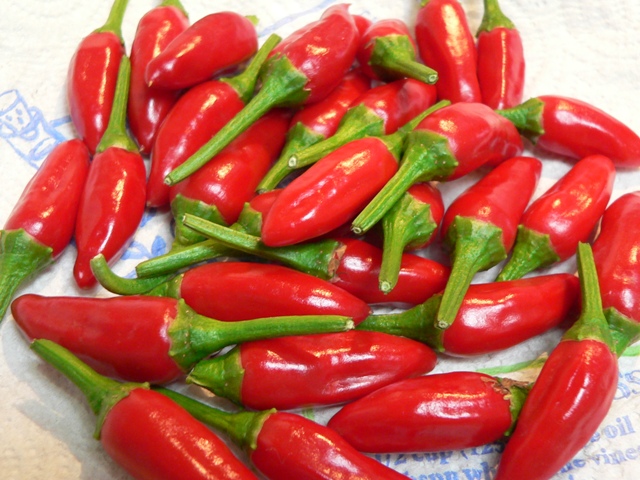
One of Pete’s plans for 2010 is to establish a permaculture garden in our small suburban backyard.  My mum donated one of her chilli plants to start us off  and, even though it’s still in a pot, this small shrub has fruited abundantly – here’s just a small portion of our harvest!

I turned the chillies into harissa sauce, using a recipe I put together years ago. It’s adapted from a recipe in Dave Dewitt’s A World of Curries, and is very simple to make, providing you have a food processor (I use a mini one). The quantities are pretty loose – use whatever you have on hand in amounts that suit your personal preferences.

  • 7 large red chillies, medium heat
  • 4 red bullet chillies, hot
  • 2 teaspoons caraway seed
  • 2 teaspoons ground cumin
  • 2 teaspoons ground coriander
  • 2 teaspoons ground paprika (I sometimes use smoked paprika)
  • ½ teaspoon Malden salt flakes
  • 30 or more fresh mint leaves
  • 4 tablespoons extra virgin olive oil
  • 10 cloves of peeled garlic
  • water

1. Wash and deseed the chillies.  I usually wear gloves to do this, because I’m a wuss. For this batch, I used a dozen of our red chillies, as I didn’t have any long red ones.

2. Place the chillies, garlic and all the spices in the bowl of a small food processor or blender.  Add the mint leaves and pulse to combine, then add the olive oil and enough water to create a thick sauce.

3.  Scrape the harissa into a clean sterilised jar and cover it with a thin film of olive oil.  Best to use the sauce within a couple of weeks, as it doesn’t have any vinegar or lots of salt to preserve it.

As I mentioned before, this is a very adaptable recipe, and I tend to use whatever chillies I have on hand, and then pack the little food processor with as many mint leaves as I can jam in.  I also prefer to use spearmint rather than peppermint, if given a choice.   Allow a couple of days for the flavours to meld together, then serve on everything from carrot sticks to roast chicken!

Read Full Post »

« Newer Posts - Older Posts »