Feeds:
Posts
Comments

Archive for the ‘Recipes’ Category

cupcakes 014

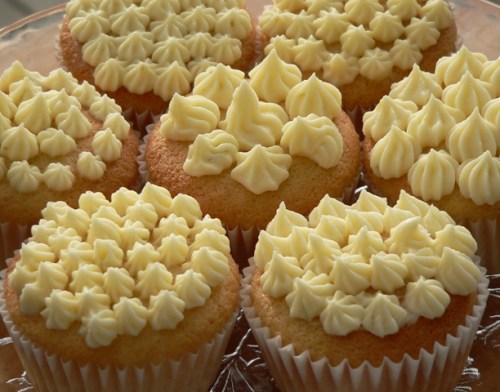
Inspired by gorgeous cupcakes in a recent Masterchef episode, I thought I’d try my hand at making some.  I found this interesting recipe attributed to a clever lady named Scout, which replaces the butter with cream, thereby making the mixing process faster and easier.

I’ve tinkered with the recipe slightly – using heavy whipping cream instead of the thickened cream originally specified and topping the cupcakes with a lime curd buttercream icing.  The end result is light and moreish, with simple flavours – a far cry from heavier, pound cake based versions.  Which may be why my Pete, who is normally a staunch anti-cupcake campaigner, likes them so much.

Cupcakes

  • 2 large (59g) eggs
  • ½ cup cream (35% fat)
  • 1 tsp vanilla
  • 1 tsp finely grated lime rind (optional)
  • ¾ cup caster (superfine) sugar
  • 1 cup self-raising flour

1. Preheat the oven to 175C (with fan).

2. In a large mixing bowl, beat the cream and eggs together for one minute.  Add the sugar, lime rind and vanilla and beat on high for three more minutes (I use the whisk attachment on my stand mixer).

3. Gently fold in the sifted SR flour.  Line a muffin pan (12 x 1/3 cup size) with paper liners, and divide the batter evenly between the 12 holes.   Bake for 12 – 15 minutes, until lightly golden and the cake springs back slightly when tapped in the centre.  This recipe overcooks easily, so watch it carefully to ensure it doesn’t go too brown.  Allow to cool on a wire rack while you prepare the icing.

. . . . .

Icing

  • 60g very soft unsalted butter
  • ¾ cup icing sugar mixture (confectioner’s sugar)
  • 2 rounded teaspoons of lime curd

Beat the butter with a whisk or beaters until very smooth, then beat in half a cup of sifted icing sugar.  Stir in the lime curd, then add remaining sifted icing sugar and mix well until the mixture reaches a thick piping consistency.   You might need more or less icing sugar, adjust accordingly. Spread or pipe the icing over the top of the cupcakes.

cupcakes 006

cupcakes 028

Read Full Post »

180509 017

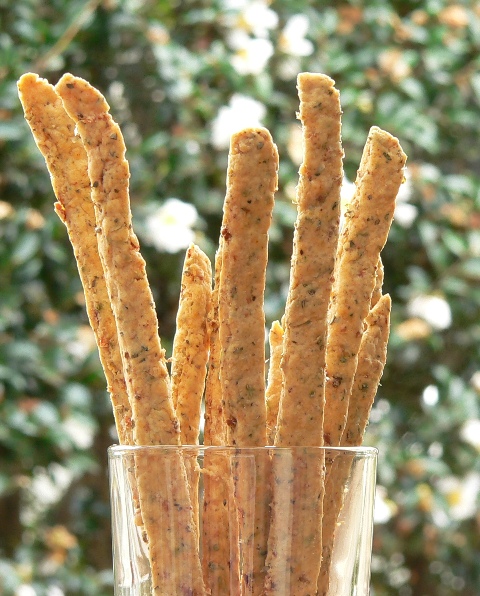
When Small Man was very young, we would give him grissini to chew on whenever he was cranky or out of sorts.  We called them “Grizzle Sticks” and they were indeed very good at soothing the grizzling child.  These aren’t grissini, but they are reminiscent of them.  I found the recipe at Dan Lepard’s Guardian website and modified it to suit the ingredients I had on hand at 7am on a Monday  morning.  They were easy to make and even easier to eat – Pete D declared that between these and the crackers, we’ve just about nailed beer food.  Below is my amended list of ingredients and the methodology is here.

  • 100g plain flour
  • ½ tsp baking powder
  • 1 scant tsp brown sugar
  • ½ tsp salt
  • ½ tsp Kashmiri chilli powder
  • 1 small pinch cinnamon
  • 50g organic dark rye flour
  • 3 tsp dried oregano
  • 50g unsalted butter, softened
  • 30g pancetta flat, weighed after the fat was removed, finely chopped or minced in the mini-whizzer
  • 50ml cold water

Do try this, it’s a flexible recipe that will lend itself to all sorts of inclusions.  I think I’ll try pecorino or anchovies next time…

Read Full Post »

230509 015

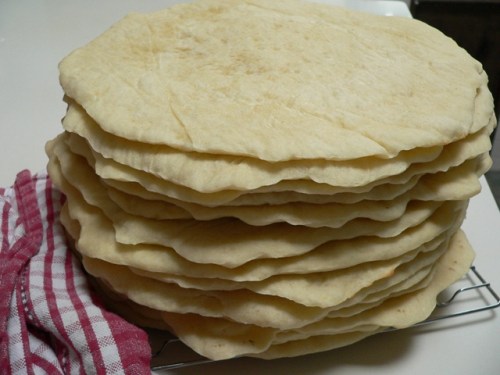
I was so appalled by the price of a decent pre-made pizza base ($4.79 each!), that I made a quadruple batch of parbaked bases today.

It’s easy to do – make the basic dough recipe, let it rise, then divide the dough into four balls and allow it to rise a second time.  Tip each ball onto a sheet of parchment paper and work it out with your fingers into a large flat circle. There are some photos here of the shaping process.

Now, instead of topping it, slip the base (on its sheet of paper)  into a  hot oven and bake for one to two minutes.  We use preheated pizza stones, but you could always put the base on a tray if you don’t have these. You want the dough to puff up just the tiniest bit, but ideally it shouldn’t brown at all.   In our oven, that’s takes a minute and a half, baking four bases at the one time.

Remove the parbaked bases from the oven, discard the paper and cool  completely on a wire rack (this bit is important, or they’ll end up wet and sticky).  The bases can be frozen for ages, separated by sheets of freezer or parchment paper, then well wrapped in clingfilm.

I’ve delivered eight bases to the neighbours and stashed a further eight in our freezer.  We would normally prepare our pizza dough from scratch, but it’s nice to have some reserves for when things get really hectic!

. . . . .

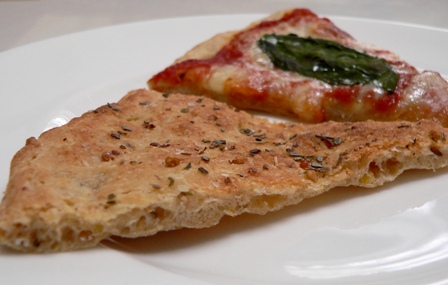
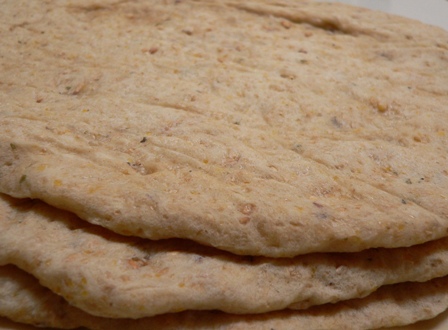
Edit 31/05: Have just tried making multi-grain pizza crusts as suggested by Patrick in the Aussie Pizza post below.  They’re delicious!  I used Kevin Sherrie’s grain mix (90%) combined with a little bakers flour (10%), omitted the salt (as it’s already included in the grain mix) and increased the total flour weight by about 10% to compensate for the extra grain mass. Here’s a photo of the last slices of the two test pizzas, plus the bases parbaked and ready for the freezer.

multigrain pizza 002

multigrain pizza 006

Read Full Post »

lime curd and vanilla 006

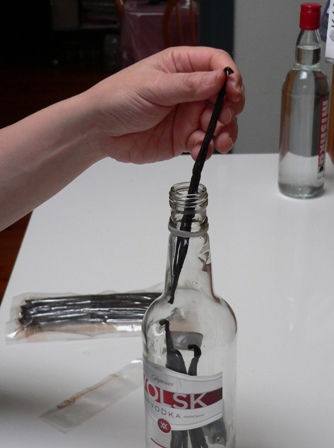
Making your own vanilla extract is the easiest thing in the world.  All you need are vanilla beans, vodka and patience.  Split your beans most of the way through with a pair of kitchen scissors and pop them into a bottle ,  fill it with vodka, then let it brew for three months or more.  Give it a shake occasionally and marvel at how quickly it turns a rich, dark amber.

Start with six to ten beans in a 700ml bottle – ten is probably more than you need, but I bought my vanilla pods in bulk, so I have lots to play with.   As the  extract is maturing, I’ll also add in beans which have been scraped out and used for other cooking, so the bottle gets quite full after a while.  Trust your nose – sniff if occasionally, and when it seems strong enough, decant a little out  to use.  You can then top the bottle up with more vodka and allow it to mature again.

After experimenting with various spirits, I’ve found that vodka produces the most aromatic result.  I’ve had moderate success with a mild brandy, but after a few months, it still smells more of alcohol than vanilla.

When vanilla extract is made commercially, chopped beans are boiled up and percolated through a base alcohol.   This is done to maximise the extraction from the beans in the shortest possible time.  By contrast, cold macerating the pods for several months is a gentle process, and the vanilla aroma and flavour extracted from the beans is very pure and clean, without any stewed or cooked overtones. You’ll be able to taste the difference in your baking!

. . . . .

Use this vanilla extract to make a wicked vanilla syrup!

Read Full Post »

b&b 008

In the immortal words of Snoopy, it was a dark and stormy night.

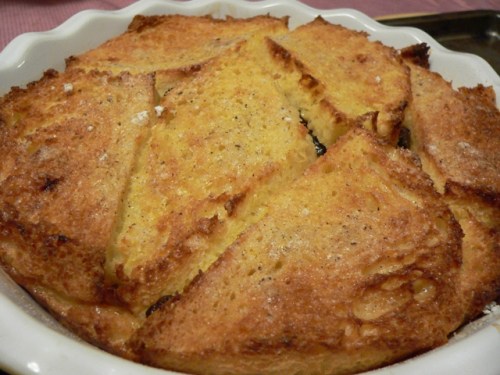
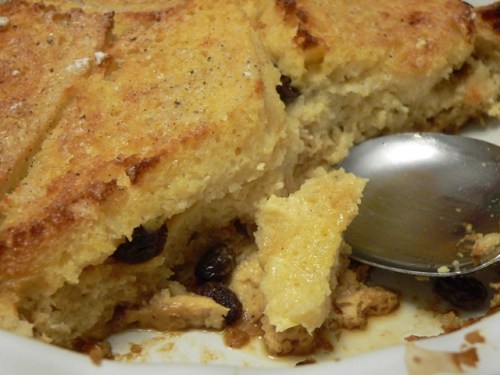
I’d made loaves of ricotta bread earlier in the day, and bread and butter pudding seemed like an ideal way to use the leftovers.  The soft curd loaves have a fine, rich texture, slightly reminiscent of panettone.  Having bought 30  free range eggs from the markets that afternoon, it was the perfect dessert for a dark and stormy night.

Google turned up an interesting Bill Granger recipe, which I, of course, had to mess around with.  I reduced the quantity of eggs and cream, added apple brandy, eyeballed the other ingredients, and still ended up with the most delicious dessert we’ve had in ages.  Here is my rough recipe – feel free to play around with it as your ingredients on hand necessitate.

  • Golden syrup
  • Ricotta bread (I used about ¾ of a loaf)
  • Unsalted butter
  • Dark raisins
  • 5 large eggs
  • 400ml milk (approx.)
  • 250ml cream (approx.)
  • 2 tsps vanilla extract
  • generous dash of Calvados brandy
  • 115g (½ cup) caster sugar
  • Vanilla sugar
  • Whipped cream to serve

1.  Carefully cut the crust away from the outside of the loaf, and then cut it into thick slices.  Butter one side of each slice and cut it in half on the diagonal.

2. Grease a pie dish and drizzle a generous amount of golden syrup all over the base.  I actually had enough to fill a 26cm pie dish and a small rectangular dish (which I subsequently took to the neighbours).   Arrange a layer of bread over the bottom of the dishes, butter side up.  Scatter with raisins, then place another layer of butter-side-up bread over the top. You could keep going with layers, but I’d cut thick slices, so just two layers of bread was enough to fill my dishes.

3. In a large mixing bowl, whisk together the eggs, cream, milk, vanilla , Calvados and sugar.  Ladle the mixture over the top of the bread until the dishes are quite full and the bread is soaked.  Leave for 30 minutes, pushing the bread down every 10 minutes or so to help it soak up the liquid.  Preheat oven to 175C (160C with fan).

4. Sprinkle vanilla sugar over the bread, then bake in the oven for 45 – 55 minutes, or until golden brown.  Remove from the oven and allow to cool for 10 – 15 minutes before serving with whipped cream.

b&b 014

Read Full Post »

« Newer Posts - Older Posts »