Feeds:
Posts
Comments

Archive for the ‘Recipes’ Category

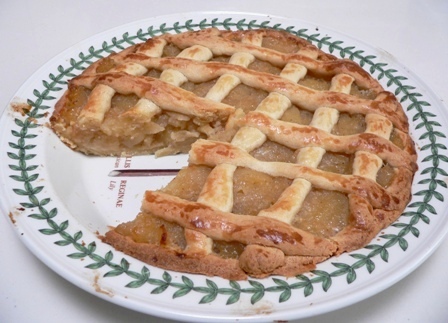
apple pie 002

Since we’ve started making apple pie in this way, Small Man has requested it for dessert every single night.  He absolutely loves it, so we’ll keep making it once a week or so, while the apples are new season, crisp and a little tart.  It’s a great make-ahead dessert, because you can freeze both the dough and the pie filling, and assemble them prior to baking.  The shortcrust pastry has just the right amount of sweetness to complement the slightly tart apples.  This recipe makes enough pastry for two sweet pies – I usually make one and freeze the rest of the dough for next time.  You can easily halve the pastry ingredients if you’d rather not have the excess.

Filling

  • 4 – 5 large new season apples (we used Fujis, but Pink Ladies are our preferred cooking apple. Grannies are obviously brilliant as well).
  • Sugar to taste
  • Juice of one lemon (or to taste)
  • ½ tsp ground cinnamon

1. Peel and core the apples, then cut them into bite-sized chunks (save the peels and cores in the freezer for apple jelly or pectin).

2. Put the cut apple flesh into a medium sized saucepan with a dash of water, lemon juice, cinnamon and sugar,  and cook gently, covered at first, then with the lid off, until the apples are tender but still holding their shape (you don’t want applesauce). The apples need to cook until they’re quite dry, so don’t add too much water at the beginning – just a tiny bit to stop the apples from scorching.  Pour the cooked apple mixture out onto a large flat plate to cool.
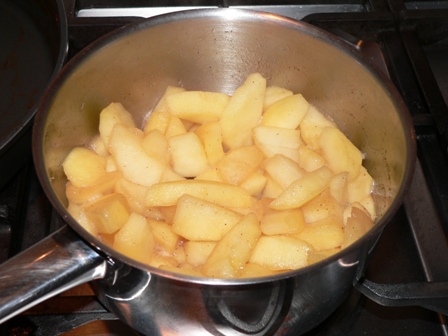
pizza-and-apple-pie-011

June’s Pastry

  • 250g unsalted butter, chopped
  • 200g bread flour
  • 200g plain flour
  • 150g icing sugar mixture (not pure icing sugar)
  • 2 whole eggs OR 1 whole egg + 2 egg yolks

1. In a large mixing bowl, combine the flours and icing sugar mixture.  Rub in the butter.  Add the eggs and mix well, using a stirring action first, and then squelching the pastry with your fingers to combine.  It can be quite sticky sometimes, depending on the weather – add a little more flour if you need to (but try not to add too much).  Knead the pastry briefly but gently, until well combined.

2. Divide into two portions – freeze one wrapped tightly, first in clingfilm and then in foil, and wrap the other half in clingfilm and store it in the fridge to rest for about half an hour.

Assembling

1. Preheat the oven to 200C/400F.

2. Remove the dough from the fridge and roll two-thirds of it out on a large sheet of parchment paper, until it forms a circle slightly larger than your pie dish. Make sure you dust your rolling pin with flour to stop it sticking.

3. Invert the pastry into your pie plate, easing it gently into the sides.  Gently, gently remove the parchment paper.  Ease and work the pastry into the plate with your fingers.  Trim any excess so that it just overhangs the outside of the plate – you’ll turn the edge in after the filling has gone in.  Make sure there aren’t any air bubbles in the base – pop them with a fork if you need to.

4. Pour in the cooled filling into the pie shell.  Fold the pastry in over the filling, forming a little rolled edge (I’ve found that doing this means you avoid a burnt rim!).  Roll the remaining dough into long skinny logs and lay them over the filling in a lattice formation.

5. Brush the pastry top with either a little milk or a beaten egg (egg is better, but I’m usually loathe to waste an entire egg on this) and bake for 20 – 30 minutes, or until golden brown.

Read about our manic pie making weekend!

Read Full Post »

ricotta bread finished

 There are four names regularly mentioned with great affection in our house whenever the topic of breadmaking arises – Kevin Sherrie and Johnny B (the millers), Richard Bertinet (aka “The Frenchman”) and Dan the Man.

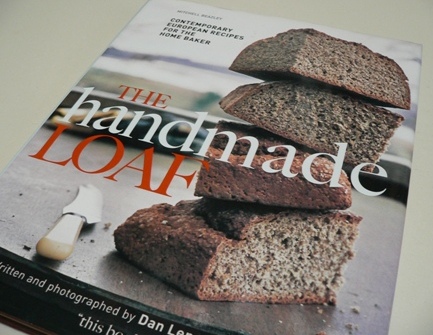
Dan Lepard, a former Melbournian and all round good guy, has gone on to become one of the most respected bakers in the UK.  The Handmade Loaf is as comprehensive and enjoyable a read as you’re ever likely to find in a bread book.  A few of his recipes have become our household staples, particularly his sourdough focaccia, which was the basis of all school lunches for nearly two years.

This book provides a wealth of ideas and techniques, interwoven with photos and stories of old and new world bakers from all over Europe. Whereas most bread texts deal with manipulating a given dough in a multitude of ways, Dan’s book is full of innovative recipes and suggestions, such as this one for including leftover ricotta in your loaf.

dan lepard

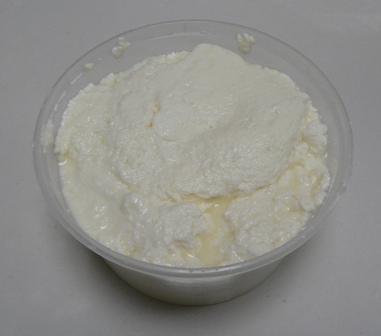
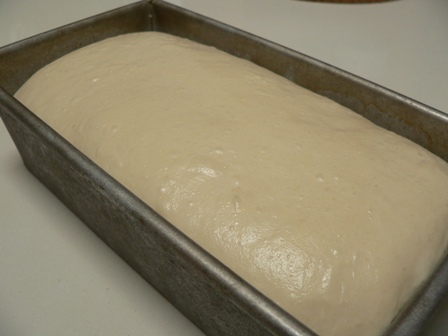
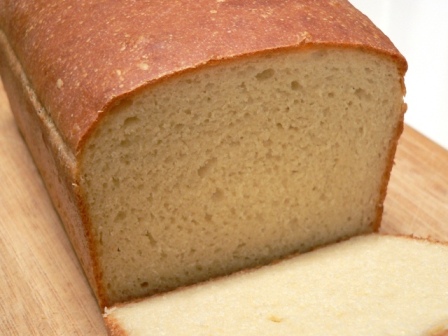
If you live where I do, you’ll often end up with half a tub of ricotta in the fridge.  That’s because the lure of warm, fresh ricotta for  the price of a gold coin tempts you daily, often before you’ve finished the perfectly fine batch you bought a few days ago.  Loathe to throw out Friday’s purchase, I tried this recipe yesterday.  Pete was very happy with the results, which went particularly well with his homemade pluot jam.  This is a moist, fine-grained loaf with the distinct flavour of ricotta and just a little added richness from the curds.  Here are a few photos of the process…

ricotta-0021

120509 041

120509 047

ricotta bread 012

. . . . .

The best thing to do with leftover ricotta loaf is…bread and butter pudding!

Read Full Post »

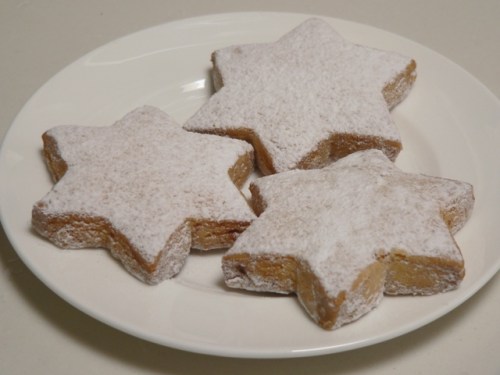
kifli 009

Have I persuaded you to make June’s Vanilla Kifli yet?

If not, please let me try again, because these little treats are melt-in-the-mouth delicious.  Granted, the word kifli means crescent, so making them star-shaped is somewhat unconventional.  But they appeal to the littlies, so we now make “star and moon” vanilla kifli.  The ones above are part of a batch I made for Mother’s Day (my mum likes stars as well!).

I’ve now made this recipe numerous times and have a couple of tips to add to my original post.  Firstly, if possible, go by weight rather than cup measurements when you’re putting the ingredients together.  Doing so will ensure a consistently moist dough – a cup of flour can vary enormously depending on everything from ambient humidity to your hormonal state, so if you have scales, this is a good time to pull them out and use them.

Secondly, don’t spread the mix too thinly – Pete measured the dough this morning and declared the perfect thickness to be 1.5cm (5/8 “).  I usually roll or press out half the dough at a time, onto a sheet of parchment paper.

kifli 001

Thirdly, substitute ground unblanched almonds for a small portion of the almond meal.  This batch had 50g  ground almonds to 200g almond meal.  The recipe will work perfectly well with straight almond meal, but the unblanched almonds add interesting texture and colour.

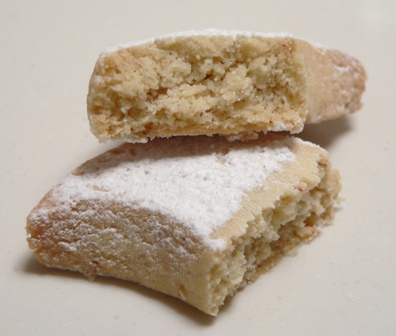
Finally, don’t overbake.  I set my oven to 160C (fan) and bake for no more than 18 minutes, and sometimes even that’s too much.  I do, however, have a hot and occasionally temperamental oven, so you’ll need to adjust accordingly to suit your baking conditions.  As you can see from the photo below, the absolute ideal is a kifli which is light golden the whole way through, without a darkened brown bottom.  That bit takes a bit of practice, but the rest of the recipe is actually remarkably simple!

kifli 018

These cookies seem to improve with a little time, so make sure you hide some until the second day (hard to do in this house).  You can also shape the unbaked dough into logs and freeze them (make sure you wrap them well to prevent freezer burn).  I’ve defrosted frozen dough a month later and it’s  baked up beautifully!

Read Full Post »

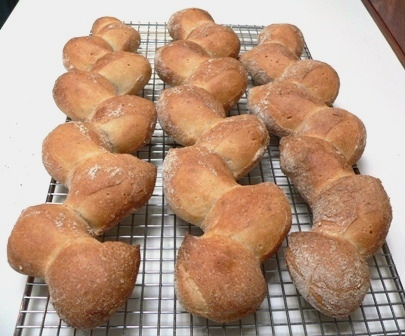
If you can bake a regular loaf of bread, you can make epi.  This decorative loaf, traditionally fashioned to mimic a stalk of wheat, is always impressive, providing you don’t show anyone how easy it is to make.

Start with your normal batch of dough (mine was a white sourdough, but it will work equally well with yeasted dough) and when it has finished its first rise, divide it into 250g – 300g portions.  Stretch and roll these out into long baguette shapes and allow them to prove on a floured tea towel until well risen – about 30 minutes for a yeasted dough, perhaps a bit longer for sourdough.  I dust my tea towel heavily with rye flour – plain flour seems to stick quite badly. Place the long rolls seam side up, so you can flip them over when you go to bake them.  As shown below, pleat the tea towel to form channels for the baguettes to rise in, then fold the ends of the tea towel in to cover the top of the dough while it rises.

Preheat the oven to 250C (480F), then drop the temperature down to 220C (430F) – or your usual baking temp – when you put the dough in.

090409-003

Move each proved sausage carefully to a baking tray lined with parchment paper.  Using a pair of scissors, snip through the dough and twist the little knobs to alternate sides.

090409-010

090409-011

Once you’ve finished, spritz the top of the epi with water and bake in the oven (dropping the heat down when you put them in) for 20 – 30 mins, or until golden brown and crusty.  For my dough, I allow 15 minutes on 220C, then drop the heat to 175C for a further 10-15 minutes, rotating the trays when I reduce the heat.

090409-012

Epi are the perfect bread for sharing – a stick or two on the dinner table can be easily broken up, resulting in lots of little individual bread rolls.  It’s also the perfect bread for dipping in the Pukara Novello!

Read Full Post »

Onion Marmalade

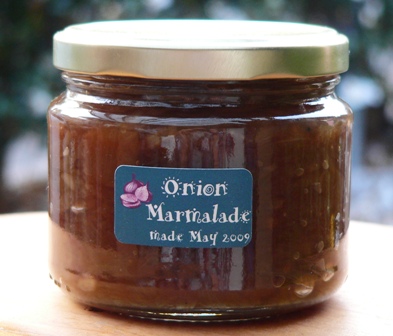
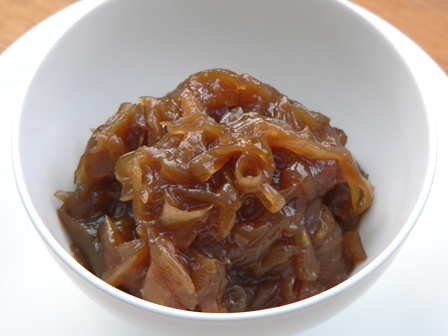
onion-marmalade-001

This is the third recipe I’ve tried for onion marmalade, and the first one I’ve been really happy with.   While the others have been too sweet, this one is subtle, with delicious complex flavours that were a perfect complement to last night’s sausages and mash.

The most important thing is the slow, slow cooking of the onions – don’t rush this or the texture and flavour won’t be right.  Also, I’d strongly suggest you prep your onions with the slicer attachment of your food processor, as 2kg is a lot of onions!  Even with the food processor, I shed a few tears – which made me think of the Muppets clip below.

Onion Marmalade

Makes 3 x 300ml jars  (Adapted from Preserves by Pam Corbin)

  • 100ml olive oil
  • 2kg onions, peeled and finely sliced
  • 200g brown sugar (original recipe used demerara sugar)
  • 150g lilly pilly or quince jelly (original specified redcurrant jelly)
  • 300ml white wine vinegar (original recipe used cider vinegar)
  • 50ml balsamic vinegar
  • 1 rounded tsp salt
  • 1/2 tsp freshly ground black pepper

1. Heat oil in a large heavy pan (I used a large Le Creuset pot) over a medium heat and add the onions.  Reduce the heat to low, cover the pan and cook, stirring occasionally, for 30 – 40 minutes until the onions are completely wilted and just beginning to colour.

2. Add the sugar and jelly, and increase the heat.  Remove the lid and cook, stirring frequently, for about 30 minutes until the mixture turns dark brown and most of the liquid has evaporated.

3. Take the pan off the heat and allow to cool for a few minutes, then add the vinegars (this is important, as adding vinegar to the hot pan will cause it to all steam up and evaporate away).  Return to the heat and cook for another 10 minutes or so, until the mixture becomes thick and gooey, and a spoon drawn across the bottom of the pan leaves a clear track across the base for a couple of seconds.

4. Remove from heat and season with the salt and pepper. Spoon into hot sterilised jars and seal with vinegar-proof lids.

Note: the original instructions don’t mention this, but we routinely boil our sealed jars in a hot water bath for ten minutes, ensuring that the lids are covered by at least 2.5cm (1″) of hot water.

onion-marmalade-005

Read Full Post »

« Newer Posts - Older Posts »