Feeds:
Posts
Comments

Archive for the ‘Recipes’ Category

It was my darling friend Carol’s birthday last week, so I made her a box of treats.

I filled it with her favourite chestnut flour brownies, dark hazelnut praline chocolates, roasted hazelnut amaretti, and chocolate chip cookies.

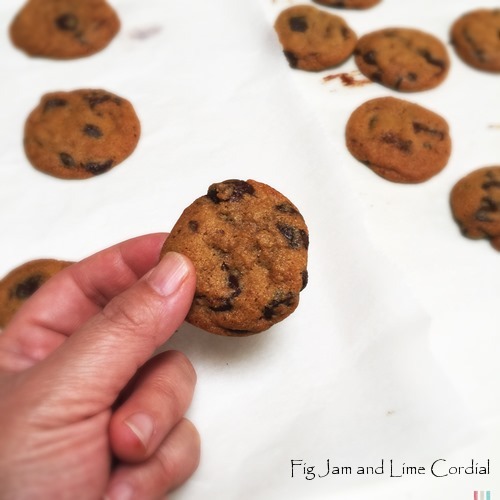
The cookies are an old favourite, but this time I made them in two sizes. I’ve tweaked the methodology a bit as well…

The secret is to start with cold butter, and then to let the dough rest in the fridge overnight. This ensures the cookies won’t spread too much when baked. Oh, and watch the egg size – large eggs are good, but huge jumbo ones will result in a sloppy dough. I shaped my cookies with icecream scoops – a regular sized one and a small one that I normally use to make truffle centres.

These quantities make a double batch for sharing, but the recipe works perfectly well halved…

  • 330g plain flour
  • 70g bread or bakers flour
  • ½ tsp fine sea salt
  • 240g white sugar
  • 200g brown sugar
  • 250g unsalted butter, cold, cut into small pieces
  • 2 large (59g) eggs
  • 2 tsp vanilla extract (I used homemade)
  • 1 tsp bicarbonate of soda (baking soda), sifted
  • 300g semisweet chocolate callets (Callebaut 811, 54% cocoa)
  • 100g bittersweet chocolate callets (Callebaut 70% cocoa Sao Thome Origin)
  • 200g bake stable dark choc chips (Callebaut 44% cocoa baking sticks, broken into small pieces)

Note : As you can see, there is a very high ratio of chocolate to flour (3:2). I use all dark in my cookies, but please use any combination you prefer. Try to use the best chocolate you can get your hands on!

1. In a large mixing bowl, beat the cold butter and sugars together, until they form a grainy paste.  Beat in the eggs and vanilla until just combined. Do not overmix.

2. In a separate large bowl, stir together the flour, salt and sifted bicarbonate of soda (it’s important to sift the bicarb, or you’ll get bitter lumps in the finished cookie). Add the chocolate bits to the flour and stir to combine. Add the whole lot to the batter and mix until just incorporated. It’s important not to overmix at any stage, or the cookies will flatten out while baking.

3. Cover the bowl and pop the dough into the fridge overnight to chill. These cookies are notorious spreaders, and chilling them helps to minimise this.

4. Preheat oven to 150C (with fan). Line two baking sheets with parchment paper.

5. Scoop balls of cold dough and place them on the lined trays, about 10cm apart. The dough should be quite stiff. If you’re using the larger 5cm scoop, flatten the bottoms out a little (so they sit on the tray like half domes); for the smaller cookies, shape the dough into small round balls (around the size of a melon ball). It’s best to bake large and small ones separately because of the different baking times.

6. Bake the large cookies for 16-18 minutes until golden brown, rotating the trays once during the baking time. Bake the small cookies for about 10-12 minutes, rotating once at the 8 minute mark. The cookies are done when they move a bit on the tray when gently pushed. Experiment to see how you like them – a slightly shorter time will result in more fragile cookies with a wafery crumb, a minute or so longer and the cookies will be chewier, more robust and store better.

7. Remove from the oven and allow the cookies to sit on the trays for a minute or so. Instead of transferring them onto a wire rack to cool, I prefer to carefully drag the sheet of parchment with all the cookies on it off the tray and onto a cold bench. This allows the melted chocolate to reform before the cookies are moved.

The big and little cookies will keep well for several days in airtight containers…

We love these – they’re less doughy than most chocolate chip cookies, which makes them a bit fiddlier to make, but much easier to eat!

Read Full Post »

Beggar’s Chicken

Sometimes…a proper food adventure is needed!

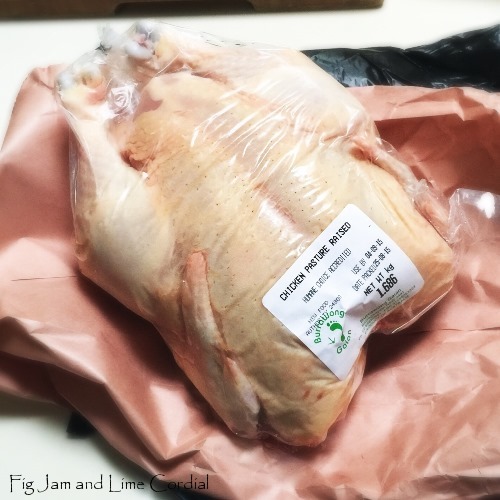
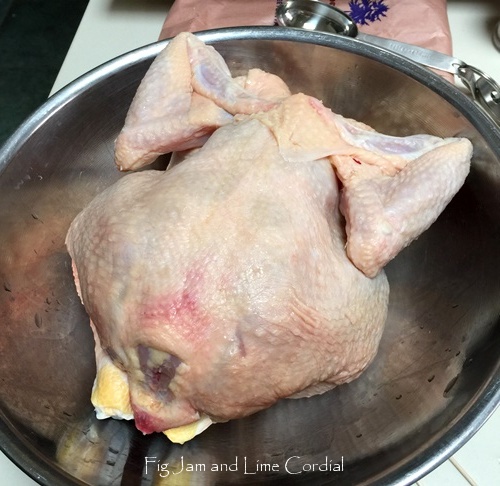
I picked up an amazing Burrawong Gaian chicken from my friends at Dulwich Hill Gourmet Meats

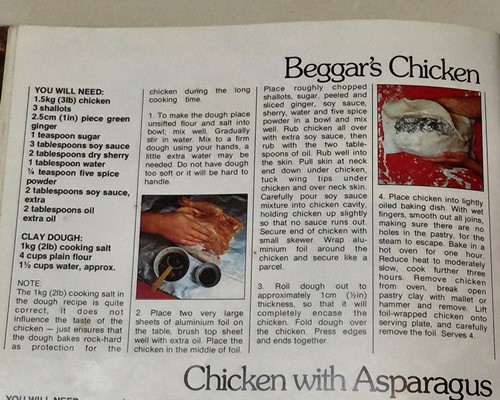
…and tracked down a very old recipe on the bookshelf…we last attempted this in 1985…

bc9

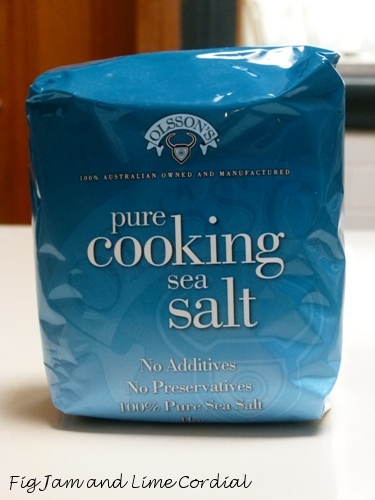
I made a salt crust using flour and a kilo of very affordable Australian cooking salt…

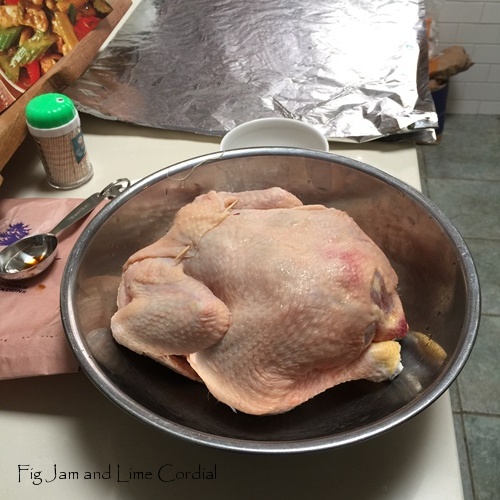
We carefully sealed up the neck end of the chicken, firstly with toothpicks (break the sharp ends off so that they don’t pierce the foil)…

…and then by folding the wings over to hold the skin in place…

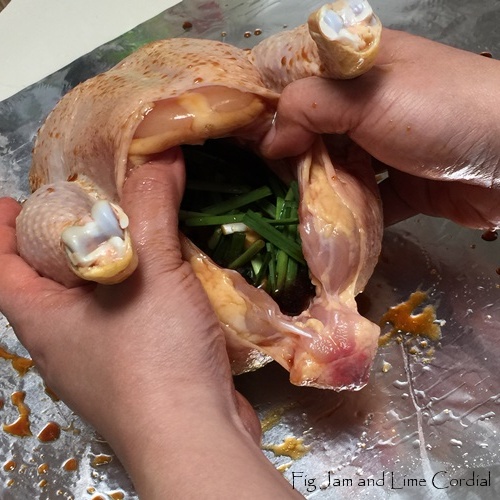
The skin was rubbed with soy sauce and oil, then a marinade of perennial leeks (I didn’t have any spring onions), ginger, sugar, soy sauce, sherry, water and five spice powder was carefully poured into the now closed cavity. It took a bit of effort, but we managed to seal up the bottom of the bird to most of the liquid inside…it was a two person job…

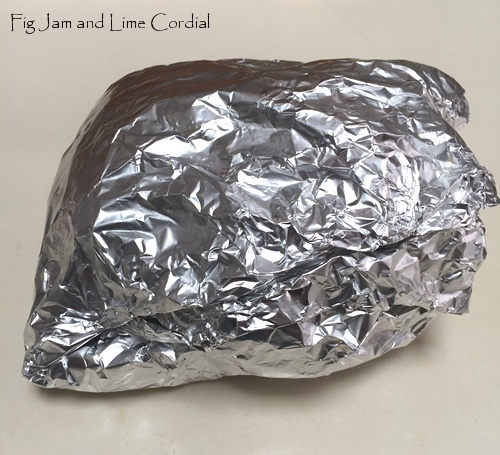
The prepped chook was wrapped in two layers of well oiled, thick foil…

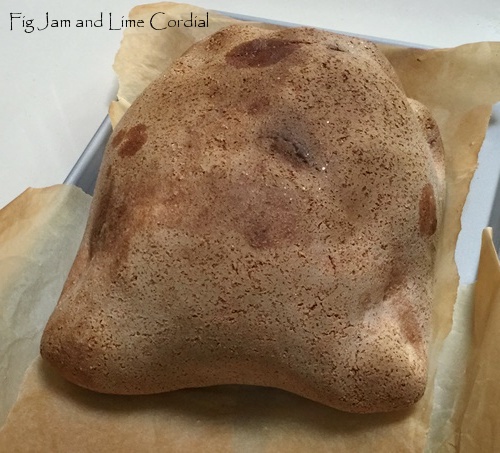
…and then wrapped in the rolled out salt dough. The entire parcel was baked for a total of four hours…

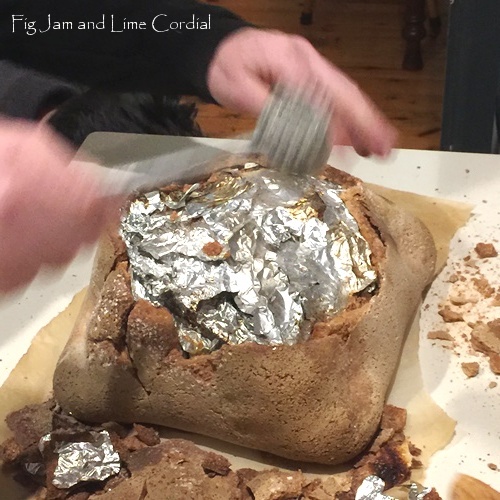
Cracking open the concrete hard shell took a bit of muscle…

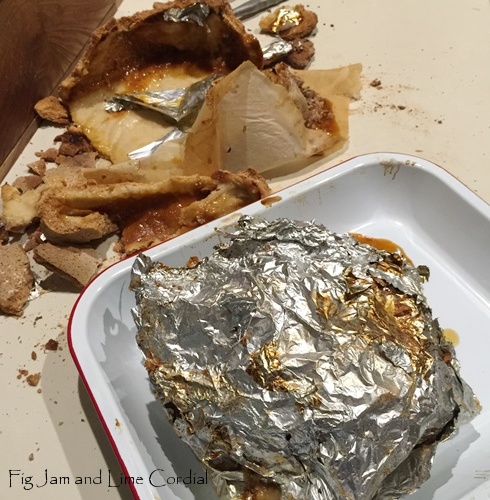
…and resulted in quite a bit of debris…

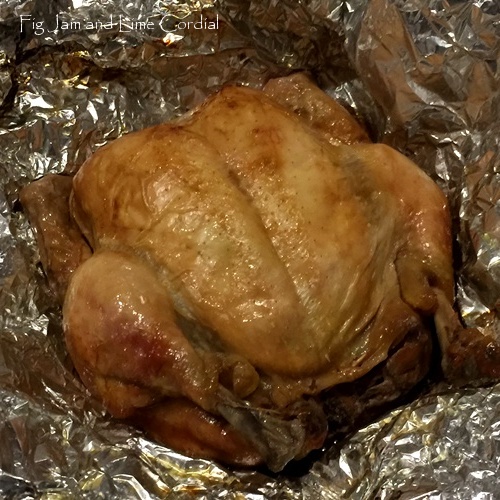
But it was so worth it! The finished chicken was tender and extremely flavoursome, but not overly salty. The white meat was just a tad dry – I think when we make this again in another twenty years time, we’ll have to remember to roast the bird breast-side down.

The following day, the tiny bit of meat leftover had a texture and flavour that resembled a really good smoked chicken…

Lots of work, but great fun! If you do give this a go, make sure you wrap your chicken really well – you want to make sure the foil package doesn’t leak, or the salt can seep in. And whilst it’s delicious served hot with rice, I think it would also make a brilliant cold sandwich filling!

Read Full Post »

Potato Crisp Focaccia

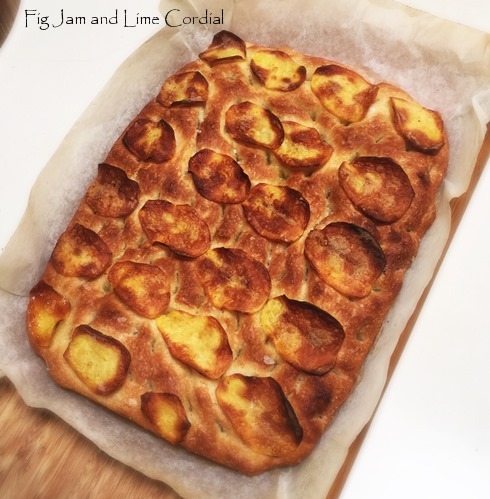
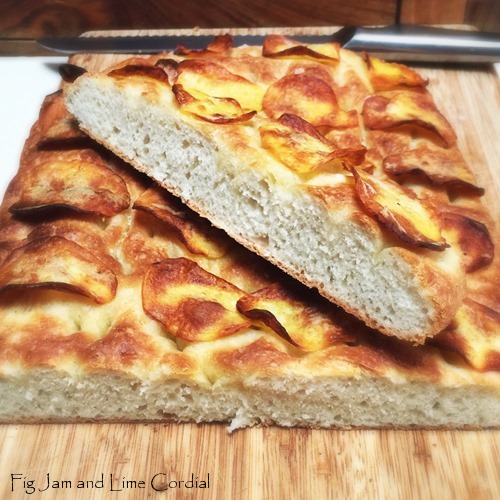
This isn’t the most successful bread recipe I’ve ever attempted. The potato slices on top all turned into crunchy crisps and fell off as the loaf was sliced.

But I’m blogging it because it was an enormous hit with my family. I took the focaccia (above) out of the oven at 11am. I then went out to errands for a few hours. When I returned at 3pm, the entire thing was gone. Smashed. Not a single crumb left. Pete didn’t even get a taste.

So the next day, I made it again, and this time kept my eye on it until it was cooled enough to slice…

Because I’d increased the hydration of the dough, the crumb was soft and tender, and the truffle oil added a delicious flavour to it…

  • 500g bakers flour
  • 10g dried yeast
  • 8g fine sea salt
  • 360g water
  • 40g extra virgin olive oil
  • truffle oil, for the top of the loaf
  • flaky sea salt
  • 2 medium sized potatoes

1. In a large mixing bowl, whisk together the flour, yeast and salt. Add the water and olive oil, then squelch together with a clean hand, or using a stand mixer with dough hook attachment.

2. Cover the dough and allow it to sit for half an hour, then give it a quick knead. Cover again and allow to prove until doubled in size. Preheat the oven to 220C with fan.

3. Turn the dough out onto a parchment lined baking tin (I used my medium enamel pan) and spread it out into a flat rectangular shape. Drizzle over the top with truffle oil, then sprinkle over the flaky sea salt. Now push your fingers into the dough, all over, pushing through to the tin, dimpling the surface completely. This pushes the truffle oil and salt into the focaccia, allowing the flavours to incorporate.

4. Allow the dough to rise again  briefly as you prepare the potatoes (don’t prep the spuds too early, or the slices will discolour). Peel the potatoes and slice them finely on a mandoline. Lay the slices over the focaccia. Drizzle a little extra oil and sprinkle over a bit more salt.

5. Bake for 15 minutes, then rotate the pan and bake for a further 10 – 15 minutes longer, until golden brown. Watch that the potatoes don’t burn – reduce the heat after rotating the pan if necessary.

The following morning, I found half of the second loaf, denuded of potato crisps, still in its bag in the kitchen. I filled it with salami, prosciutto, sundried tomatoes and English cheddar, then heated the whole thing up in the sandwich press. Perfect brunch fare!

Read Full Post »

Chocolate Sablés

It’s a joy to be baking again!

The last couple of months have been hectic, and I haven’t had much time to spend in the kitchen. I still don’t have the emotional reserve to be experimenting with new recipes yet, but I spent last weekend filling the freezer with rolls of frozen cookie doughs, including old favourites like Dorie’s World Peace Cookies.

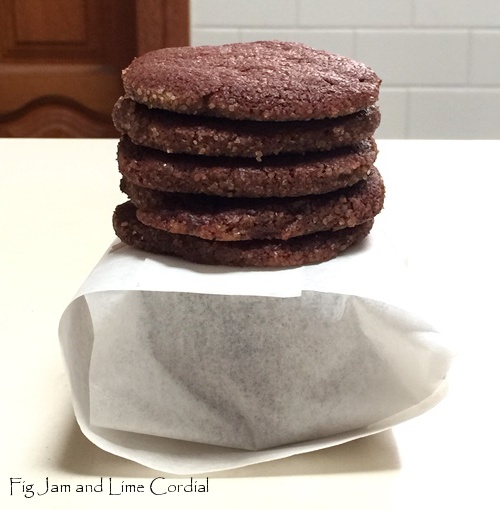
I also indulged in a big batch of Chocolate Sablés. These are oh-so-good – crumbly, short and very moreish. I blogged about them in 2010, and they’re every bit as good today as they were five years ago. I haven’t changed a single thing in the recipe. Here it is again – I hope you enjoy them as much as I always do…

Chocolate Sablés
(adapted from a recipe in Fran Bigelow’s Pure Chocolate)

  • 240g (8oz) semisweet chocolate (I used Callebaut 811 54% cacao)
  • 250g (1 cup) unsalted butter, at room temperature
  • 220g (1 cup)white sugar
  • 1 large (59g) egg
  • 1 teaspoon vanilla extract (I used homemade)
  • 140g (just under 1 cup) plain (AP)  flour
  • 170g (1 cup) potato starch flour
  • 55g (½ cup) Dutch-processed cocoa
  • pinch of fine sea salt
  • Demerara or raw sugar for decorating

1. In a medium bowl, sift the flour, potato flour and cocoa together. Even if you don’t normally sift, make an exception this time, or the cocoa and potato flour will be lumpy and won’t mix properly. I think the sifting also lightens the flour to create a crumblier cookie. Stir in the salt.

2. Melt the chocolate in the microwave on high – use short bursts and stir frequently, making sure you don’t scorch the chocolate. Allow this to cool, but not set up.

3. Using an electric mixer, beat the butter on medium until smooth and pale, then add the sugar and continue beating until smooth. Scrape down the sides often and expect to beat the mixture for a good 3 to 5 minutes until light and fluffy.

4. Beat in the egg and vanilla until blended.  Add the melted chocolate and mix on low to medium until just combined, scraping down the sides of the bowl as required.

5. Add the flour mixture and mix at low speed until just combined. Do not overmix. Finish by stirring with a wooden spoon or spatula if there are little bits of flour left unincorporated.

6. Put the bowl in the fridge for 10 – 20 minutes until the dough is firm enough to handle, but not too stiff.

7. Place a large sheet of parchment paper on the counter, and pour over a generous amount of Demerara sugar (about ¼ cup). Shape half the dough into a thick log (about 6cm or 2½”  in diameter)  and roll it in the sugar until the sides are well coated (leave the ends uncoated). Wrap the log in a sheet of parchment or cling film and refrigerate for at least 4 hours. Repeat with the remaining dough. The logs can remain in the fridge for up to 3 days, or frozen for longer storage.

8. When it’s time to bake, preheat the oven to 175C/350F or 160C /320F (fan assisted). Remove a log of dough from the fridge and allow it to come to room temperature for about 10 minutes.

9. Slice the log into 6mm/¼” thick discs. Lay the slices onto parchment lined trays, leaving 2½ cm/1″  between each.

10.  Bake for 10 – 12 minutes, until the cookies have expanded and move slightly when very gently prodded. Bigelow’s instructions say to bake “until the tops are dull”. Remove the sablés from the oven and allow them to rest very briefly before carefully transferring to a wire rack to cool. They’re very fragile – be prepared to eat any broken ones!

. . . . .

I made four rolls (a double batch) and froze three of them for another day. Each batch makes at least 50 cookies. I’ve packaged them in lots of five for sharing with the neighbours…

Hope you’re all having a lovely week! ♥

Read Full Post »

International Scone Week 2015

Your very kind comments on my last post gave us all great comfort. Thank you. ♥

. . . . .

Folks, it’s International Scone Week!

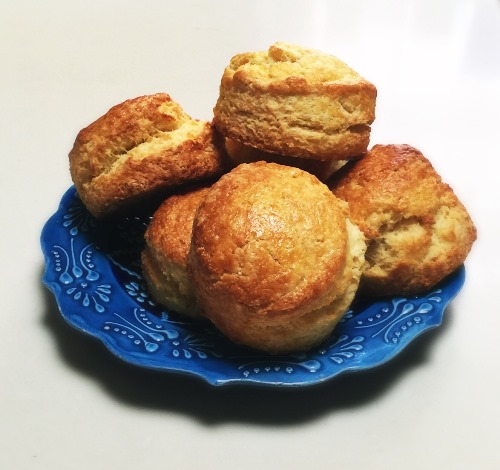
Here is my simple contribution for 2015 – Small Man’s favourite buttermilk scones. He’s in the middle of a HSC trial exam today, and has told me he’s really looking forward to these when he gets home…

International Scone Week is now hosted by the lovely Tandy of Lavender and Lime. Please see her post on how to join in and check out all the wonderful scones baked so far!

Read Full Post »

« Newer Posts - Older Posts »