Feeds:
Posts
Comments

Archive for the ‘Recipes’ Category

Converting Recipes to Metric

A post written somewhat selfishly for my own benefit, but hopefully some of you might find it useful as well.

Conversion tables published on the internet are often variable, so I thought I’d list (for my own reference) the quantities that I use for baking.  These are the weights I’ve come up with through trial and error and I’ve found they work well with our local ingredients.

  • 1 cup flour (plain/AP, self-raising, bread) = 150g
  • 1 cup or 2 US sticks of butter = 250g
  • 1 cup white or caster (superfine) sugar = 220g
  • 1 cup packed brown sugar = 210g
  • 1 cup Dutch-process cocoa = 110g
  • 1 cup natural cocoa = 100g
  • 1 cup icing sugar mixture (confectioner’s sugar) = 125g
  • 1 cup almond meal = 125g
  • 1 cup water (250ml) = 250g
  • 1 cup oil (250ml) = 225g
  • 1 US/UK tablespoon (15ml) = 3 teaspoons
  • 1 Aus tablespoon (20ml) = 4 teaspoons
  • 1 US tablespoon of butter = 15g
  • 1 cup cornflour (cornstarch) = 135g
  • 1 oz = 30g
  • 1 large egg = 59g
  • 1 teaspoon baking powder = 5g

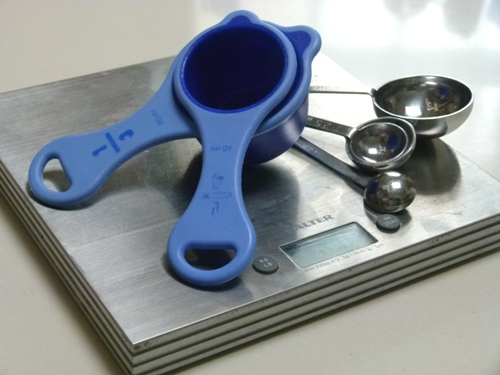
Most American recipes (and some older Australian ones) list their ingredients by cup measure. Before I bake such a recipe, I will mark it up with the equivalent metric quantities, and then proceed to measure out using a set of digital scales.  My cookbooks are all scribbled in, and I keep a flour-encrusted calculator on my kitchen bench specifically for this purpose!

PS. I’ll add this listing to our Suppliers page on the top toolbar, so it will be easy to find at a later date!

Read Full Post »

I’ve wanted to try this recipe for ages!

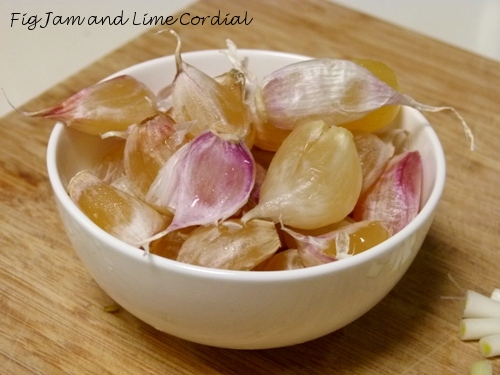
With the arrival of Ian and Diana’s new season garlic, I was keen to use up the last of my previous year’s frozen supplies

Forty frozen cloves of garlic, looking most fine after a year in the deep freeze!

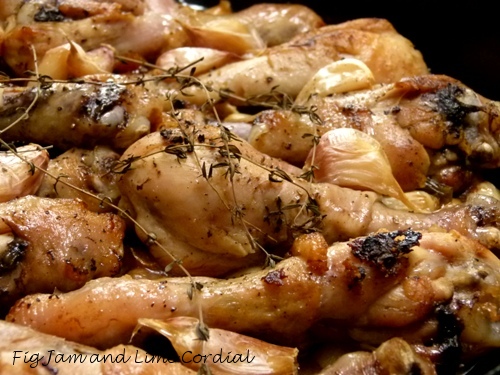
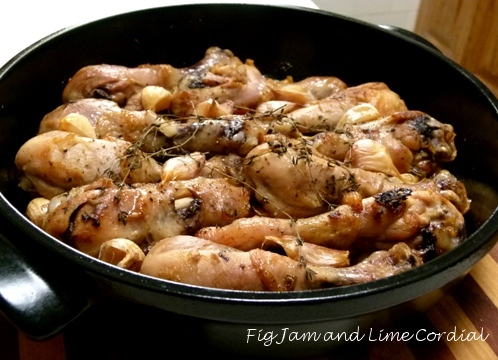
I followed Nigella Lawson’s recipe, substituting chicken drumsticks for the thigh pieces she’d stipulated, and our perennial leeks for the spring onions.

The chicken was browned in a little oil first, then laid over the chopped leeks, half of the unpeeled garlic cloves and a scattering of thyme leaves.  The remaining cloves were scattered on top with a few sprigs of thyme, a couple of tablespoons of white wine and a light seasoning of salt and pepper. The pot was then covered with a tight fitting lid and baked in a 160C (with fan) oven for 1½ hours.

The finished dish was surprisingly mellow, yet still distinctly garlicky.  The frozen garlic worked perfectly, although there were still quite a few cloves left in the pot at the end of the meal (Small Man made short work of most of the drumsticks)…

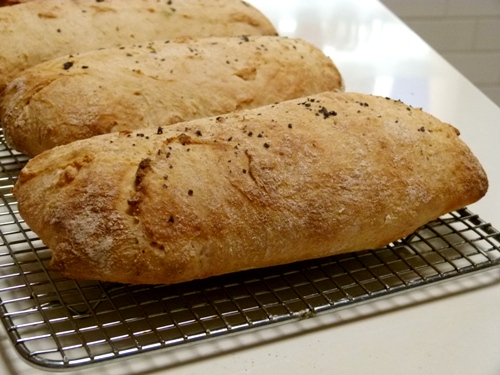
Loathe to waste the cooked garlic, and inspired by Joanna’s recent post, I squeezed the soft pulp out of the leftover cloves and mixed it into a batch of our sourdough ciabattas.  The finished loaves were served with antipasto the following evening!

Read Full Post »

♥ A recipe for Aunty Robbie

. . . . .

I recently came across this intriguing recipe in Alice Medrich’s Bittersweet.

It’s a self-marbling cake, made with extra virgin olive oil, cold eggs and a little white pepper, and it’s surprisingly good.  The layers swirl together in a tie-dye fashion, giving the cake a lovely retro feel.

I baked it in a 10-cup bundt pan as instructed, but found that there was far more batter than needed.  Despite making two extra muffins, the cake still  burgeoned over the top of the pan, and I had to slice the bottom off to get it to sit flat.  If you decide to bake this, make sure you have an extra loaf tin or muffin pan on standby to take the excess batter – it’s too good to waste!

Here's the bottom of the cake that I cut off - love the 70's swirls!

This recipe had me so fascinated that I went out and bought natural cocoa. I normally only keep Dutch-process cocoa in the pantry, but Ms Medrich was adamant that it wouldn’t work in this cake!

Chocolate mixture:

  • 50g (½ cup) natural cocoa powder, sifted (I used Cadbury’s)
  • 110g (½ cup) sugar
  • 85ml (¹/3 cup) water

Cake batter:

  • 450g (3 cups) plain (AP) flour
  • 2 teaspoons baking powder
  • ¼ teaspoon fine sea salt
  • 440g (2 cups) sugar
  • 250ml (1 cup) extra virgin olive oil
  • 1 teaspoon vanilla extract (I used homemade)
  • ½ teaspoon finely ground white pepper
  • 5 cold large (59g) eggs
  • 250ml (1 cup) cold milk

1. Preheat the oven to 175C (350F) or 160C (320F) with fan. Grease a 10 or 12 cup bundt tin, or two 6 cup loaf tins. Line the base of the loaf tins with parchment paper.

2.In a large bowl, whisk together the chocolate ingredients – cocoa (make sure you sift it first), water and 110g sugar.  Whisk until well blended and smooth.

3. In another bowl, whisk together the flour, baking powder and salt.

4. In a large mixing bowl using an electric mixer with a whisk attachment, beat the 440g sugar, olive oil, vanilla and pepper until well blended.  Add the eggs one at a time, mixing well after each addition, and then beat for a few more minutes until the batter is thick and pale.

5. Beat in a cup of flour, then half a cup of milk, then the second cup of flour, then the rest of the milk, and finally the rest of the flour.  After each addition, beat just enough to combine.

6. Using a cup measure, scoop 3 cups of the batter into the bowl with the chocolate mixture, and whisk or stir to combine.

7. Pour the two batters into the bundt pan (or loaf pans) in six alternating layers (three of each), starting with the plain batter.  Don’t overfill the bundt pan.  Any surplus mixture can ladled into muffin pans or a small loaf tin (reduce the baking time accordingly).  The batter will swirl into the most gorgeous patterns as it bakes, there’s no need to do anything further to it.

8. Bake the cake until a skewer comes out clean, which should take 60 – 70 minutes.  Ms Medrich recommends the same baking time for both the bundt pan or loaf tins, but so far I’ve only baked this cake in my Wilton Belle pan. Allow the cake to rest in the pan for 15 minutes before turning it out carefully onto a wire rack to finish cooling.

Suelle at Mainly Baking makes a very similar Alice Medrich recipe – she recently posted her mocha version here.

This cake keeps well, and is better eaten on the second day.  It slices cleanly and presents beautifully, and has a gentle, old-fashioned feel to it, despite the olive oil and white pepper.   Definitely one I’ll be baking again!

Read Full Post »
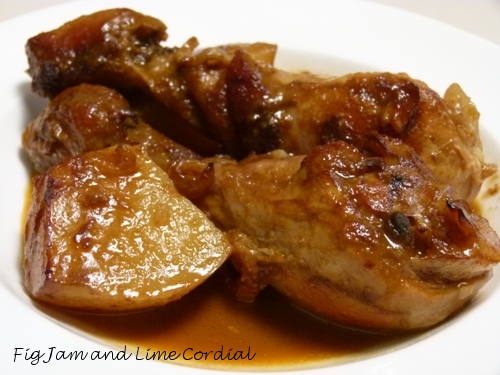
Sometimes, our curries are complicated concoctions involving a wide range of spices and condiments, blended together in carefully measured quantities.

Other times, they’re all-in-one stews that are quick to prepare with minimal washing up at the end of the meal.  This is the one I make during holidays, when I’m feeling particularly lazy.

It begins with a good Malaysian curry powder – I use either Lingam’s or the classic Ayam Brand curry powder that my mother always kept in her pantry…

  • 1-2 large onion, peeled and quartered
  • 4 cloves garlic, peeled
  • 3 – 4 rounded dessertspoons of curry powder
  • 1 teaspoon of sweet soy
  • juice of half a lemon
  • salt to taste
  • curry leaves (optional)
  • 1.5kg chicken pieces (I used drumsticks)
  • potatoes, peeled if necessary and cut into chunks
  • 1 tin coconut cream
  • water
  • oil for frying

1. Preheat the oven to 175C (350F) with fan. In a small food processor, blitz the onion, garlic, curry powder, soy sauce, salt and lemon juice to form a thick paste.

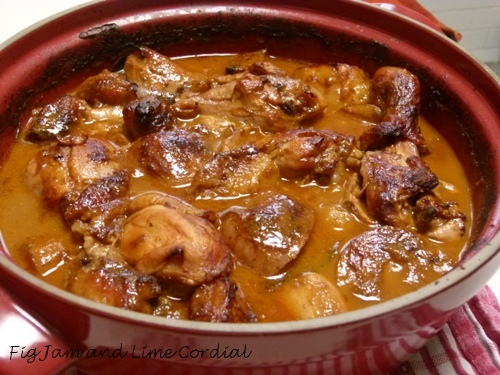
2. Heat a little oil in a large pot (I used my Emile Henry Risotto Pot) and fry off the paste for a minute or so until pungent.  Add the curry leaves and coconut cream and stir to combine.  Then add the chicken pieces and turn them in the sauce to coat.  Add a little more water if required to ensure that the chicken pieces are mostly submerged.

3. Put the lid on the pot and bake in the oven for an hour.  After that time, remove the pot from the oven and add the potatoes, gently working them into the sauce.  Replace the lid and return to the oven for 45 minutes, then remove the lid and bake uncovered for a further 15 minutes, or until the sauce has thickened. Serve with steamed or boiled rice.

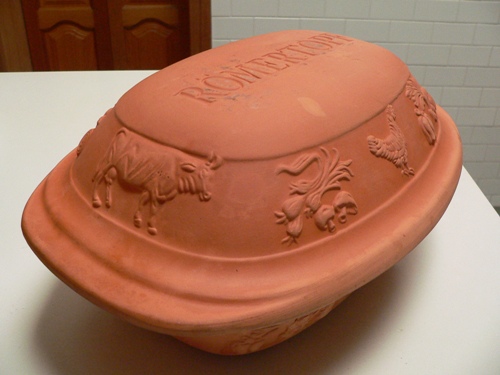
I’ve also made this curry in our Römertopf Baker, and the method is even easier.

Rub the onion/garlic/curry powder mixture over the chicken pieces, and then lay them out, with all the residual paste, in the presoaked Römertopf.  Pour over the coconut milk and a little water, stir gently to mix the sauce up a bit, then cover the pot and place it in a cold oven.  Turn the temperature up to 200C with fan and bake for two hours, adding the chopped potatoes halfway through the cooking time.  Remove the lid near the end if necessary to thicken up the sauce.  Enjoy!

Read Full Post »

It’s always a challenge at this time of year to use up our Christmas leftovers!

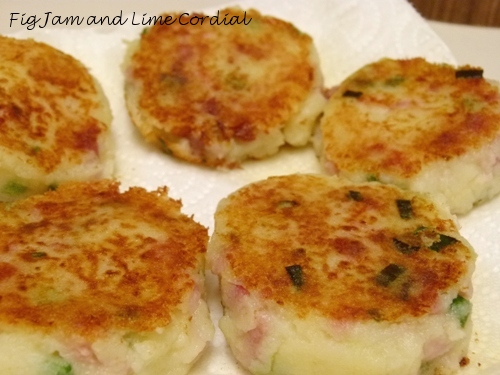
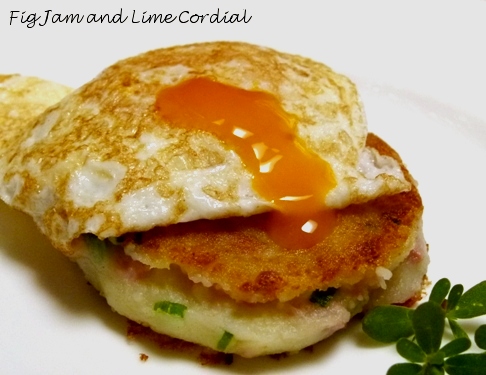
I combined a bowl of cold mashed potatoes with a handful of chopped ham and a couple of spring onions from the garden.  The mixture was shaped into patties and dusted with flour before shallow-frying to golden brown.

Topped with a freshly laid egg and garnished with a little backyard purslane, our homemade bubble and squeak was a great start to the day!

. . . . .

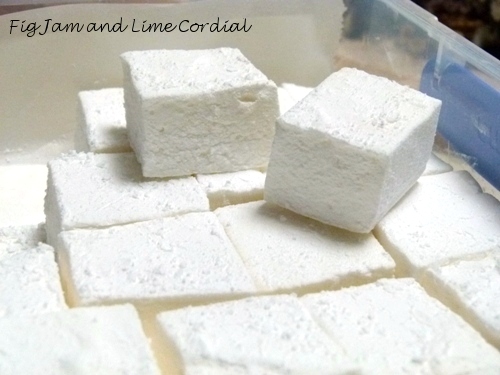
We had four leftover eggwhites from the brandy custard we made to accompany our Christmas pudding.  They became a double batch of marshmallows

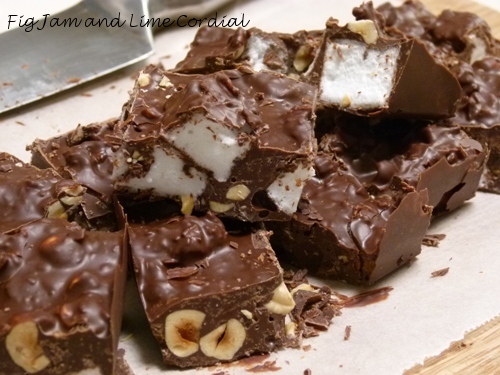
…which in turn became Rocky Road, with a blend of dark and milk Callebaut chocolate, pailleté feuilletine and roasted skinned hazelnuts…

. . . . .

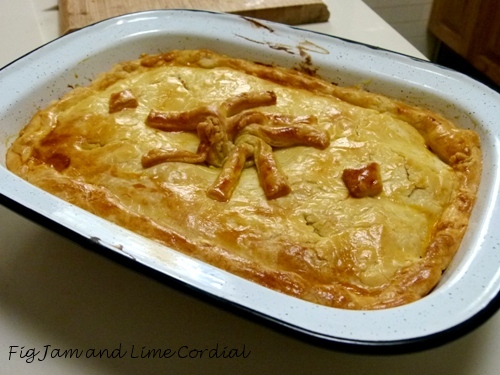
And finally, our leftover Christmas turkey and gravy became the base for a delicious turkey pie.  The pie was better than the original turkey dinner!

. . . . .

How are you going with using up your Christmas leftovers?  We still have some glazed ham left, and I’ll have to get creative, as the boys are sick of eating cold sliced ham!

Read Full Post »

« Newer Posts - Older Posts »