Feeds:
Posts
Comments

Archive for the ‘Recipes’ Category

This quick and easy recipe comes from the Silver Palate Cookbook.

I first made it more than twenty years ago, and can still remember the excitement of my then work colleagues when I brought it in for morning tea.  It was very encouraging feedback for a kitchen novice.

The recipe itself is a doddle to make – the only tricky part is spreading the thick batter evenly into the pan, and that’s only because I use parchment paper to save on washing up.  The original recipe says to grease the pan, which would make the dough handling much easier.  I’ve found the simplest method is to spread the mixture out with my hands, and then smooth the top over with a spatula.

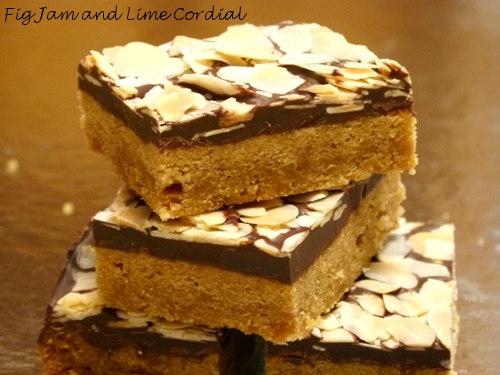
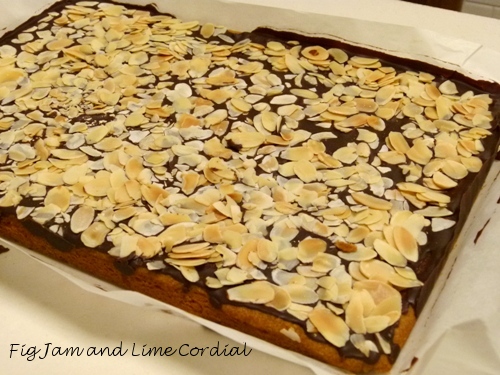
The bars are a delicious combination of brown sugar shortbread, chocolate and nuts.  They’ve proven to be as popular now as they were twenty years ago!
  • 250g (1 cup) unsalted butter
  • 210g (1 cup) brown sugar
  • 1 large (59g) egg yolk
  • 300g (2 cups) plain (AP) flour
  • 1 teaspoon vanilla extract (I used homemade)
  • 340g (12oz) dark chocolate chips (I used Callebaut 811 54%)
  • 90g (1 cup) toasted flaked almonds (original recipe specified coarsely chopped walnuts or pecans)

1.  Preheat oven to 175C/350F or 160C/320F with fan.  Grease a 23cm x 30cm (9″ x 12″) baking pan, or line it with parchment paper.  Don’t worry too much about the pan size – mine was an inch longer (13″) than the recipe recommended, and it was still fine.

2. In a large mixing bowl, cream the butter and sugar together. Add the egg yolk and vanilla, and mix well.  Finally, beat in the flour until well combined.

3. Spread the batter into the prepared baking pan and bake for 25 minutes.

4. Remove the pan, sprinkle the chocolate chips evenly over the top, then return the pan to the oven for a further 3 to 4 minutes.

5. Remove the pan from the oven and spread the melted chocolate evenly with a spatula.  Scatter the nuts over the surface, and allow to cool completely in the pan (be patient!) before cutting.
Click here for a printable version of this recipe

Read Full Post »

Pete and I were in Melbourne for less than forty-eight hours, but during that time we ate some truly amazing food.

Of course, it helps to have a friend like Davey who sent us an email with recommended dining venues before we even touched down.  One of his suggestions was Cumulus Inc, a fantastic restaurant within easy walking distance of our hotel.

Every dish we ate there was noteworthy, but the true star of the show for me was their white house bread, a flavoursome chewy sourdough with a lightly salted crust.

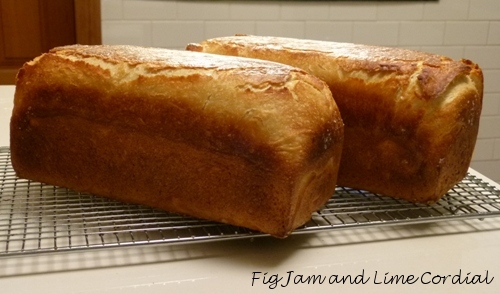
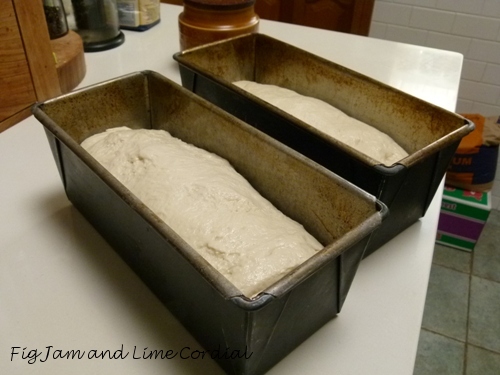
I was inspired to attempt something similar at home.  Here’s the recipe I came up with – it’s a variation on Joanna’s white toast bread, adapted to sourdough and baked in a gerry-rigged pullman tin.  The quantities below make a single long loaf, although my photos show a double batch…

  • 200g active sourdough starter ( 166% hydration, ie. fed at a ratio of one cup water to one cup flour)
  • 350g bakers/bread flour
  • 175g semola rimacinata di grano duro (remilled semolina flour)
  • 175g Italian 00 flour
  • 375g water
  • 15g extra virgin olive oil
  • 12g fine sea salt
  • 10g brown sugar
  • Maldon sea salt, for the pan

1. In a large mixing bowl, mix all the ingredients together to form a shaggy dough, then allow to rest, covered, for 30 minutes.

2. Give the dough a quick knead in the bowl, then cover again and allow to prove until roughly doubled in size. Prepare a long loaf tin by spraying with vegetable oil (I use canola) and sprinkling a generous pinch of crushed Maldon salt all over the sides and base.  My tin was 28cm x 11½cm (11″ x 4½”).  Preheat the oven to 220C (430F) with fan.

3. Scrape the proved dough onto a lightly oiled surface and shape it into a loaf.  Place the dough seamside down into the prepared tin – it should fill the tin to about halfway. Cover with cling film and allow to prove until the tin is approximately three-quarters full.  Sprinkle the top of the dough with a little more crushed Maldon salt.

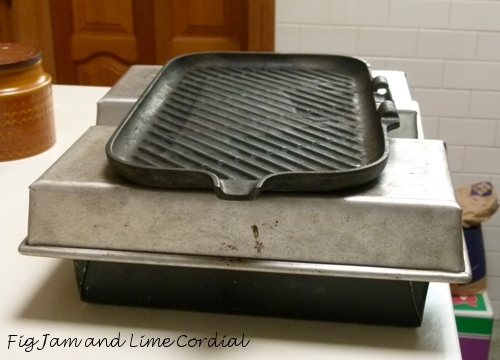
4. Spray a long flat pan with oil and place it over the top of the loaf tin.  I used a biscotti pan.  As the lid didn’t lock into place like a real pullman tin would have, I weighted it down with a cast iron griddle.

5. Reduce the oven temperature to 210C (410F) with fan and bake the bread, complete with lid and weight, for 40 minutes.  After the initial baking time, remove the pan from the oven.  Uncover it, tip the loaf out, and check for doneness by tapping on the base of the bread to see if it sounds hollow.  Return the loaf in its pan minus the lid for a further 10 minutes or more if necessary.  Allow to cool completely before slicing.

Note: If you’d like to try this recipe using a starter at 100% hydration (ie. fed with equal quantities by weight of flour and water), reduce the bakers flour to 325g and increase the water to 400g.

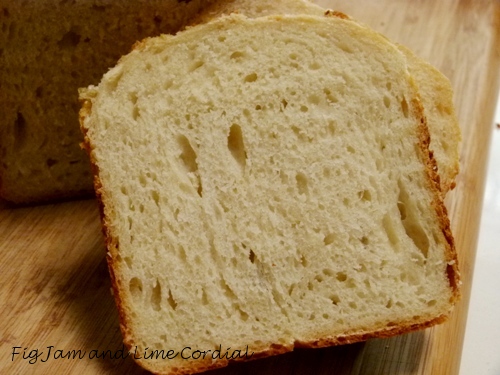
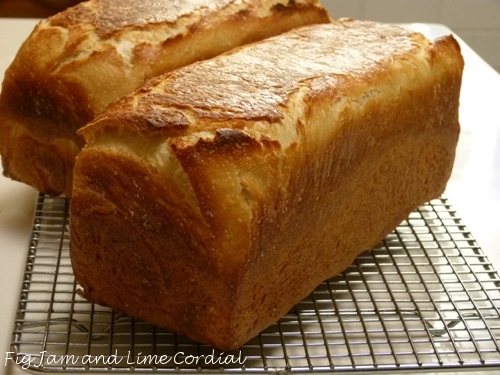
The finished loaf had a fine, tender crumb with a few small holes.  It held its shape well when sliced…

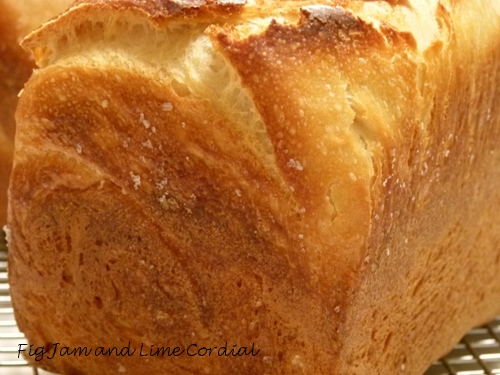
The entire crust was covered with a light dusting of sea salt…

This perfect sandwich bread is reminiscent of the bread we had at Cumulus Inc., but quite different in flavour and texture.  Nevertheless, it’s a happy reminder of the lovely meal we had there, and a great addition to our baking repertoire!

Read Full Post »

Treasure!

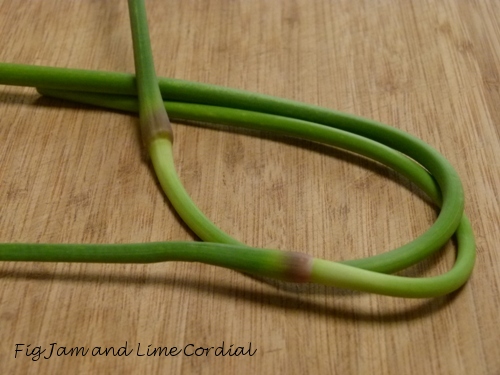
That’s what I thought when the garlic scapes arrived.  Up until now, we’d only read about these – we’d never actually had any to play with.  Scapes are the “flower” stalks of garlic plants and interestingly, only certain varieties produce them.  I say “flower”, but in fact the head of the scape is a cluster of miniature cloves.

Our grower friends Ian and Diana recently cut the scapes off their garlic bulbs – a necessary process to ensure the plant doesn’t divert all its energy into flowering rather than forming cloves.  Di, bless her, arrived with a huge bag full for me…

A week later, Uncle Steve (Pete’s brother) dropped off another bag of scapes, although these were obviously from a different variety of garlic.  Whereas Diana’s were curled, these were straight…

As you can see, the heads are jam-packed with bulbils…

The entire scape is edible, although the tops were very garlicky indeed!  The stalks have a milder, but still very distinct, and very fresh, garlic flavour and aroma.

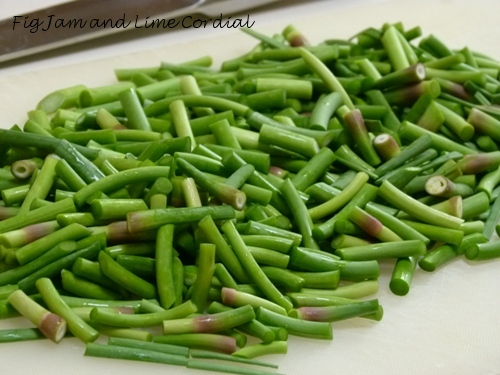
I didn’t want to waste this fabulous bounty, so I washed, chopped and froze about a third of the scapes…

Others were added to stirfries and stews for a gentle garlic kick.  The remainder were pulsed in the food processor with flaked almonds, salt and olive oil to create a delicious scape pistou – so called because unlike pesto, it doesn’t have any cheese added…

I’ve been stirring this garlicky paste into everything from pasta (and then I do add cheese) to fried rice.  It also makes a delicious dip spread over thin slices of sourdough.

I was right, wasn’t I?  It really was treasure.

PS. Have a look at what Linda’s doing with her homegrown scapes!

Read Full Post »


There’s not a lot that Jonathan won’t have a crack at.

Pete’s baby cousin, who has never abseiled before in his life, recently announced that he was going down the side of the 28-storey AMP building at Circular Quay. And with typical Jono panache, he did so in a lycra Spiderman costume.

He then told me in no uncertain terms that such bravery should not go unrewarded, so last week he invited himself and the lovely Laura over for dinner.  He’ll squeal in protest when he reads that and, truth be told, we’re always delighted to have the opportunity to share a meal with them (particularly Small Man, who likes to bend Uncle Jono’s ear about golf).

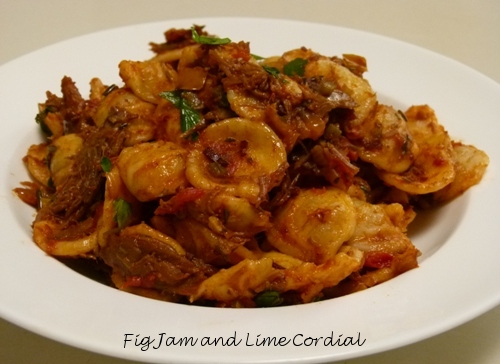
We served Mystery Meat Pie (although I knew what the meat was this time), and Pete’s dinner party speciality – duck ragu pasta.

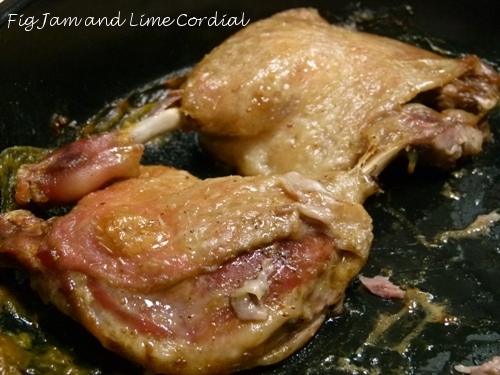
The day before, I roasted four duck marylands for a couple of hours in the oven until brown and crispy. I fed one to Big Boy who was home for lunch, and stripped the meat from the other three, discarding the bones and skin.

The roasting process produced a large quantity of duck fat and juice, which I poured into a bowl and popped into the fridge.  Once cold, the fat lifted cleanly off the top (and was stored in the freezer), leaving behind a small quantity of jellied stock which was used in the pasta dish.

Duck Ragu Pasta
(adapted from a recipe in Jamie Oliver’s Cook With Jamie)

  • shredded duck meat from three roasted marylands (thigh and drumstick portion)
  • olive oil
  • 6 slices of pancetta, finely chopped
  • 1 onion, finely chopped
  • 1 yellow capsicum, seeded and chopped
  • ½ red capsicum, seeded and chopped
  • 2 sticks celery, finely diced
  • 6 sprigs fresh rosemary,  leaves picked and finely chopped
  • 1 stick cinnamon
  • 4 cloves garlic, peeled and finely chopped
  • 2 x 400g tins of San Marzano peeled tomatoes
  • ½ bottle fruity young red wine (we used an Ashton Hills Pinot Noir)
  • leftover duck stock from roasting
  • 500g pasta (we used orecchiette, but Jamie recommends occhi di lupo)
  • 50g salted butter
  • flat leaf parsley for garnish
  • 4 teaspoons of chardonnay vinegar
  • 2 teaspoon of sherry vinegar
  • 1 – 2 teaspoons sugar
  • salt to taste

1. In a large saute pan, heat a little olive oil and fry the pancetta until brown, then add the onion, capsicums, celery, rosemary, cinnamon and garlic.   Fry until softened, about 10 minutes, then add the tomatoes and red wine.  Lower the heat and allow to simmer for about 30 minutes.

2. Add the shredded duck and duck stock, and simmer for another half an hour, adding water if required. Put a large pot of salted water on to boil for the pasta.

3. Remove the cinnamon stick and add the vinegars, sugar and salt, all to taste.  The purpose of the vinegars and sugar is to give the dish a sweet/sour taste.  Jamie’s original recipe specifies orange juice and zest, combined with red wine vinegar.  Heat for a few minutes more to amalgamate the flavours, then add the butter and allow to melt into the sauce.

4. Boil the pasta until al dente, then drain well and add to the sauce.  Serve with a scattering of chopped parsley and grated Parmesan cheese.

. . . . .

We finished the meal with Small Man’s Treacle Pudding and a large bowl of microwave custard.  Having eaten himself into a food-induced coma, Spiderman fell asleep on the floor shortly thereafter!

Read Full Post »

Pie is one of those suggestible foods.

Once mentioned, it worms itself into my brain and won’t come out until I finally get my fill of it.

That’s what happened when Lorraine posted about The Pie Tin in Newtown a couple of weeks ago.  Pete and I went there for lunch the following day, but that wasn’t enough to satisfy my cravings.

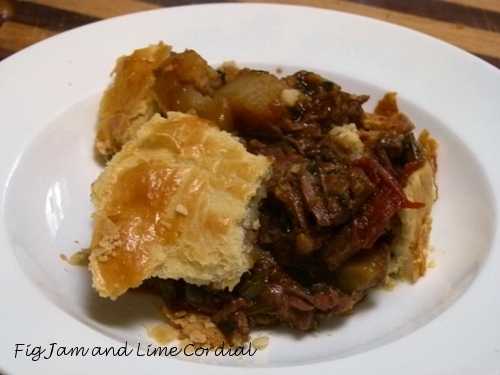
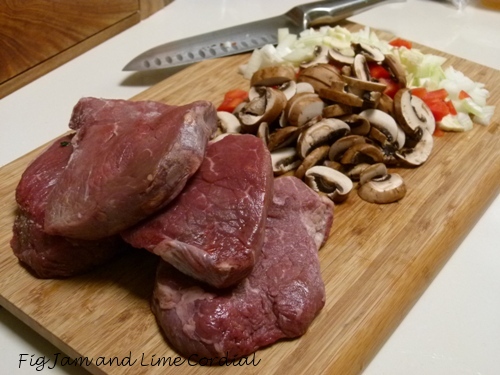
So when I uncovered a bag of ice-encrusted steak in the freezer, I decided to make mystery meat pie for dinner.   It was a big hit with the boys, and a great way to use up bits and pieces in the fridge.

I think the slightly freezer-burnt steaks were Angus rump, but as I’m a bit sloppy with both packaging and labeling, I can’t be completely sure.  I also had an onion, some leftover capsicum strips from the dinner before, a handful of Swiss brown mushrooms, and a couple of cloves of garlic…

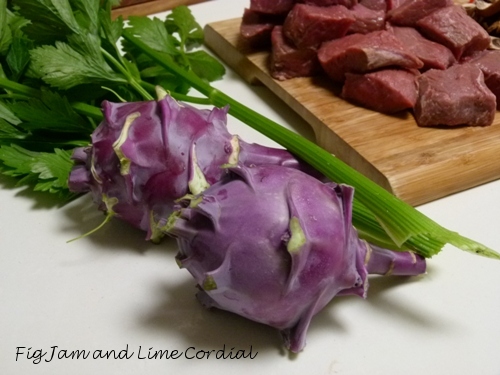
From the garden, I brought in a couple of kohlrabi and a few sticks of young celery, as well as a sprig each of rosemary and thyme.  The meat was cut into large chunks, and the vegetables peeled (as required) and chopped…

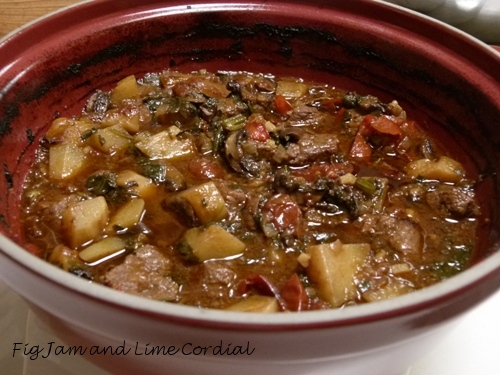
In my Emile Henry risotto pot, the meat was browned in a little oil, then set aside. The vegetables were fried briefly, and then the meat was returned to the pan, along with the rosemary and thyme leaves (stripped from their stalks), a half can of Guinness beer, some homemade beef stock, a tin of baby Roma tomatoes and a generous seasoning of salt and pepper.  The pot was covered and brought to a simmer, then baked in a preheated 175C (with fan) oven for approximately two and a half hours.

Halfway through the cooking time, I uncovered the pot to allow the sauce to reduce.  After removing from the oven, a cornflour slurry (cornflour in a little cold water) was added to thicken the sauce further.

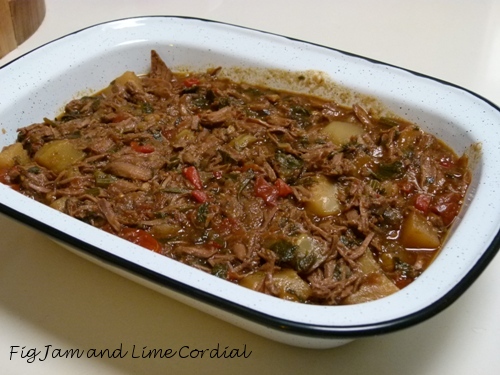
The chunks of meat were fork tender by this stage, so I removed the pieces, shredded them, and returned the meat to the sauce.  This was then ladled into a pie dish…

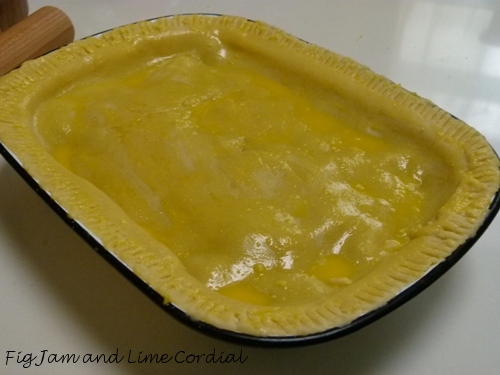
…and topped with pastry…

Pâte Brisée

  • 170g cold unsalted butter
  • 320g plain (all-purpose) flour
  • ½ teaspoon salt
  • 2+ tablespoons cold water

In a large mixing bowl, combine the flour and salt, then rub in the butter.  Add the water as needed to form a workable dough – the amount needed will vary depending on the ambient temperature and the moisture content of the flour and butter.

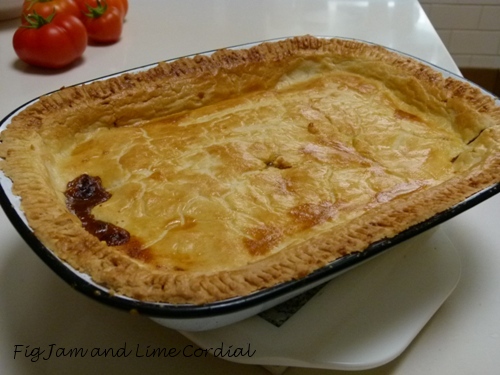
The pie was brushed with a beaten egg and baked in a preheated 200C (with fan) oven for about 20 minutes, until golden brown.

My hungry wolves loved this, particularly Pete.  And I’ve finally sated my craving – at least until the next time someone mentions pie!

Read Full Post »

« Newer Posts - Older Posts »