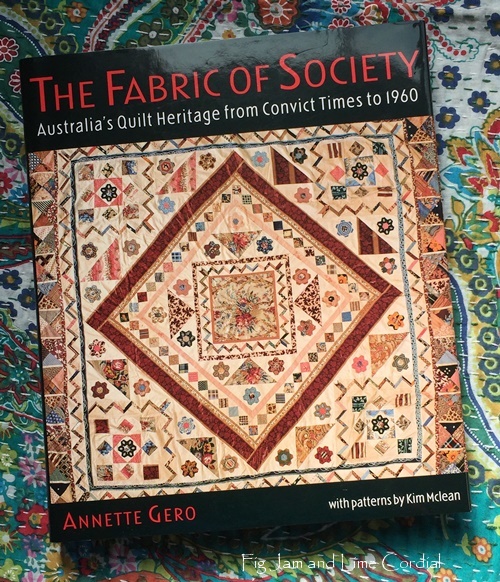
Last year, when I was tidying up, I came across a bolt of grey wool gabardine that I no longer needed.
When I mentioned it to my friend Amanda, she commented that her local quilting group could use it for making waggas. And when I enquired what a “wagga” was, the darling woman sent me photos of some pages from The Fabric of Society, Dr Annette Gero’s brilliant book about Australian quilt history. I was hooked. I cheerfully sent the bolt of wool up to Amanda in rural NSW.
Before we go any further, I should point out that I am not a quilter. I have a surprising number of friends who are amazing quilters, but I know my limitations. Any hobby that gives me an excuse to hoard small scraps of fabric must be avoided at all costs.
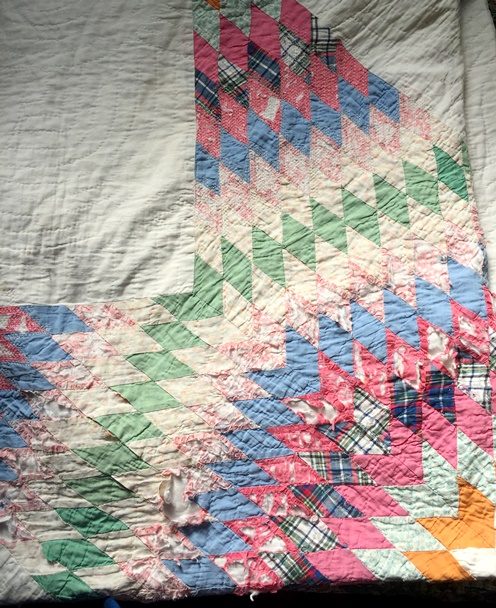
But I am a mender and I do love all things vintage, partly for the aesthetic, but mostly for the wonderful stories an old piece will have to tell. So when I was at the Sewing Basket recently, I bought three very torn and battered old quilts to see if I could mend them. I’ll do a separate post about them – I’m still trying to take decent photos. But here’s a sneak peak…
Working on the quilts reminded me of the book Amanda had mentioned, and I thought it might be an interesting read. It turned out to be a great deal more than that!
It wasn’t an easy book to find – being published a decade ago meant that most bookstores no longer stock it. I finally tracked down a copy from Dr Gero herself…and ended up spending a glorious hour showing her my old quilts and talking excitedly about all things textile related. Of course, I also purchased a signed copy of The Fabric of Society from her, and I can’t begin to tell you how much I’m enjoying it.
As a quilt historian, Annette has researched the provenance and backstories of the quilts she showcases, and her writing style brings their stories to life. The book provides a unique insight into Australian history and a glimpse of the everyday lives of men and women from the early 1800s to 1960. Annette has kindly given me permission to share a few pages with you.
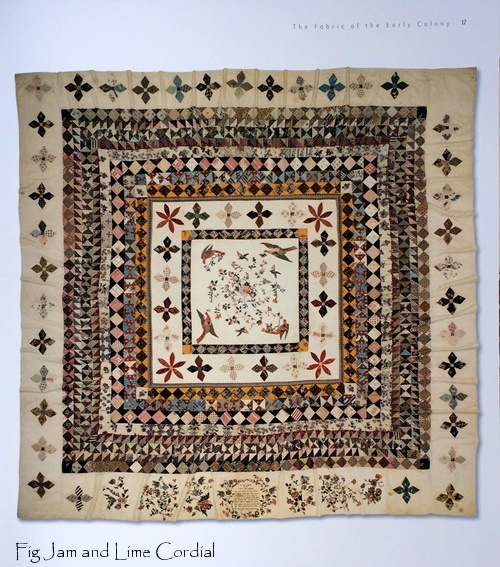
This quilt was made by convict women en route from England to Australia in 1841. This was a common practice, but the Rajah Quilt – named after the ship transporting the women who created it – is the only one of its kind to have been uncovered to date…
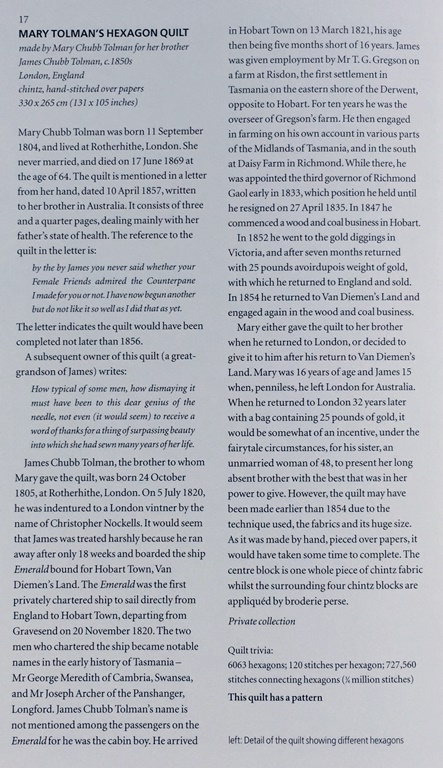
Mary Chubb Tolman’s humungous hexagon quilt was made sometime prior to 1857. It boasts 6,063 hexagons and an estimated 750,000 hand stitches. I’m including the story that accompanies the quilt so you can get some sense of how the book is laid out.
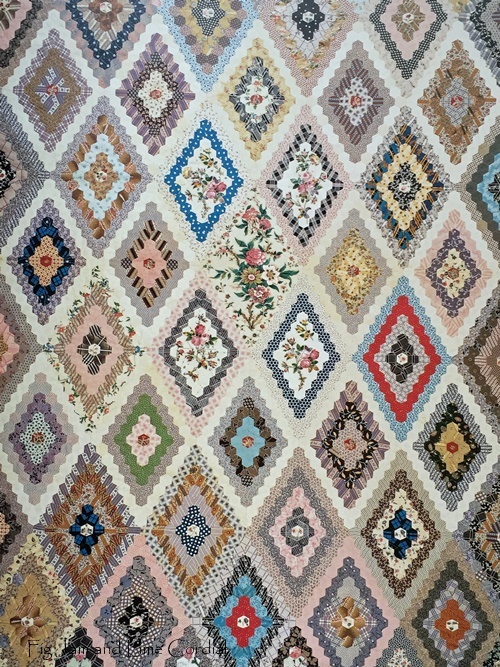
I laughed out loud at the last line – the patterns which accompany the book include one for this quilt, but anyone who is willing to undertake a project of that magnitude now (or even back then) has my utmost respect…
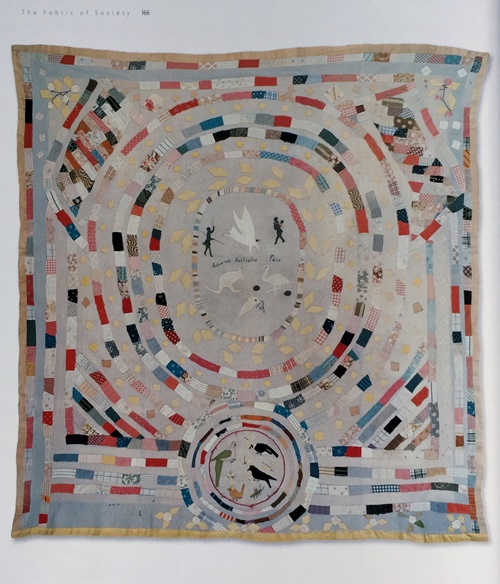
The quirky quilts of Mary Jane Hannaford are featured and they’re just too fabulous for words! One of Australia’s most famous quiltmakers, she didn’t start quilting until she was in her 80s (!) and all of her works are delightfully whimsical and deeply patriotic…
And then…there is an entire chapter on waggas!
Waggas are the quintessential Australian quilt. They appear in the stories of Henry Lawson and Banjo Patterson (1890s), and the term was originally used to describe crudely sewn together sacks (or other found fabrics) which were used as rough blankets. There is a country town in our state called Wagga Wagga (it’s a Wiradjuri phrase meaning “the place of many crows”). The “wagga” name for these blankets is thought to have come from the Wagga Lily Flour sacks which were used to make some of the very early ones.
I adore everything about them – the frugality, the make-do spirit, the uniqueness of every single one. I love that they were almost always made from upcycled fabric and clothing, and that they were meant to be true workhorses, designed to keep folks warm during hard times. I love that the ones which survived did so as family treasures – being so coarsely assembled and heavily used meant they didn’t have any value as objet d’arts. However, like many items of this ilk, they carried with them the memories and stories of hard times and sacrifices made by earlier generations.
This one made by Joan Williamson in the late 1940s was filled with old clothes. The clothing had been well darned, and when it had passed the point of no return, it had been turned into quilt padding. Many waggas were created using re-purposed materials at a time when resources were seen as too precious to discard. Our planet would be so much healthier if we all viewed clothing that way today, because in reality, our resources are still too precious to discard, regardless of what they cost to buy…

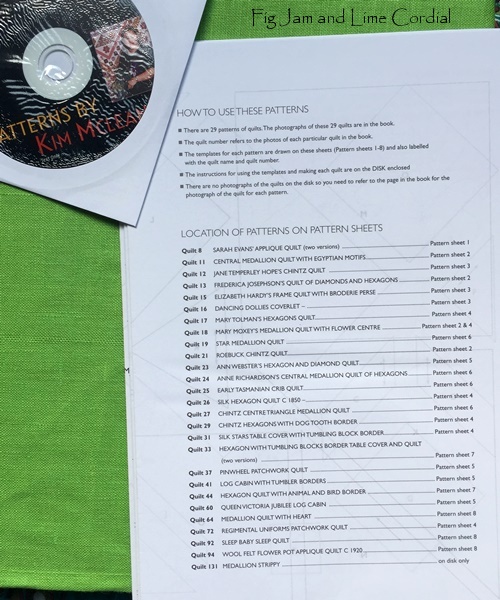
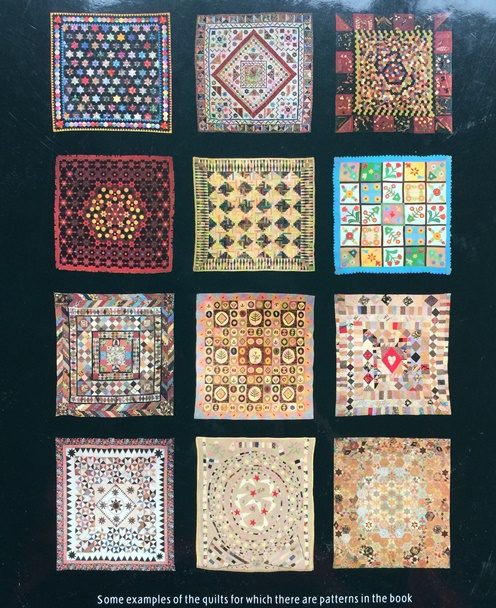
If you’re a quilter, the book comes with paper patterns for 29 of the vintage quilts in the book…
. . . . .
The Fabric of Society is an expensive book, but at the same time, it’s also excellent value for money.
It’s weighty, the photography is stunning, and the stories are joyous and fascinating. Published by fine art specialists The Beagle Press, the pages are thick and glossy, the quilt photos appear to have been taken under natural light (my old iPhone didn’t do them justice), and the book is bound in such a way that it sits flat when open, so you can read it while nursing a cup of tea (a very important consideration).
At a time when we’re all trying to stay at home as much as possible, it was a no-brainer for me to spend the dollars I’d been saving by not eating out on something that will provide hours of enjoyment and distraction.
As always, this isn’t an ad – I don’t have any affiliation with Annette, but she’s incredibly kind, extremely knowledgeable, and huge fun to talk to. At one point in our conversation, she mentioned that she has trouble walking away from vintage doilies at markets. “Someone put so much work into them and they’re selling them for just a few cents each! I have to buy them…otherwise all that hard work isn’t getting the respect it deserves”.
I told this story to Pete. My husband is very used to me coming home with handcrafted items I’ve “rescued”, citing the exact same reasoning.
“I think I’ve found my spirit guide”, I told him. “You are not allowed to go shopping together”, he replied.
If you’re interested in purchasing a copy of The Fabric of Society, please email Dr Annette Gero directly via her website. ♥
. . . . .
Folks, Annette just asked me to let you know that she is selling her latest book Wartime Quilts for $89 (which is 30% off RRP). She will also pay the postage to anywhere in Australia. You can read all about it here – it’s a spectacular book and filled with stunning quilts, many made by soldiers, some containing up to 9000 pieces of wool. (Umm. I might have come home with a copy of this one too. Don’t tell Pete.) Please email her directly for more info.
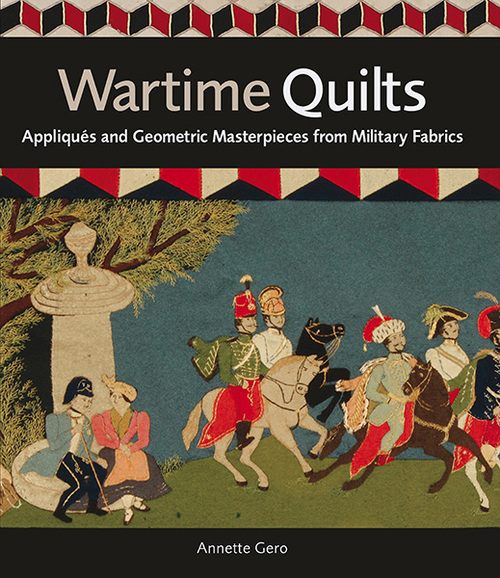


 Fig Jam and Lime Cordial