Feeds:
Posts
Comments

Whenever I type “friands” into a message, the autocorrect changes it to “friends”.

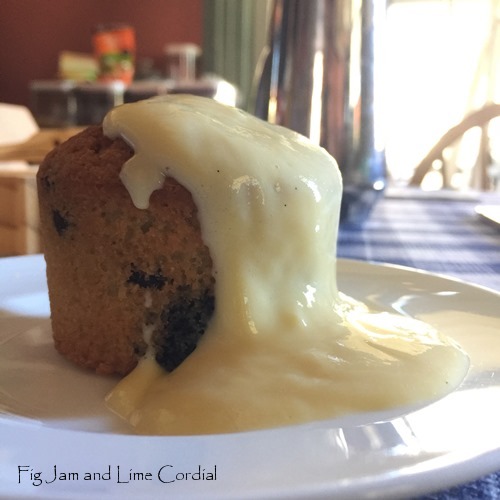
I have decided to accept the wisdom of the universe – friands are indeed our friends. So I’ve baked them a couple of times during lockdown and they’ve been a huge hit with Pete and Small Man.

Thanks to darling Jane, we’re well stocked in eggs, plus Monkey Girl brought me six egg whites the other day after her first attempt at Portuguese tarts. I stashed them in the freezer, and they defrosted perfectly for our most recent batch of friends. I mean friands.

Here’s a gently edited cut and paste of our original recipe, including the microwave custard. Have you ever made microwave custard? If not, you might find it life changing. Our friend Will, the best MC ever, will jog the kilometre from his house to ours in pouring rain just to pick up a tub of it off our back deck. He is English, though. I’m occasionally tempted to leave a spoon out for his return trip home. ♥

. . . . .

BLUEBERRY AND DARK CHOCOLATE FRIANDS

  • 100g unsalted butter, melted and cooled
  • 4 large egg whites
  • 45g plain flour
  • 140g icing sugar mixture (or plain icing sugar)
  • 85g almond meal
  • 80g defrosted frozen or fresh blueberries
  • 50g dark chocolate callets (I used Callebaut 70%)

1. Preheat the oven to 190C or 175C with fan. Sit six sturdy cupcake liners on a tray and spray the insides of them lightly with oil.  Alternatively, use a well greased friand pan or a lined muffin pan – if you’re using the latter, I’d still spray the paper liners with oil as this batter sticks savagely.
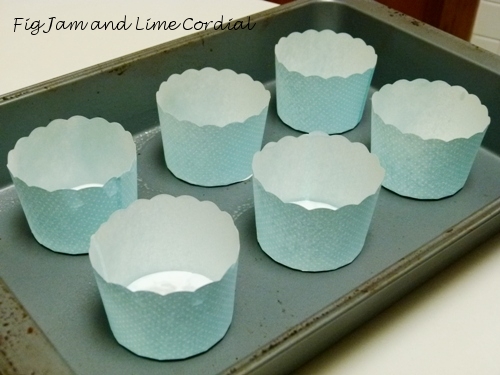
2. Melt the butter if you haven’t already done so (I always forget that step and then have to wait for it to cool). Put the blueberries on a flat plate to defrost a bit if necessary. It’s ok to use them still a bit frozen, but if they’re too hard, they’ll tend to sink to the bottom of the friand.

2. In a large bowl, sift together the flour and icing sugar, then stir in the almond meal. Sifting the icing sugar is important or you’ll end up with hard lumps in your batter.

3. In a separate mixing bowl and using a hand whisk, beat the egg whites for about a minute until they’re frothy, but not stiff. They should look like this…
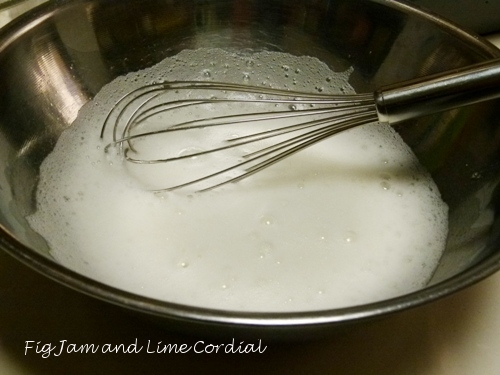
4. Quickly but gently fold in the dry ingredients, then add the cooled melted butter.  Stir until just combined.

5. Very gently stir the blueberries and chocolate into the batter.

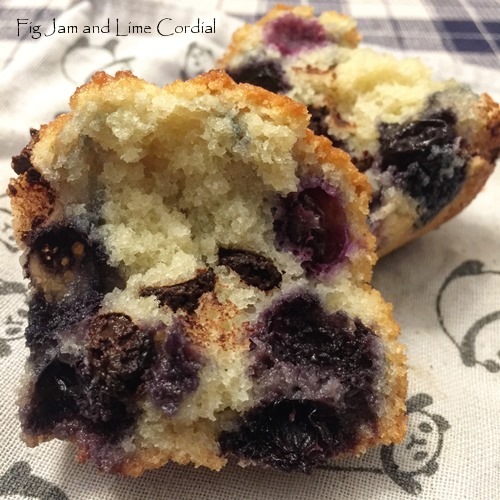
6. Spoon the mixture evenly into the six paper liners and bake for 25 – 30 minutes, rotating the tray once during the baking time.  The finished friands will be well risen and  golden brown in colour.

7. Allow to cool on a wire rack before serving with a hot cup of tea!
. . . . .

MICROWAVE CUSTARD
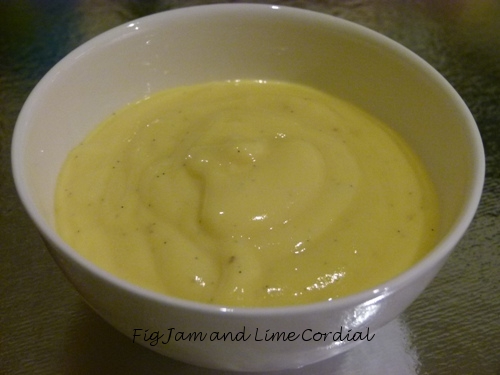
And…waste not, want not…turn the four leftover egg yolks into custard in just a few minutes in the microwave!

  • 2 cups (500ml) full-cream milk (I used UHT)
  • 1 tsp homemade vanilla extract*
  • 4 egg yolks (from 59g eggs)
  • 1 Tbsp (4 tsps) cornflour (cornstarch)
  • 1/3 cup (70g) caster (superfine) sugar*

1. In a large pyrex mixing bowl, whisk together the milk, vanilla extract, cornflour and caster sugar until smooth.  Microwave on high for 2 minutes until hot (my microwave is 1000 watts).

2. In a separate bowl, whisk the egg yolks until smooth.  Pour the egg yolks through a sieve into the bowl of heated milk, whisking constantly as it ribbons into the hot mixture to ensure it doesn’t curdle. A second set of hands is always useful here.

3. Heat the eggy milk in the microwave on high for 1 minute, then whisk.  Heat for another minute, then whisk again.  Continue heating in 30 seconds bursts, whisking well after each, until the custard has thickened to your liking. Use immediately, or refrigerate until needed.

. . . . .

I saw this clip on the news recently about a Sydney restauranteur helping Thai students who are struggling under the COVID19 crisis.

Many international workers employed in restaurants here don’t qualify for help under existing government schemes and the food industry as a whole (bless them) has rallied to support them.

The message Jack from Jumbo Thai had for everyone was particularly wonderful – as one hand takes, the other hand gives. That’s how we look after each other and our communities.

Happy Sunday, folks! ♥

Our garden is finally bouncing back after the drought and one of the first things we planted after lockdown was bok choy seeds. After only a few weeks (four or five we think, time seems to move a bit differently these days), they’re ready to harvest. The cima di rapa is coming up too, but taking a bit longer.

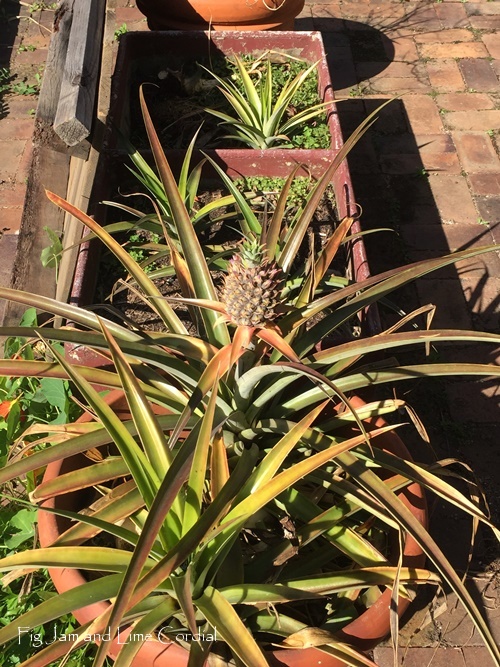
And a few years ago, Pete’s brother Uncle Steve and his wife Ali gave us a potted pineapple plant for Christmas. Sydney isn’t the ideal climate for this tropical fruit, but most years, Pete manages to coax a baby fruit out of it. It’s been slowly spreading, so now we have a mini pineapple garden. That is, a very small garden producing tiny pineapples.

There are now several plants in a large pot and an old concrete laundry tub which we found in the backyard when we moved in 30 years ago…

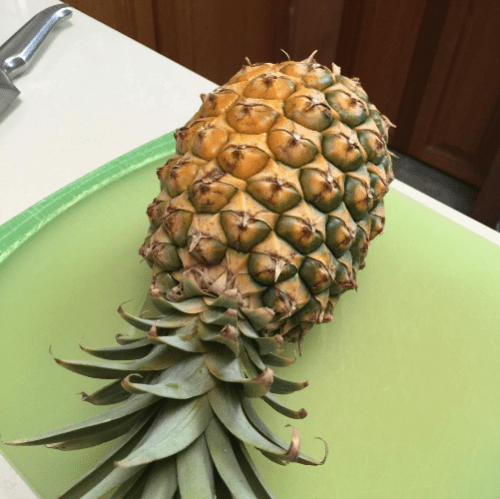
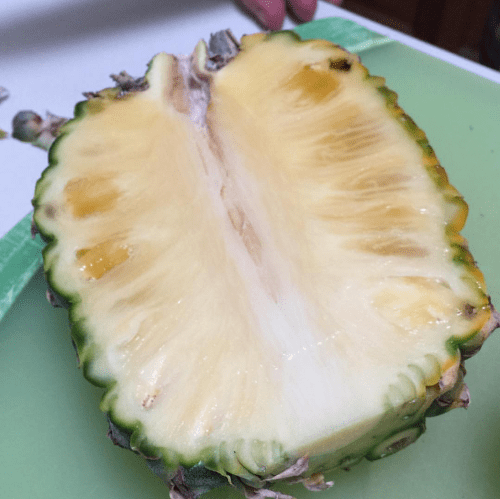
So far we’ve only managed to get one small pineapple each year, but it’s always been delicious and perfect. Here are photos of last year’s precious harvest…

How are things growing in your garden? ♥

The Handmade Loaf: The book that started a baking revolution by [Dan Lepard]

When I posted my focaccia recipe yesterday, Lien left me a comment to let me know that the e-book version of Dan Lepard’s classic book The Handmade Loaf is now available for under $1 from Amazon Australia (looks like the US Amazon price has gone back up to $4.99). And even though I already have a hard copy, I bought an iPad version as well. As I’m getting older, the option of an adjustable font size is very appealing.

Dan’s book is full of wonderful baker stories and great recipes for both yeasted and sourdough loaves, as well as a variety of other breaded items (the potato stottie cakes are a particular favourite of mine). Over the past decade, my dough handling methods have become far more simplified (lazy is probably a better description) than those outlined in Dan’s book, so these days I tend to refer to it more for inspiration than strict formulas. Recipes have changed as well – we use far less sourdough starter in our loaves now than we did when the book was first published. Nonetheless, it’s a great asset in any bread baker’s library.

Here’s a link to the Kindle version and I believe it’s available on iBooks as well. I’m not sure how long they’ll be discounted for, so grab it soon if you’re interested. And here’s a review I wrote about it in 2009.

Have fun reading it! And thanks for the headsup, Lien! ♥

. . . . .

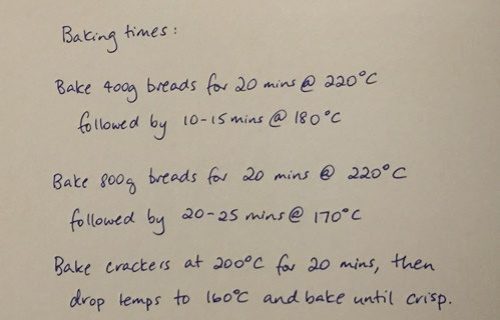
PS. I’ve just remembered one thing – well over a decade ago, Dan had an online forum and a few of us asked him about the baking times in this book. They seemed a bit too intense for our domestic ovens, given that the loaves weren’t baked in covered pots back then. He provided these revised baking times and I scribbled them into the front of my book. Just passing them on in case they’re of use to anyone. As I said, these days I use the book mostly for inspiration and ideas rather than formulas.

This focaccia recipe has a lot of history in our house.

For years, it was the boys’ go-to school lunch. And it was a tricky one to make – Dan Lepard’s original recipe from The Handmade Loaf required that I change the hydration of my starter for it, work the oil into the dough in stages, give it multiple stretches and generally coddle it along. But every single time I made it, it was smashed. So I kept making it until Emilie’s much simpler all-sourdough recipe appeared in Artisan Sourdough Made Simple.

However, the one big advantage of the old recipe was that it was relatively quick to make. Because it used a little bakers yeast with the sourdough starter, it was usually ready to eat within a few hours, providing I’d remembered to prep the starter to a different hydration the night before.

Fast forward to 2020 pandemic baking.

On a whim, I thought I’d make this focaccia again, but I didn’t have any ripe starter (at any hydration). I also didn’t have any regular extra virgin olive oil. Hmm.

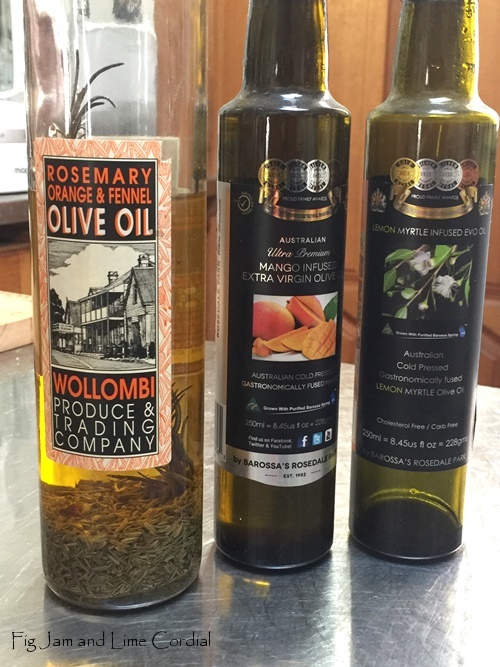
I rummaged through the pantry and found the weirdest assortment of flavoured oils you could imagine. Mango-infused olive oil anyone? No? What about Orange, Rosemary and Fennel?

Throwing caution to the wind, I pulled my tub of starter out of the fridge and dolloped cold, flat starter into the mixing bowl. Then I added the orange and fennel oil, and a little extra dried yeast. The end result was very good indeed – the starter masked the flavour of the bakers yeast (which none of us like very much) and the loaf was on the table in time for lunch. In hindsight, I’m not sure we’d have noticed the yeast flavour anyway over the citrus oil.

I’ve tried this a couple more times with pleasing results. The Lemon Myrtle oil version was particularly nice!

Here’s the recipe:

  • 175g – 200g sourdough starter. Use whatever you have, cold from the fridge if necessary.
  • 330g water
  • 80g oil – again, use whatever you have.
  • 500g bread/bakers flour
  • ¾ teaspoon dried yeast
  • 10g fine sea salt
  • Extra oil, for drizzling
  • Flaky salt for scattering on top

Note: I used 175g of flat starter for one batch and a 200g mix of flat and active starter for another. Both worked equally well.

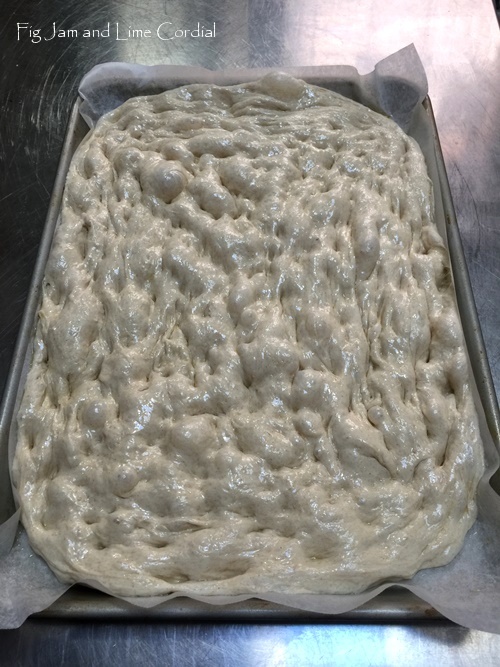
1. In a large wide mixing bowl, mix together the starter, yeast, water and oil. Add the flour and salt. This is a very wet dough – just mix it all together well with a spatula. It will form a shaggy mass. Cover it with a wok lid or a shower cap and let it rest.

2. After an hour, come back and give the dough a few folds, leaving it in the bowl. I use my spatula for this, dragging up the side of the dough, stretching it up and then flopping it over the top. Then I rotate the bowl 90° and repeat, doing this four times in total for a complete rotation.

If you can remember, repeat the 4-step folds a couple more times over the next two hours. Let the dough rise until it’s seriously puffy (usually four hours in total). It’s worth mentioning that at this point, I haven’t put my hands into the dough yet.

3. Line a baking tray with parchment paper and scrape the dough onto it. Oil your hands and gently flatten the dough into a rectangle.  You will probably need to get your fingers under the corners and give it a gentle pull to get it into shape. My pan was 40cm x 28cm.

4. Preheat the oven to 220C (425F) with fan.  Drizzle oil over the dough and spread it with your fingers, then scatter over the flaky salt.  Allow the dough to rest for a further 15 minutes or so while the oven heats up.

5. Dimple the top of the dough with your fingers, pushing all the way down to the bottom. Bake for 25 – 30 minutes, until golden brown. I usually rotate the tray at the 20 minute mark. Transfer to a wire rack to cool (if you can – otherwise, scoff it warm).

. . . . .

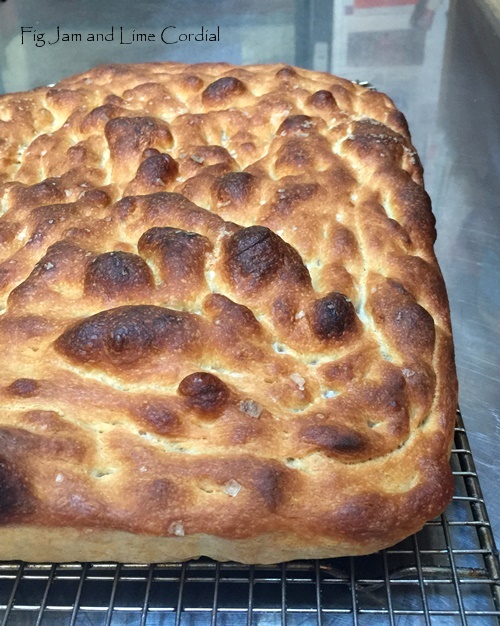
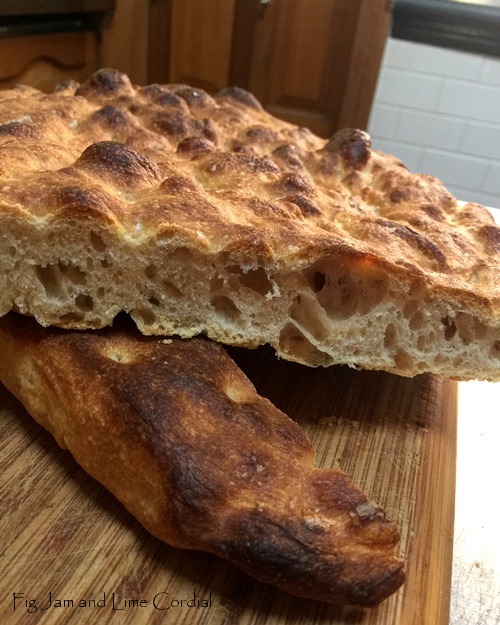
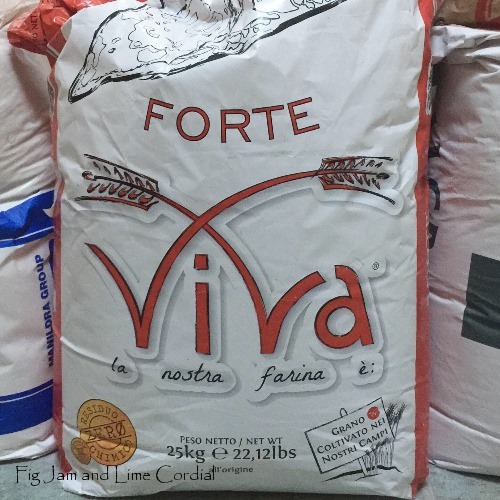
I used the gorgeous Italian flour that our friend Steve sent us, and it resulted in the most magnificent open crumb…

Small Man was so happy to have this back on the menu that he ate HALF of the first loaf I made in a single sitting, which makes it a winner in my book. Not sure what he’ll make of the mango-infused oil version though. Trying that next! ♥