Feeds:
Posts
Comments

I first met Pete’s grandmother when I was nineteen years old.

It was a scary moment – Pete had forewarned me that his father’s mother was the family matriarch, and ruled with an iron fist.  She also had, I was told, a dim and fairly old-fashioned view about Asians taking over the country.

Lunch was just the three of us, and a couple of hours in, she pulled me aside and told me how outgoing Peter was in my company, and how pleased she was that I’d made him wear his suit jacket for the visit.  By the end of the day, we were firm friends, and remained so until she died.

Grandma was incredibly sharp well into her later years – at eighty she was still punting on the stock market and swimming daily laps in her pool.  She also baked amazing roast dinners.  I once asked her how it was done, and I still smile when I remember her instructions:

“When I was younger, ” she said, “I had one of those automatic ovens, which was quite new at the time.  I would prepare the roast – preferably a bolar blade –  and set the timer on the oven. Then I would go sailing for the day, and when I came home, the roast would be ready.”

In actual fact, her rules for success were quite simple.  She would roast the meat for hours and hours (there was no such things as “rare” in Grandma’s house), then rest it in a warming oven for as long as possible prior to serving.  She was also adamant that the meat should never be poked or skewered until ready for carving, or the precious juices would be lost.

. . . . .

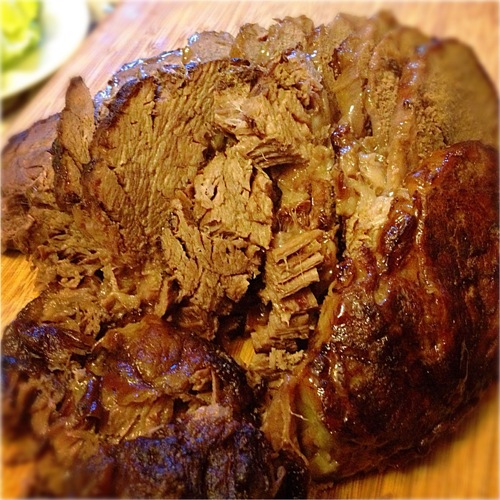
Recently, we defrosted a 1.75kg slab of Cape Grim Scotch to roast for dinner. At 2pm, we rubbed the meat with olive oil, salt and pepper, then browned it in a hot pan.

It was placed in our 24cm Emile Henry Flame casserole pot with a cup of water and the deglazed juices from the frying pan.  The pot was covered, and baked in a 150C fan-forced oven for three and a half hours, during which time I went sailing. (Ok, no I didn’t. But does surfing the net count?)
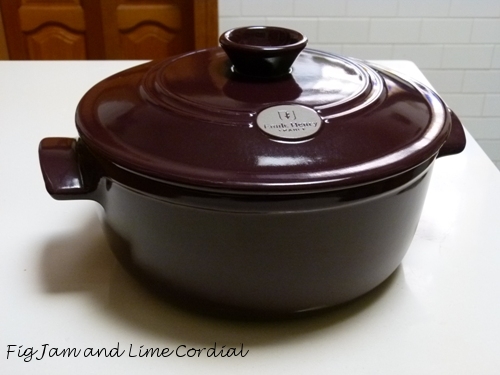
At about 5.30pm, we  poured off the liquid (which was used for gravy) and returned the covered pot to the oven for a further 30 minutes. (As you might have guessed, we were figuring this out on the fly, so I’m writing it down before we forget!)

After the four hour baking time, the covered pot was placed on an insulated trivet and allowed to rest for a further hour while we prepared the boiled new potatoes, roasted beets, gravy and coleslaw.  The clay pot kept the meat beautifully warm as it rested.

It was without doubt the best roast we’d ever made – so tender that it shredded when we tried to carve it. The flavour from the slow cooked grassfed beef was astonishingly rich.

As we were eating dinner, Pete said, “you know what, babe?  Grandma would have been proud.”

I’d like to think that’s true!
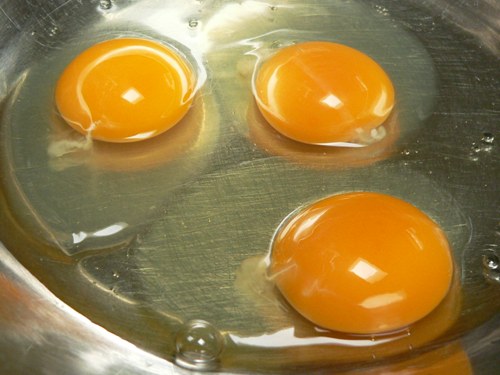
It always pays to get advice from people who are really qualified to give it. As the former President of FREPA (Free Range Egg and Poultry Australia), Meg Parkinson is an extremely reliable source!

Meg left the following comment on my Speedy Mayo post, and I’m sharing it with you, with her permission. If you recall, Annabel Langbein’s mayonnaise recipe came with a recommended keeping time of two weeks in the fridge, which troubled Meg.  When she remarked on it, I mentioned that some chefs suggest refrigerator storage times for unshelled eggs of up to a week.

This was Meg’s reply:

Hi Celia

I understand your confusion.

I have been on the committees which drew up the egg food safety codes in Victoria and then Australia. I assure you that around 24 hours is the microbiologically correct advice for yolk and whole egg – especially if some of that time has been spent at ambient temperatures. Salmonella grows fastest at 32C and above but still grows at other temperatures. When it has started growing and then is put in the fridge, the growth slows down but does not stop. Salmonella can get into egg by bad handling such as dropping shell in the egg after it has been handled – especially if hands have not been well washed. It also can get in by contact with hands, bowls, utensils etc which have not been properly washed.

Egg white has anti-bacterial properties which does mean that it can be stored for a little longer. Household fridges usually run at around 8C not the 4-5C most people think they do.

Cooking kills salmonella quickly, as does hot water and soap. People get sick when raw or undercooked eggs are eaten under trigger conditions. These are, for example, when there is a combination of incorrect temperature, poor handling and made more likely if the eggs have been stored on the bench or stored in second hand cartons which have had broken eggs in them.

I make mayonnaise from our own eggs, laid that day, just before I am going to use it. If it is not eaten in 24 hours, I throw it out.  I know it is easier for me, as we have a lot of eggs, but since mayonnaise is so easy to make this way I think it is better to stick to the 24 hour limit.

Regards

Meg Parkinson

. . . . .

Some additional advice from Meg on keeping and freezing egg whites:

I would still keep egg whites for around 24 hours but 2 days is probably fine.  In Canada they say 2-4 days, but we say 2 days as our ambient temperature is higher (ie every time the fridge is opened warmer air moves into it).  At home, egg white is easy to freeze, just put in ice block trays.  When de-frosted they should be used immediately.

Meg also recommended the website of the Alberta Egg Board, with the caveat above regarding our warmer climate.  Thanks so much, Meg!

You’re all so nice!

Thank you for your well wishes – I’m still coughing a lot, but the sore throat is a bit better. I haven’t had a chance to reply to all your comments on the last post, but I really do appreciate your love and concern.

I’ll be back in a few days! ♥

I’m down with a bad sore throat and a chesty cough, courtesy of Small Man who brought it home from school last week.

It’s time for Sarah’s ginger tea.

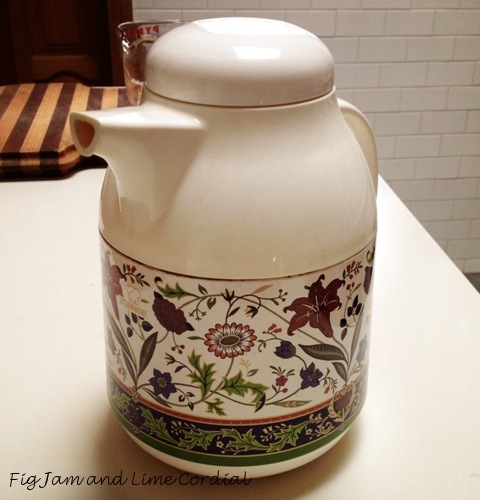
Many years ago, when I was visiting my sister in Singapore, I was very unwell with both conjunctivitis and tonsillitis. My sister’s housekeeper Sarah made me her ginger tonic, and I swear it cured me (although the antibiotics probably helped too).  It’s basically just ginger and honey, although Sarah goes the extra step of boiling the ginger for a minute to really intensify its flavour.  The other key element is a good thermos – the idea is to drink small cups of the tea over many hours, as the ginger flavour brews and intensifies.

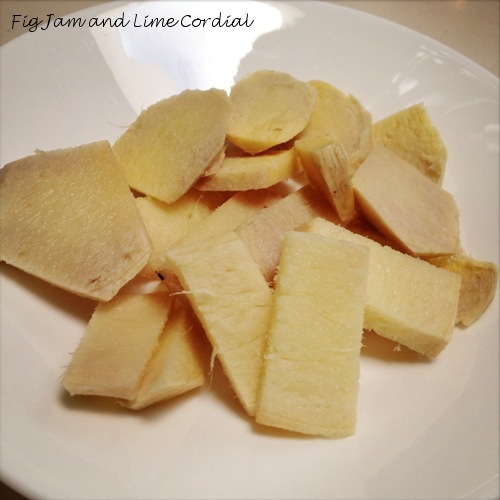
I use a generous amount of peeled ginger, but Sarah simply washes the root, cuts it into chunks and bruises it.  Try to use old ginger if at all possible, as young ginger isn’t nearly as potent…

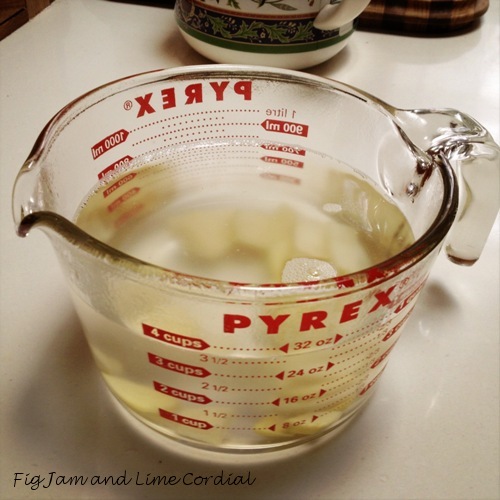
Put it in a large pyrex jug and pour boiling water over it. Then put the jug in the microwave and heat it on high for one minute, watching carefully to make sure it doesn’t bubble over.  If you don’t have a microwave, put the ginger and water into a saucepan and heat it on the stove…

Stir a couple of tablespoons of honey into the tea until dissolved, then pour the whole lot, ginger and all, into a thermos that will keep it hot for several hours.  The tea will taste quite sweet at first, and slowly get hotter from the ginger as it steeps. Let it sit for at least half an hour before drinking…

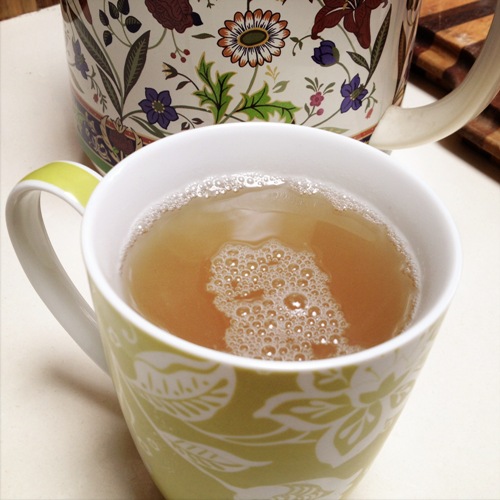
I’m drinking my first cup as I type this, knowing that the next one will be eye-wateringly hot from the ginger.  If it gets too strong near the end, I will occasionally add more boiling water and honey to thin it out a little.

Do you have a sure-fire cold remedy?

My Pete sips a combination of lime cordial, Rochester Ginger and Bacardi, mixed with just a little water to make it palatable. One of our Italian neighbours adds mystery ingredients to Coca Cola and then boils it down to a concentrated syrup.

I’d love to know your home cures!

The lovely Barbara runs the dried fruits and nuts counter at Harkola.

I love shopping when she’s there – apart from being great fun, she’s also an extremely kind soul who will often teach me new recipes as she’s weighing up our purchases.  She called this one out over the counter to me, and I noted it down on my iPhone.

Like most experienced cooks, Barbara’s instructions can sometimes be a little vague…

“What temperature is the oven?”

“Usual oven temperature..”

“How much milk do I need to add?”

“Just whatever you need..”

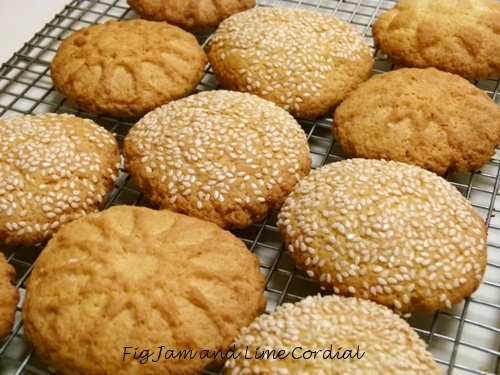
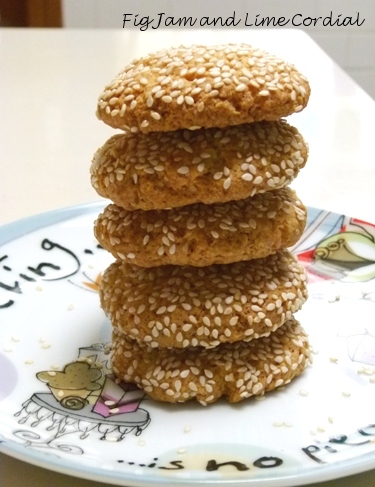
As always, her recipes result in a mountain of food, so feel free to scale the quantities down.  I made it as I was instructed – and took a sample back to Harkola for Barbara to try.  She advised me that the cookies are traditionally baked a bit harder than mine were (to ensure a longer keeping time), but I was pretty happy with how they turned out.

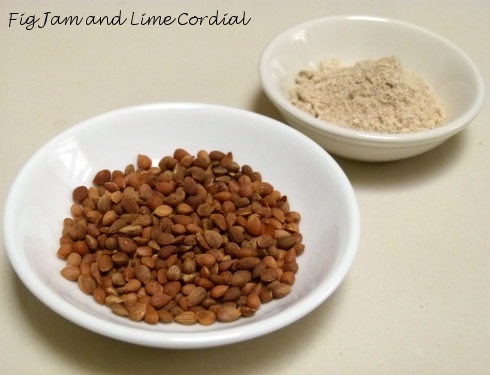
The cookies are known as Kaak, and they’re flavoured with mahlep – a spice made from the ground kernels of the St Lucie cherry tree.  It’s wonderfully aromatic and often used in baklava…

  • 1kg (6¾ cups) self-raising flour
  • 440g (2 cups) white sugar
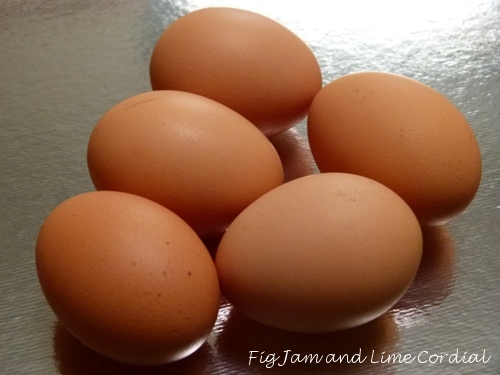
  • 3 large (59g) free range eggs
  • 250g (1 cup) unsalted butter
  • 160g (2/3 cup) milk, or as needed
  • 1 – 1½ teaspoons ground mahlep (or try vanilla or ground aniseed)
  • sesame seeds for topping

Barbara’s instructions were simply to “mix everything together”. Here’s a workable method I came up with after a little trial and error…

1. Preheat the oven to 175C (350F) with fan.  Line as many oven trays as you can with parchment paper (you’ll need lots!).

2. Pulse the flour, sugar and butter in the food processor until the butter is incorporated and the mixture is crumbly. I had to do this in two batches, as the quantities are enormous, even for the Magimix!

3. In a large mixing bowl, stir the mahlep through the flour-butter mixture.

4. In a small jug, whisk together the eggs and milk. Pour this into the flour mixture, and work the ingredients together with your hands to form a stiff dough.

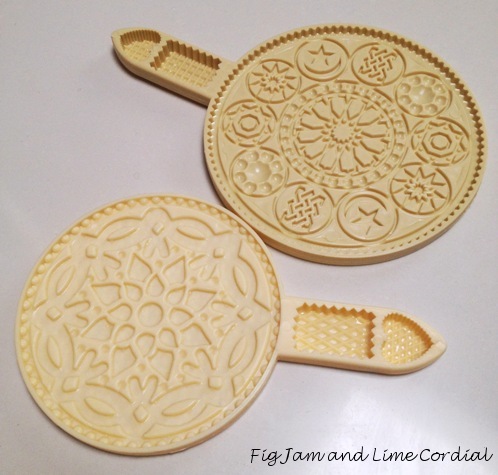
5. Roll the dough into smooth, walnut sized balls.  Flatten them out, dip them in sesame seed and lay them on the parchment lined trays, allowing a little room for spreading.  The sesame seeds are optional, and the cookies are also quite nice without them.  I bought decorative moulds at Harkola, and pressed some of the dough balls against them to form a patterned top – although a lot of the detail is lost as the dough bakes…

6. Bake for approximately 20 minutes, rotating the trays halfway through the baking time, until the cookies are well browned.  Store in an airtight container. Any excess can be frozen quite successfully.

These chunky cookies have a texture reminiscent of both shortbread and rock cakes, and they’ve been surprisingly popular. Which is just as well, as Barbara’s quantities make a huge batch. I’m off to deliver some to the neighbours now!