Feeds:
Posts
Comments

Posts Tagged ‘Dan Lepard’

We’ve just had a long weekend here in Sydney, and I spent most of it in the kitchen!  Great fun – although I’ve made a serious dent in the flour supplies..

. . . . .

Over the past few weeks, I’ve been trying to improve my bread slashing skills, albeit with limited success.

Joanna, bless her, is doing her best to coach me via email and, whilst I’m making some progress, I’m still a long way from getting it right.  Luckily all the rejects are edible, so nothing is going to waste.

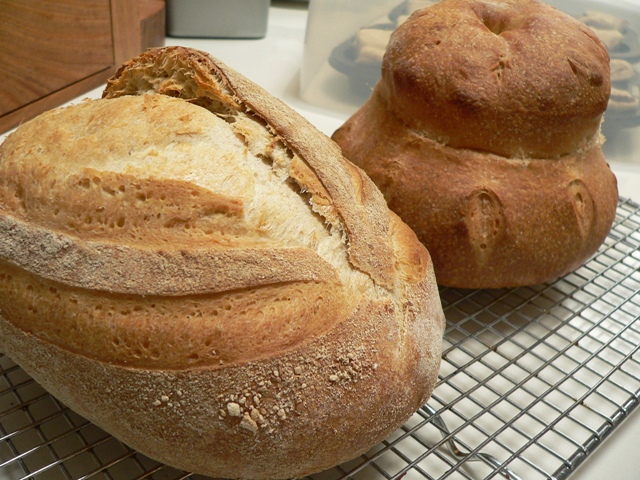
I tried again on the weekend.  The first loaf burst open – not unattractively, mind you, but not correctly.  The little cottage loaf, which I’m now pretty happy with, was just sitting there, minding her own business…
018

The second loaf was more successful.  I tried all of Jo’s tips – final prove in the fridge, didn’t oil my hands, didn’t spray water on the dough and put the cold loaves straight in the oven.  I also added an extra slash, as the dough seemed to need more room to expand.  I’m much happier with this one, although the loaf does remind me of a watermelon.

025

026

. . . . .

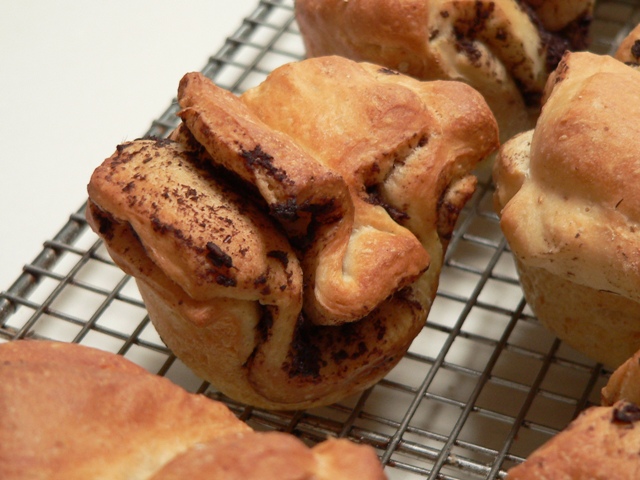
Since the oven was on, I thought I’d try Dan Lepard’s latest Guardian recipe for tapenade rolls.  My version had less added salt (8g to the 500g flour), jarred olive tapenade and, because I can’t do maths on a Sunday morning, I made twelve rolls instead of the specified ten.  They were delicious, though…

033

…and so full of personality!  For some reason, the little one below reminded me of Groucho Marx.  I think it was the eyebrows.  They were perfect with soup for lunch.
031

. . . . .

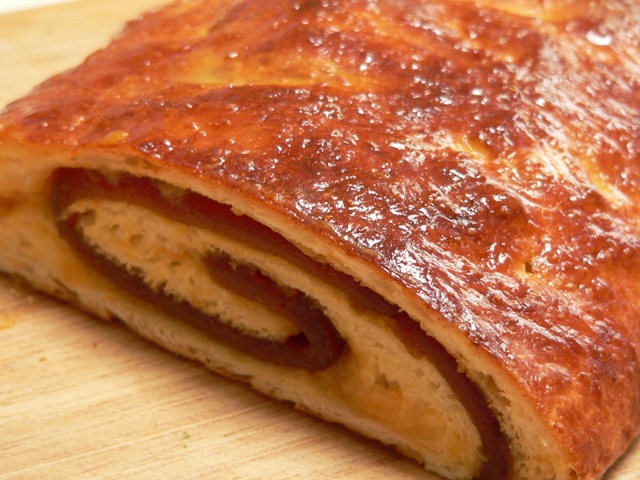
We’d picked up a sheet of ameerdine (apricot paste) during our trip to Harkola and I was struggling to think of a way to use it.  In the end, I made a large apricot danish, using Richard Bertinet’s sweet dough recipe and layering it with Pete’s apricot jam, some pastry cream and the ameerdine, before rolling the whole thing up and baking it in the oven.  It was a messy process – the apricot paste was quite stiff, and the pastry cream oozed out during the rolling process.  But the end result was a big hit with Pete and the neighbours!
006

Read Full Post »

ar8

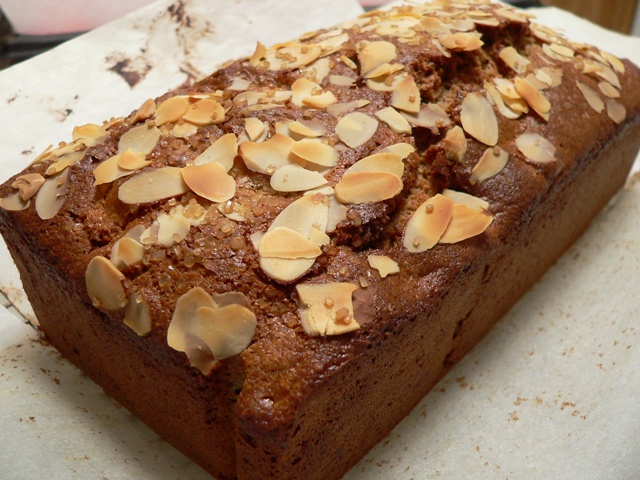
One of the nice thing about Dan Lepard’s recipes is that they’re often so quintessentially British, despite the fact that he started life as a Melbourne boy.  This delicious rye apple cake recipe is a good example – with the addition of golden syrup, apple, rye flour and almonds, the end result is a cross between a tea cake and a muffin, albeit with better keeping properties than either.

I had everything on hand – Kevin Sherrie’s organic rye flour, unblanched almond meal from Santos Trading (a rare and exciting discovery) and crisp, new season pink lady apples.

The recipe is here, and I followed the methodology exactly, with a couple of substitutions.  Instead of muscovado sugar, I used soft brown sugar, and I replaced 50g of the flaked almonds with 50g of unblanched almond meal.  I baked the cake in my trusty Chicago Metallics cake tin and it took 45 minutes to cook to perfection in my 175C fan assisted oven. Note that some bakers on Dan’s forum needed to extend the baking time for this recipe.

We had this for dessert last night, but it was even better this morning with a hot cup of tea!

arc1aarc2a

Read Full Post »

Flatbread

024

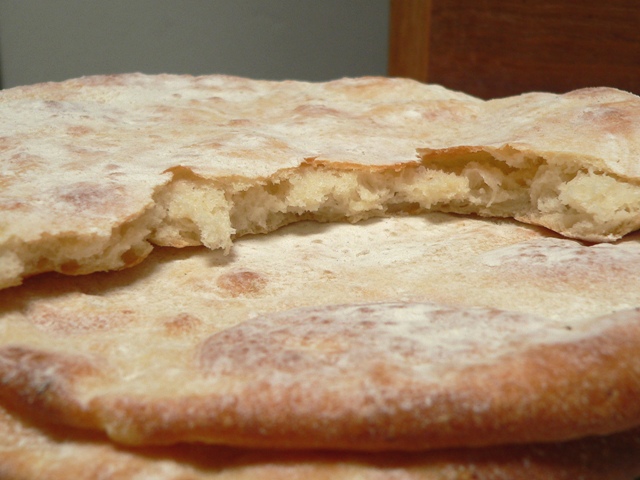
Fellow bread baker Joanna put me onto Dan Lepard’s potato stottie cakes. The recipe is from his wonderful book, The Handmade Loaf – which I waxed lyrical about it here.

Jo mentioned that when she’d made this traditional flatbread  from Newcastle upon Tyne, the bread had risen quite a lot, rather than staying flat.  I took a variation of Dan’s recipe and applied my own flatbread methodology, which I’ve used with both yeasted breads and sourdoughs in the past. The end result is always very moreish and, as an added bonus, you can eat the bread hot out of the oven, which makes it a great standby when you’re in a hurry.

Flatbread makes a great accompaniment to Indian and Middle Eastern dishes, though my boys were happy to scoff these smothered in homemade butter.  As I’ve never been to Newcastle upon Tyne, I can’t vouch for the authenticity of the finished product, but they were absolutely delicious!

Here’s how I shaped the stottie cakes…

Turn the risen dough onto an oiled bench and give it a few folds.  Divide the dough into four equal pieces and shape each piece into a tight ball.  Place each ball on a square sheet of parchment paper.  Spray a sheet of clingfilm with a generous coating of oil, then wrap it closely around the dough ball.  Allow the dough to prove for a further 15 – 30 minutes.  Preheat pizza stones in the oven to 250C (with fan).

008

Just before you’re ready to bake, gently flatten out  the dough into a thin pizza-like disc on the sheet of parchment paper, pushing through the clingfilm with your fingers.

010

Carefully remove the clingfilm (if you’ve greased it well, it should come off easily).  Dust the top of the dough with a little flour.

011

Slide the flattened dough, still on its sheet of parchment, onto a pizza stone.  Reduce the heat to 220C with fan. Allow the flatbread to heat up for a few minutes, until the dough starts to rise a little.  Once the dough has started to firm up, carefully remove the sheet of paper and discard.   After a few more minutes, open the oven, pull the rack out carefully, and flip the bread over.  Either use an egg slide, or the “perfect for every occasion when I might give myself a second degree burn” welding gloves.  The gloves really are great for this – I just picked up the flatbread and turned it over!  After a few more minutes, flip the dough over again and bake until the top is brown and the bread is cooked through.

These didn’t take long to cook because they’re so thin – ours were in the oven for about 10 minutes in total.  They were eaten before they had a chance to cool!

012

Read Full Post »

180509 017

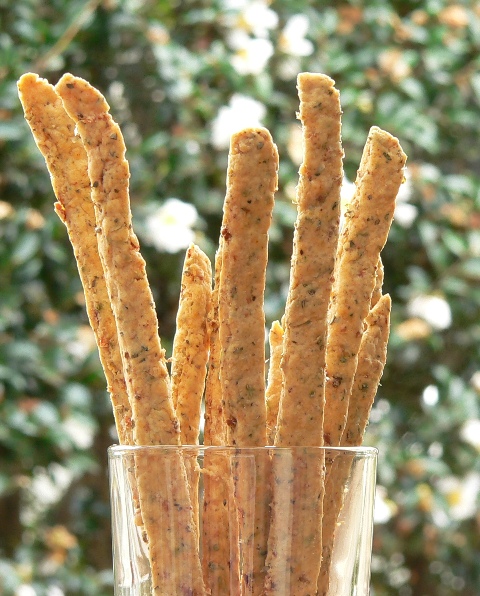
When Small Man was very young, we would give him grissini to chew on whenever he was cranky or out of sorts.  We called them “Grizzle Sticks” and they were indeed very good at soothing the grizzling child.  These aren’t grissini, but they are reminiscent of them.  I found the recipe at Dan Lepard’s Guardian website and modified it to suit the ingredients I had on hand at 7am on a Monday  morning.  They were easy to make and even easier to eat – Pete D declared that between these and the crackers, we’ve just about nailed beer food.  Below is my amended list of ingredients and the methodology is here.

  • 100g plain flour
  • ½ tsp baking powder
  • 1 scant tsp brown sugar
  • ½ tsp salt
  • ½ tsp Kashmiri chilli powder
  • 1 small pinch cinnamon
  • 50g organic dark rye flour
  • 3 tsp dried oregano
  • 50g unsalted butter, softened
  • 30g pancetta flat, weighed after the fat was removed, finely chopped or minced in the mini-whizzer
  • 50ml cold water

Do try this, it’s a flexible recipe that will lend itself to all sorts of inclusions.  I think I’ll try pecorino or anchovies next time…

Read Full Post »

gf loaf 012

Dan the Man has created the best gluten-free bread recipe ever.

I’ve been on a quest to find Pete A a decent gluten-free loaf for years.  Every attempt has  been an abysmal failure.  Most have a cake-like texture, and only just pass muster if toasted.  The closest I ever managed was a gluten-free soda bread, but even that was solid and heavy in a pumpernickel kind of way.

What Dan Lepard has now given us is a chewy, elastic, tangy bread which keeps well for several days.  His secret ingredient – psyllium husk – mimics the gluten in wheat, and almost unbelievably, this recipe actually “proves” like real bread. (Note that I used psyllium husk and not psyllium husk powder – the former was readily available at our local health food store.)  The finished loaf is chewy with a crunchy crust and a non-stodgy middle, unlike the tapioca based breads which were hitherto the gluten-free standard.  Another nice thing about this recipe is that it uses readily available ingredients – just make sure you buy gluten-free cornflour, as many are wheaten.  Here are some photos, so you know what to expect.

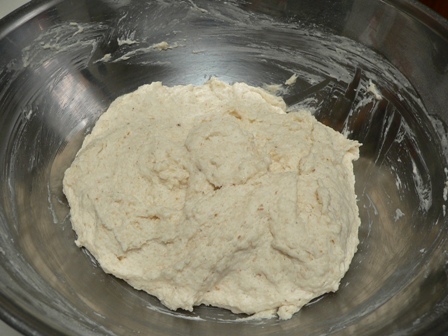
The dough works together easily in the mixing bowl, after a good minute or so of stirring.  A mixer or breadmaker really isn’t needed here.  It will seem quite wet at first, but the moisture will be absorbed during the first hour of resting.

150509 007

Shape the rested dough into a baton (basically flatten it out into a disc and then roll it up), and place it into an oiled loaf tin.  Allow to rise another hour and a half, during which time it will just about double in size.

150509 009

150509 011

Tah-dah!  The finished loaf…

150509 018

Pete A was so wonderful – he arrived at 10.30pm  to pick up his loaf (the man works way too hard), ate a slice on the spot, and said, “How have you done this?  It tastes just like bread!”

I received  these  messages from him over the following days:

Day 1 : ”Just had a lovely Enzo lunch; bread oil balsamic.  Bread getting a little tough in an Italian way so all perfect.  No toasting needed yet.”

Day 2 : “Just had lovely French toast.  Bread no tougher.  Still ‘Italian’ ”

I can’t remember a time when baking was more rewarding than this. Dan Lepard’s recipe is here – follow it to the letter, and it will treat your gluten-free friends and family to a taste that they’ve probably been missing for a long time.

gf loaf 016

Edit 23/5/09:  Here’s a photo of tonight’s Kalamata olive and rosemary loaf :

olive gf 001

. . . . .

More gluten-free recipes here…

Update: 10 Nov 09: Gluten Free Christmas Cakes

Read Full Post »

« Newer Posts - Older Posts »