Feeds:
Posts
Comments

Archive for August, 2010

I really can’t complain about our living costs.   Since we started along this path of  “quasi-sustainability”, our food expenses have dropped dramatically.  Paradoxically, we’re eating better than ever before, with very little  pre-prepared or heavily processed food in our daily diet.

It’s tough economic times though, so we’ve again reassessed to see where we can save a bit of money without feeling like we’re depriving ourselves.  We’ve already made lots of big changes, but there’s still room for a bit of tinkering.  These things won’t save us a fortune, but it’s surprising how quickly it all adds up!

Homemade pasta

As I mentioned in a previous post, we used to struggle with homemade pasta.  So much so that until recently, we’ve always purchased it from our mate Joe at Peppe’s Pasta, at $7.50 per 500g.  Now that we have our trusty Ottolenghi recipe down pat, we’ll be making this at home. And since our girls are reliably laying five eggs a day at the moment, the pasta will only cost us $1.20 per 500g!

Homegrown lettuce

Everyone talks about how wonderful it is to have homegrown herbs, but I’ve only just realised how fabulous it is to grow lettuce!  It’s ready to harvest within a matter of weeks, and I go out every morning and pull a few leaves off for the boys’ lunches.  If you have room for a small herb garden, even if it’s in pots, I’d recommend you plant a little lettuce as well.  If nothing else, it might convince the kids to eat their greens!

No more pinenuts

I  love pinenuts, but they’ve recently become prohibitively expensive – good quality ones from Lebanon or Spain are between $60-$100/kg.  I now happily substitute slivered almonds, which are a tiny $12/kg from Harkola. There’s always a bag hidden in the fridge somewhere.

No more packaged dips

Not that we were buying many, but it’s so easy to make dips at home that we really don’t need to spend money on them anymore.  In addition, the commercial versions tend to have a lot more oil and salt than our homemade ones.  We make our own hommus, taramasalata, roasted beetroot dip and nasturtium pesto – more than enough variety to fill a nibbles tray.

Aldi

Friends, if you’re not buying at least some of your groceries from Aldi, then you’re probably spending more money than you need to.  I know we certainly were.  I think the notion that Aldi products are inferior is a misconception – they may not always be better than what you can buy at Woolies or Coles (although sometimes they are), but they’re usually comparable in quality.  And they’re almost always cheaper!  Aldi also have a great organic range, with items you won’t find in other supermarkets.

Emergency meals = no more takeaway

I once read somewhere – I think it was in Shirley Conran’s Superwoman – that one of the best ways to reduce stress in the kitchen is to have a list of emergency meals written down.  These need to be easy to prep and preferably quick to cook, with minimal washing up.  It was suggested that the list be taped to the inside of a cupboard, where it could be referred to whenever exhaustion might otherwise drive you to pick up the telephone and order $60 worth of takeaway.  Our list includes dishes like baked bean toasted sandwiches, risotto and survival soup. Our boys adore them all!

If you have any money saving tips, please share them with us.  Every little bit helps!

. . . . .

Previous Frugal Living posts:

Read Full Post »

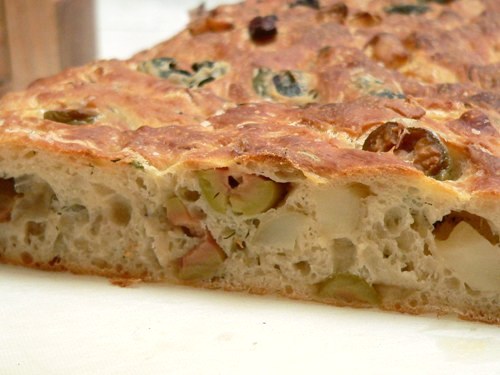
Over the weekend, I baked a couple of Dan Lepard’s irresistible treats, including this most recent recipe from his Guardian column.

It’s made with baby potatoes, a mix of green and black olives, and bakers’ flour – and baked in a large parchment-lined roasting tray.  The perfect accompaniment to an all vegetarian dinner party!

. . . . .

It’s not apple season here at the moment, and most of the available fruit is coming out of cold storage.  It’s not the best for eating raw, but wonderful for cooking.

We turned five large Pink Lady apples into Dan’s upper-crust apple pie – the fruit was tossed in a hot butter caramel, then topped with a delicious pastry laced with Calvados.  Small Man, our apple pie aficianado, declared it to be most fine…

Read Full Post »

Everyone has their culinary bugbear – some can’t bake cakes, others struggle with pastry, and many are put off by tempering chocolate.  For us, it’s always been homemade pasta.  That’s not to say we haven’t thrown time and money at trying to get it right, but each attempt has turned out stodgy, floury and brittle.

So it was with some trepidation that we decided to try a recipe from Yotam Ottolenghi’s new cookbook, Plenty.   But oh, we were so delighted with the results!  The pasta was mixed in minutes in our large food processor, and passed easily through the rollers and cutters without the usual shredding and crumbling.

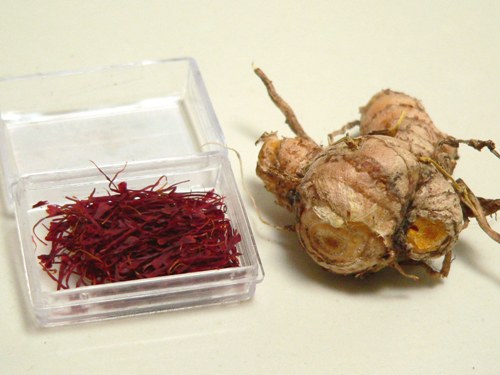
We began with four eggs from our girls, and gifts from friends – a small box of saffron from James and a knob of turmeric that Diana grew in her backyard.  The recipe specifies ground turmeric, but Di’s fresh version was too good to pass up.

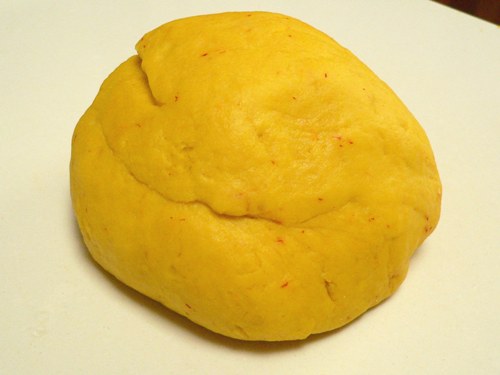
The finished dough was a glorious golden yellow…

  • 440g pasta flour or 00 flour
  • 4 large free range eggs
  • 4 tablespoons (80ml) boiling water
  • 4 tablespoons (80ml) extra virgin olive oil
  • 2 scant teaspoons saffron threads
  • 1 teaspoon ground turmeric (we used grated fresh)

1. In a medium sized bowl, soak the saffron threads in the boiling water for ten minutes, then stir in the turmeric and olive oil.  Add the eggs and beat well to combine.

2. Place the flour in the large bowl of a heavy duty food processor and, with the motor running, gradually pour the egg and oil mixture through the chute.  Pulse the food processor until the ingredients are thoroughly mixed and start to come together.

3. Tip the dough and any loose flour onto a clean bench and knead briefly until smooth.  Wrap snuggly in a plastic bag, and then rest the dough in the fridge for at least 30 minutes, or up to one day.

4. Cut the rested dough into four pieces, keeping three covered as you work the first one. Shape the small ball into a long rectangle, then pass it through the rollers of a pasta machine, starting with the thickest setting.  Pass the sheet through, fold it, and pass it through again – repeating this process a few times to give the dough strength.

5. Once the pasta is elastic and doesn’t tear or crumble through the rollers, gradually reduce the  settings until it reaches the desired thickness.  Flour the thin sheet of pasta well, then either cut it into strips with a knife, or pass it through the cutting blades of the pasta machine.  Hang the noodles up while you process the remaining dough – we used a laundry rack, but I think tradition dictates a wooden dowel supported between two kitchen chairs!

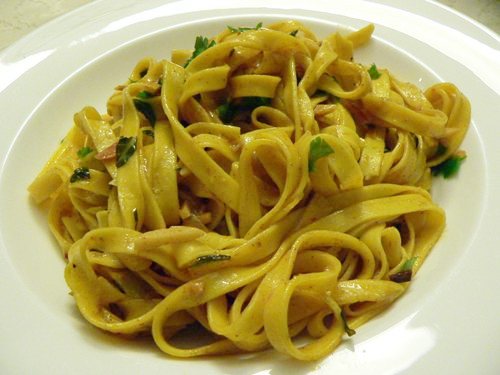
This pasta cooks in mere minutes in salted boiling water, and we served it with slivered almonds, mint, parsley and the spiced butter and shallot sauce which accompanied the recipe in the cookbook.  Truly superb vegetarian fare!

PS. We’ve repeated this recipe without the turmeric and saffron and found it works perfectly well for “everyday” egg pasta.  The quantities given above make approximately 750g of pasta dough.

Click here for a printable version of this recipe

Read Full Post »

I’ve been experimenting with sourdough fruit loaves, and came up with this rather pleasing combination. It’s slightly spicy, slightly sweet and quite addictive!

For my sourdough baking friends, the formula is listed below, but in more general terms, I adapted my standard recipe as follows:

1. The all white bakers’ flour was replaced with a mix of bakers’ flour to organic wholemeal spelt to organic rye in a ratio of 4:2:1 (600g bakers, 300g spelt, 150g rye).

2. A teaspoon each of honey and ground mixed spice was added to the dough.

3. Approximately half the flour weight in walnuts and mixed dried fruit was worked in at the initial kneading.

I didn’t soak the rye or spelt, but will try doing that next time to see if it alters the texture of the bread at all.  These loaves tend to brown very quickly in the oven, so need to be monitored carefully to avoid burning.

As you can probably guess, we’re having lots of fruit toast for breakfast this week!

Sourdough Fruit Loaf (makes three 850g loaves)

  • 300g sourdough starter (166% hydration)
  • 550g water
  • 75g extra virgin olive oil
  • 600g bakers’ flour
  • 300g organic wholemeal spelt flour
  • 150g organic rye flour
  • 1 teaspoon honey
  • 1 teaspoon mixed spice
  • 16g salt
  • 100g walnut halves
  • 100g raisins
  • 200g dried cranberries
  • 200g Turkish figs, chopped

Read Full Post »

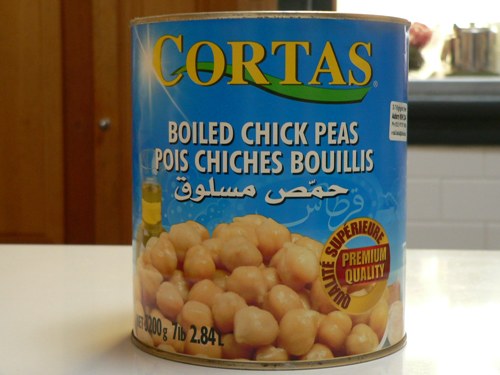
I find it hard to resist a bargain (the avocado doesn’t fall far from the tree), so when I saw these enormous cans of chickpeas on sale at Harkola a few months ago, I had to buy one.  From memory, we paid a tiny $3.50 for this 3.2kg can!

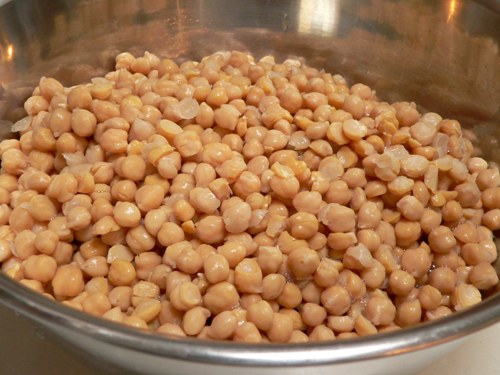
Of course, actually opening a can this size is quite a commitment, so it sat in our pantry for quite a while.  I finally opened it on the weekend, to find large, tender chick peas of great quality.  I froze four portions in ziplock bags for future soups and stews, left some in the fridge for more immediate use, and turned the rest into hommus.

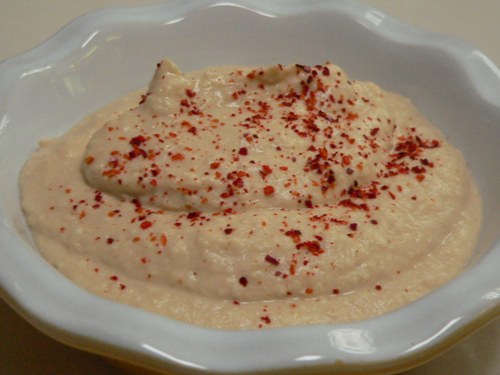
The recipe I now use for hommus was inspired by an episode of Barry Vera’s Feast Bazaar.  It’s a very light and low fat dip, as opposed to most commercial versions on the market today.  That’s because the puree is loosened with hot water rather than oil, resulting in a silky, almost fluffy paste. I didn’t  measure the quantities for this, as we adjust the recipe each time for taste and texture.

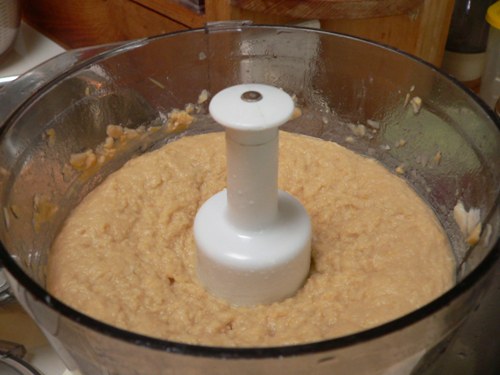
Rinse and drain the chick peas, then load them into the bowl of a large food processor with a clove or two of coarsely chopped garlic. Turn the machine on, then add hot or boiling water slowly through the chute until the mixture blends to an almost smooth paste (photo below).

Now add a few tablespoons of tahini paste (we prefer the Lebanese version),  the juice of one or two lemons, a little extra virgin olive oil, and salt to taste, then blend again until well combined.  The original version didn’t add olive oil, but we quite like the flavour, so we add just a little bit to ours.  Do keep tasting as you go, adjusting seasoning and ingredients to your own personal preference.

This recipe works well with tinned chickpeas, but absolutely brilliantly with dried ones that have been soaked overnight and boiled for a couple of hours.  The latter will produce a very smooth and silky hommus, as the freshly cooked chickpeas are softer and blend more readily than their canned counterparts.

The original Barry Vera recipe recommended serving the hommus spread thickly onto a plate and topped with slices of pan-fried, sumac-coated lamb fillet.  We usually just eat it with sourdough baguettes!

Read Full Post »

Older Posts »