Feeds:
Posts
Comments

Archive for November, 2011

I’ve been experimenting with some variations on my salt-crusted bread recipe.

Firstly, a black salt and Kamut loaf, made by substituting wholemeal Kamut flour for the 00 flour in my original recipe:

  • 200g active sourdough starter ( 166% hydration, ie. fed at a ratio of one cup water to one cup flour)
  • 350g bakers/bread flour
  • 175g semola rimacinata di grano duro (remilled semolina flour)
  • 175g wholemeal Kamut flour
  • 375g water
  • 15g extra virgin olive oil
  • 12g fine sea salt
  • 10g brown sugar
  • Black Salt, for the pan

I followed the same methodology as used in my original salt-crusted loaves, sprinkling crushed black salt inside the tin in place of the Maldon.  It gave the loaf a beautiful speckled crust…

The bread was dense with a slightly cakey crumb and a subtle nutty flavour…

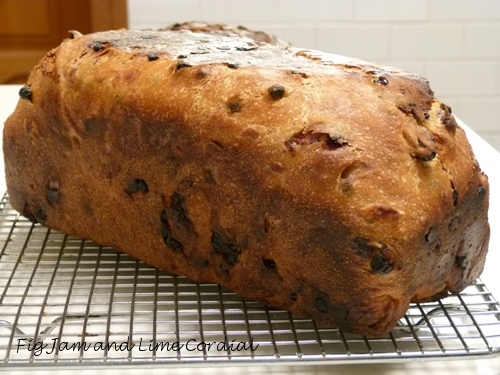
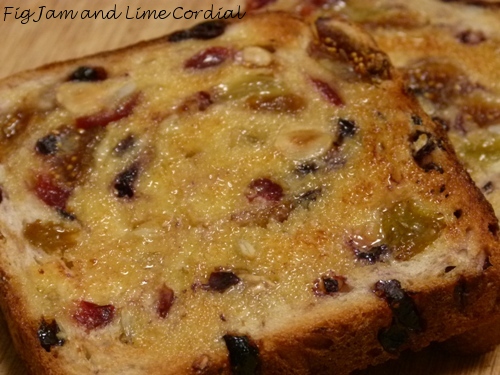
Secondly, I raided Pete’s muesli supplies to create this sourdough fruit loaf…
  • 200g active sourdough starter ( 166% hydration, ie. fed at a ratio of one cup water to one cup flour)
  • 700g bakers/bread flour
  • 375g water
  • 15g extra virgin olive oil
  • 12g fine sea salt
  • 10g brown sugar
  • 600g mixed dried fruit and nuts

I omitted the salt crust this time.  There was enough dough for one large tinned loaf and a smaller freeform one.  I baked them at a slightly lower temperature (200C with fan) to prevent the fruit from burning, and as a result the loaf in the tin needed a slightly longer baking time.  The little loaf burnt anyway, but the gerry-rigged pullman tin seemed to protect the crust of the larger loaf as it baked.

The fruit and nut mix included roasted skinned hazelnuts, sunflower seeds, pepitas (shelled pumpkin seeds), golden raisins, chopped dried figs, cranberries, dried blueberries and currants.  These were all added during the initial mixing, and imbued the dough with a soft purplish tinge…

Pete and I adored this bread. We had trouble eating anything else all weekend!
PS. As I mentioned in the previous post, if you’d like to try these recipes with a 100% hydration starter, reduce the added flour weight by 25g and increase the water to 400g.  If my maths is correct, that should work!
Read Full Post »

We’ve had a solid week of rain in Sydney.

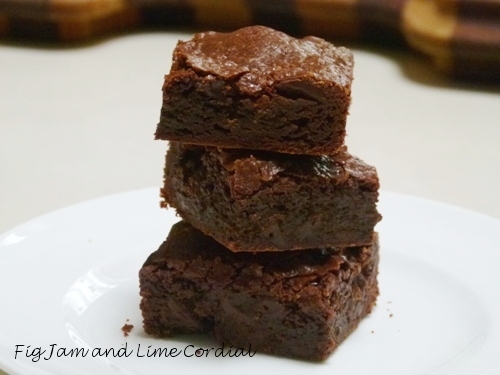
I’m not exaggerating – we only had 45 minutes of Spring sunshine last week, which led to a mild case of cabin fever and culminated in a manic baking frenzy.  I made several batches of chestnut flour brownies – they’re gluten-free, simple to bake and perhaps just a little too easy to eat!

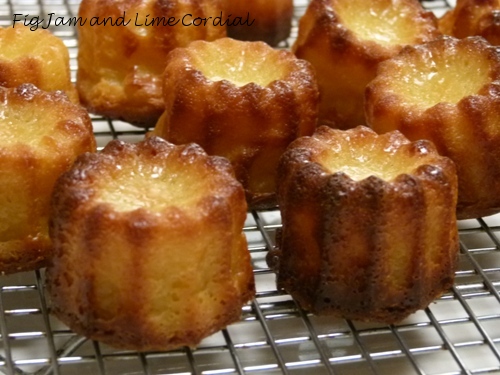
I also whisked up a batch of Anna’s Canelés – the only time a silicone baking mould ever gets used in our kitchen. I made big ones…

…and baby ones, all flavoured with a hint of dark rum…

A wet week necessitates lots of custard (according to my Pete), which resulted in a glut of egg whites. I turned some of them into friands – these blackberry and Valrhona chocolate ones are a variation on our original recipe.  The red wrappers were very cheery…

…and matched the rosy filling!

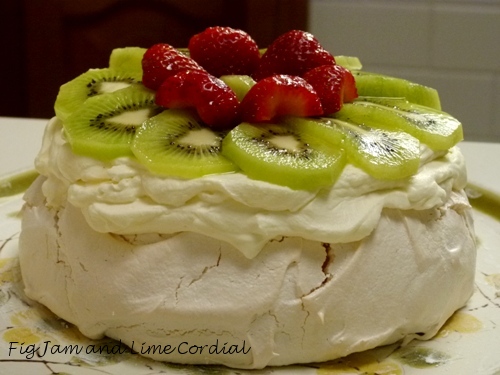
The remaining four egg whites were turned into a baby pavlova

…which was topped with whipped cream, strawberries, kiwi fruit and a drizzle of vanilla syrup just before serving.

Serendipitously, Nic at Dining with a Stud is hosting the Great Australian Pavlova Blog Hop.  Nothing marks the start of summer in Australia like a pavlova…

The sun finally returned on Saturday afternoon, and we were able to head out to inspect our soggy garden.  Thankfully it was mostly intact, although parts of it were very muddy!

How’s the weather in your part of the world?

Read Full Post »

Paper Dragon

A paper dragon for Joanna…

This optical illusion is so cool that I had to take a video to show you!

When you view the dragon with one eye closed, its head appears to actually move as it follows you…

Pete says the illusion can be captured on video because the camera is recording the image as it would be seen by one eye (mono) rather than two (stereo).

Try it out for yourself – you can read about it on the Grand Illusions website and download the pdf file here.  One tip – make sure you tape the head together facing inwards rather than out, or the illusion won’t work.

Have a fun weekend!

Read Full Post »

Perennial Leeks

Last year, my friend Christine at Slow Living Essentials put us onto perennial leeks.

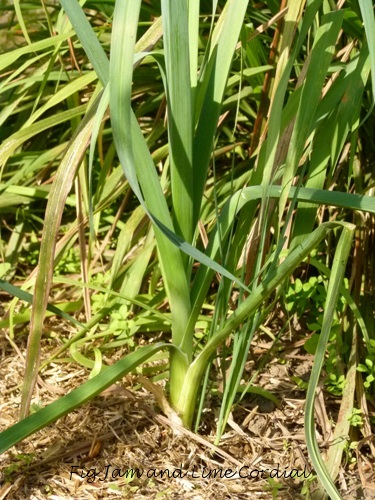
In garden terms, these have been life-changing.   We bought seven tiny leek seedlings from Cornucopia Seeds (sadly, they don’t seem to stock them anymore!), planted them in the yard, and watched them grow.  They’re smaller than regular leeks, but sweet and delicious nonetheless, and we use them right up to the green tips.

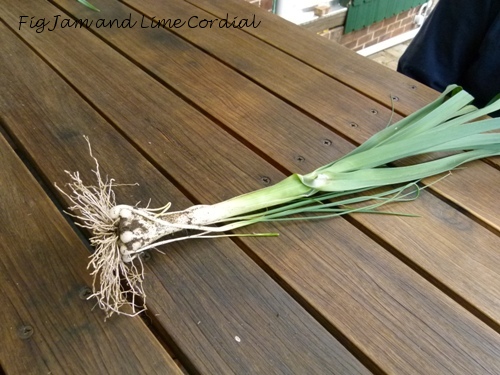
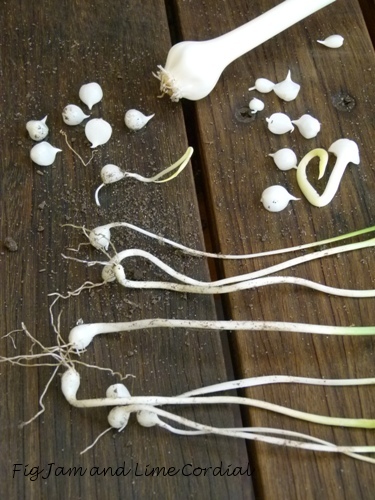
I think our leeks are a slightly different variety to Christine’s, so I decided to take some photos for you.  Here’s one we pulled out last week (it reminds me of a Muppet)…

Unlike regular leeks, these grow with a bulbous base, particularly at this time of year, when they’re madly reproducing…

As we peeled back the base, we found 24 bulbils, half of which were already shooting.  All of these will grow into new leeks – we simply poke a hole in the soil with a stick, drop in a bulb and water it in…

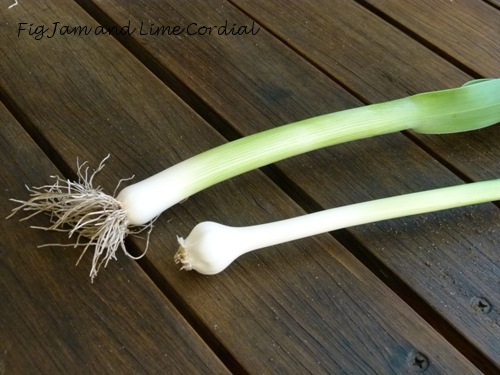
Before we had perennial leeks, we planted regular ones, which have taken a full year to get to a picking size.  Here’s a comparison of the two.  Remember that even though the traditional leek is larger, there are oodles more of the perennial ones in our yard, and they’re growing much faster.

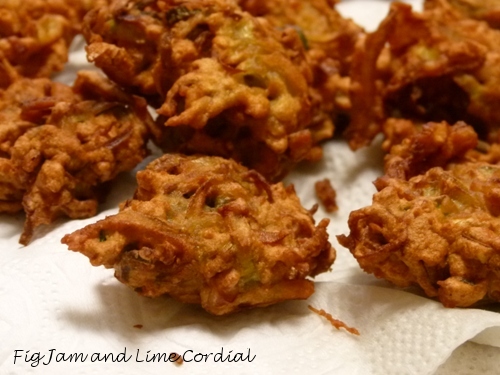
After a quick phone call to our friend the Spice Girl for advice, we turned a few leeks and a couple of onions into bhajis. We mixed the sliced vegetables into a thick batter made with:

  • besan (chickpea) flour
  • salt
  • lots of cumin
  • coriander
  • a little turmeric
  • chilli powder
  • a little bicarb of soda (baking soda)
  • water (added sparingly)

Heaped spoonfuls of the batter were then deepfried until golden brown. They were very moreish with a garlic and yoghurt dipping sauce…

Our perennial leeks taste just like the regular kind, but reproduce like onion weed (albeit less vigorously).  They’re thriving in our small suburban backyard, and more than make up for the fact that we haven’t been able to grow onions!

Edit: According to Jerry Coleby-Williams, the variety we grow here in Australia is Allium ampeloprasum var. porrum.

Read Full Post »

For the longest time, Valrhona chocolate was out of our reach, price-wise.

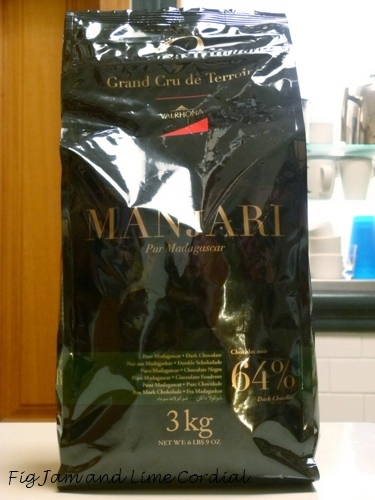
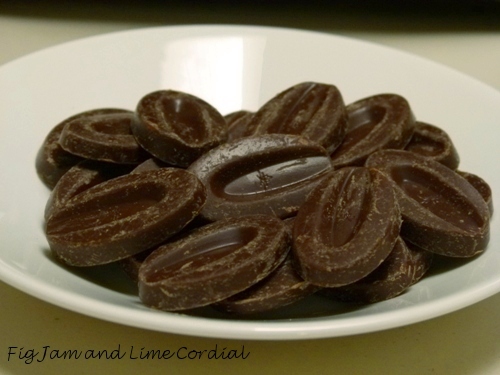
It’s still nearly double the Callebaut equivalent, but that didn’t stop Pete from buying me an early Christmas present when we spotted this bulk pack at Chefs’ Warehouse.

The bag contains three kilos of Valrhona Manjari, a dark (64%) origin chocolate from Madagascar.  It has a most unusual colour – the fèves have a slight reddish tinge to them. They’re lighter in colour than most dark chocolate, which made me double check the packaging to see if there was any added milk (there wasn’t).

The flavour is quite distinct, with high acidity and a long aftertaste. It’s not my preferred eating chocolate, but I was pretty sure it would have some exciting culinary uses…

Earlier this year, my dear friend Joanna put me onto this wonderful chocolate cake recipe by Hugh Fearnley-Whittingstall.

It’s become a regularly baked treat at our house, partly because of its simplicity, but mostly because it showcases the chocolate, without the overlay of competing flavours.  Needless to say, it’s worth making this cake with the very best chocolate you can get your hands on.

Made with Valrhona Manjari, the cake has a hint of orange that is most appealing. Here’s the amended recipe (our original post is here):

Valrhona Manjari Chocolate Cake

  • 250g (8.8oz) Valrhona Manjari fèves , 64% cacao
  • 250g (1 cup) unsalted butter, cut into pieces
  • 4 medium free-range eggs, separated
  • 200g/7oz caster sugar
  • 50g (1.75oz) plain (AP) flour
  • 50g (1.75oz) ground almonds

1. Grease a 23cm/9″ springform cake tin and line the base with parchment paper.  Preheat oven to 170C/340F or 160C/320F with fan.

2. In a large pyrex bowl, melt together the chocolate and butter in the microwave using short bursts, being careful not to scorch the chocolate.  Stir until smooth and combined.

3. In a large bowl, whisk together the egg yolks and sugar to form a paste, then stir in the melted chocolate and butter.  Carefully fold in the flour and almonds.

4. In a separate bowl, whisk the egg whites until stiff.  Stir a large spoonful into the chocolate mixture to lighten it, then carefully fold the remaining egg white in, trying to keep as much of the air in the mixture as possible.

5. Pour the batter into the prepared tin and bake for 30 minutes, until  just set.  The cake will still be a little wibbly in the middle – resist the urge to bake it until solid.  Allow to cool in the tin for about 15 minutes on a wire rack before opening the springform.

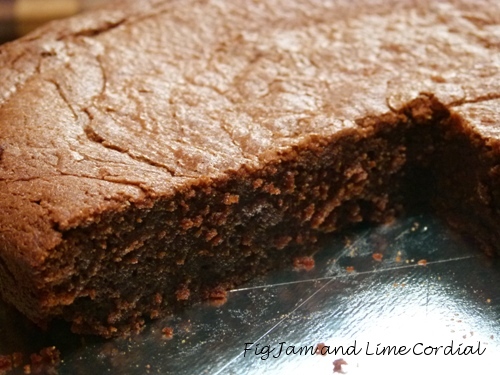
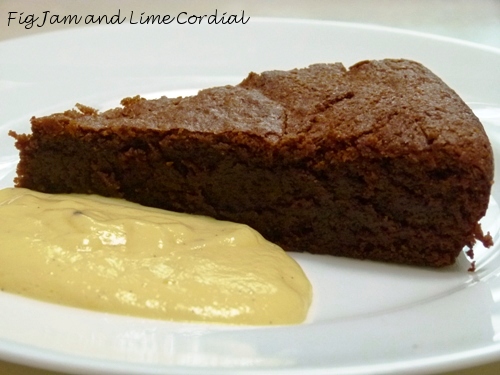
The finished cake is quite flat, velvety and slightly fudgy.  Don’t take that to mean that it’s stodgy in any way – somehow it manages to be both light and fudgy at the same time.  It cuts well at room temperature, and the flavour seems to improve with a day’s rest.

Finding a really good flourless (or nearly flourless) chocolate cake recipe is a little like Goldilocks’ search for the ideal bowl of porridge.  The ingredients are always similar, but the proportions vary slightly from recipe to recipe.  Sometimes the cakes will be overly eggy (which Pete is particularly sensitive to); other times the finished texture will be dense and heavy.

For us, this version is the perfect rendition of the style. It’s a great do-ahead dinner party dessert, particularly when served with a dollop of microwave custard. It’s the cake I’m baking for all our December entertaining, and the one I’ll be putting on the table for Christmas lunch.

As Hugh FW wrote in his introduction to the recipe:

“Everyone should have a little black cake in their
culinary wardrobe and this is mine.”

It’s now mine too, and it’s so easy that it might soon be yours as well!

Read Full Post »

Older Posts »