Feeds:
Posts
Comments

Archive for November, 2013

As you know, I love trying new things with chocolate, and I usually have no difficulty in finding taste testers. Occasionally though, the experiments can start to pile up.

These bars certainly looked pretty – the dark 70% chocolate tempered beautifully, and I’d stirred through leftover candied rind, almond slivers and glacé ginger. But the flavours were a bit too intense, and after a month or so of sitting in the choccy box, the bars were looking scuffed and a little worse for wear…

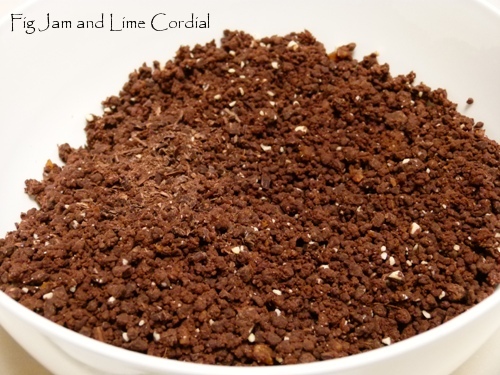
So I blitzed them up in the food processor, and used them in our Guinness chocolate cake

We first blogged about this cake years ago, and I’ve made it a dozen times since. It’s a firm family favourite!

My revised ingredients list for this version is as follows (I’ve copied the instructions below to save you flicking between posts – the original post has detailed photos):

  • 250g (1 cup) unsalted butter
  • 375g (1¾ cups) soft dark brown sugar
  • 4 large (59g) free range eggs
  • 250g (12/3 cups) plain (AP) flour
  • ½ teaspoon baking powder, sifted
  • 2 teaspoons bicarbonate of soda (baking soda), sifted
  • 440ml can of Guinness, at room temperature
  • 1 cup (110g) Dutch-processed cocoa powder, sifted
  • 200g surplus dark chocolate, finely ground

1.  Preheat oven to 160C (325F) with fan. Spray a 15-cup bundt pan with canola oil spray (or other vegetable oil, just not olive or rice bran oil).

2. Grind the chocolate up in a food processor. Pulse the chocolate until finely crumbled, but be careful not to heat it up too much, or it will melt.

3. In medium sized bowl, stir together the  flour, baking powder, sifted bicarb soda and sifted cocoa. Note that you really do need to sift the bicarb and cocoa, or you’ll end up with bitter lumps in your finished cake. Stir in blitzed chocolate.

4. In a large mixing bowl with an electric mixer, cream together the butter and sugar, then add the eggs one at a time, mixing well after each addition.

5. Add some of the flour mixture to the batter and mix well.  Then add in some Guinness and mix again to combine.  Continue in this fashion, alternating flour and stout, making sure you finish with a reasonable amount of flour at the end.  The mix may appear to curdle, but the final addition of flour will smooth it out again.  Beat until the batter is thoroughly mixed – it will be quite soft.

6. Pour the batter into the prepared pan. If you’re using a smaller bundt pan, fill to two-thirds full and pour the remaining batter into muffin tins or small loaf pans.

7. Bake for 60 – 70 minutes, or until a skewer inserted into the centre of the cake comes out cleanly. If you’re making little cakes as well, remember that they’ll bake much faster – start checking muffin sized cakes after about 20 minutes.

8. Remove from oven and let the cake rest for 10 minutes before turning out onto a wire rack to cool.

Chocolate Topping
(from Jamie Oliver’s Return of the Naked Chef)

  • 100g/3 ¾ oz butter
  • 100g/3 ¾ oz best cooking chocolate
  • 100g /3 ¾ oz icing sugar (sifted)
  • 3 tablespoons milk

Melt the chocolate topping ingredients in a bowl over some lightly simmering water. Stir until blended well and allow to cool slightly. Pour over cake and allow to set.

. . . . .

Since writing the original post in 2009, I’ve acquired a full-sized 15-cup bundt tin which comfortably accommodated all the batter (it’s too much for the smaller 10-cup bundts). As a result, the cake took slightly longer to bake – about 70 minutes…

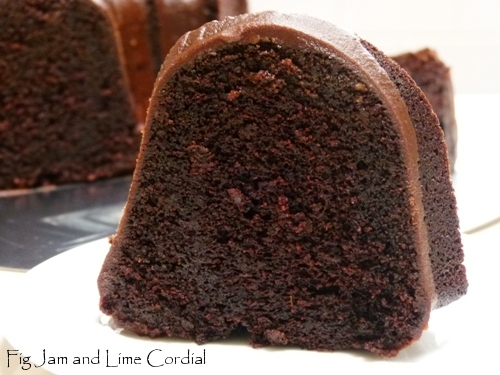
The finished cake was spectacularly dark – a product of the higher cacao chocolate in the reject bars combined with the Guinness. The icing provided just enough sweetness to balance out the flavours, and the small pieces of candied rind, ginger and almonds added a surprise to every slice. By day three, the essential oils from the rind had seeped through the crumb, giving the cake a lovely choc-orange flavour.

I think (because it’s hard to be objective about these things) that it was one of the best chocolate cakes I’ve ever made…
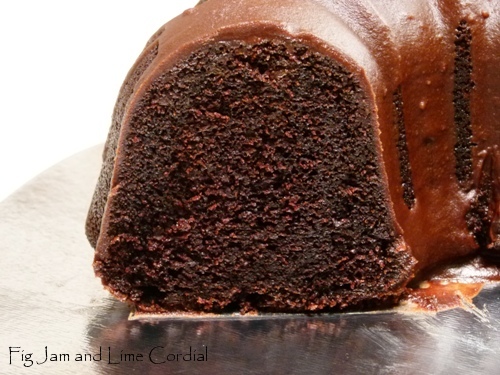
My blitzed chocolate bars produced nearly 400g of crumbs, and I’ve tucked the leftovers into the freezer for a repeat bake. It was lovely not to have to waste them!
Read Full Post »

Happenings

Last Friday, our dishwasher broke. (I can hear my friend Chicago John groaning from here – we’d been commiserating just last week about unplanned expenses.)

The repair man is coming next Monday, and the costs are already promising to be high – with a $159 call out fee from Miele, plus the cost of the new drain pump motor that we suspect we’ll need. Still, these things happen, and we’ve had ten trouble free years from a machine which is in use daily, so it’s hard to complain. (Edit: Folks, the best news EVER! Mo left me a comment below telling me to clean the non-return valve – which we’d never heard of before now – and it WORKED! The machine is draining again, and running perfectly! Thank you so much, Mo!)

As a result though, I haven’t been spending as much time in the kitchen as I normally would, so I don’t have many new recipes to share with you. Instead, here’s a brief catch-up on what’s been happening over the past week…

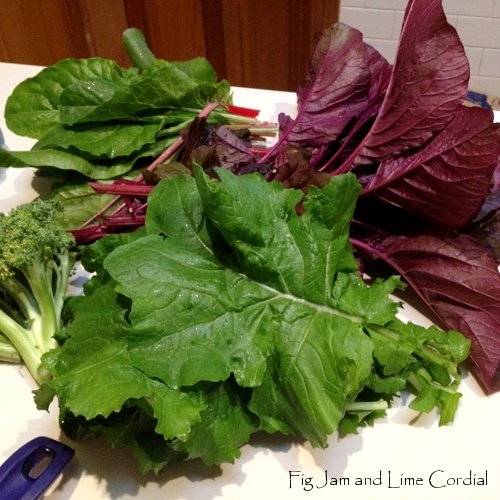
It’s been raining and unseasonally cold, but the leafy greens are thriving on the extra water. We harvested red amaranth, chard, broccoli raab and the last head of broccoli, and turned them into a glorious red-tinged stir fry…

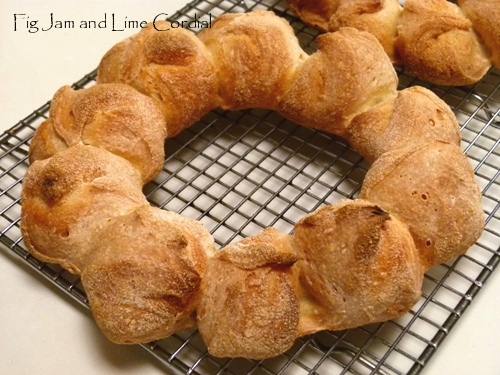
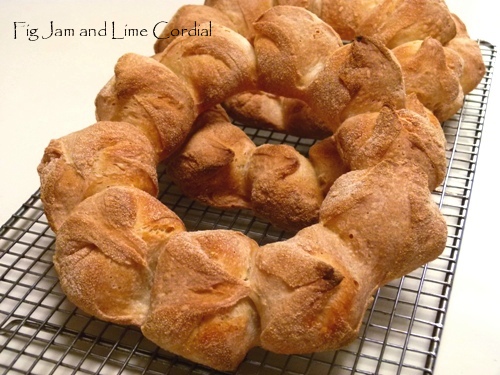
I took the bread wreath idea and tried it using the dragon tail technique – it worked very well…

The following day, I tempered a large batch of Amedei “9”, my current favourite blend. I made tiny four gram bites – the right size for just a little taste – and larger pieces, for chocolate emergencies…

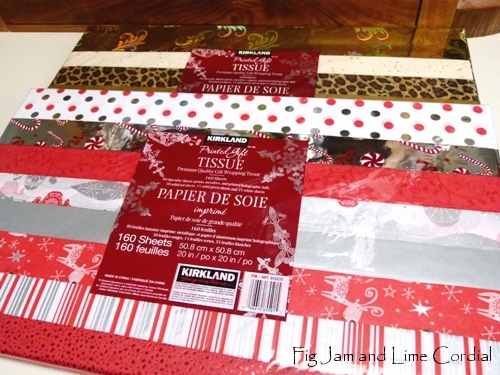
I’ve been getting ready for Christmas, and was delighted to discover these gorgeous packets of tissue paper at Costco, for just $8 per 160 sheets…

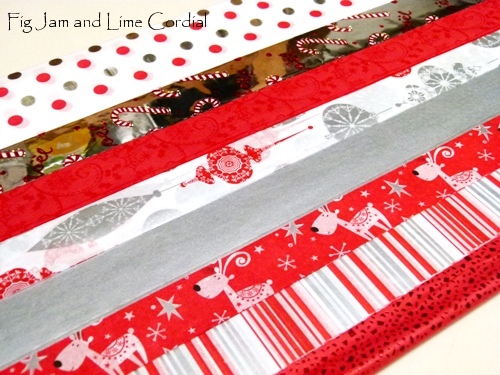
Each sheet is a half metre square…

Finally, I’ve been watching the 50th Anniversary episode of Doctor Who. I say “watching” because I think I’ve now seen it three times. Yes, it was that good!

What’s been happening in your world? And I know I’m spoilt, but I really don’t like washing up by hand, do you?

Read Full Post »

Fennel Salad

This year, we planted fennel in our garden for the first time.

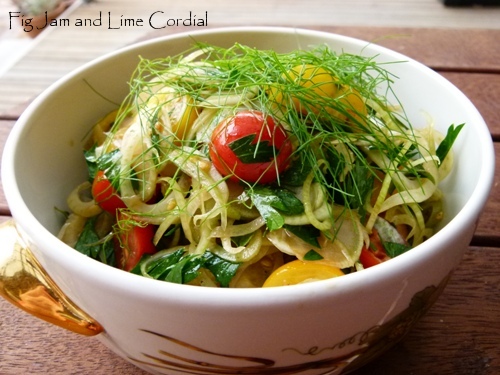
The seedlings grew well, making delicate frothy tops and small bulbs – I think we planted them too closely together to get really big ones. We’ve been eating them thinly sliced on pizza and also in this simple salad.

Every fresh ingredient in this dish comes from our garden – it was a recipe that came about purely by chance, as we had friends coming for dinner and needed a last minute accompaniment. It was so tasty that we’ve made it several times since!

  • 1 small fennel
  • flat leafed parsley
  • fresh oregano
  • cherry tomatoes
  • extra-virgin olive oil
  • balsamic vinegar
  • fine sea salt
  • freshly ground black pepper

Thinly slice the bulb of the fennel on a mandoline. Strip the leaves from the parsley and oregano, discard the stems. Slice the cherry tomatoes in half. Combine all the fresh ingredients, then dress with a little olive oil and balsamic vinegar, and season to taste with salt and pepper. Allow to sit for half an hour or so to allow the flavours to meld, then garnish with a few of the fennel fronds before serving.

. . . . .

Read Full Post »

A Fifty Chocolate Salute

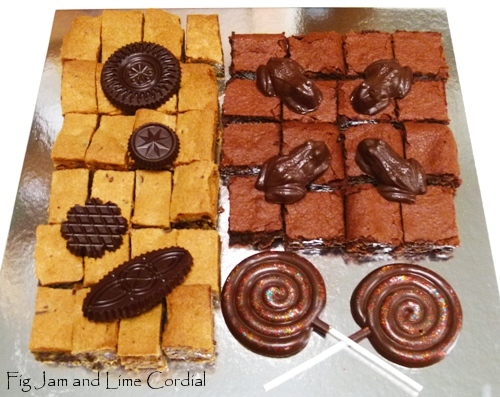
Our friend Gill turned fifty recently, and I made him this fifty piece tray of goodies. It was so well received that I think it might become my new standard 50th birthday gift!

Our assortment included a batch each of butterscotch bars and classic brownies

…four dark milk feuilletine-filled chocolate cane toads…

…a couple of (less than successful) experimental lollipops and some Amedei treasure chest coins

The treats were assembled on two layers of thick cake board, and wrapped in cellophane. Merchandising isn’t my strong suit, and after attempting several different layouts, I gave up and simply stacked all the brownies and butterscotch bars on the board (nobody seemed to mind).

Gill’s littlest Beatle was quite excited, he’d woken on the morning of his dad’s birthday looking for cake!

Read Full Post »

Lentils and Rice

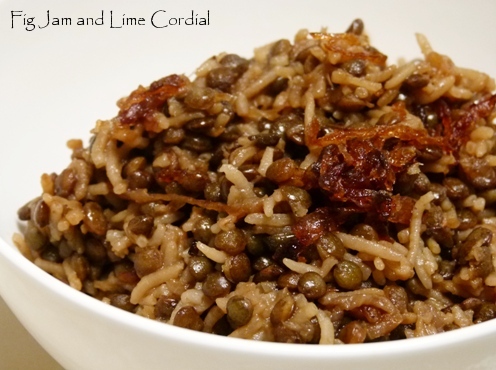
Our friends Gill and Therese (affectionately known as “G&T”) are vegetarian. We were cooking dinner for them the other night, and I made this simple Lebanese rice and lentil dish to accompany a root vegetable tagine. The rice stole the tagine’s thunder – we were all surprised by how delicious it was!

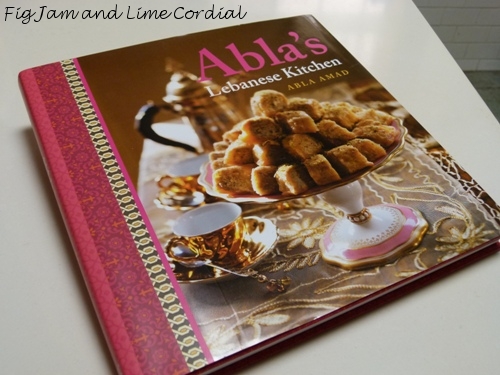
The original recipe is from Abla’s Lebanese Kitchen, a truly fabulous cookbook and one I’d highly recommend if you’re looking for a Christmas gift…

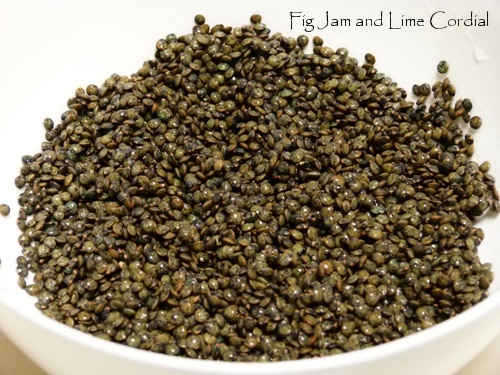
I changed Abla’s recipe slightly, substituting French lentils and Basmati rice for her original ingredients…

Here’s my take on the recipe:

  • 300g (1½ cups) French lentils, washed and drained (original recipe used brown lentils)
  • 1 teaspoon fine sea salt
  • 125ml (½ cup) light olive oil (or other neutral oil for frying)
  • 2 medium brown onions, halved and sliced thinly (I used a mandoline)
  • 200g (1 cup) Basmati rice (or other long grain rice)

1. If using Basmati, put the rice in a bowl of water to soak. If using regular long grain rice, rinse and drain well.

2. Put the lentils and salt in a large saucepan with 750ml (3 cups) water, cover and bring to the boil over a high heat. Once the pot is boiling, add another cup (250ml) of cold water and boil for 15 minutes (the extra water is supposed to stop the lentils from splitting). Check the lentils – they should be tender but not mushy.

3. In the meantime, in a large pan (I used a wok), heat the oil over high heat and fry the onions until golden brown – the time this takes will vary depending on your onions (Abla specifies 6-7 minutes, but mine took longer). A lot of the flavour in the dish comes from this step, so take the time to really brown them well. Once they’re done, scoop out a quarter of the onions with a slotted spoon and reserve for garnishing.

4. At this point, carefully combine the cooked lentils with the remaining onions and their oil. I did this by turning the heat off on the onions in the wok, and then carefully ladling in the lentils and their cooking liquid. Take care to go slowly, as the oil will  bubble and pop. Abla’s original instructions are to add the onions and their oil to the lentil pot.

5. Drain the Basmati rice (if using), rinse well and drain again. Add the rice to the cooking pot, then add another cup (250ml) of water and stir well. Cook, covered, over a low heat for 20-30 minutes or until the water is absorbed and the rice tender (keep an eye on it and stir occasionally).

6. Scatter over the reserved fried onions and serve. This dish reheats well – I made it the day before and the flavours seemed to intensify overnight. If you plan to do that, keep the fried onions in reserve and scatter them over the dish just before serving.

This dish was so good that I made it again a few days later for Big Boy and Small Man, who both loved it. Definitely a keeper!

Read Full Post »

Older Posts »