Feeds:
Posts
Comments

Archive for the ‘Cool Things’ Category

Cockatoo Island is a great place to explore.

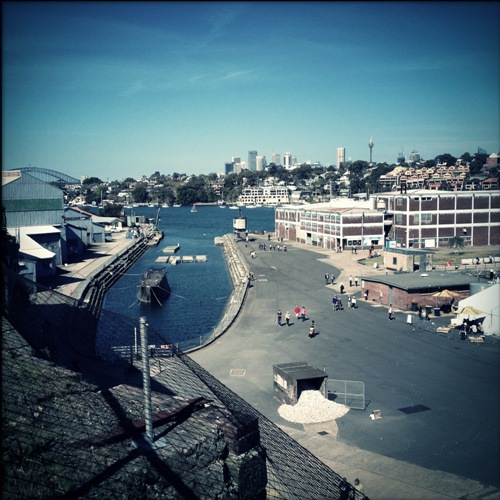
Located in Sydney Harbour at the junction of the Parramatta and Lane Cove rivers, it’s just a short ferry ride from Circular Quay.  Pete and I visited the Biennale exhibit there a couple of weeks ago, and were so blown away by the island itself that I felt it deserved a post of its own.

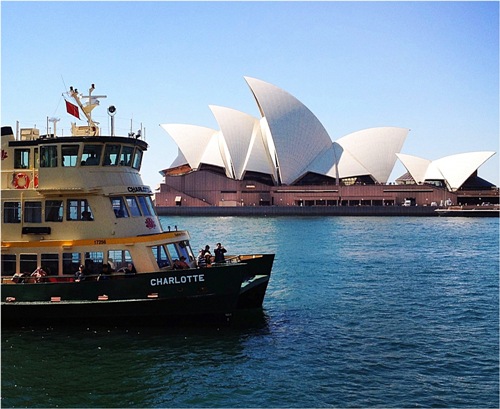
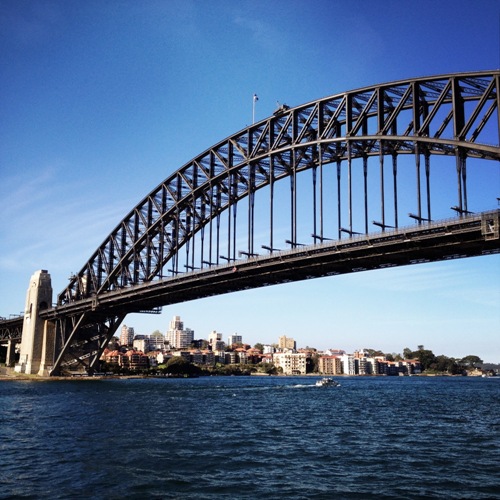
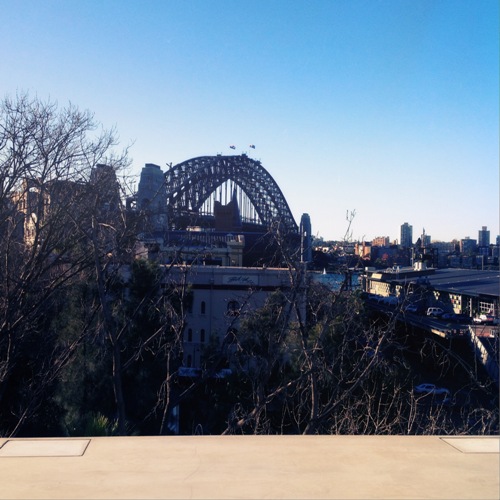
Sydney turned on her shiniest spring weather for our trip.  The free Biennale ferry took us past the Opera House and under the Harbour Bridge. We really do live in one of the most beautiful cities in the world…

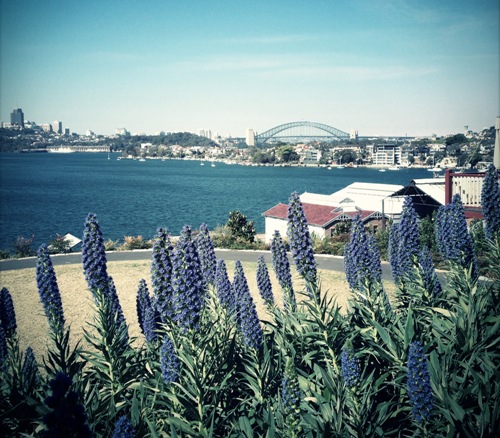
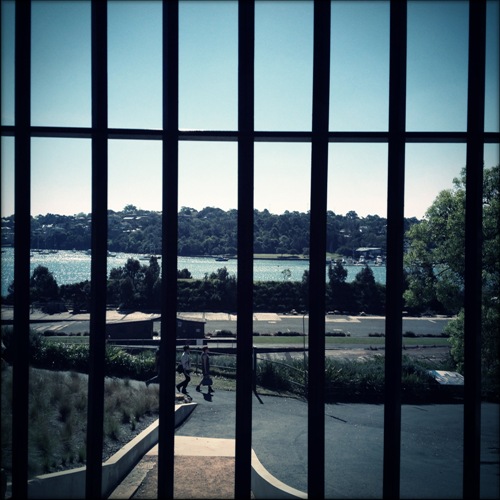
The 18ha (44 acres) island operated as a penal colony in the mid-1800s, and as one of Australia’s largest and longest running shipyards from 1857 to 1991.  The view from the restored houses at the top of the cliffs is breathtaking…

The island was listed by UNESCO as a World Heritage Site in 2010…

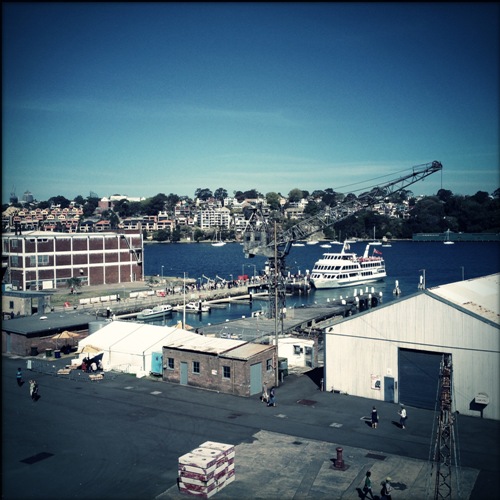
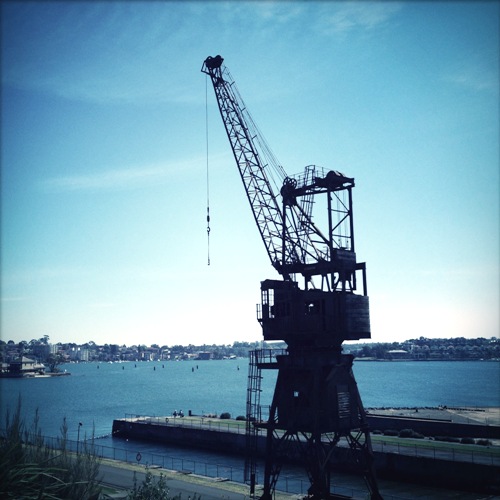
The dock below was built by convicts in the 1800s…

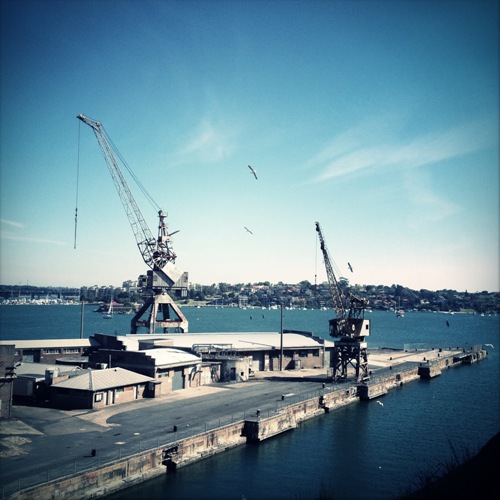
The island is a huge seagull nesting site – I didn’t want to get too close with my iPhone camera to the dark coloured chicks, many of whom were nested on the ground in the care of their parents.  The sky was full of gulls, riding the winds…

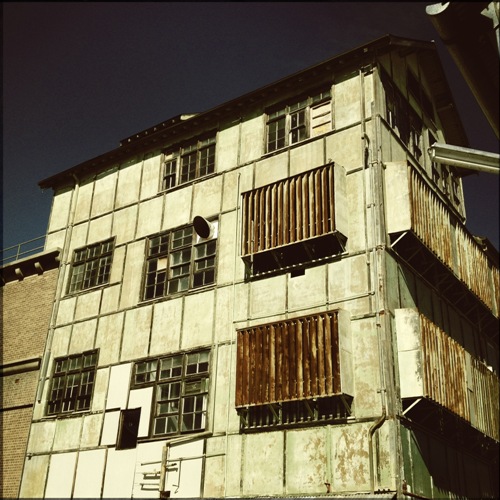
Some of the old buildings are still standing, although many were demolished when the shipyard closed in 1991…

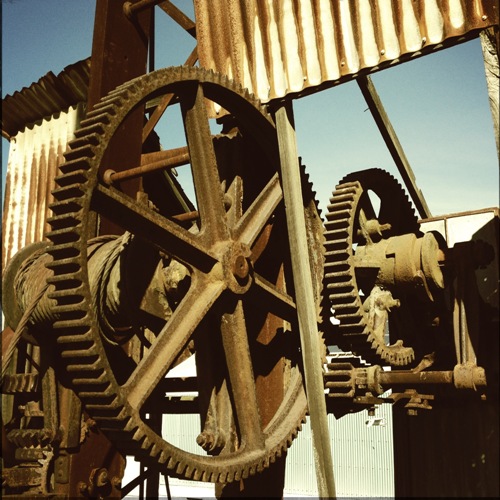
The island is dotted with heavy machinery from a previous era…

…and remnants of its penal colony past…

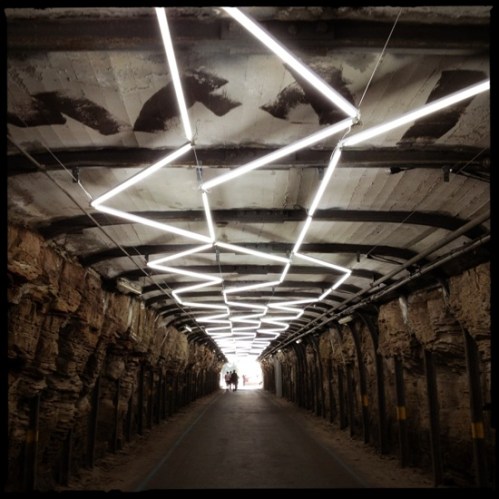
There are two tunnels cutting through the cliffs from one side of the island to the other.  We weren’t sure if the lighting in this one was utilitarian or an art installation…

Cockatoo Island is a fascinating landmark, and definitely worth a visit if you ever get a chance.  The ferry ride alone is worth the trip!

Read Full Post »

18th Biennale of Sydney

The River (2012) by Monika Grzymala

I’ve discovered that I adore contemporary art.

Traditional art forms have never really held my interest  – don’t get me wrong, they’re wonderful to look at and I always marvel at the skill of the artist – but contemporary art moves me emotionally.

I would never have discovered this if Roz and John hadn’t come to Sydney earlier this year and taken Pete and I to the small Biennale exhibit at Carriageworks.  Roz encouraged us to visit the other Biennale spaces, and we have – we spent an afternoon at the Museum of Contemporary Art last month and, just this week, a full day meandering through the large installations on Cockatoo Island.

The island is an amazing place, and I’ll be writing a post about it shortly, but I wanted to share with you the photos that we took of the artworks there, in the hope that it will encourage any of you who are thinking about visiting to do so. The Biennale ends this Sunday, and there won’t be an opportunity like this again for another two years.

Many of the art installations are enormous, and it just wasn’t possible to capture them fully in a photo.  In addition, there are many multi-faceted works, which incorporate sight, sound and space.

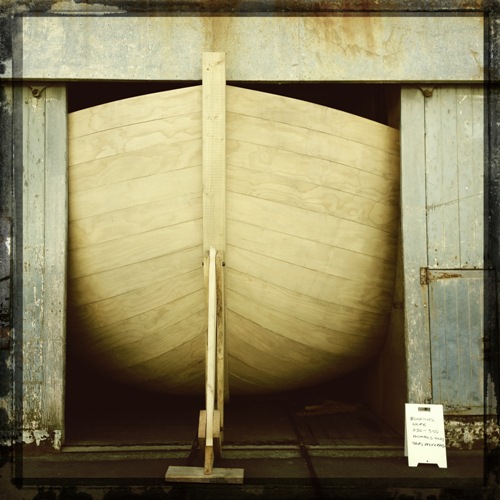
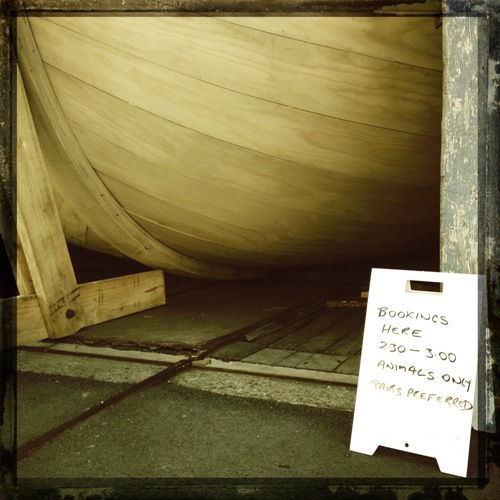
This beautifully crafted piece was Pete’s favourite. Rehearsing Catastrophe: The Ark in Sydney by Australian artist Lyndal Jones is an ark under construction, complete with building sound effects, workshop and audiovisual presentation…

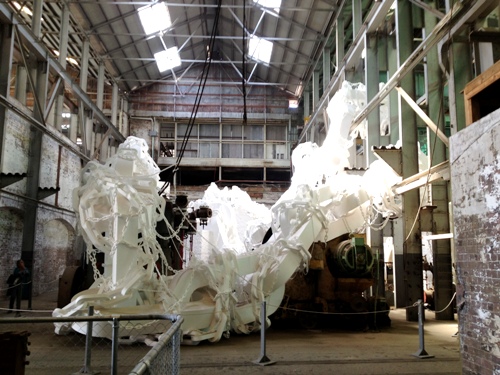
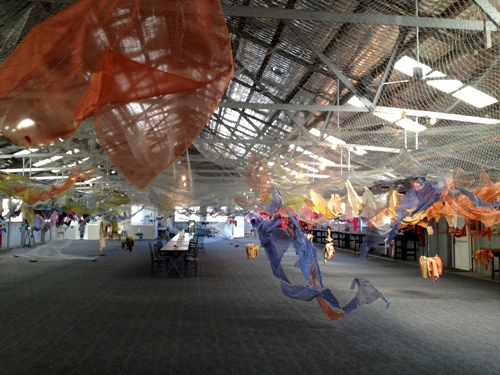
I loved this huge installation of polystyrene chains wrapped around the old machinery of the island (a former shipyard). Snow Ball Blind Time by New Zealand artist Peter Robinson

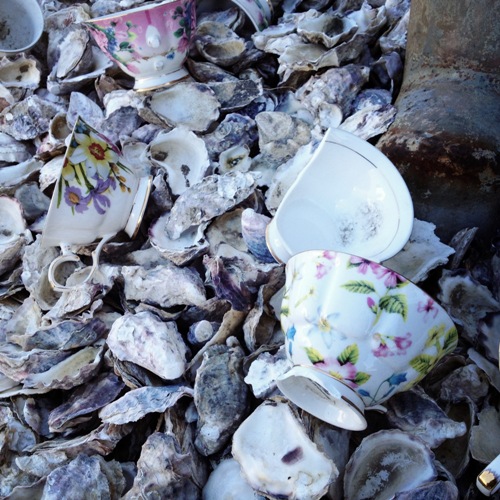
Just a tiny section of Jonathan Jones’ untitled piece incorporating a small hill of oyster shells and broken china cups, which the artist says is “his monument to discursive engagement… a comment on the mixing and crashing together of Asian, European and Aboriginal cultures”

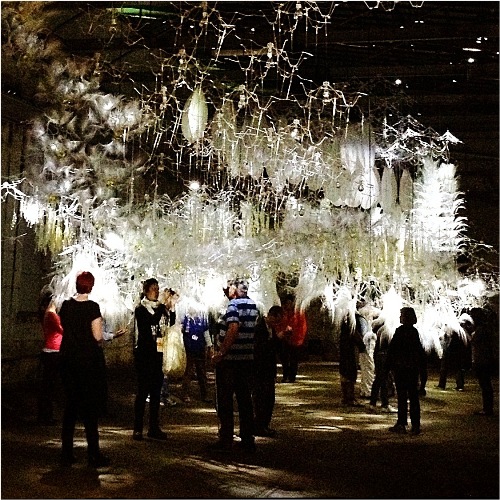
Philip Beesley’s Hylozoic Series responds to human presence. It was magical…and crowded!

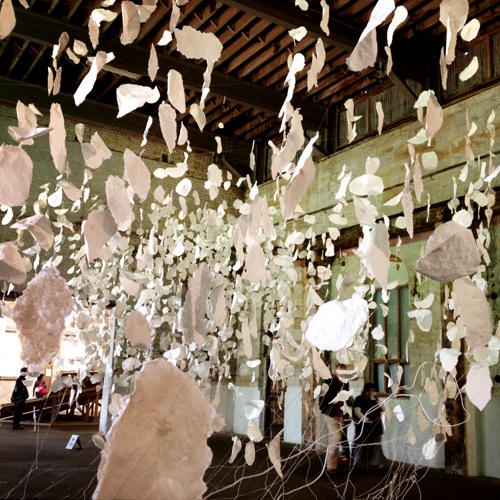
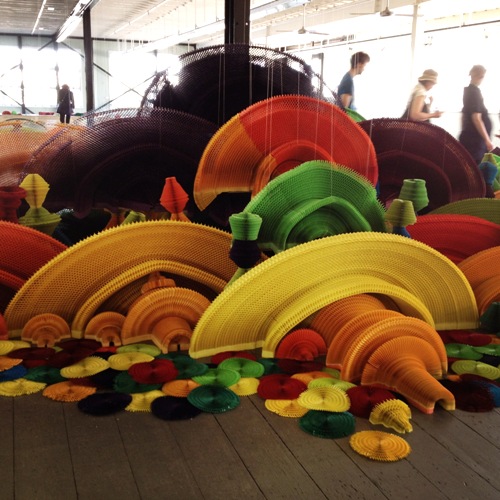
Chinese artist Li Hongbo’s Ocean of Flowers filled an entire floor with hand glued papercrafts…

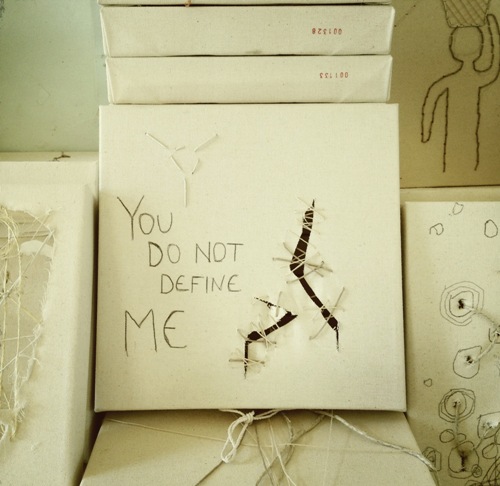
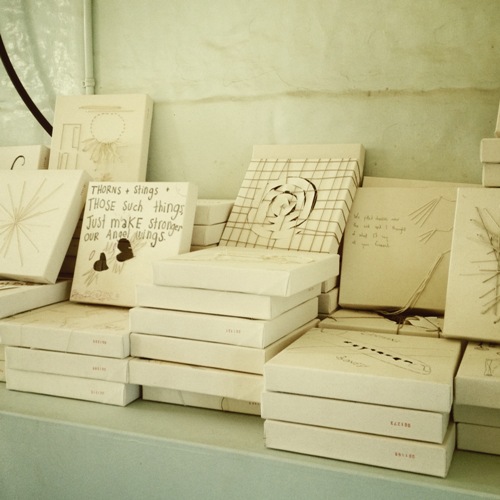
Canadian artist Nadia Myre’s The Scar Project is a moving, often sad and insightful work of art, created collaboratively. People were invited to stitch representations of their scars, and then write the stories of how they got them, and the impact they had on their lives…

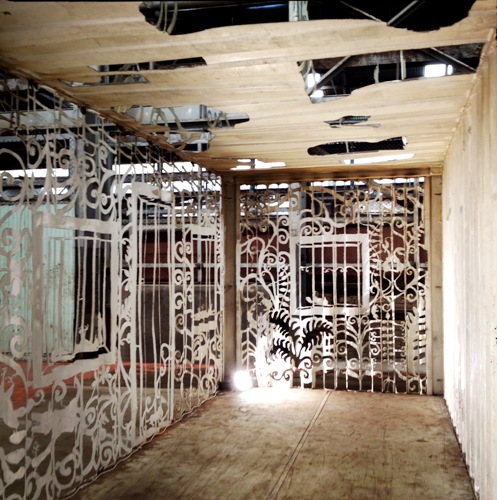
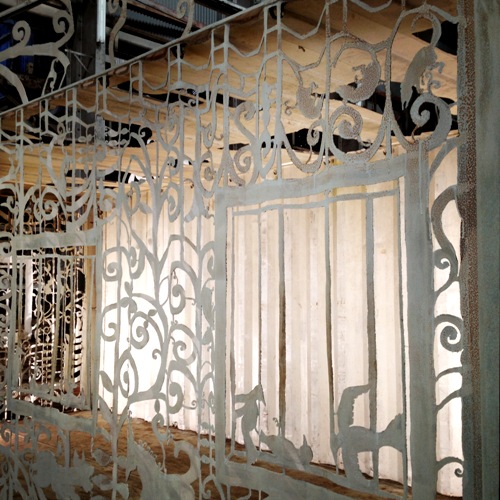
Canadian artist Cal Lane’s Domesticated Turf is absolutely wonderful – from a distance it looked like a paper cut out rather than a corrugated metal shipping container, carved into delicate and decorative lacework…

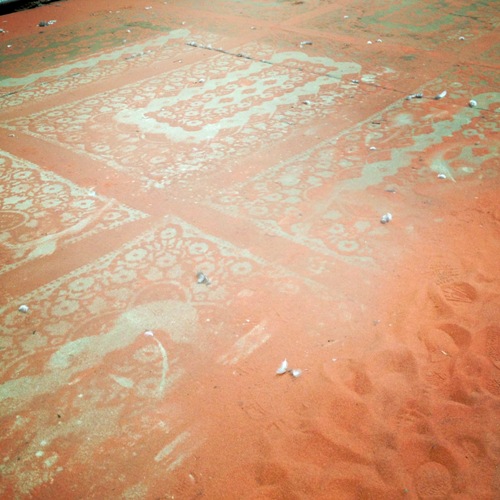
The installation includes a red sand stenciled surround…

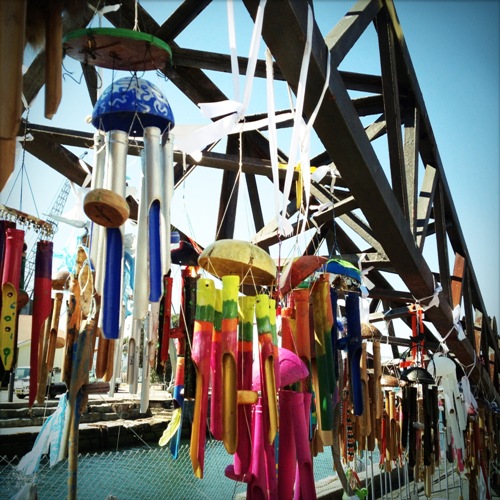
Tiffany Singh’s Knock on the Sky Listen to the Sound is an interactive piece that invited visitors to take a wooden chime home, decorate it, and bring it back. The results are brightly coloured and rang cheerfully in the open air…

Jon Pylypchuk’s Spend the rest of your life mining this death and it will only bring you despair is situated in a cave within the Dog Leg tunnel…

Stitching Time – A Collective Fashioning by Erin Manning was created with the help of a large project team, which included three Australian universities…

Junling Yang’s Class in the Class is set up as an old fashioned classroom, with desks, chairs, pencil cases and exercise books.  Over three of the tables were projectors, telling stories…

The 18th Biennale of Sydney has been an extraordinary experience!  Please visit their website for more information. There’s still time to catch it before it ends!

Read Full Post »

Welcome to my city!

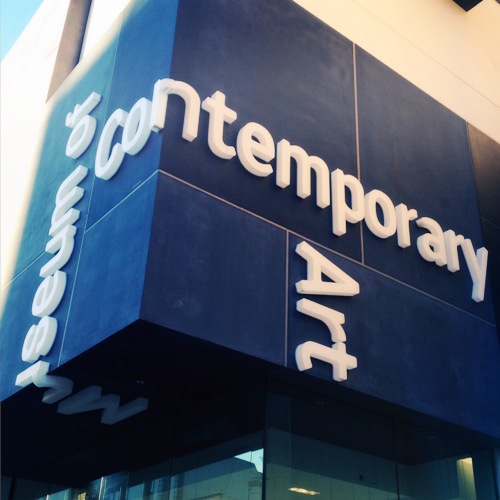
It was a sunny winter’s day, and Pete and I took a trip down to the historic Rocks district to visit the Museum of Contemporary Art (MCA).

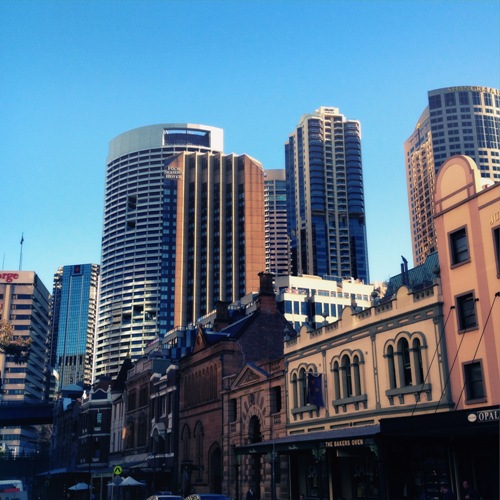
The Rocks, built along Sydney’s foreshore, was the site of Australia’s first European settlement in 1788.  The area now has protected status, and its original architecture has been preserved. Skyscrapers dominate from Circular Quay onwards…

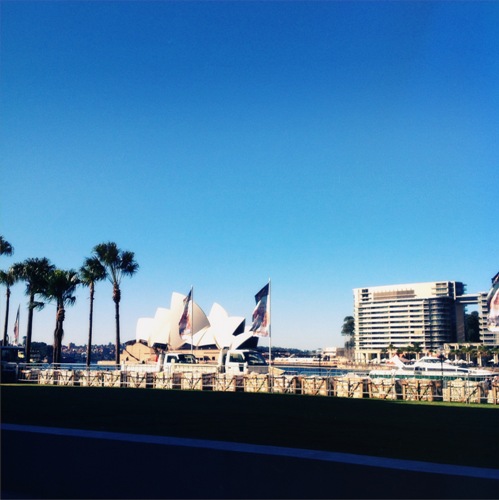
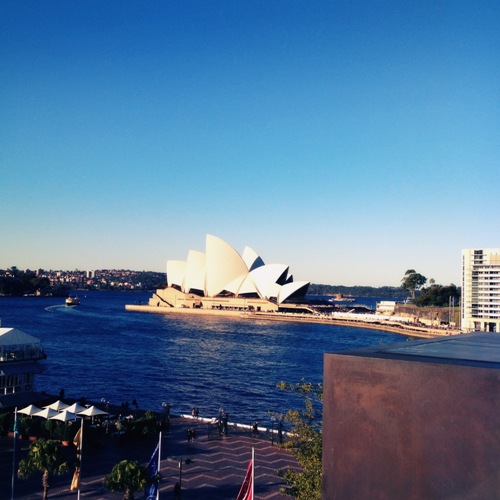
We had a delicious lunch at the MCA restaurant, sitting outside and gazing  at the Opera House…

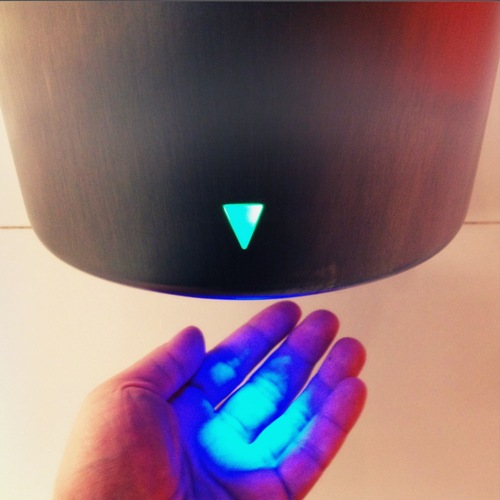
Everything about the MCA is cool, even the hand dryers in the bathrooms…

The 18th Biennale of Sydney, our largest contemporary visual arts event, is currently in full swing.  The MCA plays an integral part in this, with two floors of the museum currently dedicated to Biennale installations.

Here’s just a snippet of what the MCA has on offer at the moment.  All the photos were taken with my iPhone4S, using the Hipstamatic app (Foxy lens, Pistil film, for those who are interested).  The size and majesty of many of the displays was hard to capture (especially as flash photography is prohibited).

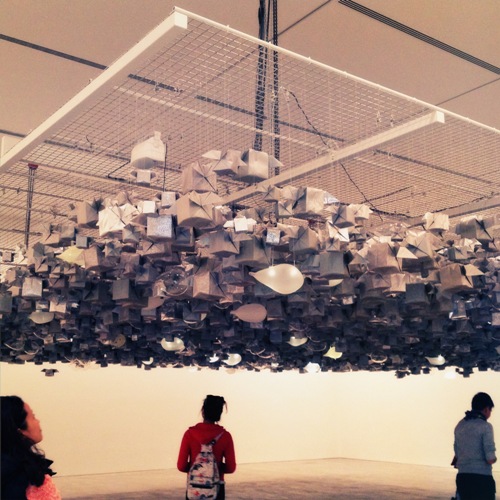
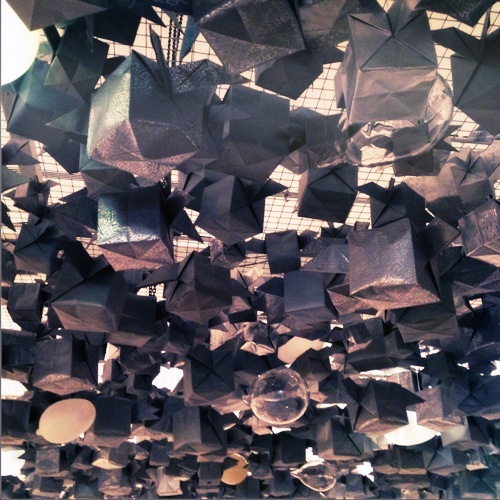
This large installation by Thai artist, Pinaree Sanpitak is entitled Anything Can Break. The accompanying music makes standing under the display a complete sensory experience…

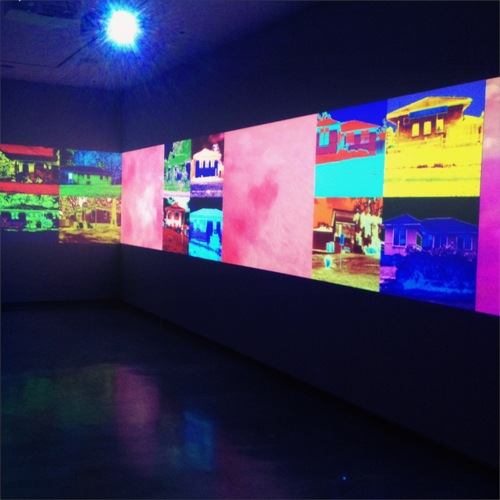
The Biennale includes several audio visual pieces, including Air Land by Khaled Sabsabi..

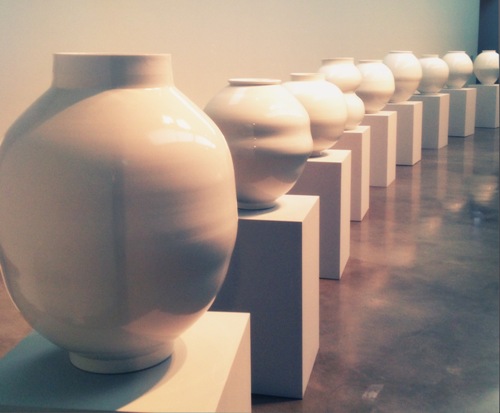
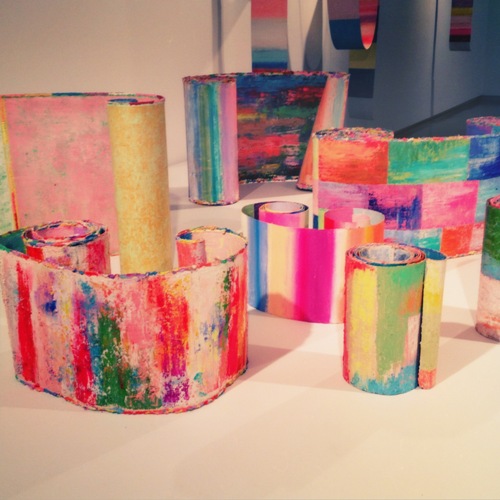
Moon Jars, by Pak Young-Sook…

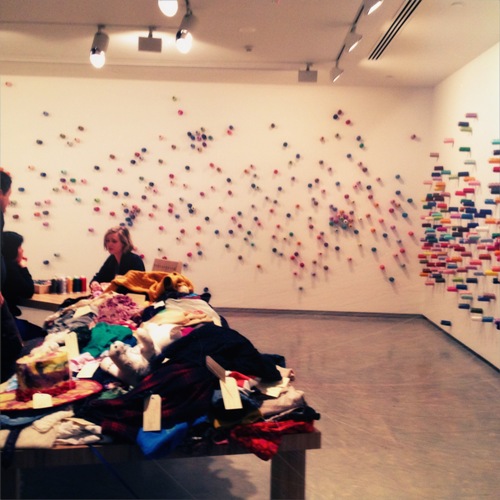
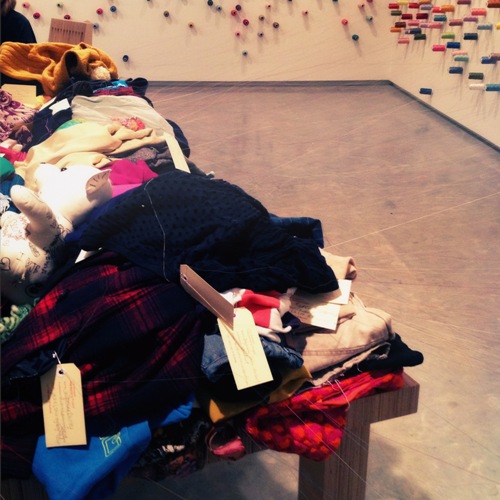
The Mending Project, by Lee Mingwei is an interactive piece – members of the public bring clothing that needs to be mended and chat to the artists as it’s being repaired. The clothing is then left for the duration of the exhibition…

All the pieces remain connected to the spools mounted on the wall…

Multicoloured oil paints on canvas, by Thai artist Mit Jai Inn…

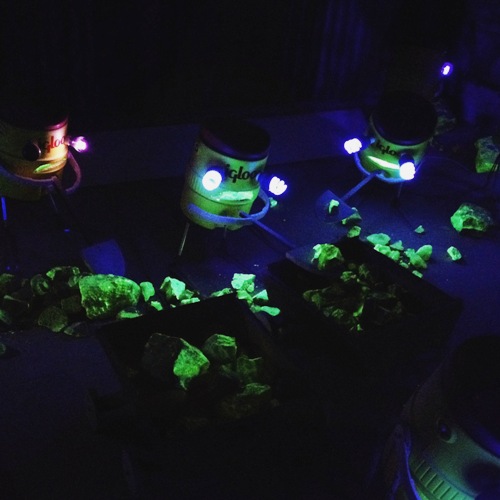
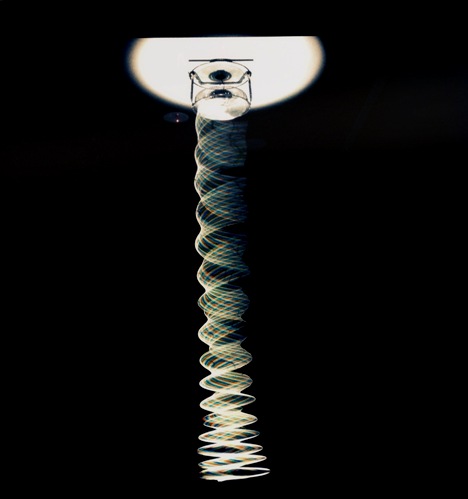
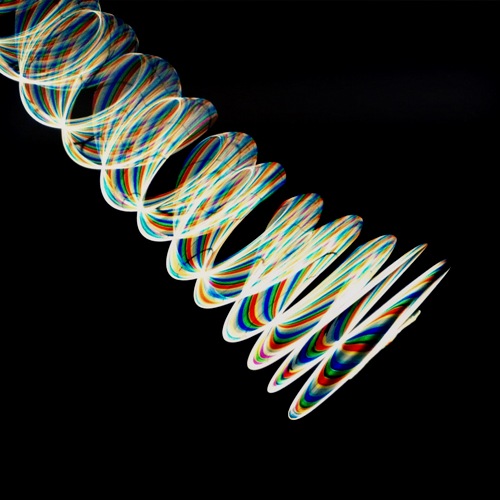
Hidden away in a darkened corner is Brisbane artist Ross Manning’s Fixational Eye (Vertical), a spinning light display…

I could have stood there watching it all day…

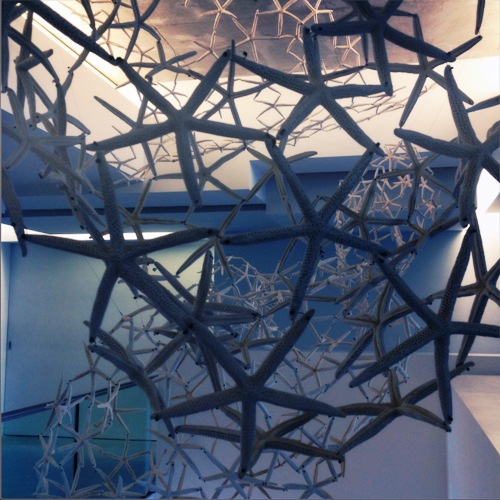
Woven Water: Submarine Landscape I by Maria Fernanda Cardosa incorporates preserved starfish…

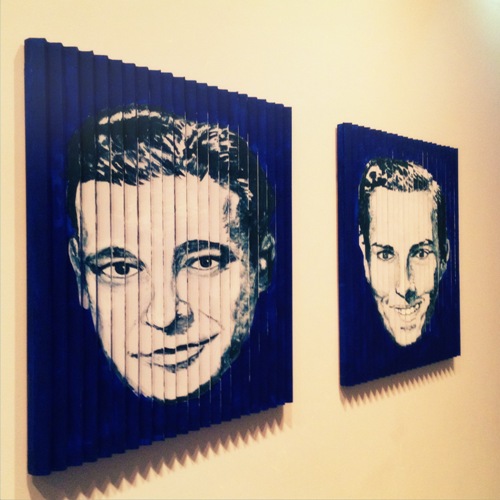
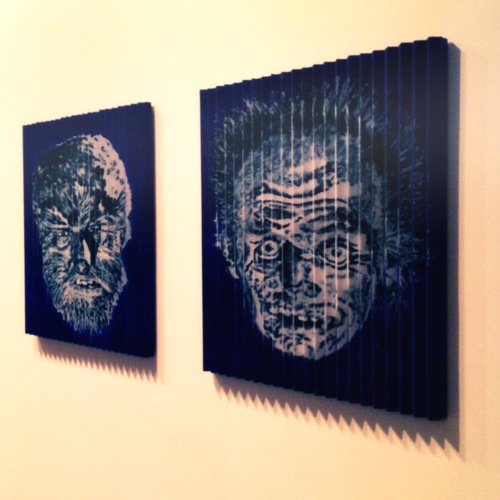
These Manster pieces by Maria Kozic are direction specific. Here they are viewed from the left…

..and from the right…

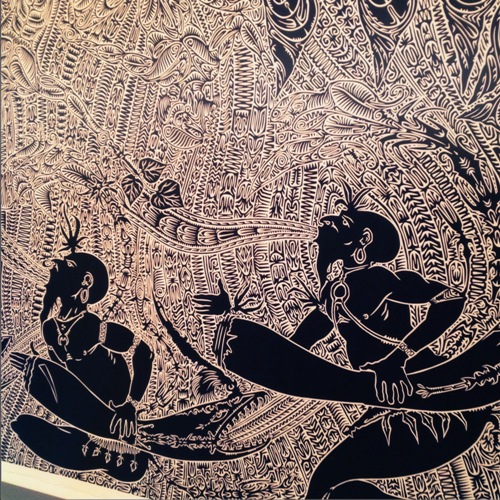
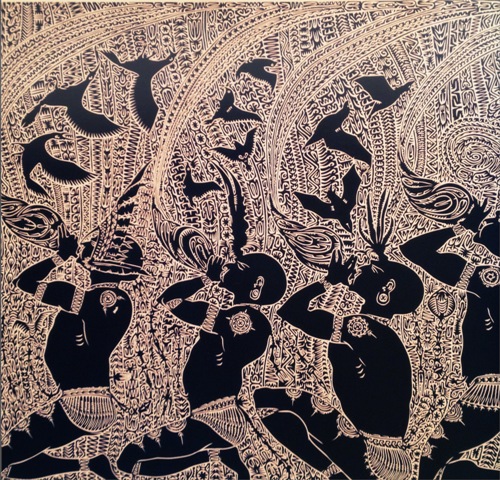
Girelal by Alick Tipoti is a very large linocut mounted on canvas – my iPhone could only capture sections of it…

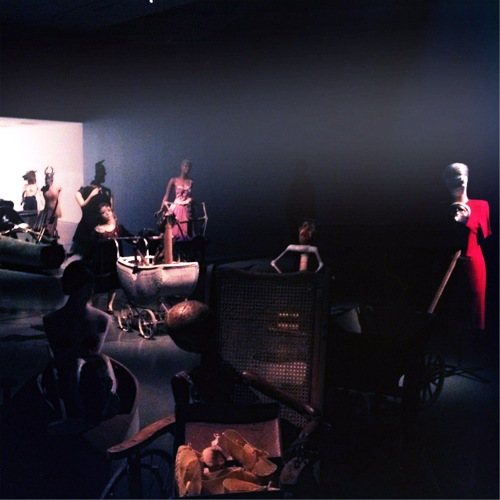
I found A Journey by Judith Wright very moving (but hard to photograph in the deliberately dimly lit room)…

The top floor of the MCA offers a café with breathtaking views…

Astonishingly, entry to the MCA is free.  If you’re in Sydney, do wander in for a visit, and maybe support them as we did, by eating in one of their restaurants or purchasing from their very funky shop!

Museum of Contemporary Art
140 George St
The Rocks
Sydney  NSW  2000
10am – 5pm Mon – Wed, Fri – Sun
10am – 9pm Thursdays
Closed Christmas Day

Website:  www.mca.com.au

Read Full Post »

A Study in Succulents

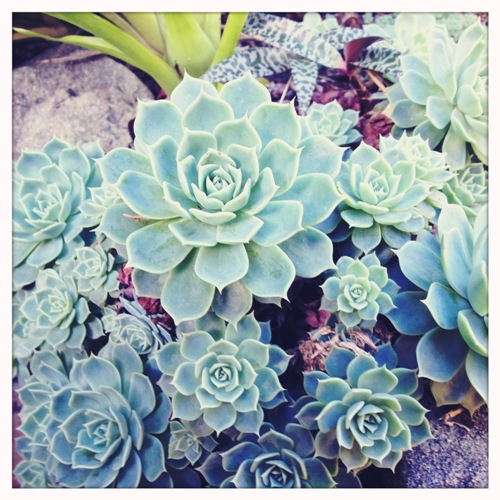
My neighbour Nic grows beautiful succulents.

Photographing them today gave me a great opportunity to learn more about my iPhone 4S and the Hipstamatic Photo App.

iPhone 4S, Hipstamatic , John S Lens, BlacKeys SuperGrain Film

iPhone 4S, Hipstamatic , John S Lens, BlacKeys SuperGrain Film

iPhone 4S, Hipstamatic , John S Lens, BlacKeys B+W Film
(the BlacKeys BW film allows just a hint of colour through)

iPhone 4S, Hipstamatic , Jane Lens, DC Film
(very close to true colour)

iPhone 4S, Hipstamatic , Jane Lens, DC Film
(very close to true colour)

iPhone 4S, Hipstamatic , Helga Viking Lens, Blanko Film
(an oldfashioned, slightly washed out effect)

Fear not, there’s a cookie recipe coming next!

Read Full Post »

Sigh.  I do get excited by things sometimes. It always makes Pete laugh!

When I was sixteen, I was a passionate amateur photographer, with an Olympus SLR and a kit bag full of interchangeable lenses. Back then, everything and everyone was a potential subject, and I remember the excitement of viewing the world through a photographer’s eye, always on the look out for a great photo.  Sadly, it was a hobby that faded after I started university, as film processing costs became prohibitive.
Last week, I discovered the Hipstamatic App for my iPhone 4S (thanks Lucas).

This digital photography app emulates the old fashioned point and shoot camera, but offers a range of filter options (in the form of “lenses”,” films” and “flashes”) that allow you to creatively manipulate the final image. With most photo apps, the filters are applied to a photo after it’s taken; with Hipstamatic you choose the effect before you click the shutter button.

It’s not without its limitations (which I’ll discuss a bit later on), but at $1.99 for the basic app, price isn’t one of them.  The base model comes with five lenses, four films and three flashes.  Add-on packs start at just 99c each – so far, I’ve bought seven of them, so I’m out of pocket a grand total of $8.92. That’s roughly the price of a loaf of artisan sourdough.

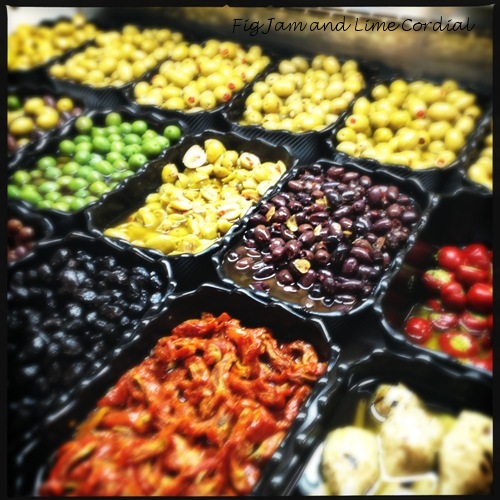
And for that small cost, I’ve been having a ball! Here are some of the pics I’ve taken in the last few days, while I’ve been experimenting with the different effects that can be achieved with the app.

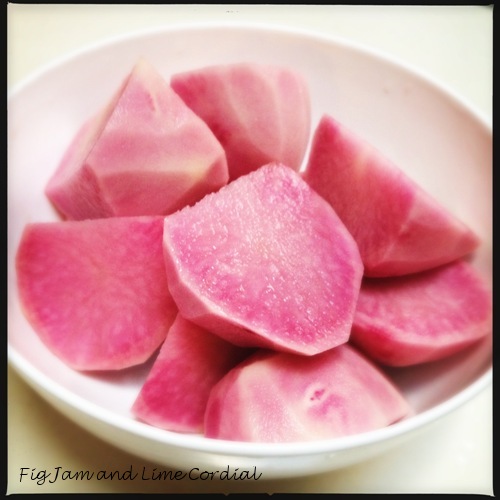
All the photos above, and the one below of cranberry red potatoes, were taken using the Loftus Lens and DC Film.  Both of these were designed in conjunction with food photographer David Loftus to specifically enhance food photos…
. . . . .

Taking black and white photos makes my heart soar!

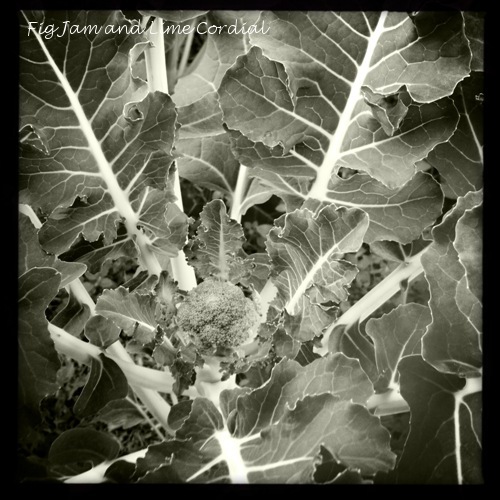
The next two photos were shot using the Lucifer VI Lens and Claunch 72 Monochrome Film…
. . . . .

The Americana Lens coupled with Blanko Freedom 13 Film allowed me to capture our Yellow Princes as they darted around the tank…

. . . . .

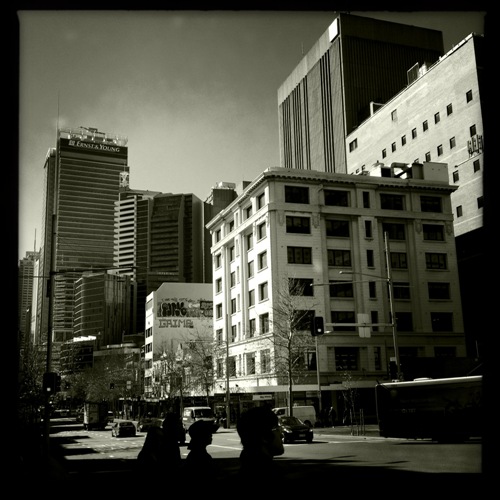
Pete and I spent an afternoon in the city recently.  I had my iPhone out as soon as I stepped off the bus, and took this photo using the John S Lens and my now favourite Claunch 72 Monochrome Film…
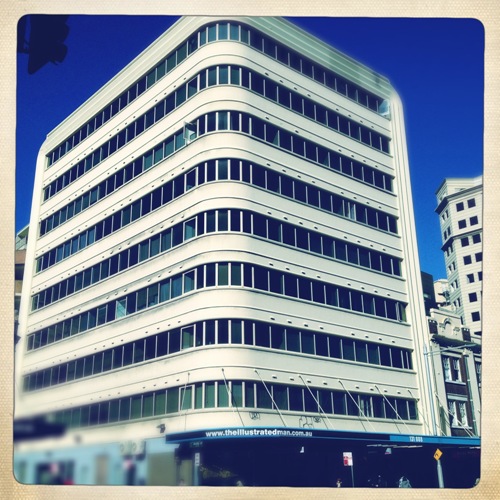
The Americana Lens and Ina’s 1969 Film gave this photo of a building in Surry Hills a 70s feel…
. . . . .

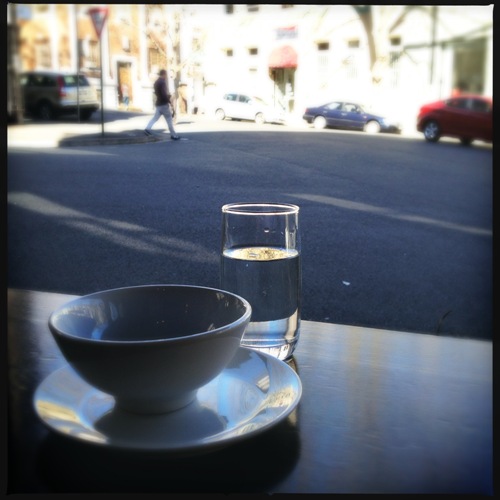
As Pete missed out on lunch with Glenda and Maus, we went back to Bar H in Surry Hills.  We sat by an open window and I took this photo as we waited for our meal.  The following three shots were all taken using the Loftus Lens and DC Film…
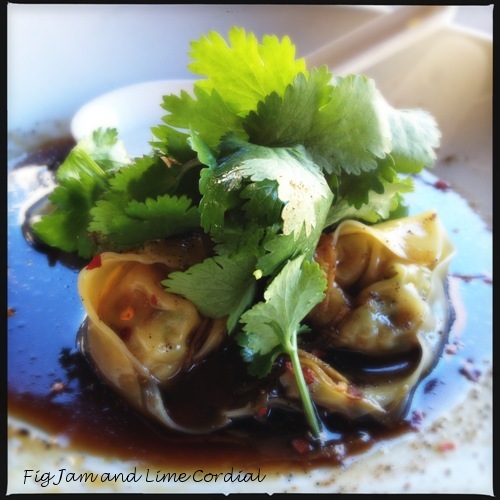
Steamed prawn and fish wontons…
Wild kingfish sashimi salad…

. . . . .

A stroll through Hyde Park, and an experimental shot taken using Buckhorst H1 Lens and US1776 Film…
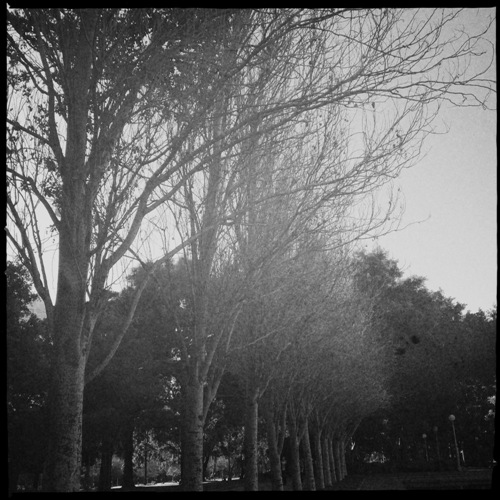
. . . . .

The new Sydney Westfields has the most amazing food court I’ve ever seen!  We had dessert at the Via Del Corso Pasticceria e Caffé…
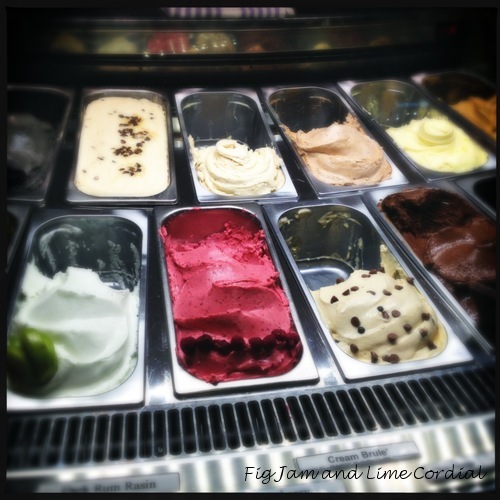
Pete had the lemon lime tart…the Loftus Lens and DC Film seemed to cope well with the indoor fluoro lighting..

I had blood orange and chocolate sorbet…
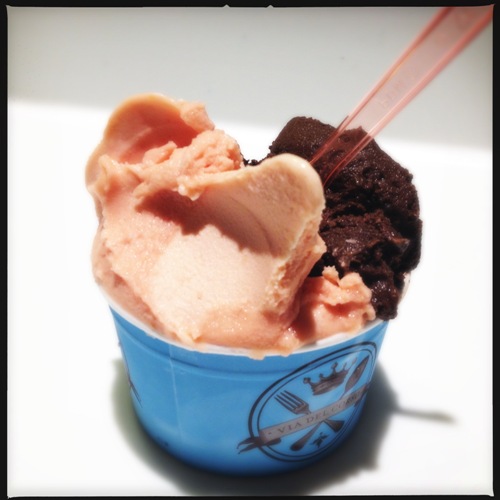
Notice how the Loftus Lens blurs the edges of the photo slightly?

This window display at Ragù astounded me – I don’t think I’ve ever seen a full leg of San Daniele prosciutto hanging in a food court before…
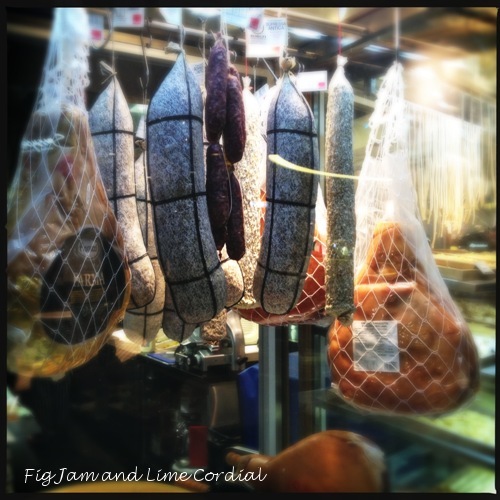
. . . . .

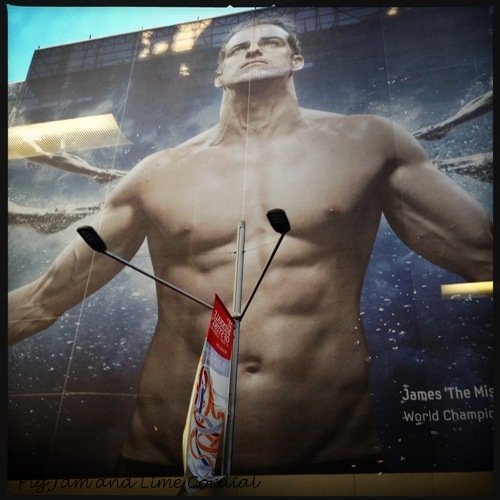
And finally, the Jane Lens and DC Film (my default “regular” photo setting) captured this poster of James Magnussen, Australian Olympic swimmer, which covered the entire Queen Victoria Building.  I took it through the window of a moving bus (Debra, this photo is for you!)…
Hipstamatic is a wonderful app, but as I mentioned above, it does have a few limitations.

Firstly, it can’t zoom.  It really is point and shoot only.

Secondly, it can’t take photos using the front camera on the iPhone, which really isn’t a big loss, as the front lens isn’t as high quality as the rear one anyway.

Thirdly, the photo can’t be edited in Hipstamatic after it’s been taken, although you can save it onto your computer and play with it there.  This means that you have to learn how the different lenses and films work together, so you can pick the right combination before clicking the shutter button.

Fourthly, each photo takes about ten seconds to process, and the software can only process nine pictures at a time. I don’t have a problem with this, but it was sufficiently annoying for Monkey Girl (Big Boy’s ♥) to uninstall the app.  Then again, she’s nineteen.

One major consideration – according to some reviewers, the app has a tendency to crash, particularly if you’re using an older iPhone or operating system (although it’s been mostly fine on my iPhone 4S with iOS 5.1.1).

And finally, the app doesn’t come with a built-in training manual or guide.  It takes a little study to figure out how it works, and then some experimentation to  determine which settings you prefer to use. There are a couple of great instructional websites here and here which I found particularly useful.

If you have an iPad and would like to see more of the fantastic photos taken with this app, download their free magazine.  And check out New York Times photographer Damon Winter’s Hipstamatic photo story on Afghanistan – he won an international award for it!

PS. All the photos in this post are SOOC (straight out of camera) – they haven’t been adjusted or photoshopped in any way!

Read Full Post »
« Newer Posts - Older Posts »