Feeds:
Posts
Comments

Archive for the ‘Food & Friends’ Category

I’m worried about bees.  They’re such an important part of our existence – without them to pollinate our crops, we’d all be up a creek without a paddle.  And they’re under serious threat – many of the world’s bee colonies are infected with dangerous parasites that are killing honeybees at an alarming rate, possibly also leading to problems like colony collapse disorder.  Worse still, these mites are now developing resistance to miticides which have worked in the past.  According to Wikipedia, a third of the bees in the US (!!) didn’t survive winter 2009.

Australia is almost the only country left whose bee industry remains unaffected by the ominously named Varroa destructor mites.  Most experts agree, however, that it’s just a matter of time before these make it to our shores, especially as they’re now prevalent in neighbouring New Zealand and Papua New Guinea.

Whilst I can’t do anything to stop the parasites, and will continue to fret about the welfare of the world’s bees, I decided today that I needed to put away some Australian honey.  I know it’s crazy – we only go through a couple of jars a year – but honey lasts almost forever, and I want to continue eating it in a chemical-free form for as long as possible (which will presumably only be until the Varroa mites make it here).

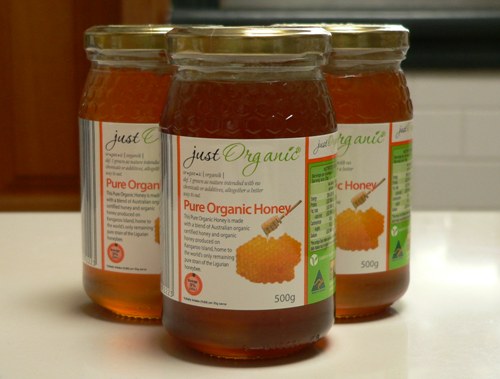
Fellow Aussies, did you know that we can buy organic honey, from the only remaining strain of pure Ligurian bees in the world, at Aldi?  For just $5 a 500g jar?  It’s a ridiculous bargain, and since a Sydney Morning Herald article was written about it last year, the price has actually gone down.

I have my ten glass jars of liquid gold stashed away.  Even if you’re not as nutty as I am, I hope that the next time you have a spoonful of honey, you’ll spare a thought and a prayer for the plight of the world’s bees. And if you’re living here in Oz, give thanks that we still have access to organic honey at such a reasonable price!
Read Full Post »

Our trips to Flemington Markets often produce colourful surprises…

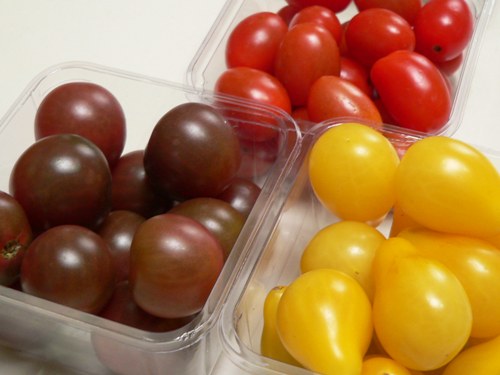
Last week we brought home a trio of small tomatoes: red grapes, yellow teardrops and chocolate tomatoes – the last being a new variety to me. The brown and yellow toms were deliciously sweet, making the red grapes taste a little tart by comparison.

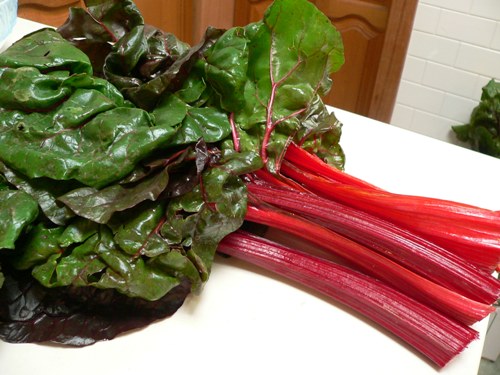
Also at the markets was a vegetable known as rainbow or ruby chard.  I’ve never seen it for sale before, so we were quite excited to find it at the organic growers on our last visit.   We’ve been thinking about planting this, and were keen to  taste it before we bought seeds.

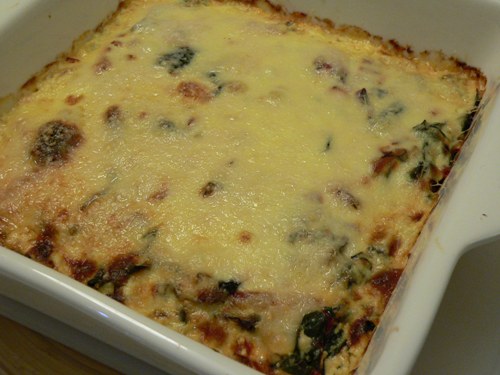
Sadly, the excitement didn’t last very long.  If you haven’t tried chard before, what you should know is that it tastes exactly like silverbeet (which is, in fact, what it is).  None of my men will eat it, although it was quite tasty baked under a bechamel sauce.

Note to self: don’t plant rainbow chard!

Read Full Post »

One more quick revisit, in case anyone else is as cold as I am at the moment!

It is freezing in Sydney – coldest June day in 60 years, with more frosty weather to come. Our outdoor thermometer registered 2.8°C overnight – very chilly for our temperate city!

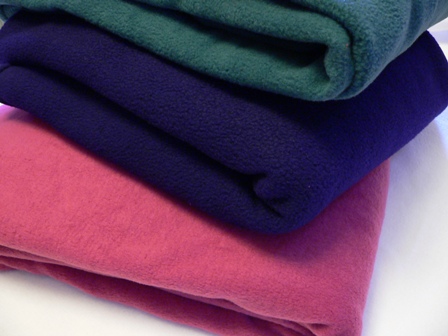
As a result, I’ve been sewing polarfleece sacks, using this pattern that I wrote last year.  If you have even basic sewing skills, they’re very simple to put together.  I’m sitting in one right now as I type…

Read Full Post »

In Australia, molasses isn’t always particularly palatable – sweet, but also thick, black and often bitter.   The byproduct of sugar cane production, it’s good for cooking, but difficult to eat straight, and one of its more common uses is as cattle feed.  It isn’t a product I use often, preferring instead the sweeter treacle or golden syrup.

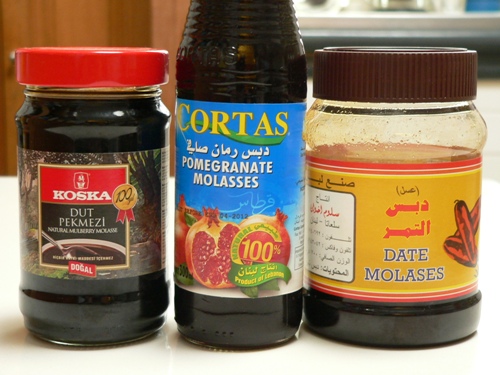
So I was both surprised and delighted during a recent trip to Harkola to find three different molasses (molasseses?) made from a variety of base ingredients.

On the left is a jar of mulberry molasses from Turkey – probably the closest to what we know as traditional molasses, but much nicer.  It’s dark, sweet and raisiny with a slightly tannic note, but very edible with a spoon.  It’s much less viscous than sugarcane molasses, with a texture similar to a thick syrup.

In the middle is a bottle of pomegranate molasses from Lebanon, the current in-vogue ingredient in many fine dining restaurants (and food blogs!).  It’s surprisingly tart, more liquid than the mulberry version, and would be brilliant in a salad dressing. Pete thought we could use this in much the same way as sweet balsamic vinegar.  For some reason, its flavour reminds me a little of sherbet lollies.

My personal favourite is the date molasses, also from Lebanon, which Ray at Harkola told me is traditionally combined with tahini and spread on bread.  It has become my newest baking ingredient, and I’ve been using it in cakes and cookies wherever molasses or treacle is called for.  The date flavour is quite pronounced, and again, the texture is quite liquid and syrupy.

Despite all being called molasses, the three different versions taste completely different to each other, and I’m sure I’ll find a use for all of them.   Do you use any of these in your cooking?  If so, I’d love to know what you do with them!

Read Full Post »

The chickens have landed!

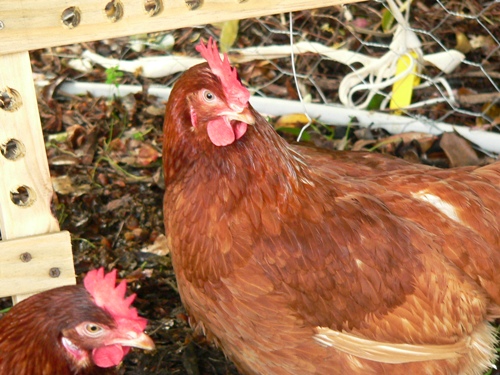
Six young ISA Brown hens have taken up residence in our backyard, and I am completely besotted.  I had a long list of tasks planned for this morning, and instead I’ve been sitting outside watching them scratch and forage.

ISA Browns are a hybrid cross of Rhode Island Reds and Rhode Island Whites, and particularly suited to suburban backyards.  They’re reputed to be excellent layers – which may well be true, as we found our first egg within half an hour of the chickens arriving…

The chickens are here to garden for us – the supply of eggs is an ancillary bonus.  If the permagarden gurus are correct, they’ll weed and de-bug our vegetable beds, then fertilise them, ready for planting.

One day in, and I’m no longer concerned with any of that – I’m just so happy to have them in the backyard, with their gentle clucking sounds and funny little ninja moves.  They scratch the ground with one foot, then the other, then leap back quickly like a Phantom Agent and gaze intently at the ground to see if any worms have been uncovered.  They’ll repeat this over and over as they work from one side of the enclosure to the other.  I could watch them all day long!  In fact, I think I’ll go see what they’re doing right now…

Read Full Post »

« Newer Posts - Older Posts »