Feeds:
Posts
Comments

Archive for the ‘Frugal Living’ Category

Hooray, it rained on Saturday!

That meant Small Man’s sporting commitments were cancelled (don’t all parents cheer when sport is off?), which in turn meant that Carol and I were able to race out to Haverick Meats at 8am. If you’ve ever wondered if it’s really worthwhile buying meat from a specialist wholesaler, let me give you a breakdown of my purchases from last weekend:

  • 1.45kg free range pork mince $13 – enough to make filling for 175 dumplings (three dinners)
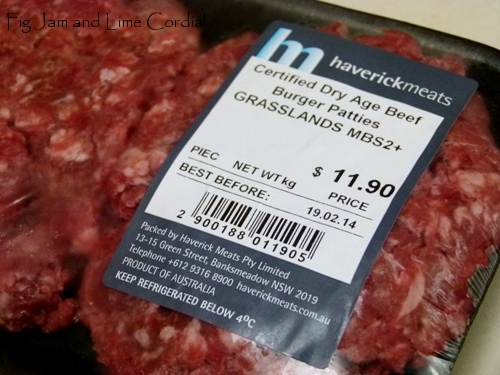
  • 6 x grassfed beef burgers $10  – these were marked $11.90, but reduced on the day.
  • Free range bacon $11 – I divided the packet into three bags and froze two of them. Each will be used for a pasta dinner.
  • 2kg free range chicken wings $8
  • 2.5kg free range chicken drums $11.50 – the wings and drums combined will be enough for three large pots of curry.
  • 1.75kg free range pork loin chops (rind off) $14 – these were an amazing buy at just $7.90/kg, and they’ll provide us with two easy meals.

In total, I spent $125, and came home with enough great quality higher welfare meat for eighteen family dinners. That works out at under $7 a meal, or just $1.75 per person. And I was being conservative – I suspect the pork necks will provide us with more than two dinners per piece.

We don’t eat meat at every meal, so this quantity should last us a month. I bought mostly pork and chicken, but on my previous visit, most of my purchases were grassfed beef. We still have eye fillet and mince in the freezer, so I didn’t buy any more this time.

. . . . .

The big find this weekend were these dry aged grassfed MBS2+ (that’s the marbling score) beef burgers.  I’ve never seen all those words on the one label before…

They were marked $11.90 but reduced to $9.90 on special…

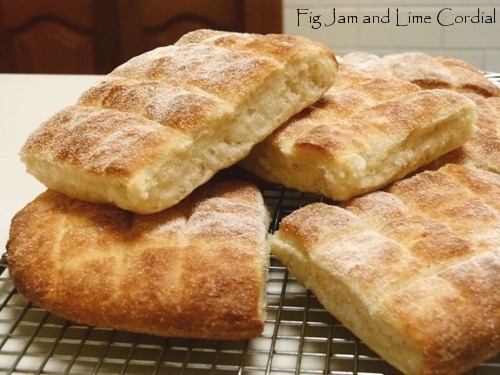
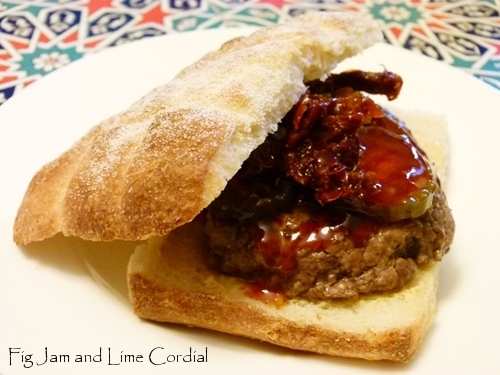
I baked a batch of Dan Lepard semolina buns to go with them…

The burgers were fantastic – pure, tender meat with very little (if any) filler. We cooked them to medium in the cafe press, and served them with mustard, pickles, cheese and chilli sauce.

. . . . .

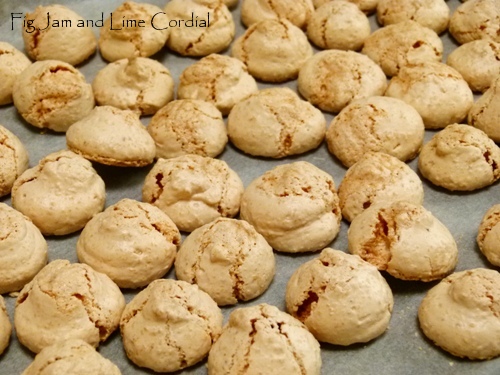
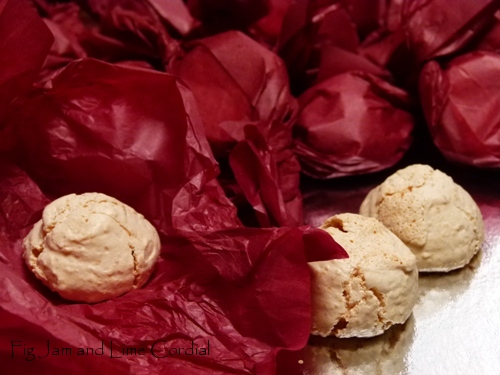
On our way to Haverick’s, Carol commented on how much she liked my amaretti, so I offered to bake a batch for her when I got home. I’ve discovered that if I pipe the cookies with a large round nozzle (the one that usually makes everything look like poop), then flatten the top gently with a wet pastry brush, I get far more “authentic” looking amaretti.

Of course, once I started making these, my tribe wanted more as well, so I ended up baking two batches…

. . . . .

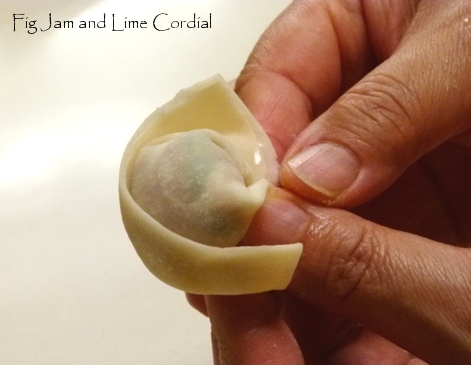
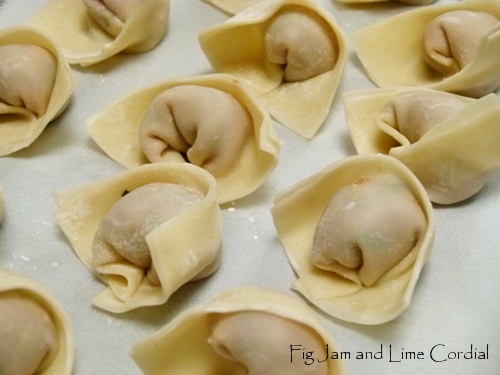
As the amaretti were cooling in the oven, I used 900g of the pork mince to make dumpling filling. I thought I’d have a go at wontons…

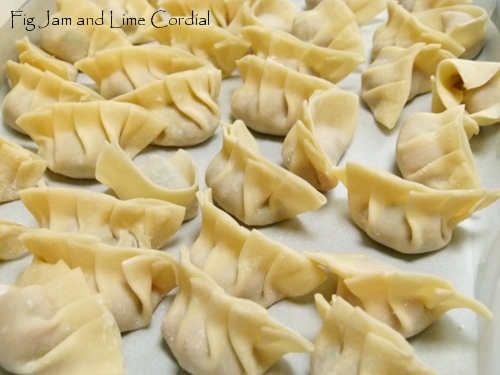
I made 45 wontons and 70 dumplings while watching the Winter Olympics (it was very therapeutic)…

Most of these went into the freezer (apparently they defrost perfectly, but I’m yet to try)…

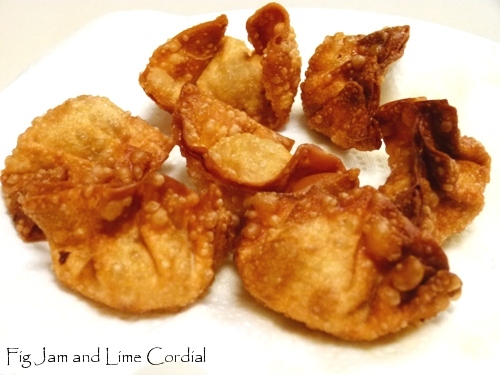
I left a few out and deep-fried them as a pre-dinner nibble – the boys devoured  them…

. . . . .

I love having time on the weekend to get ahead – we now have a couple of dumpling dinners stashed in the freezer, plenty of amaretti for the boys to snack on, and enough meat for the next month.

I hope you all had a great weekend too!

Read Full Post »

I have a lot of friends turning fifty this year!

Lynda is the latest to reach the half century, so I made her a fifty piece gift, similar to the one I made for Gill at the end of last year. Since I’m always banging on about homemade gifts, I thought I’d give you another example of what we do here.

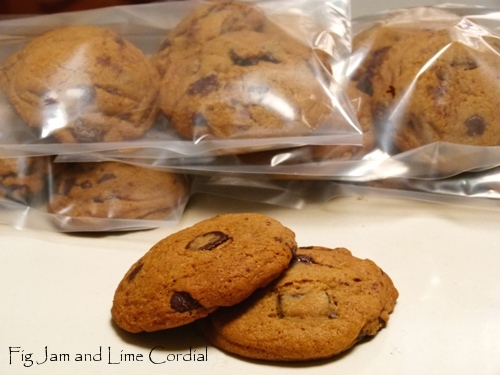
Lynda’s present began with twenty of her favourite chocolate chip cookies. I’ve packaged them in sealed bags of five, so that she doesn’t have to eat them all at once…

Inspired by a photo in Alice Medrich’s book, I individually wrapped twenty of my amaretti cookies in tissue paper, then packed them in two bags of ten…

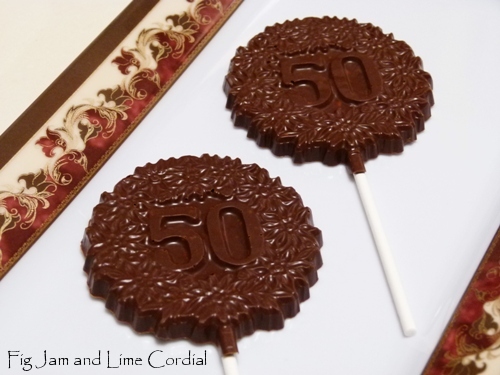
There has to be chocolate of course, including the birthday card in the top photo, and six chocolate lollipops. They’re all made with a dark/milk feuilletine blend

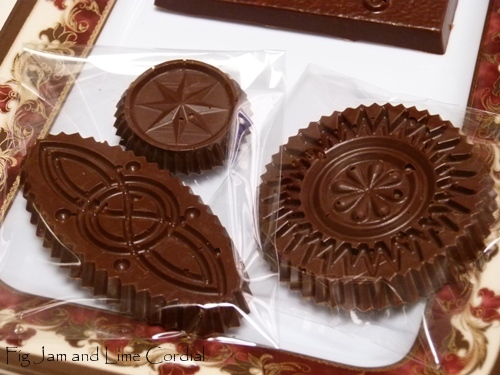
And in case you’ve been keeping count, that’s forty-seven pieces, so I added three treasure coins to round up to fifty…

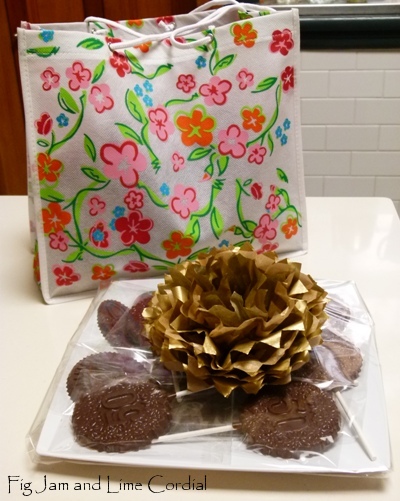
The cookies all went into a floral shopping bag, and the chocolates were wrapped and decorated with a tissue paper flower.

Happy birthday, Lynda!

Read Full Post »

Living Within Our Means

No matter who we are, we all have to find a way to live within our means. It doesn’t matter whether our finances allow for annual overseas holidays or require us to keep a careful eye on our grocery bill – almost no-one has unlimited funds to spend.

Over the years, our family income has varied quite a lot – from our reasonably flush late twenties, when we were childless and both working professional jobs; to our mid-thirties, when it all came crashing down with retrenchment and cancer. It took us a long time to figure out how to live within our means, but as we approach our fifties, it feels like we’ve finally got it sorted.

Here are a few life lessons we’ve learnt along the way…

Be prepared for an emergency, because one will come up

When we were young and bulletproof, we thought statements like this were melodramatic and alarmist. But as we now know only too well, life can literally pull the rug out from under our feet in a heartbeat. It’s almost impossible to anticipate the unexpected, but we can be just a little prepared for it, at least financially.

The conventional wisdom espoused by financial planners is to stash away three to six month’s worth of living expenses as a contingency fund. That’s a great goal to aim for, but much harder to achieve in practice – if a family is barely meeting their monthly expenses, how do they find three times that amount to tuck away? The answer is: slowly and incrementally. I have friends who prepare for emergencies by ensuring they have adequate credit on their mortgages – it works well for them. Either way, having some access to funds when a crisis hits can avert potential disaster, or at least soften its blow.

. . . . .

 Save whatever you can on recurring expenses

Saving on a one-off expense (new car, holiday) is great, but finding ways to save money on the stuff we buy every day/week is the true secret (in my opinion) to living affordably. And if it’s done creatively, it can be both painless and empowering.

My friend Smidge wrote an excellent blogpost comparing her two local supermarkets. There was a cost difference of 16% between them, and that was for the same products from both stores – she wasn’t comparing brand names to generic labels.  She found she could make a saving of $56 in just a few weeks’ worth of purchases – over a year, that’s a saving of over $800 (and that’s after-tax money).

By contrast, John Birmingham of the Sydney Morning Herald wrote about his $4000 a year takeaway coffee habit. I know that sounds crazy, but in Sydney prices, that’s equivalent to just two or three coffees a day.

Saving money like this takes a little thought and planning, mainly because we need to undo all our unconscious spending habits. For example, until we started making our own, it had never occurred to us that buying yoghurt was an expense we could save on. These days we make two litres a week for just $1/L, a saving of $10 each week, or $520 a year. And that’s just on yoghurt. By baking our own bread, we save about $1,000 a year (and we’ve been doing that now for over seven years).

Taking a good hard look at where the money goes isn’t always a pleasant process, but it can be very enlightening. There are a multitude of ways to trim dollars from our regular expenses, but sometimes it just doesn’t occur to us that it’s possible. It takes a little bit of lateral thinking, but it’s surprising how quickly the savings can add up. For example, $4 for a cappuccino might seem like nothing (it’s just two small coins), but one a day will amount to nearly $1,500 a year. I’m certainly not saying a daily coffee is a bad thing, but it’s important to be aware of the cumulative cost of all these seemingly little things.

. . . . .

DIY – Make it, Bake it, Grow it

I know our individual life circumstances are all different, and not everyone has the time, space, or inclination to make things from scratch. The last thing I ever want to do on this blog is to make anyone feel bad – the way we choose to live our lives works for us, but it might not be right for you.

Having said that, our key to living within our means has been to make as much as we can from scratch.  Doing so has allowed us to provide ethically-sourced, premium quality food for our sons, while keeping to a workable budget. Again, we’ve had to be resourceful to do this – we’ve tracked down wholesale suppliers of grassfed and free range meat, learnt to grow edible crops, and experimented with recipes. It all takes time, but it’s worth it.

More importantly, every little bit of it is worth it.  That’s one of the main reasons I write this blog – I don’t expect anyone to try all the different things we attempt, but I know that even just one thing – be it baking your own bread or growing herbs – can be incredibly empowering.

. . . . .

Make your own gifts

Even though this probably belongs in the point above, Pete thought it was important enough to warrant its own heading. First world gift-giving can get crazy – I have a friend whose Christmas shopping for her family alone costs her thousands of dollars every year.

These days, we buy very few gifts. Most are now homemade, and in the past couple of years, they’ve almost always been chocolate (even as a 50th birthday present).

Over the past twenty years, we’ve made polarfleece beanies, beeswax candles, crystal jewellery, fruit cakes, cookies, Christmas decorations and jams as gifts. None of these items used “cheap” ingredients, but they were all reasonably economical to make, particularly compared to buying the finished item. In addition, they were unique, made with care, and greatly appreciated by the recipients.

Mastering one skill well – be it sewing or baking or basketweaving (or just about anything else) – will enable you to create unique gifts for your friends and family that will make them feel loved. You’ll also save some serious dollars in the process!

. . . . .

Explore free and discounted services

Libraries. Parks. Art galleries. Our cities are filled with  thrilling and exciting things which cost absolutely nothing. I’m not a particularly good library user (as I prefer all my books in electronic format), but thanks to my friend Roz, I’ve become a keen art gallery visitor. With the Sydney Biennale just around the corner, it’s going to be an exciting year in my city. What’s happening in yours?

. . . . .

Patience and perseverance

Achieving an affordable lifestyle isn’t a result of luck. And it certainly isn’t an automatic byproduct of a large income – some of the highest salaried folks I know struggle with their cashflow.

Rather, it’s about patience and perseverance. Patience to save up and wait for things rather than having them immediately, and the perseverance to keep plugging away at it; saving a few dollars here, figuring out a smarter way to do something, and tucking a little bit away for a rainy day. And if there’s one thing I’ve learnt over my thirty years of adulthood, it’s this: it all adds up. The little changes, the frugal mindset, being consistent in watching the dollars – it doesn’t amount to much in a few weeks or months, but over the course of years, it can make a huge difference.

Achieving financial equilibrium – finding that sweet spot where our expenses don’t exceed our income – can lead to a less anxious, more contented lifestyle. It’s definitely something worth working towards!

Read Full Post »
Grab a cup of tea and come and meet our new chooks!

As you might recall, a couple of weeks ago, we introduced five Lohmann Brown hens, purchased from City Chicks, into our existing flock of three ISA Browns.

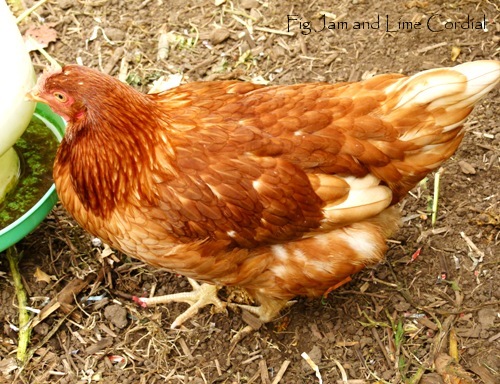
At just 16 – 20 weeks, the new girls were awkward teenagers compared to four year old Rosemary, Francesca and Harriet.  On the advice of Linda, we put the newbies up on the roost at night (it’s supposed to make the integration process easier).

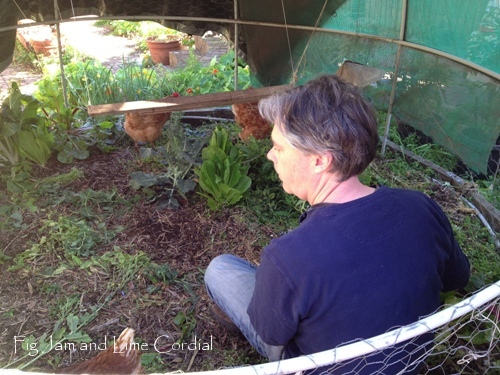
The following morning, I went out and found that only one of the new girls had been brave enough to come down, and she was being picked on mercilessly by the older hens. I couldn’t bear to watch, so Pete, bless him, sat in the dome and played rooster for a couple of hours, breaking up fights. I adore that man…

It only took a few days for everything to settle down, and the flock is reasonably harmonious and peaceful now.

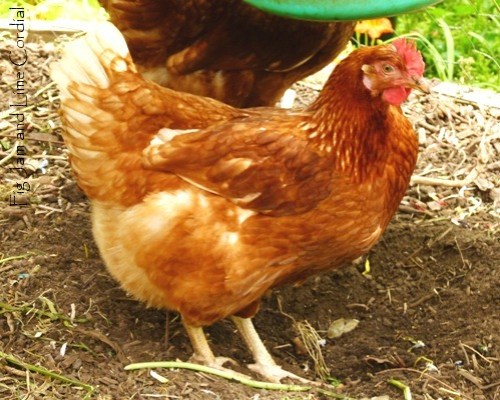
Of the Lohmann Browns, Amber is the oldest and most dominant – she started laying just a few days after she arrived. She’s named after Amber Wheeler, a character in the hilarious new Aussie sitcom Upper Middle Bogan. In the series, Amber is cranky, foul-mouthed and surprisingly endearing, not unlike our new chook…

. . . . .

I think Mrs Gronkle will be the next hen to start laying. When she arrived, she made a funny little noise, which turned out to be a sneeze. Have you ever seen a chook sneeze? It’s comical to watch. Steve the Vet told me that, like humans, they occasionally get runny noses. Anyway, the noise passed, but the name stuck…

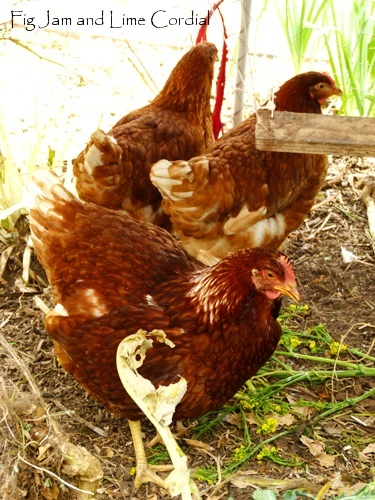
Mrs Gronkle has very distinctive dark brown feathers with a white collar around her neck. She’ll be easy to identify…

. . . . .

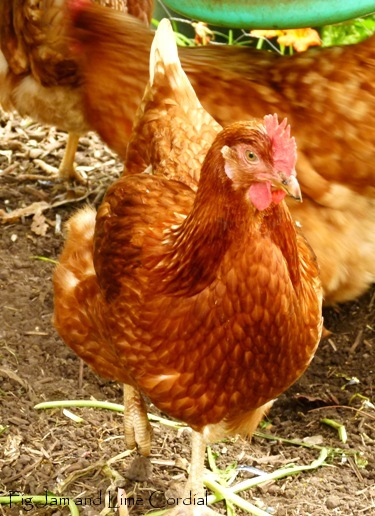
This is Billie, and she seems to be the third oldest of the Lohmann Browns. So far she’s kept to herself a bit – it will be interesting to see what she’s like as she gets older. Her beak is quite hawkish…

. . . . .

Baby Esme, named in honour of our friend Beej (her twitter moniker is @esmewatson) is very, very cute. She has a pert white tail that seems to stand upright. She’s one of the youngest two, as evidenced by her almost non-existent comb…

She’s quite similar in colour to Billie, so we’ll need to study them closely to be sure we can tell them apart in years to come…

. . . . .

And finally, we have…Not Quite Lorraine. When this beautiful white feathered chook arrived in amongst the others, how could we possibly name her anything else?

She’s adorable – impeccably groomed and cheerfully exuberant, just like her namesake

NQL and Esme are the babies of the flock, and can often be seen hanging about together. The Lohmann Browns have very fluffy bottoms!

. . . . .

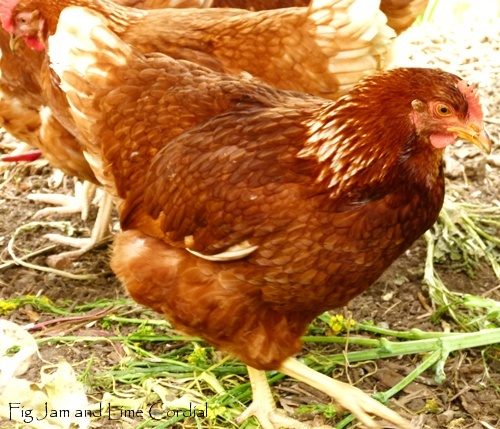
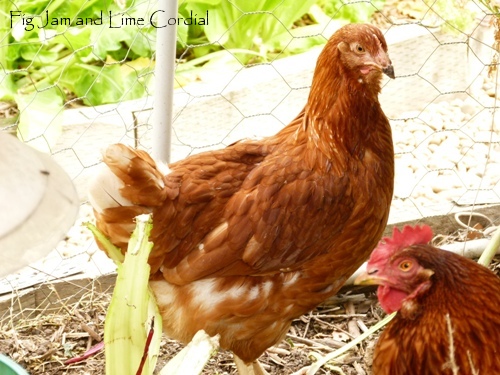
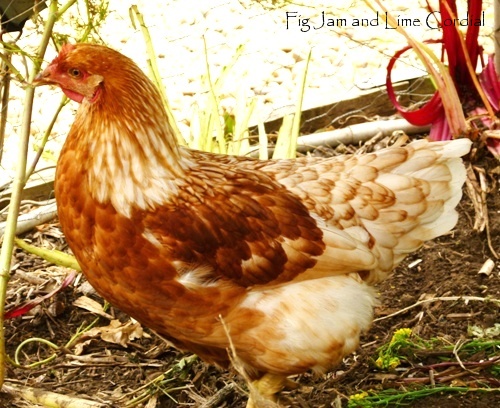
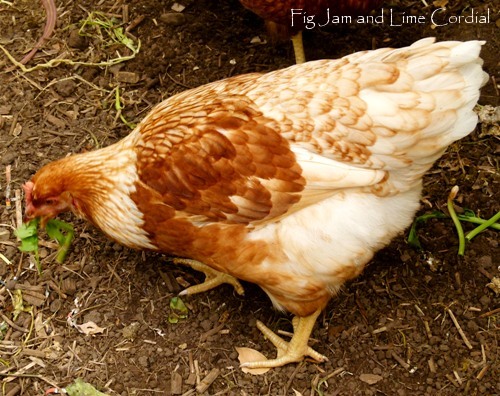
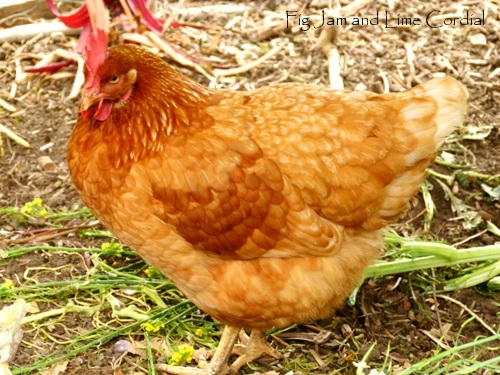
Our old girls haven’t exactly welcomed the newcomers, but it didn’t take long for them to accept their presence. Somehow their arrival has given the existing hens an air of gravitas – whilst the youngsters jump about on the swing and race around chasing flies, the old ISA Browns sit sedately like village elders.

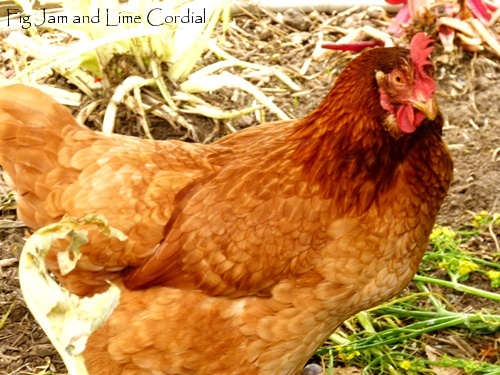
Rosemary has clearly forgotten what an annoying youngster she was, and is now very impatient with the newbies…

Even though she’s no longer laying, she’s looking quite magnificent at the moment…

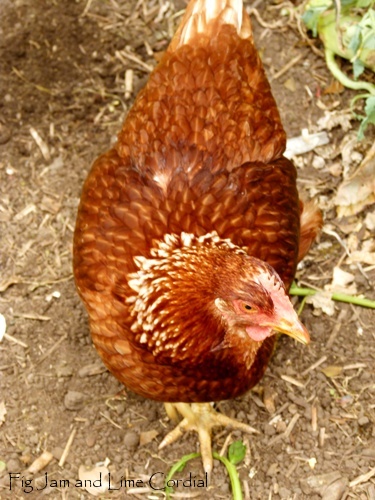
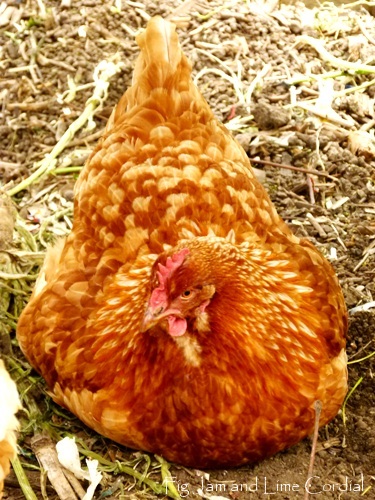
My darling Francesca has turned into a bit of a mad old chook. She used to be pedantic about her dust baths, but now doesn’t seem to care anymore, and is often a little bedraggled. I guess that’s what happens when we go through henopause…

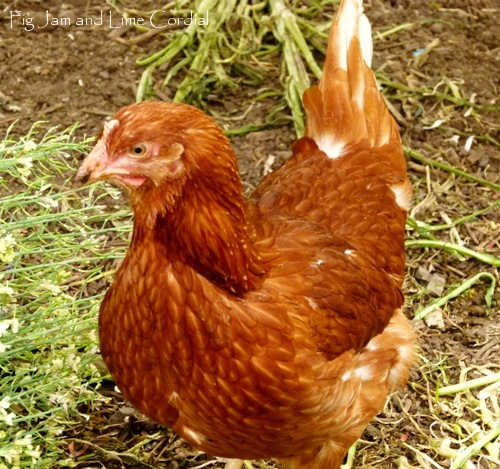
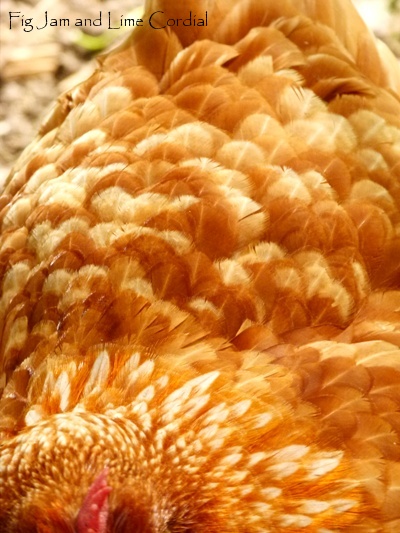
And finally, Harriet was looking decidedly regal today, like a peacock displaying her feathers. Pete described it as “Harriet in her kaftan”…

. . . . .

And so, the adventures begin again! I’ll keep you all posted!

Read Full Post »

I really don’t like wasting food.

That doesn’t mean I don’t do it (with regret and all too often), but it does drive me a little crazy when I have to throw something out.

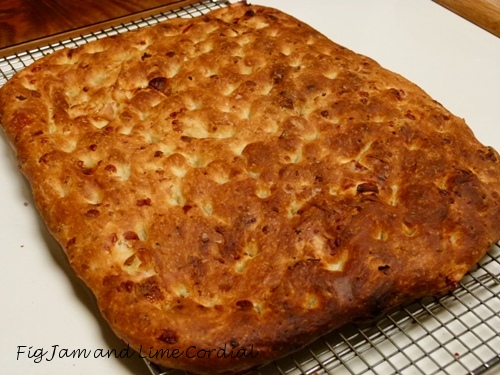
Our filled focaccia is a quick and easy way to use up bits and pieces in the fridge. It’s made with bakers yeast, which makes it a very quick dough, and one that can be thrown together on the spur of the moment. I’ll often make this when we have last minute guests for lunch.

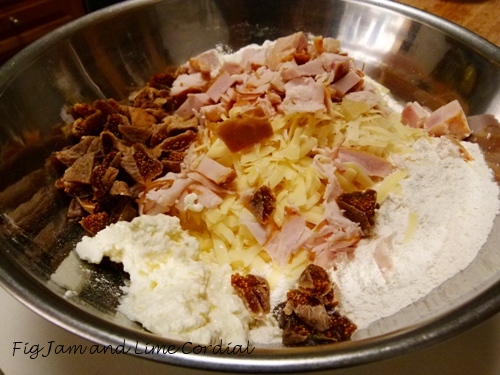
Today, I opened the fridge and found a little ricotta cheese, a piece of Cheddar, and a wedge of Manchego, all leftover from our brunch with the cool kids. There was also a bag of turkey breast offcuts that our mate Johnny had kindly given us, and a handful of organic figs from Pete’s muesli stash.

The basic dough recipe doesn’t change, and you could really throw in anything you like, providing you don’t mess around with the liquid quantities too much. It works particularly well with leftover deli meats, cheeses and antipasto.

  • 1kg bakers flour
  • 640g water
  • 20g dried/instant yeast
  • 14g fine sea salt
  • 100g extra virgin olive oil (plus extra for drizzling on top)
  • flaky sea salt (for scattering)
  • deli meats, leftover cheese, dried figs and antipasto (any combination thereof)

1. In a large mixing bowl, whisk together the flour, yeast and fine sea salt. Stir in the add-ins – I used grated hard cheeses (about 250g), chopped turkey breast (about 200g), half a cup of ricotta and eight dried figs, cut into pieces.

2. Add the water and oil. Squelch everything together with a clean hand. Scrape off your hand, then cover the bowl and allow to rest for half an hour.

3. Uncover and give the dough a brief knead in the bowl – this should only take a minute or so. Cover the bowl and let it sit in a warm spot until it’s doubled in size (this should take an hour or so, longer if the weather is cool).

4. Preheat the oven to maximum. Line two baking trays with parchment paper.

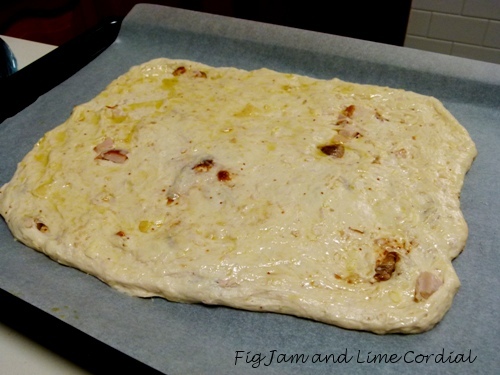
5. Turn the dough out onto an oiled surface and divide it into two.  Push and stretch each half into a rectangle and place it on a lined baking tray. Drizzle over the extra oil, and sprinkle with the flaky sea salt. Allow to prove for another 20 minutes or until the dough has puffed up slightly.

6. Dimple the top of each focaccia with your fingers, pushing all the way to the bottom of the dough. Reduce the oven to 220C with fan, and bake for 20 minutes, or until dark brown (start checking at the 15 minute mark).

We took one of the focaccias to Johnny’s factory, where it was shared between his staff. The other one fed Pete, Big Boy and I for lunch. That’s not bad value for the $2 in flour and oil it cost to make them! Best of all, I didn’t have to throw out the cheeses, and the offcuts (which in turn are a reflection of Johnny’s reluctance to waste anything) were free.

We still waste more food than we’d like to, but we’re working on it. It’s certainly easier now that we have the garden (where we can pick only what we need for a meal) and the chooks and worms (who effectively recycle much of our waste into eggs and fertiliser).

Sydney chef Stefano Manfredi has written a very interesting blogpost on the subject of waste in high end restaurants. It’s a fascinating read and gives some insight into how much food is wasted in the name of “art”.

How do you deal with leftovers at your place?

Read Full Post »
« Newer Posts - Older Posts »