Feeds:
Posts
Comments

Archive for the ‘Frugal Living’ Category

It was time to move the chook dome.

The chickens had their initial rotation several months ago, before the beds were planted out.  At the time, we were growing legume crops to improve the soil.

Now, for the first time, the hens will be moving onto finished beds – to eat the leftover vegetation, rotorvate the soil, and to weed, de-slug and fertilise the patch in readiness for the next round of planting.  Bed number one was pretty much spent – at the back you can see lucerne, grown specifically for the chickens, as well as an old kale plant, a finished sunflower and a few straggly clumps of curly parsley.

The ladies couldn’t wait – they were clustered at the front of the dome, willing it to move forward!

Watching them on the new bed reminded me of the famous scene in Willy Wonka and the Chocolate Factory, when the visitors are so overwhelmed by the chocolate room that they don’t know what to eat first!

Clever Queenie and Bertie immediately began spuddling for worms, Francesca went straight for the sunflower seeds, Harriet and Maggie attacked the lucerne and Rosemary..well, as she does, she ran around the coop like a mad thing trying to get a little bit of everything before anyone else did. As always, it’s such a joy to watch their individual personalities shine through, and to see them so happy in their new patch!

Read Full Post »

As regular readers will know, our backyard garden has been established following the permaculture principles taught in Linda Woodrow’s book, The Permaculture Home Garden.

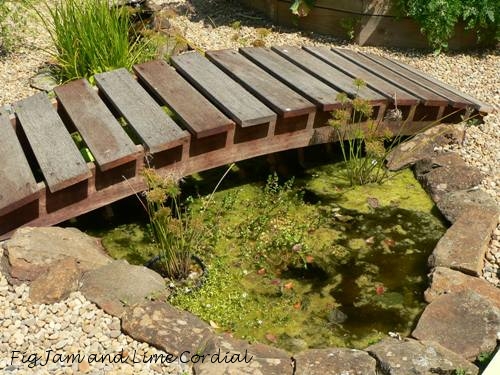
One fundamental tenet of the plan is the need for a backyard pond to attract natural predators into the garden.  The pond didn’t need to be pretty (Linda points out that a lined tractor tire filled with water would suffice) but ours is, and it provides a constant source of joy to us and our garden visitors.

It’s been fascinating to observe the pest-predator balance adjust itself in our garden.  Despite the frustration of watching the fruit fly descend en masse on our defenseless tomato plants, we haven’t used any chemical deterrents. For a couple of weeks, most of the tomatoes in our yard were filled with crawling grubs, and good for nothing more than worm and chook food.

Then the plants and the predators fought back – the plants by suddenly producing more fruit than the pests could eat, and the predators by eating every grub in sight.  Despite the heavy losses, we were still able to harvest a more than reasonable crop of roma and cherry tomatoes.

The pond bridge, which we had built to Pete’s design, affords shelter to our Australian rainbow fish.  Please excuse the murky photo above, but we’re inordinately proud of our little fish, and I really wanted to show them to you (it’s very hard to autofocus under the water!).

We initially bought six fish for the pond.  On the first night, one leapt out of the bucket they were acclimatising in, and when we put the rest of them into the pond, a second one died instantly.  We were quite worried about the remaining four – and I was quite concerned about the large quantity of mosquito larvae wriggling in the water.

A few weeks later, all the mosquito larvae were gone.  A month after that, the pond was full of tiny fry, swimming in the shallows and hiding in the plant roots.  I have no idea if they’ll survive, or what they’re eating, but they’re clearly thriving in their little space!

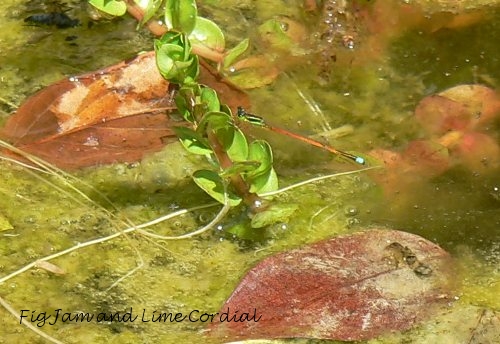
Having water in the garden attracts a large number of damselflies and dragonflies to our backyard. (Edit: I’ve just found out that the two pictured here are damselflies rather than dragonflies. Apparently damsels hold their wings in when they perch, whereas dragons always have them out.)

We have small multi-coloured ones (above), beigey-green ones (below), large red ones and large orange ones (although I’m yet to successfully photograph the latter two). My camera doesn’t have a working macro setting, so these pics were all taken from a distance and cropped.

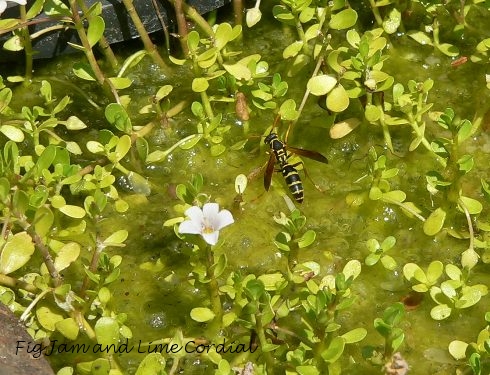
Paper wasps are quite prolific in our garden – we used to dislike having them in the backyard, until we realised what amazing predators they are!  We experienced our very own David Attenborough moment, as we watched a paper wasp land on a cabbage moth caterpillar, inject it with paralysing poison, then fly off with it to feed her young.

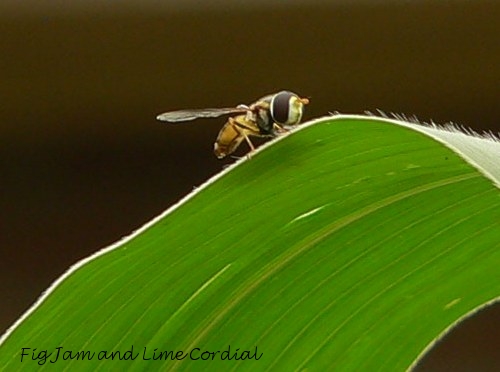
This little beauty is a hoverfly, and I think it alighted on the corn stalk simply to pose for a photo, because I’ve never seen one land before. Its larvae eat aphids and other small pests.

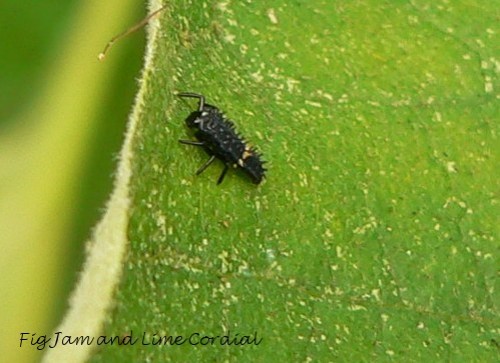
Ladybirds are a welcome visitor to our garden (unlike in parts of the UK, where they’ve reached plague proportions), but I never knew they metamorphed from the most scary looking larvae..

In the garden are a couple of spent broccoli plants, now covered with white fly and other pests.  We’ve enjoyed several meals from these plants, but  they’re now in their final stages – flowering, stalky and unappealing.

I asked Pete why we hadn’t fed them to the chickens before now.  He said that if we left them in the garden, they would attract bees and also help to build up predator numbers, by providing them with plenty of food, at no cost to us.  It does seem to be working, as there were at least half a dozen different species buzzing and crawling around the plants, feasting on the pests.

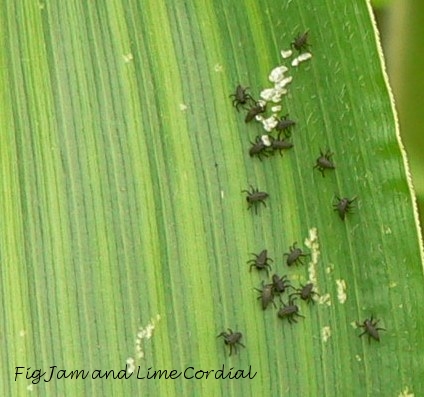
Look at all the aphids on the broccoli leaf!  The ladybirds can’t reproduce fast enough…

Permaculture in action – we’re finally starting to understand how all the pieces fit together!


Read Full Post »

I have a great story about Pete’s cousin, MJ (who is going to shoot me when she reads this).

When their grandmother passed away a few years ago, city girl MJ generously offered to help sort through Grandma’s old country house before it was sold.  While rummaging through a pile of clothes stacked on top of a closet, she pulled out what she thought was an old fur coat, only to find her hand grasping a large dead rat.

After screaming and running out of the house, she stood on the grass, trying to catch her breath, when a toy rubber snake caught her eye.  Then it moved.  More screaming ensued, which ended with her curled up in the foetal position on a bed, demanding to be taken home to the city.

Now, I have to confess, I’m about as comfortable in a rural setting as MJ is.  So whilst I was very excited at the prospect of spending the day with our old friends Diana and Ian on their small property near the Blue Mountains, I was a little perturbed by Di’s remark that they might be shearing sheep that day, and that we’d all be put to work.

The perturbation subsided as soon as we arrived.  Di and Ian’s property is so relaxing, and so incredibly welcoming, that our few hours there felt like a week’s holiday.

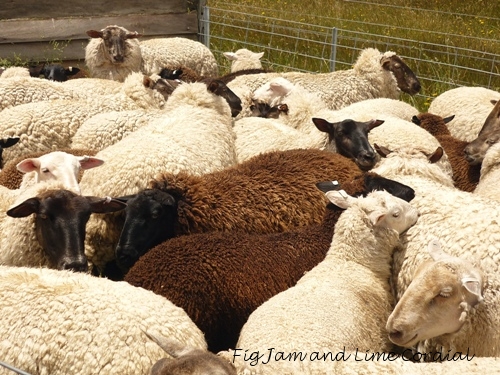
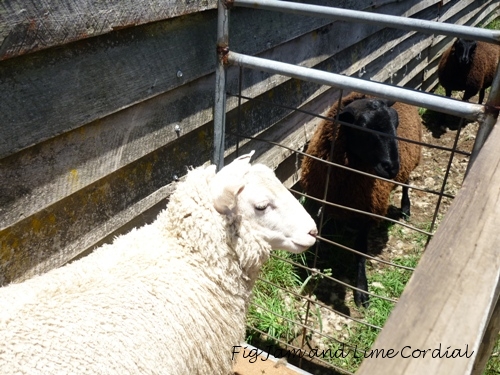
And we were indeed put to work, as were our friends Christina and Steve who joined us for lunch, although it didn’t involve shearing, much to Small Man’s disappointment.  However, we did move the sheep…
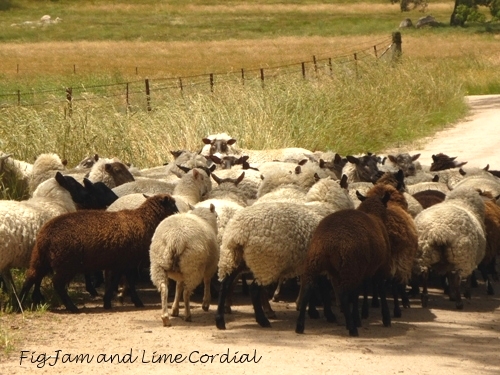
Aren’t they beautiful?
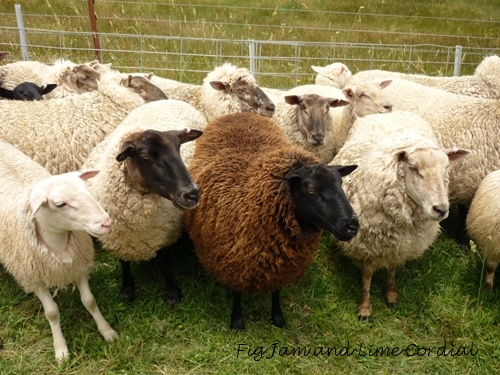
The lambs needed to be sorted from the ewes and weighed, and it was Big Boy’s job to push them off the weighing platform.  I asked him what it felt like, and he said it was “like trying to move a furry sofa that pushes back”.
As I’ve mentioned before, Di and Ian are small scale garlic growers – and whilst their garlic isn’t certified organic (a very expensive process here), it is grown organically and all tended and weeded by hand, a laborious process that necessitates the unpaid slave labour of their three handsome sons.

The garlic was harvested in late November, and has been drying and curing ever since. I thought you might like to see some photos of the process.

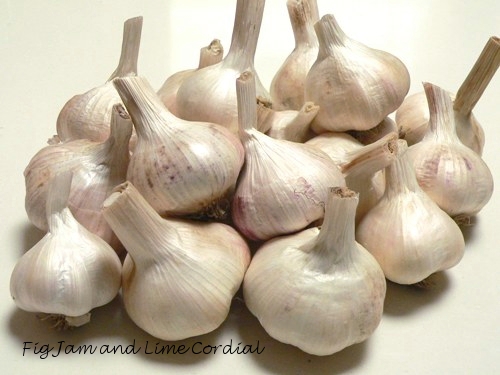
It’s hard to get an idea of scale, but these large Russian bulbs are the size of  my fist…

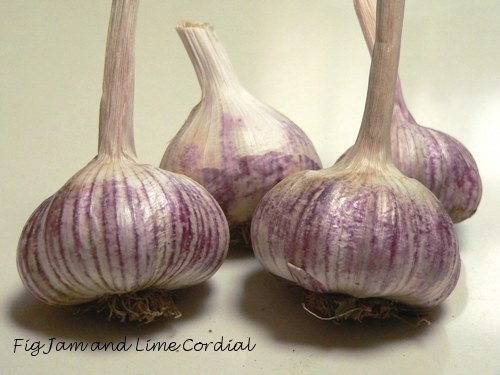
The purple striped garlic are a new crop for Di and Ian…
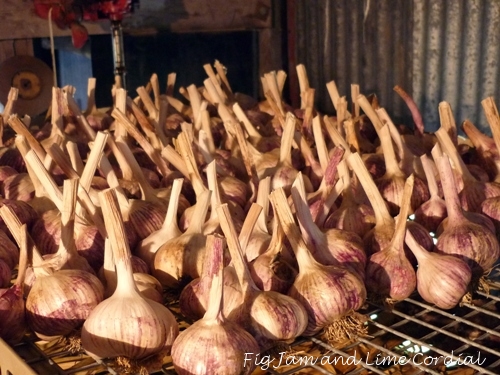
Different varieties were hanging from the rafters..

..and drying on airing shelves, before being cleaned up for sale…
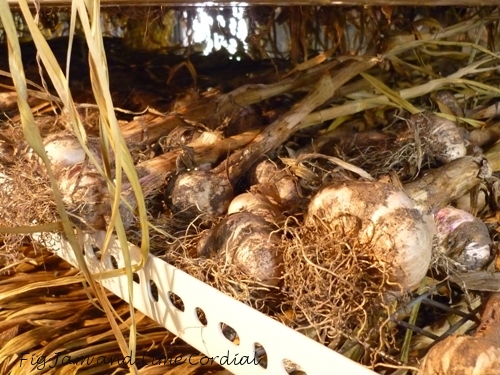
We bought two kilos of garlic to add to our homegrown crop.  Compared to our baby bulbs, Di and Ian’s are large and perfectly formed.  Their Australian white garlic will sell for $30/kg this year, and the purple stripe variety for $35/kg.   If you’re in NSW and are interested in purchasing some, please email Diana – djditchfield(at)hotmail.com.

(Edit: My apologies for the earlier misinformation, but Di’s just let me know that they can only post to NSW, not the whole of Australia.  I believe there are quite convoluted quarantine rules about shipping garlic interstate).

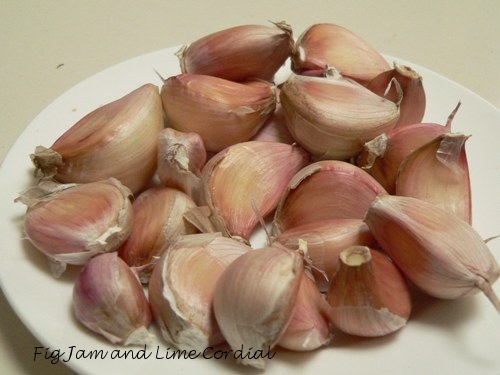
Most of the garlic we bought were Australian whites, with their lightly blushing bulbs and pungent, creamy pink cloves (there’s a kilo of garlic in the photo above)…
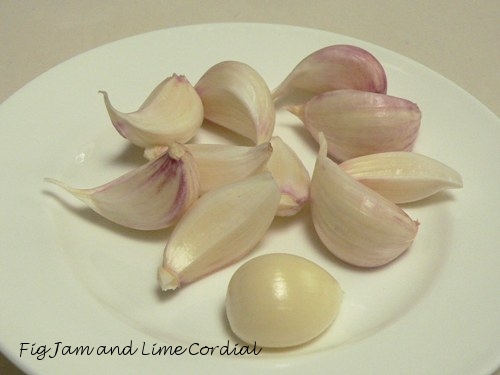
The beautiful purple stripe garlic is quite different, but equally as delicious.  To my palate, these are a bit sweeter, both in aroma and flavour…
Christina and I have bought our annual supplies, which we’ll be breaking into unpeeled cloves and freezing. Doing so will ensure that we can cook with locally grown garlic all year, without having to buy imported bulbs sprayed with toxic methyl bromide (a mandatory Australian government requirement).

After lunch, we spent time wandering around Di and Ian’s fabulous vegetable garden.  I was particularly impressed with their sage – we’ve only ever grown the ordinary gray-green type, but Diana has both variegated and reddish purple varieties growing as well.
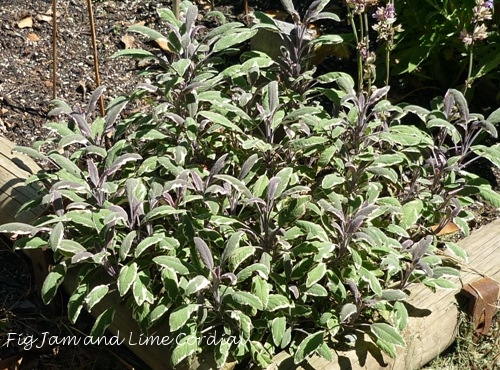
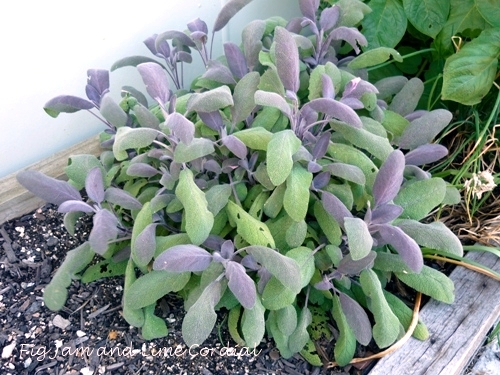
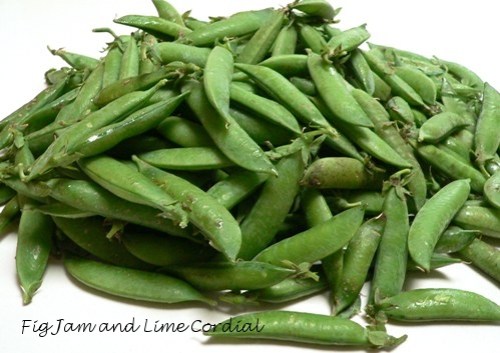
In preparation for next year’s garlic, they’ve planted a legume crop to improve the soil.  The bonus are these deliciously sweet peas – we harvested around the edges and picked nearly two kilos to bring home!

A perfectly wonderful day, spent with great friends.  Maybe country life isn’t that scary after all!

. . . . .

Ian and Diana Ditchfield
contact: djditchfield(at)hotmail.com

Read Full Post »

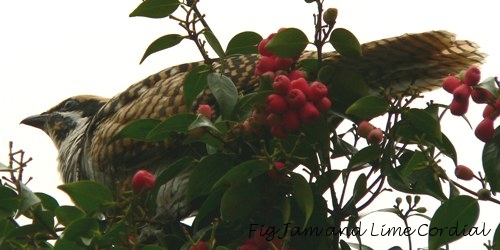
Our large lilly pilly tree is home to a breeding pair of Australian Red Wattlebirds.

However, we believe the chick they’re feeding is an Australian Koel – a local version of the cuckoo. The chick is enormous, much bigger than its unwitting foster parents, and was happily climbing over the top branches today, feasting on the small red fruit.  I took these photos especially for birdlovers Joanna and Brian.  If anyone can shed some light on whether this really is a Koel, or whether Wattlebird chicks change substantially as they fledge, please let us know!

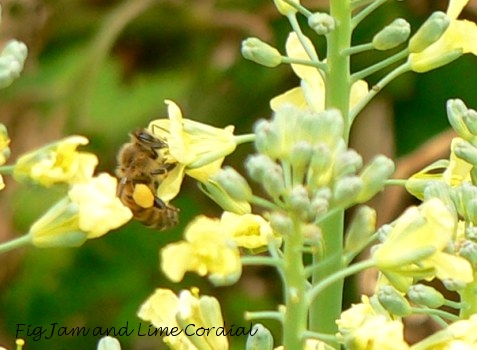
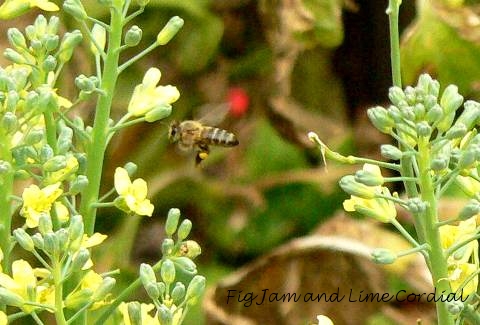
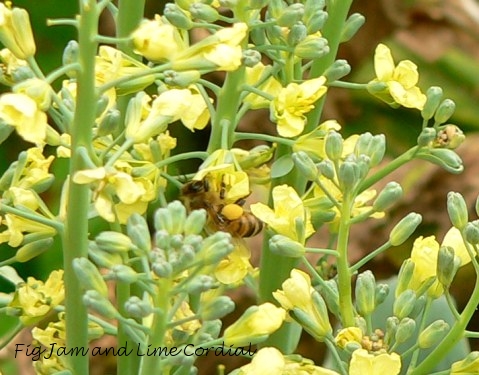
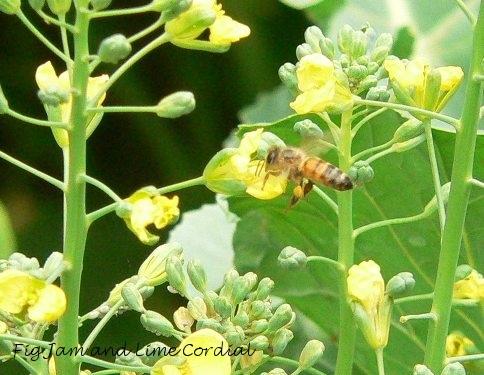
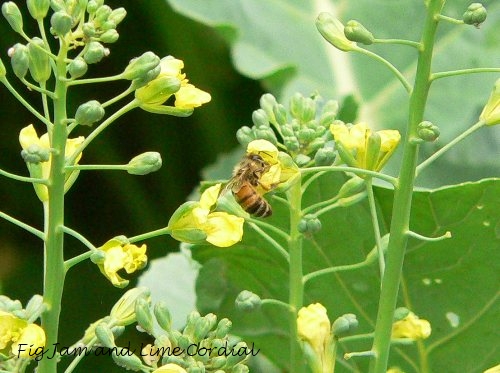
I also managed to snap some interesting bee photos  today – they were particularly enamoured with our flowering broccoli spikes and happily buzzed around for several minutes while I played wildlife photographer.

I was fascinated by the packets of pollen on their legs! I’d read about these, but had never actually seen them before, yet today every bee in the yard seemed to sport a couple of yellow balls on her legs.  I’d love to know what broccoli flower honey tastes like!

Edit: The bees are still feasting, so I took a couple more photos this afternoon!

Read Full Post »

We make our own vanilla extract (I wrote a post about it here) by infusing vodka or brandy with vanilla pods.  It’s a fun, rewarding process which produces a magnificently aromatic brew, perfect for use in cakes, desserts, syrups and jams.

Each bottle takes a minimum of three months for the vanilla flavour to seep into the alcohol, and once a bottle is finished, it can be refilled a second time to maximise the output of the expensive vanilla beans.

I haven’t had a lot of success with trying to reuse the beans a third time – the pods don’t seem to have enough oomph to create an extract strong enough for my tastes.  They’re still very vanillary though, and we’ll often scrape the tiny black seeds into Pete’s vanilla syrup or ice cream.

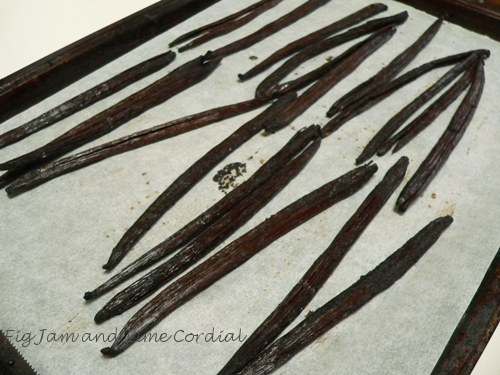
After all the Christmas baking, I had more than a dozen used beans, which I just couldn’t bring myself to throw out.

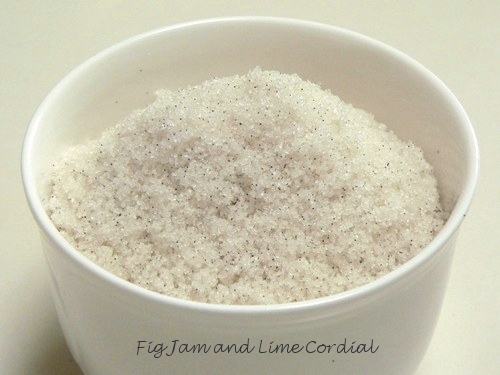
Today, while the oven was on low (100C – I was baking chocolate meringues), I popped the beans in for about ten minutes to dry them off slightly.  I then filled the food processor with granulated white sugar and scraped out the moist centres of the pods on top.  As the vanilla beans were already split down the middle from the extract making process, this wasn’t a difficult process. I wore a pair of disposable kitchen gloves and simply pushed the fine seeds out with my thumb.

The sugar and vanilla seeds were pulsed together until well combined, resulting in a soft grey sugar with a squillion tiny black flecks.  It’s the perfect addition to a cup of tea (Big Boy and Small Man now refuse to drink tea  sweetened with anything other than vanilla sugar) and is particularly delicious sprinkled over the crust of an apple pie prior to baking.

A note on the pods – once the seeds were removed, I discarded the leftover shells.  In the past I’ve tried blitzing them as well, but found the results too fibrous for my liking.

Of course, this can just as easily be made with brand new beans, but it’s particularly rewarding to get a third life out of my used ones.  My spent pods made over a kilo and a half of vanilla sugar!

Read Full Post »

« Newer Posts - Older Posts »