Feeds:
Posts
Comments

Archive for the ‘Frugal Living’ Category

As I mentioned in the snippets, I baked Joanna’s cornbread and Sally’s semolina loaf over the weekend.

The semolina loaf (above) is a charming yet easy yeasted loaf, which went down well with my family of sourdough lovers.  The fine semolina gives the bread an interesting flavour and a smooth, creamy coloured crumb.  I made it exactly to Sally’s formula, although I kneaded it by hand rather than machine.

. . . . .
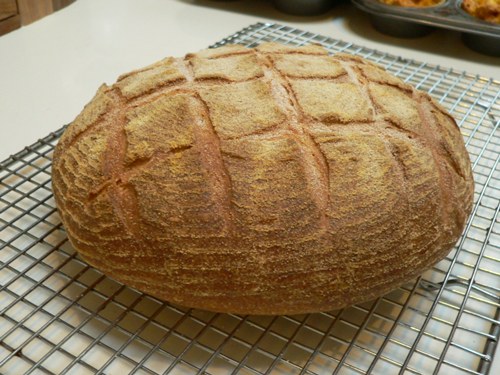
I also baked a version of Joanna’s corn bread, using sourdough starter instead of poolish.  I meant to include yeast as specified in the original recipe, but completely forgot, so this loaf took much longer to rise  and is slightly flatter than expected.

Having said that, Pete absolutely adored this bread and waxed lyrical about its texture and flavour.  The crumb was chewy, elastic, and the most gorgeous shade of yellow…

So, for my own future reference, here’s our version:

  • 225g active sourdough starter (100% or 166% hydration)
  • 115g maize meal
  • 190g water
  • 225g bakers flour
  • 9g salt
  • 20g olive oil

1. Mix the maize and water in a small bowl and allow to sit for 15 minutes.

2. Mix all the ingredients together to form a wet dough, then cover and allow to rest for 15 – 20 minutes.  Turn the dough onto a lightly oiled surface and knead briefly until smooth.  Cover and allow to rise until doubled in size.

3. Shape the risen dough into a ball and allow to prove until doubled in size (I use an oiled and floured plastic basket to rise the bread in).  Preheat oven to 240C with fan.

4. Turn the dough out onto a peel and slash, then dust with semolina.  Reduce the oven temperature to 220C with fan, and bake the loaf on a pizza stone for 20 minutes, then reduce heat to 180C with fan and bake for a further 40 minutes to set the crust.

One thing to note – this loaf will only work with fine corn maize.  I’ve tried making it previously with polenta, and the resultant dough was gritty.  It’s definitely worth searching out the maize flour – we found ours at the markets.

It was the perfect loaf to serve with Pete’s beetroot dip!

Read Full Post »

Dandelion Fever

Friends, Romans, countrymen…send me your weeds!

Our chickens love oxalis and onion weed, but more than anything else in the whole world, even more than corn on the cob, they love dandelions.  Thankfully they grow like…ahh…weeds in the front yard.  I thought you might enjoy seeing the frenzy that precedes the daily feeding…

Read Full Post »

Our chickens have started laying.

Over the last couple of days, they’ve given us four little eggs.  They’re quite small – between 43 to 49 grams (yes, I weighed them), which is hardly surprising, since our girls are still very young.

Here’s one of them next to the standard 59g egg that we buy from the markets…

As I’m now chicken obsessed, I have, of course, been researching eggs.   I was interested to learn that there are two layers of albumin – a thick inner layer and a thinner outer one.  As the egg ages, the thick layer becomes watery and indistinguishable from the thin layer.

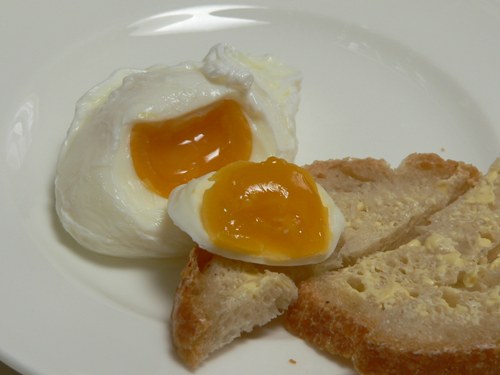
Our little eggs are so fresh that the thick albumin hasn’t started to break down at all.  This one was laid the day the photo was taken…

It made the most delicious poached egg.  Pete thinks the lovely golden yolk is a product of all the dandelions he’s been feeding the hens!

Read Full Post »

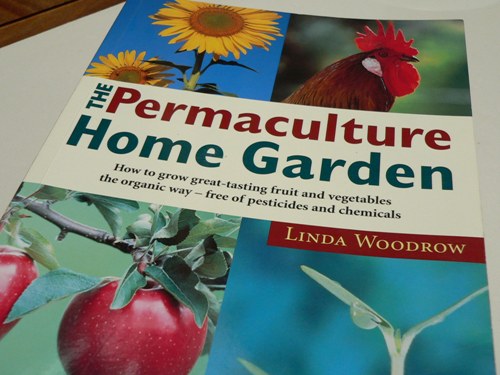
This book has changed our lives.

Written for Australian conditions, Linda Woodrow’s brilliant text for turning a suburban backyard into a self-sufficient organic garden is full of really clever ideas.  I thought I’d share just one of them with you today.

One of the tenets of Linda’s plan is to plant out advanced seedlings – doing so not only ensures that they’re more likely to survive an attack from marauding pests, but it also reduces the amount of time plants have to spend in the ground.  This in turn enables the garden beds to be planted out up to four times a year.

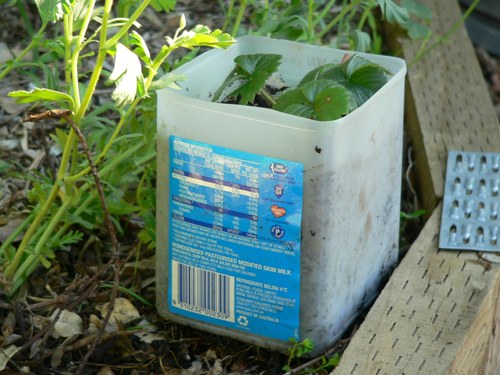
The seedlings are raised in recycled square-bottomed two-litre milk containers.  Smaller cartons could be used, but the two-litre size enables the seedlings to grow larger before planting out.

The tops and bottoms are cut off the washed containers, then they’re placed side by side in polystyrene boxes and packed with growing mix.  Some seedlings need to be germinated in seed raising mix first and then transferred to these larger punnets, but bigger seeds can be  sown directly.  Here are some sunflowers that we started last week…

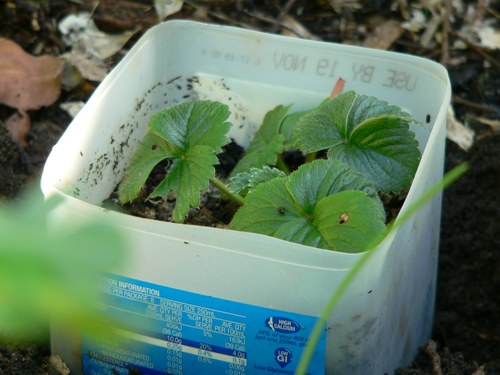
Once the seedlings are large enough, they’re put straight into the ground and the plastic slides right off, with absolutely no transplant shock.  If necessary, the sleeve can be left half-on for a week or two to protect the plant from snails and slugs as it settles in.

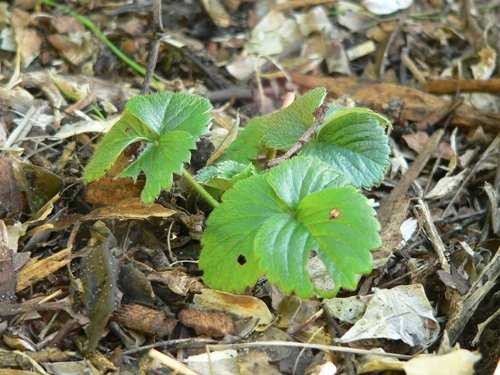
I took some photos as we were planting out strawberries last week.  Every time we’re working in the garden, I find myself humming the A-Team theme song.  Linda’s guide is so well thought out, and I really do love it when a plan comes together…

Read Full Post »

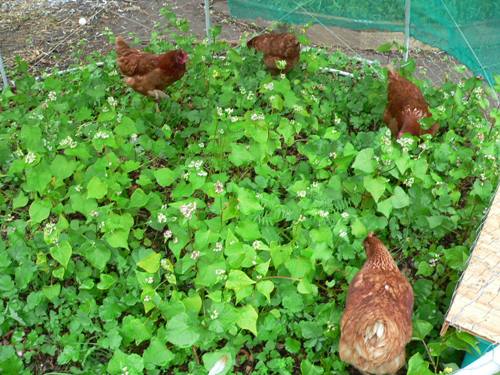
As you know, our chickens are here to garden for us.  The plan is to move them from bed to bed, allowing them to eat everything in sight and then fertilise the soil, ready for planting.

Yesterday, they had their first rotation – into a bed of buckwheat grown just for them.  I thought you might like to see some photos of our happy ladies…

Good news, we had another egg!  A little pullet egg, with a deep golden yolk and a good firm shell.  The hen who laid it was so proud of herself, she came out of the nesting box clucking and carrying on, until one of the more dominant chickens got sick of it and came over and pecked her on the head – as Christina said, that will teach her to show off!

Read Full Post »

« Newer Posts - Older Posts »