Feeds:
Posts
Comments

Archive for the ‘Recipes’ Category

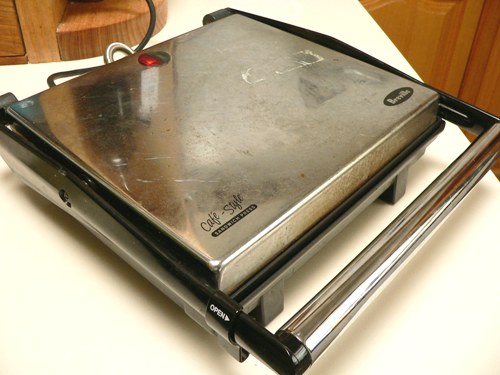
Do you remember the café press?  They were all the rage about ten years ago, when we lauded their ability to turn bread and antipasto into dinner in ten minutes flat.

I remember many dinners of Turkish bread stuffed with prosciutto and fancy cheeses, served with a simple salad. And then, all of a sudden, they went out of vogue.  Which is a shame, as they really did make the worknight dinner a simple affair.

These days, ours is only ever dragged out to make crackers.

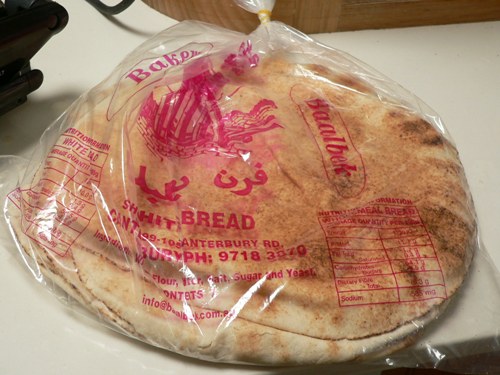
As I’ve mentioned before, we bake all our own bread at home, with the exception of Lebanese pita bread.

I’m sure I could make it at home, but with the Baalbek bakery just a few minutes down the road turning out hundreds of fresh rounds daily (at 20c each), it seems a bit redundant to do so.  And I’m pretty happy with the ingredients they use too – “wheat flour, water, salt, sugar and yeast”.  Can’t argue with that!

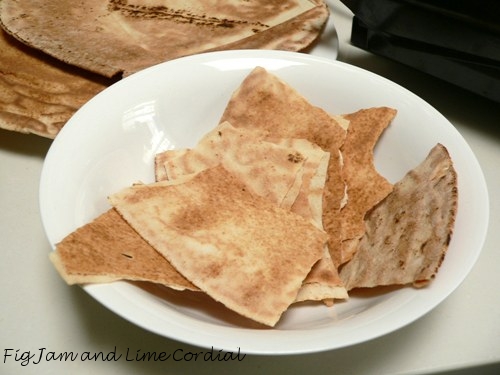
Whenever a packet of Lebanese bread gets a little stale, I turn them into crackers, by simply toasting them in the café press.  It only takes a couple of minutes per slice, and the end result is a dry, crisp cracker that keeps well for several days in an airtight container.  It’s the perfect accompaniment to cheeses, an antipasto plate, or dips.  We keep a packet of Lebanese bread in the freezer specifically for this purpose, and now no longer buy water crackers or crispbreads when we’re preparing a cheese plate.

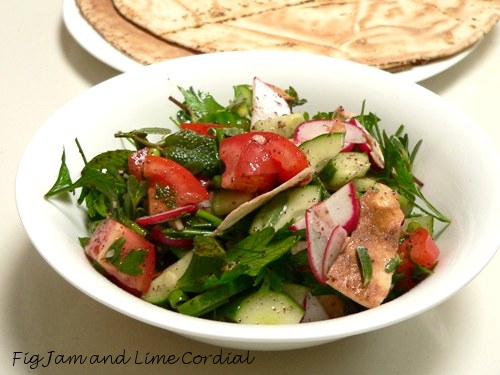
Today,  all the ingredients came together for a fattoush salad.

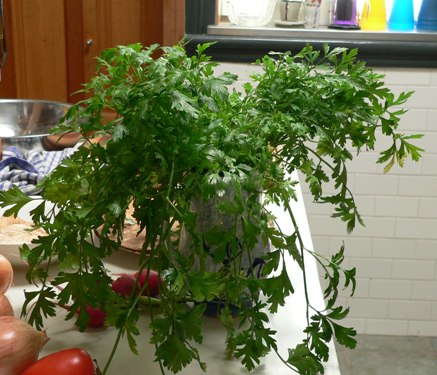
As the chooks were ready for their next rotation, Pete cleared all the continental parsley from the incumbent bed, and brought it in along with a large bunch of purslane.

  • 1 round Lebanese bread, toasted until crisp and broken into shards
  • 5 – 6 radishes, washed and sliced
  • 3 Lebanese cucumbers, washed and sliced
  • 4 tomatoes, chopped
  • 10 spring onions, chopped
  • 1 cup purslane, washed and chopped – you can just use the leaves, or include the stems as well, like I did
  • 1 cup flat-leaf parsley
  • 1 cup mint leaves

These are the quantities listed in the original recipe, taken from Abla’s Lebanese Kitchen, by Abla Amad.  I used more bread and fewer cucumbers, but the salad was still delicious.  Abla recommends splitting the pita bread and toasting it in the oven for 4 – 5 minutes until dry and crisp – I, of course, used the café press.

To dress the salad, combine the following ingredients, pour over and toss through.  I used less salt than the 1 teaspoon specified – personal preference on my part.

  • ½ teaspoon ground allspice
  • 2 teaspoons ground sumac
  • ½ teaspoon fine sea salt (original recipe called for 1 teaspoon salt)
  • freshly ground black pepper to taste
  • 100ml lemon juice
  • 100ml olive oil

We served our salad with more pita bread crackers and hommus, for an easy and delicious Saturday lunch!

Read Full Post »

Almond Bread

There’s almost always a surplus of egg whites at our place.

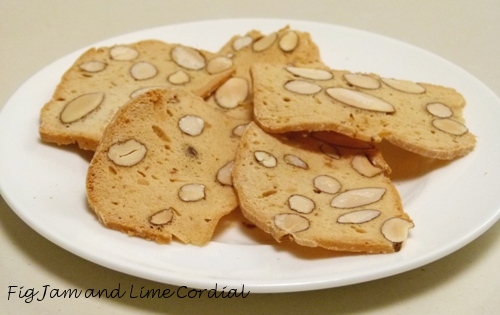
These are usually turned into meringues, marshmallows or, if I’m feeling energetic, almond bread.

The secret to successful almond bread lies in the slicing – the thinner you can cut the slices, the crisper and more elegant the finished biscotti. I find it hard work, as the loaf is heavy and stiff, but the end results are always worth it.

This recipe  makes quite a large quantity, and we stash our surplus in airtight containers in the freezer – they defrost at a moment’s notice when guests arrive.

  • 3 egg whites
  • 1/2 cup (110g) caster (superfine) sugar
  • 1 cup (150g) plain (all-purpose) flour
  • 1 cup (150g) unblanched almonds
  • 1 tsp vanilla extract (we use homemade)

1. Preheat oven to 180C (360F) or 160C (320F) with fan.

2. In a large mixing bowl, beat the egg whites until stiff (but don’t overbeat), then gradually add sugar, beating until the mix is thick and glossy.

3. Using a metal spoon, fold in flour, almonds, and vanilla, mixing well but gently.

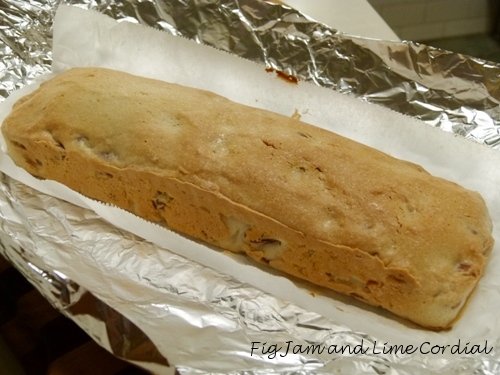
4. Turn the batter into a small loaf pan which has been lined with parchment paper, smooth out the top and bake for 30 minutes until golden brown.  Cool in the pan, then turn the loaf out (I usually leave the paper on), and wrap in foil. Refrigerate overnight.

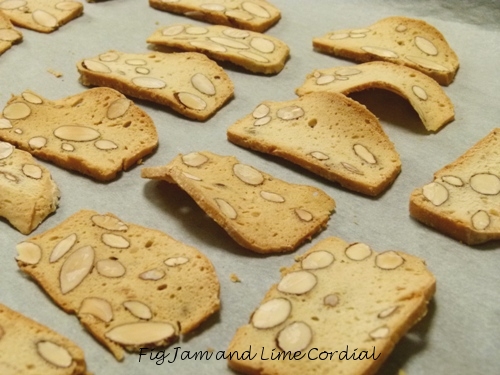
5. The following day, preheat the oven to 150C (300F) or 140C (285F) with fan.  Remove the loaf from the fridge and cut it into thin, even slices using a strong but thin-bladed knife (sharpen it before you start) and lay them out on a parchment lined baking tray.   You’ll get lots of cookies, so make sure you have a couple of trays ready.  Be warned that this can be hard on your hands.  Some people use a mandolin to slice their almond bread, but I’ve never had any luck with this – the finished loaf is way too hard for my little hand-held cutter.

6. Bake the slices until golden and crisp. Start checking after 10 minutes – my last batch took about 18 minutes, but it varies depending on your oven and the thickness of your slices. Cool and store in an airtight container.

Tip: the aim is to get the slices thin enough so that they curl a little as they bake, but not so thin as to burn.  I didn’t quite manage that with most of mine, but these few wavy ones made me very happy!

Click here for a printable version of this recipe

Read Full Post »

Inspired by Guy Grossi on Italian Food Safari, I made bruschetta for lunch today.

1. Place slices of day old sourdough onto a lined baking tray, and bake in the oven until crisp.  Alternatively, toast the slices in a  dry griddle pan, or in the toaster.

2. In the meantime, heat some oil in a frying pan and fry a chopped onion until soft, then add either fresh whole cherry tomatoes, or chopped Roma tomatoes (which is what I used).  Season with a little salt, and stir over the heat until slightly softened (but not cooked down to a pulp).

3. Cut a garlic clove in half and rub it over the top of the hot bread slices.  Scatter over a little chopped Italian parsley, then drizzle with extra virgin olive oil.

4. Top each slice with a spoonful of the tomato and onion mixture, and scatter over a little torn basil. Season with grated black pepper and serve immediately.  A perfect Saturday lunch!

Here’s a clip from the first episode of Italian Food Safari, for those who don’t have access to Oz television – it was a great series, and well worth watching.

Read Full Post »

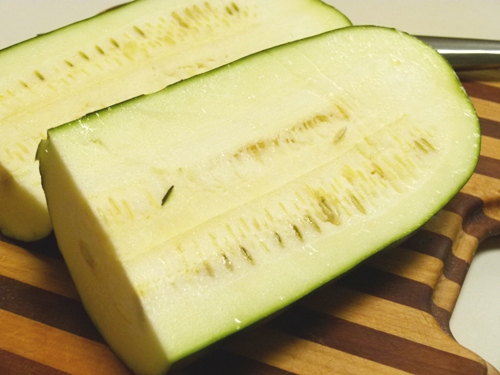
It seems we’re the only ones who weren’t able to grow zucchinis this year!

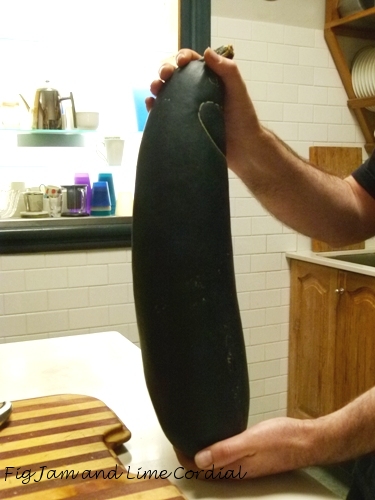
Diana grew giant yellow ones, my friend Becca was over-run with them, and last week Pete’s baby sister Penny sent down the doozy of them all!  For a couple of days, the “monster” just sat on the kitchen bench (it was too large to fit in the fridge), but by Saturday morning I’d built up my chi enough to tackle it.

Not a single bit of the zucchini went to waste!  The top and tail, plus all the seeds, were eaten with relish by the chooks.   The bottom half was sliced into large chunks and roasted with potatoes, turnips and capsicums as an accompaniment to our Saturday night roast.

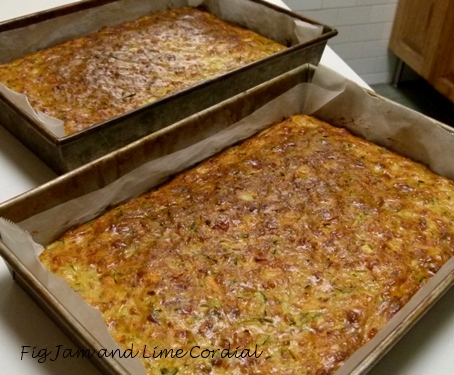
And on Sunday, the top half was turned into two large zucchini slices, enough to feed the neighbourhood!

. . . . .

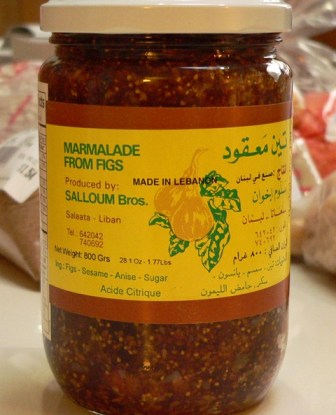
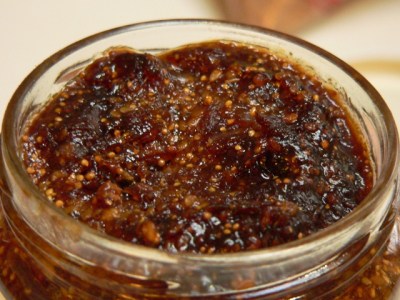
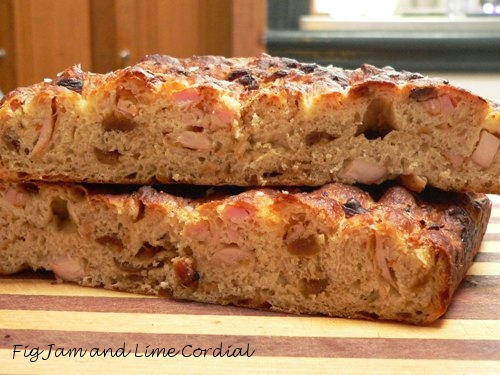
One of the foodie treats that I always buy from Harkola is this Lebanese fig marmalade – a delicious chunky paste of figs, sesame seeds, anise and sugar.  It’s ridiculously cheap ($4.95 for 800g) and packed to the brim with large pieces of fruit.  The sesame seeds give the marmalade an unusual flavour, and make it perfect for incorporating into savoury dishes.

Last weekend I had a jar of this to use up, plus a bag of turkey breast offcuts from Paesanella, so I made a filled focaccia.  The basic recipe is here, and my add-ins for this batch were:

  • 200g turkey offcuts, chopped
  • 200g fig marmalade
  • 65g Picasso sheeps’ cheese

It could have used a little more cheese, but this recipe is always made with whatever I have leftover in the fridge, and that was all I had.

The resultant loaf was a seductive blend of sweet and salty flavours – Pete and Uncle Steve loved it!

Read Full Post »

Sydney’s inner west suburb of Haberfield is known around these parts as Little Italy.

I’m at the Haberfield shops at least once a week, visiting Johnny’s cheese shop, drinking chai lattes at Manny’s cafe, or buying pasta from my friend Joe at Peppe’s Pasta.  Lorraine at NQN did a great walking tour of the suburb – grab a cup of tea and check it out here.

At the heart of Little Italy is Lamonica’s IGA – a supermarket quite unlike any other in Sydney.  As well as standard groceries, they also stock a wide range of imported Italian goods, including interesting pastas, deli items, cake ingredients, olive oils, vinegars and more.

When I was there last week, they had Italian flour on sale, including 5kg bags of Granoro 00 for $8.99, and Granoro durum semolina flour for just $2/kg.
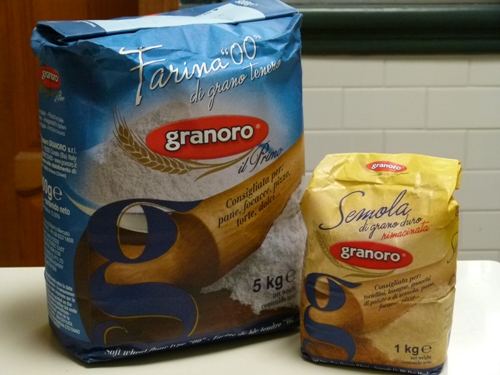
Semola Rimacinata di Grano Duro is re-milled durum wheat semolina – a superfine flour with 12% protein content (more information here).  It’s great for making egg pasta, but I also find it the perfect flour for my ciabatta loaves.  This one nearly attained the desired “slipper” shape…
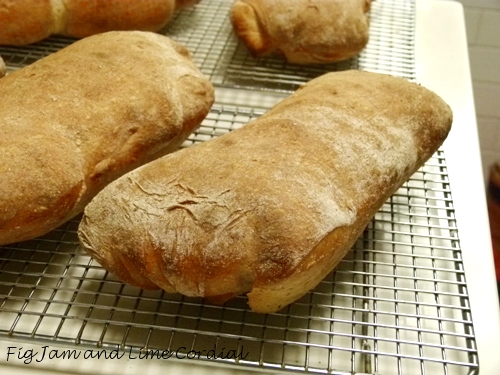
A disclaimer: this isn’t how ciabattas are traditionally made, nor is the end result an authentic representation of anything other than what I call a ciabatta. My apologies to any purists out there who are miffed by this.

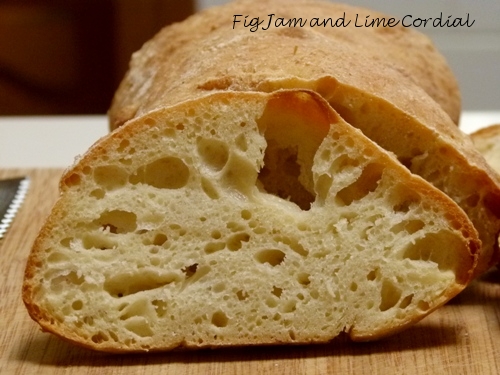
Having said that, the loaves have a chewy, elastic texture which we find highly addictive, and my family will eat all four loaves within a couple of days.  This is not light fluffy white bread, and the crumb has an intriguing, almost plasticky shine in the holes…
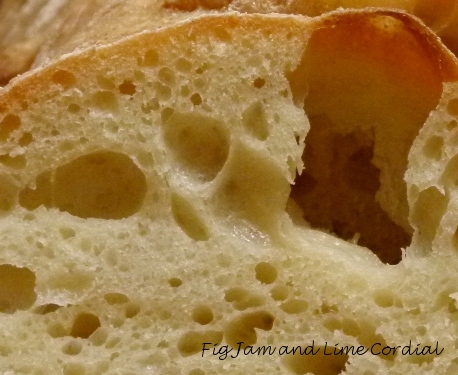
This is also the bread I make when my hands are sore, because it requires very little actual kneading or shaping.   Unfortunately as I get older, these things all have to be taken into consideration!

A note to my fellow sourdough bakers – the hydration of the dough is approximately 77%, which is quite high, but the durum wheat flour seems to absorb more moisture than regular bakers’ flour. Don’t be tempted to use fine or coarse semolina instead of semolina (durum wheat) flour – the former is too coarse and won’t absorb enough water, and you’ll end up with a soggy mess.  If you can’t find semolina flour, substitute more bread flour in its place and reduce the water by about 5%.

Ciabatta con Semola Rimacinata di Grano Duro
(an original Fig Jam and Lime Cordial recipe)

  • 300g active sourdough starter (fed at a ratio of one cup water to one cup flour)
  • 675g iced water (must be at least fridge cold – this is important)
  • 500g bakers/bread flour
  • 500g Semola Rimacinata di Grano Duro (fine durum wheat semolina flour)
  • 18g fine sea salt

1. Measure all the ingredients into a large mixing bowl.
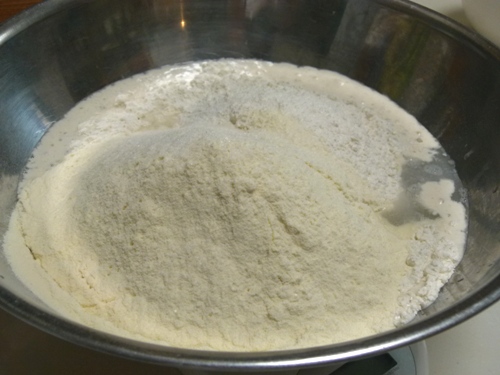
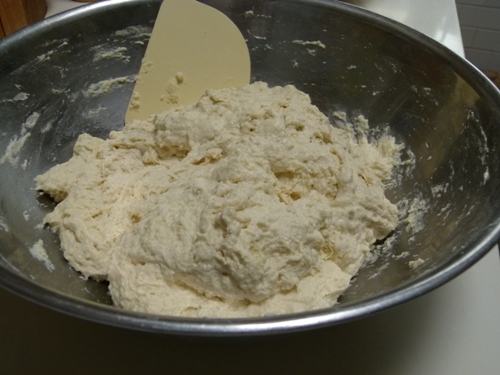
2. Squelch and scrape everything together to form a sticky dough.  Scrape your fingers off and cover the bowl with clingfilm.
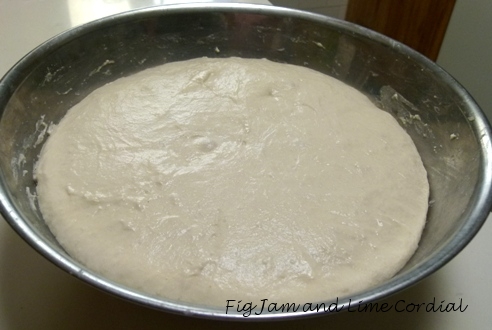
3. After about an hour, give the dough a quick knead in the bowl, and cover it up again.  Repeat this procedure when you’re next in the kitchen (within the next hour or so).  Then cover the dough up and allow it to rise until doubled in size.  In our Sydney weather, the time from initial squelching to the photo you see below was about six hours.

Place pizza stones into the oven if you’re using them, and preheat the oven to maximum (about 250C with fan).
4. When the oven is hot, generously dust the bench with rye flour.  Scrape the dough onto the bench, flour your hands and gently pat it into a large rectangle.  Now fold one third into the middle, and the other third over the top of it, to create a long thick rectangle.  You might need to use the scraper to help you, as the dough will be quite sticky and wet.
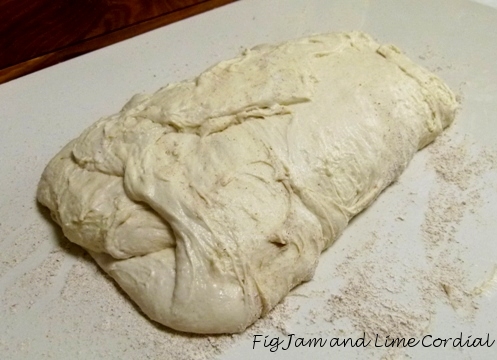
5. Cut the dough into four roughly equal pieces.
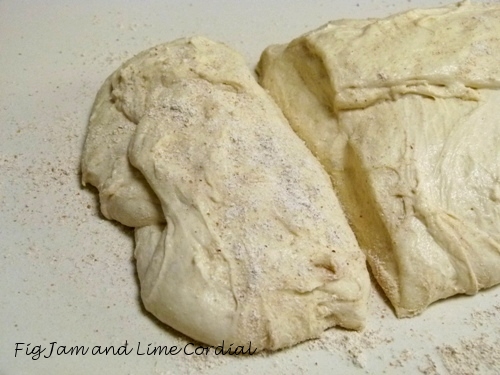
6. Tear off four sheets of parchment paper and with well floured hands and the scraper, gently transfer a cut slice of dough onto a sheet of parchment, giving it a little stretch as you go to emulate the “slipper” that ciabatta is so famously named after.  The dough will be quite soft and a bit sticky, so dust it with a little more rye flour if necessary, and also make sure you’ve got plenty of flour on your hands.

If you don’t have pizza stones, you can place the loaves onto a parchment lined tray instead.  The loaves are immediately ready to bake – there’s no need for a second prove. Note: please check your parchment paper instructions to ensure that it can cope with these oven temperatures.
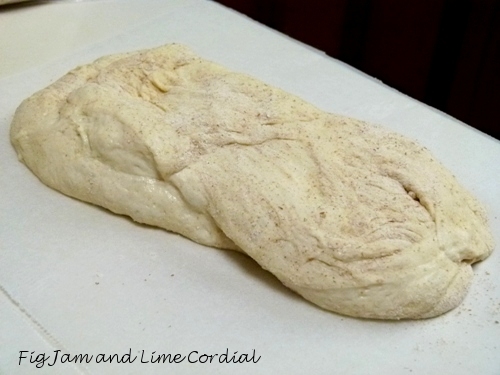
7. Spritz the tops of the dough with water, and immediately slide them onto the pizza stones to bake.  Reduce the oven temperature to 220C with fan and bake for 20 minutes, then further reduce to 175C with fan and bake for another 15 – 20 minutes, until the crust is set to your liking.  After the first 10 minutes or so, I like to carefully remove the parchment paper from under the loaves to allow the bottoms to brown up (don’t bother with this if you’re baking on a lined tray).

My oven will take four loaves at the one time, but if yours isn’t quite as ginormous, you could halve the recipe, or shape the dough into larger loaves to begin with.

Click here for a printable version of this recipe
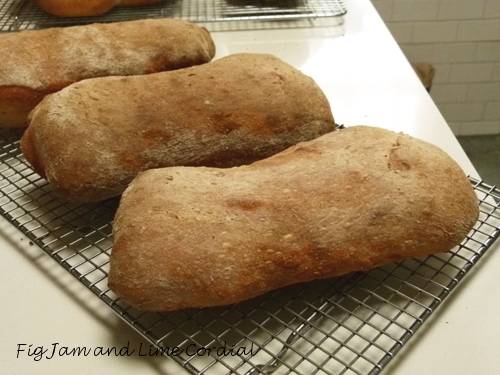
PS. A little bread trivia from my miller friend Kevin Sherrie – research has shown that including a small percentage of durum wheat flour into bread dough will keep the finished loaves fresher than bread made solely from soft wheat flour.  More information here.

. . . . .

Addendum:  Maths isn’t my forte, but if you’re using a sourdough starter at 100% hydration, the following formula should work:

  • 300g active sourdough starter (100%)
  • 715g iced water
  • 485g bakers/bread flour
  • 485g Semola Rimacinata di Grano Duro (fine durum wheat semolina flour)
  • 18g fine sea salt

Read Full Post »
« Newer Posts - Older Posts »