Feeds:
Posts
Comments

Archive for the ‘Recipes’ Category

I really, really like Nigel Slater.

My friend Joanna of Zeb Bakes sent me one of his recipes over a year ago, and since that time we’ve become avid fans of this well-known English food writer, enjoying both his dvd and cookbooks.

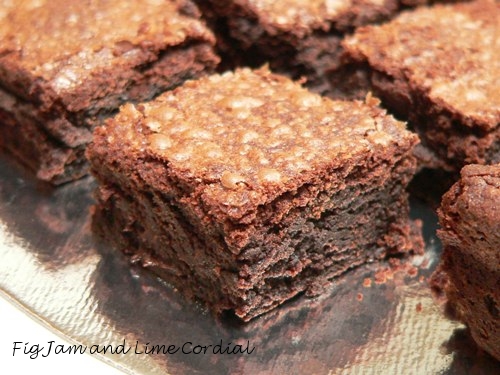
I really, really like this brownie recipe.  It comes from Nigel Slater’s The Kitchen Diaries: A Year in the Kitchen, and I’ve adapted it only slightly to suit the ingredients I had on hand.

The combination of dutched cocoa and 70% chocolate gives it a deep, not overly sweet flavour, and the large quantity of eggs ensures a light, almost moussy texture.  Pete is less enamoured – he loves the flavour, but prefers his brownies to be dense and fudgy.  He happily ate several pieces nonetheless!

Apologies to my US friends, but the original recipe was written in metric weights, rather than cup measures. I’ve included imperial  weight conversions wherever possible.
  • 300g (10.5 oz) caster (superfine) sugar (original recipe specified golden caster sugar)
  • 250g (1 cup) unsalted butter
  • 250g (8.8oz) dark chocolate (70%) – I used Callebaut callets
  • 3 large (59g) eggs, plus 1 extra yolk
  • 60g (2oz) plain (AP) flour
  • 60g (2oz) dutched cocoa (or the best quality cocoa you have)
  • ½ teaspoon baking powder
  • pinch of salt

1. Line a 23cm square baking tin with parchment paper.  Preheat the oven to 175C/350F or 160C/320F with fan.

2. Melt 200g/7oz of the chocolate, either in a pyrex bowl in the microwave on short bursts, or over a pan of simmering water.  Remove from heat as soon as the chocolate is melted. If you’re not using callets, chop the remaining chocolate into small pieces.

3. In a medium bowl, sift together the cocoa, flour and baking powder.  Stir in a pinch of salt.

4. In a small bowl, lightly beat together the eggs and yolk with a fork.

5. In a large bowl, use an electric mixer to beat the sugar and butter until very light and fluffy.  Gradually mix in the beaten eggs, mixing well between each addition.

6. Using a spatula, gently mix in both the melted chocolate and chocolate pieces, then carefully fold in the flour-cocoa mixture.  Use a light touch, and try to keep as much air in the mix as possible.

7. Scrape the mixture into the prepared baking tin, smooth the top, and bake for 30 minutes, or until a tester inserted into the centre comes out a little moist, but free of raw batter.  The brownie will firm up on cooling, so be careful not to overbake it.  Allow to cool for at least an hour before serving.

Read Full Post »

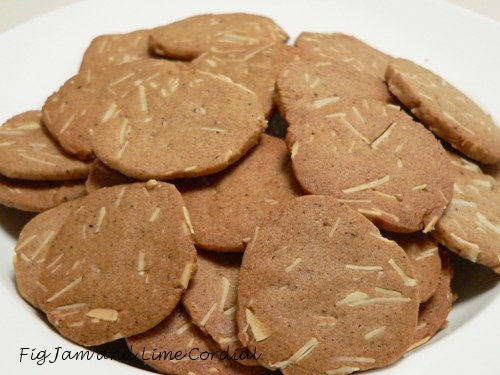
Speculaas are a traditional Dutch cookie, made with a mix of spices and almonds. I’ve tweaked the methodology on Maureen’s original recipe to make it easier to cut thin slices, resulting in a crisp biscuit that keeps well for a couple of weeks (if they last that long!).

I now make the speculaas in two ways – as a roll and cut cookie, and as a log cookie, which is sliced and baked.  Here’s my reworked recipe…

  • 500g (31/3 cups)  plain (all purpose) flour
  • 250g (1 cup) cold unsalted butter, cut into small pieces
  • 250g (1¼ cups) brown sugar
  • 1/4 teaspoon salt
  • 2 teaspoons baking powder
  • 3 teaspoons cinnamon
  • 2 teaspoons nutmeg
  • 1 teaspoon ground cloves
  • 1 teaspoon ground ginger
  • 1 teaspoon ground anise seed
  • 100g (1 cup) flaked almonds
  • 2 large (59g) eggs, lightly beaten
  • 2 teaspoons vanilla essence (we used homemade)

Method 1: Roll and Cut Cookies

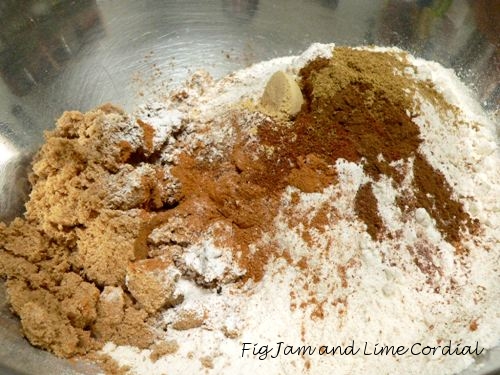
1.  In a large mixing bowl, whisk together the flour, baking powder, sugar, salt and spices.  Add the butter and rub it in until the mixture resembles coarse breadcrumbs.

2. Add the eggs and vanilla and work the mixture together to form a dough (I use my hands to do this). Refrigerate the dough for several hours or overnight.

3. Remove the dough from the fridge and allow it to soften slightly.  Preheat the oven to 175C/350F (or 160C/320F with fan).

4. Tear off two large sheets of parchment paper.  Place half the dough between the two sheets, and using using a rolling pin, roll to a thickness of approximately 3mm (about an eighth of an inch).  Gently peel off the top sheet of parchment, and scatter half the flaked almonds over the dough.  Replace the parchment paper, and roll gently over the top to flatten the almonds into the dough.

5. Leaving the two sheets of parchment in place, flip the dough over, so the almonds are now on the bottom, and remove the top sheet of parchment.  Using sharp cookie cutters, cut into desired shapes and gently transfer the cookies on a baking sheet lined with parchment paper. Repeat with the remaining dough.

6. Bake for 12 – 15 minutes until lightly browned and allow to cool on a wire rack before serving or storing in an airtight container. The baked cookies also freeze very well.

Click here for a printable version of this recipe

. . . . .

Method 2: Log Cookies

1.  In a large mixing bowl, whisk together the flour, baking powder, sugar, salt and spices.  Add the butter and rub it in until the mixture resembles coarse breadcrumbs.

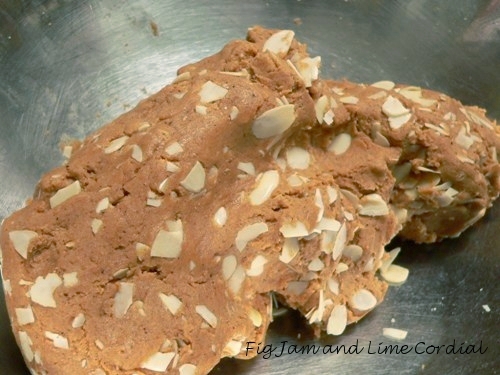
2. Add the eggs and vanilla and work the mixture together to form a dough (I use my hands to do this).  Add the flaked almonds and very gently work them into the dough.  It’s impossible to do this without crushing some of the almond flakes, but try to keep as many intact as possible, while still ensuring that they’re worked evenly through the dough.

3. Divide the dough into four, and shape each piece into a log, approximately 4cm (1½”) in diameter.  Roll each log in a sheet of parchment, and put it in the fridge to chill for a few hours until firm.  The logs can also be frozen for future baking.

4. Remove the dough from the fridge and allow it to soften for a few minutes.  Preheat the oven to 175C/350F (or 160C/320F with fan).  Line baking trays with parchment paper.

5. Slice the cold log into thin cookies, about 3mm/1/8” thick, and lay them out on the parchment lined trays.

6. Bake for 12 minutes, or until lightly browned, and allow to cool on a wire rack before serving or storing in an airtight container.  The baked cookies also freeze very well.

Click here for a printable version of this recipe


Read Full Post »

As we’re awash with new garlic, I thought it was prudent to use up the remains of my frozen stash from last year!

When we buy our new season garlic each year from Di and Ian, we keep some of it aside for immediate consumption and break the rest into cloves which we vacuum seal and freeze in a thick plastic bag.  After a full year in our stand-alone freezer, our cloves were still in great condition…

Freezing changes the texture of the cloves – they become translucent and softer.   Peeling is much easier, and we don’t really discern a noticeable difference in flavour or aroma, although we do always cook our frozen garlic.

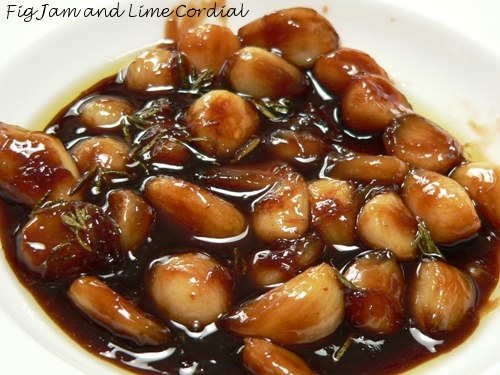
I made a caramelised garlic filling using a Dan Lepard recipe which I posted about almost exactly one year ago. The recipe specifies boiling the unpeeled cloves, but as our defrosted garlic was already quite soft, I simply immersed them briefly in a bowl of boiling water and then removed the papery skins.  You can see from the photo below that the defrosted cloves are a different  colour and texture to fresh – they’re no longer crunchy, but rather have a soft, almost gelatinous quality to them.

The blanched cloves were browned briefly in olive oil, before a mixture of water, balsamic vinegar, caster sugar, salt, pepper and fresh rosemary were added (quantities are here)…

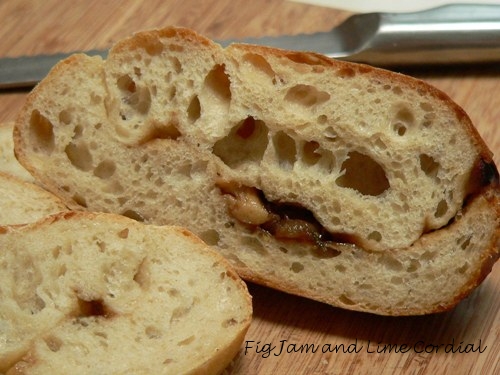
The thick caramel was allowed to cool slightly before being incorporated into a batch of white sourdough.  I simply flattened out the dough, spread over the mixture, and folded the sides over to enclose it.

The end result was delicious – sweet, but not overly so – and very garlicky!

Read Full Post »

We make our own vanilla extract (I wrote a post about it here) by infusing vodka or brandy with vanilla pods.  It’s a fun, rewarding process which produces a magnificently aromatic brew, perfect for use in cakes, desserts, syrups and jams.

Each bottle takes a minimum of three months for the vanilla flavour to seep into the alcohol, and once a bottle is finished, it can be refilled a second time to maximise the output of the expensive vanilla beans.

I haven’t had a lot of success with trying to reuse the beans a third time – the pods don’t seem to have enough oomph to create an extract strong enough for my tastes.  They’re still very vanillary though, and we’ll often scrape the tiny black seeds into Pete’s vanilla syrup or ice cream.

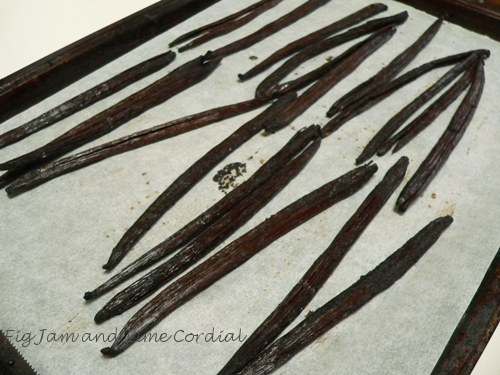
After all the Christmas baking, I had more than a dozen used beans, which I just couldn’t bring myself to throw out.

Today, while the oven was on low (100C – I was baking chocolate meringues), I popped the beans in for about ten minutes to dry them off slightly.  I then filled the food processor with granulated white sugar and scraped out the moist centres of the pods on top.  As the vanilla beans were already split down the middle from the extract making process, this wasn’t a difficult process. I wore a pair of disposable kitchen gloves and simply pushed the fine seeds out with my thumb.

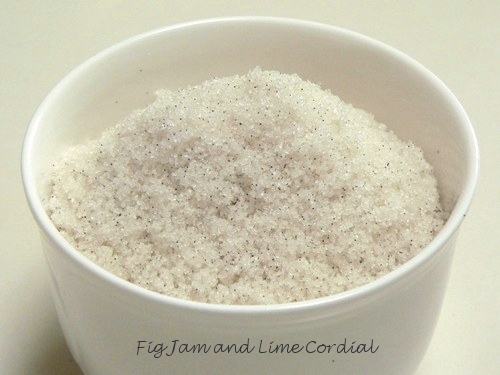
The sugar and vanilla seeds were pulsed together until well combined, resulting in a soft grey sugar with a squillion tiny black flecks.  It’s the perfect addition to a cup of tea (Big Boy and Small Man now refuse to drink tea  sweetened with anything other than vanilla sugar) and is particularly delicious sprinkled over the crust of an apple pie prior to baking.

A note on the pods – once the seeds were removed, I discarded the leftover shells.  In the past I’ve tried blitzing them as well, but found the results too fibrous for my liking.

Of course, this can just as easily be made with brand new beans, but it’s particularly rewarding to get a third life out of my used ones.  My spent pods made over a kilo and a half of vanilla sugar!

Read Full Post »

A last minute Christmas recipe!

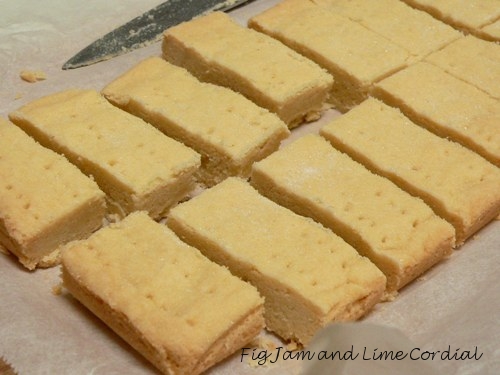
This shortbread is crumbly, tender, and only uses a few ingredients – flour, rice flour, butter and sugar.  Adapted from a recipe in the Marie Claire Kitchen cookbook, it’s easy to make and very festive!

  • 175g (1½ cups) plain (AP) flour
  • 125g (¾ cup) rice flour
  • 200g (7oz) unsalted butter
  • 80g (80ml or 4 metric tablespoons) caster (superfine) sugar
  • pinch of fine sea salt
  • extra caster (superfine) sugar for sprinkling

1. Preheat the oven to 190C/375F or 175C/350F with fan.

2. Line a  20cm/8″ square pan OR a 31 x 14cm/12 x 5½” biscotti pan with parchment paper.

3. Into a small bowl, sift the flours together with a pinch of salt – don’t skip this bit, as it helps ensure a light, crumbly texture in the finished shortbread.

4. In a large mixing bowl with an electric mixer, cream the butter and sugar until light and fluffy.

5. Add the flour all at once, and using a clean hand, bring the dough together, mixing it gently until well combined but still light in texture.  Work the mixture as little as possible.

6. Turn the dough into the lined tray and press it evenly into the prepared pan.  Prick all over with a fork.

7. Bake for 5  minutes, then reduce the oven temperature to 150C/300F or 140C/285F with fan.  Bake for a further 20 – 25 minutes, or until the shortbread is a light golden colour.  Remove from the oven and sprinkle with a little extra caster sugar, then allow to cool in the pan before slicing.

Click here for a printable version of this recipe

Read Full Post »

« Newer Posts - Older Posts »