Feeds:
Posts
Comments

Archive for the ‘Recipes’ Category

Pete’s cousin Andrew and his wife Rachel were in town today, so I was up early baking scrolls for morning tea.   It was a fun thing to do on an otherwise wet and gloomy Sunday!

I began with sourdough cheese and olive scrolls – Small Man’s lunches for the coming week. They were made from a batch of dough mixed yesterday evening and left on the bench to prove overnight.  The same dough also made two 750g loaves, which will be eaten over the next  couple of days.
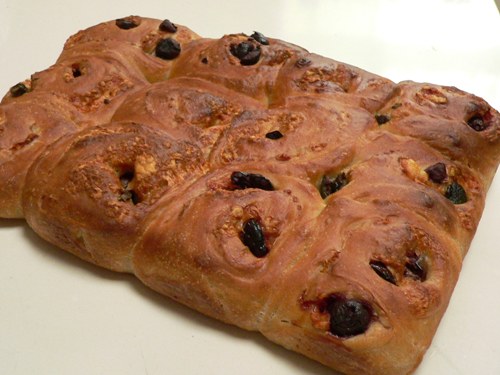
For morning tea, I made nutella scrolls (recipe here)

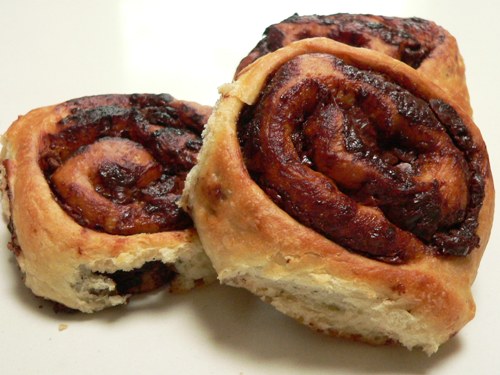
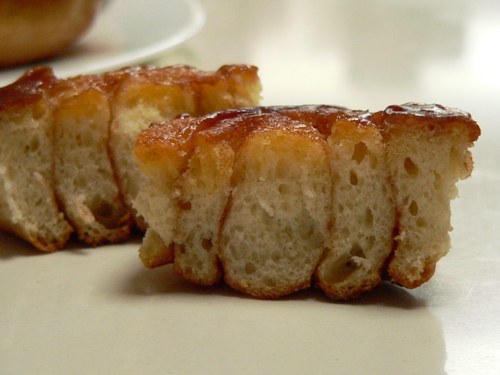
…and these caramel and cinnamon ones.  They’re quite easy to make, and Big Boy absolutely loves them.

  • 1 batch of bread #101 dough or sweet bread dough, proved
  • ½ cup unsalted butter, softened
  • ¼ cup brown sugar
  • 1/3 cup white or caster (superfine) sugar
  • 1 teaspoon ground cinnamon

1. Preheat oven to 220C with fan.  Blend together half (¼ cup) of the unsalted butter and brown sugar in a small bowl.  Spread this over the base of a parchment lined rectangular baking pan.

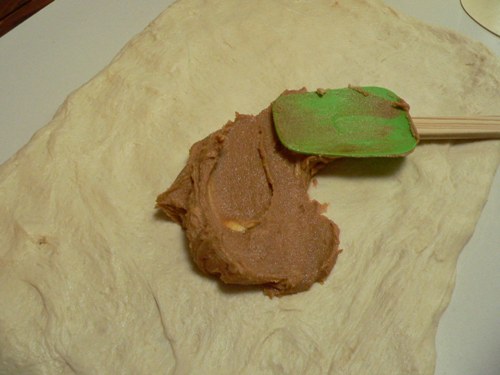
2.  Oil a clean bench, then press the dough into a large rectangle.  Mix together the remaining butter, white sugar and cinnamon, and spread over the dough, then roll up tightly.
3. Slice the dough into twelve rolls, and position them over the butter and sugar paste in the baking pan.  Cover and allow to rise for about 30 minutes.
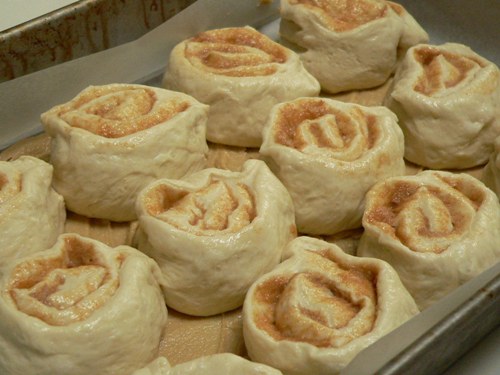
4. Spritz the top of the scrolls with a little water, then reduce the oven temperature to 200C with fan, and bake for 20 – 25 minutes, rotating the pan once during the baking time.  Be careful not to burn the tops of the buns.

5.  Allow to cool for a few minutes in the pan before turning out (carefully, as the caramel will be hot!) onto a wire rack over a sheet of greaseproof paper to catch any drips.

When cool, these can also be frozen – they’re a nice treat to have on standby!


Read Full Post »

We’re frantically busy at the moment.

My mother has a lovely Hokkien expression for times like this –  pee kung bor hong – which literally translated means, “nose has no air”.  Or in other words, “too busy to breathe”.

When things get hectic, I like to eat dhal, specifically chana dhal.  Not only do I adore the taste of it, but it has an amazingly low GI – between 5 and 11 – and I find it comforting and levelling during busy times.  I first read about it years ago on this website, and have been a big fan of the pulse ever since.

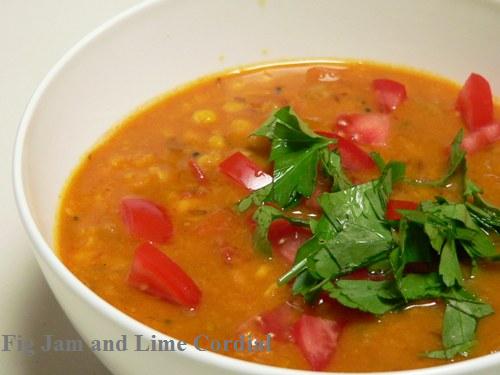
Today, I used it to cook up a large batch of Simon Bryant’s dhal soup recipe, which can be found here.  I’ll now stash the pot in the fridge, and dip into it for lunches over the next few days.  That’s one thing sorted, and I’m feeling better already!

Read Full Post »

UK baker Dan Lepard maintains that when yeast, flour and water are combined, the resultant dough will rise, regardless of whether it’s kneaded or not.  This process is known as autolysing.

I decided to test this theory out on a batch of pizza dough we made yesterday.

Into a large mixing bowl went my usual ingredients:

  • 500g bakers flour
  • 10g dried yeast
  • 7g fine sea salt
  • 320g water
  • 50g extra virgin olive oil

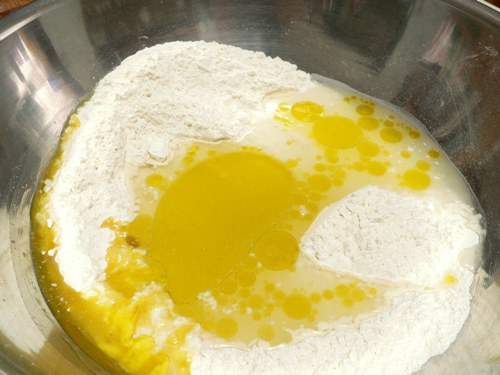
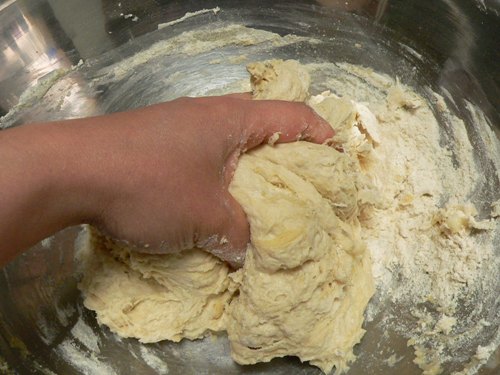
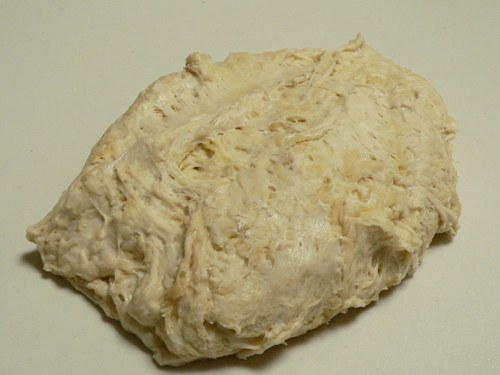
I squelched these together until all the dry ingredients were moistened…

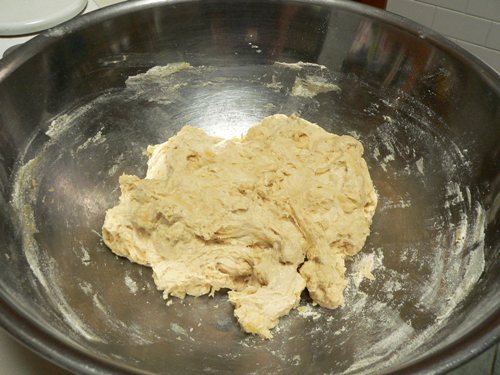
The mixed but unkneaded dough was left in the mixing bowl, covered with cling film…

Here it is after an hour…

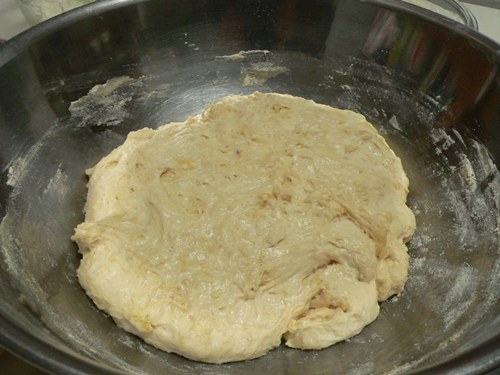
…and at the two hour mark…

I scraped the risen dough onto the bench…

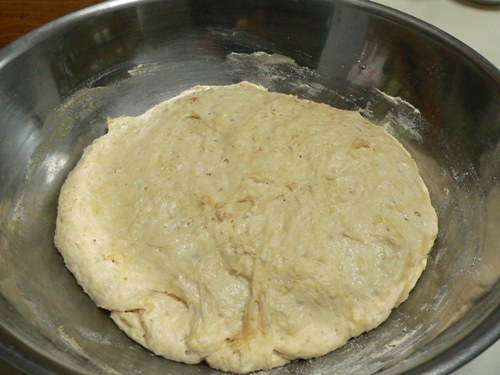
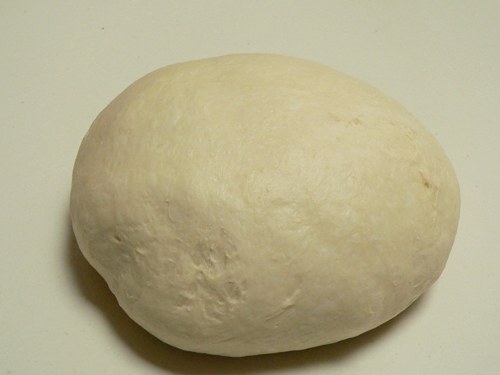
…and gave it ten folds, no more, which was enough to turn it into this…

The dough was divided into four, shaped into balls and rested for a further half hour before shaping and baking.

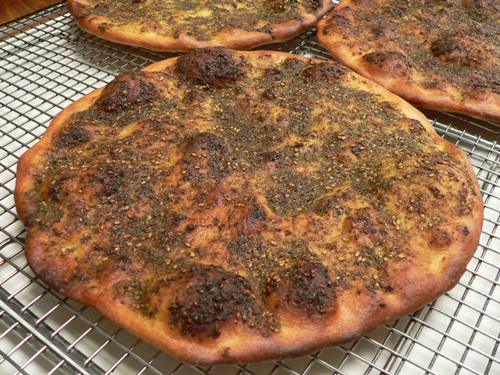
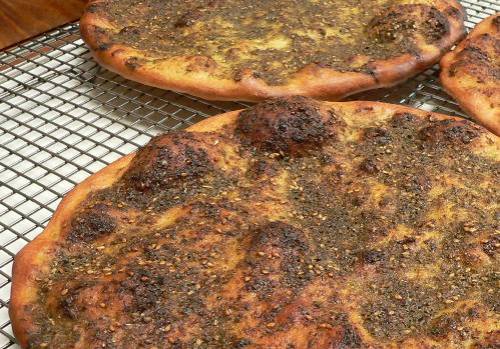
We made four man’oushe – Small Man’s favourite – and the delicious pizzas came out of the oven with large air pockets, a sign that the yeast was active and doing its job.

The whole process took longer than usual (I allowed the dough to bulk prove for two hours, whereas I would normally leave it for less than one), but the end results were no different to our regular pizzas.

Is it necessary to knead dough?  In this case, it would appear not!

Read Full Post »

Those of you who’ve been reading our blog for a while might recall that we received a bottle of lemon vodka for Christmas.

It sat unopened in our hall cupboard until I found this simple recipe in the Silver Spoon cookbook.  Serendipitously, both the cookbook and the vodka were gifts from our friends Pete and Nic!

  • 3 lemons
  • 200g (7oz) caster (superfine) sugar
  • 50ml (10 teaspoons) vodka
  • 500ml (2 cups) water

1. Thinly pare the rind of one lemon and squeeze the juice of all of them.

2. Place the water, sugar and rind into a saucepan and bring to a boil, stirring until the sugar dissolves.  Boil for 15 minutes, then remove from heat.   Remove and discard the rind, and allow the mixture to cool.

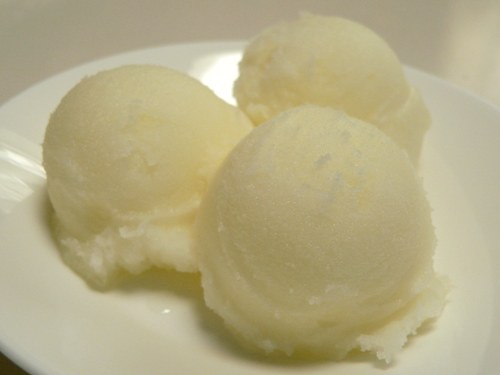
3. Strain the lemon juice into the syrup and add the vodka, stir to combine, then pour into an icecream maker and churn until frozen.  The alcohol keeps the sorbet relatively soft and scoopable straight out of the freezer.

As the vodka isn’t heated, the sorbet packs quite an alcoholic punch.  Best shared with neighbours who can walk home!

Click here for a printable version of this recipe

Read Full Post »

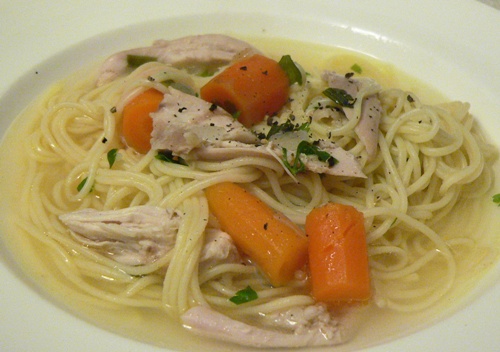
This recipe isn’t simple in its construction, but rather in the clean, uncomplicated flavours of the free range chicken and vegetables.  Mind you, it’s not that hard to make either!

I cook my chicken following a technique from Terry Durack’s Yum and use the resultant stock and meat as a base for both this recipe, and for traditional Hainanese chicken rice.

Chicken and Stock:

  • 1 free range chicken (mine was about 1.7kg)
  • 2 slices ginger
  • 2 spring onions, coarsely chopped
  • 1 tablespoon fine sea salt

Soup:

  • 2 large carrots or 6 baby carrots
  • 225g egg noodles
  • 2 onions, sliced
  • 4 spring onions, white part finely sliced, green part coarsely chopped
  • handful fresh parsley
  • salt and pepper to season

1.  Place the chicken, breast up, in a stock pot “just large enough to hold it snugly”, as per Mr Durack instructions. Add enough cold water to just cover the bird.

2. Add the ginger, spring onions and salt and bring to a boil.  Simmer for five minutes, then turn the chicken over and cook for a further five minutes.  Now cover the pot, turn off the heat, and allow the chicken to continue steeping for 40 minutes. Check the chicken by inserting a skewer through the thickest part of the thigh – if the juices run clear without any hint of pink, then the chicken is cooked.

3. Remove the chicken from the stock and allow it to rest on a plate.  When cool enough to handle, remove the skin and shred the meat into bite-sized pieces.  We don’t use all the meat in the soup, and will usually keep some of the breast or thigh meat back for school lunches the following day.

4. Using a slotted spoon, strain the ginger and spring onions out of the stock and discard.   Add the peeled and chopped carrots, onions and spring onions and bring the soup to a boil, before adding the egg noodles and shredded chicken meat to the pot.  Taste the stock, and season with salt and pepper if desired. Once the noodles are cooked, serve generous bowlfuls with a sprinkling of chopped fresh parsley.

Click here for a printable version of this recipe


Read Full Post »

« Newer Posts - Older Posts »