Feeds:
Posts
Comments

Archive for the ‘Recipes’ Category

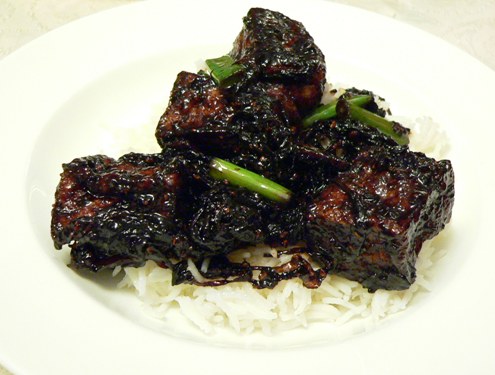
We made black pepper tofu from Yotam Ottolenghi’s Plenty last Friday night – it was rich, sticky and flavoursome.  The recipe can be found on the Guardian’s New Vegetarian blog, and we followed it to the letter.  Interestingly, the Guardian photo looks nothing like the photo in the book (which our pic above closely resembles) – perhaps the editors felt an all black dish might not appeal?

Do be aware that this is a very spicy dish – we cut the peppercorns down to three tablespoons instead of  five (!!) and reduced the number of chillies.  It still packed a punch!

. . . . .

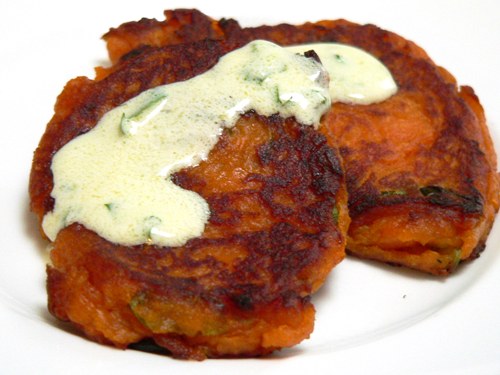
Yesterday, inspired by our success the previous night, we tried another recipe from Plenty.  These sweet potato cakes were easy to make and delicious with their accompanying yoghurt sauce (we omitted the sour cream as we didn’t have any on hand).  We served them as a side with our roast lamb dinner, but they would have made a great vegetarian starter or main course.

As the cookbook is a compilation of recipes from Ottolenghi’s Guardian column, this recipe can also be found online.

Read Full Post »

This old-fashioned little cake is pretty easy to make.  It’s moist with a soft crumb and like most tea cakes, it only keeps fresh for a day or so.  It’s supposed to be baked in a 20cm/8″ square pan, but I’ve always used a 23cm/9″ one – mistakenly at first, and then out of habit ever since.

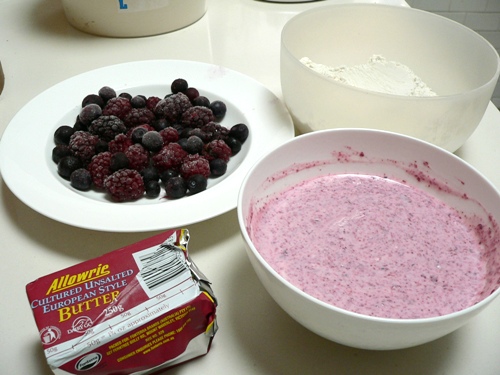
This particular cake came about quite serendipitously – our miller friend Kevin Sherrie spotted us a half bag of self-raising flour (half a 25kg bag, that is), I had berries from our last trip to Marrickville, and Pete had a fresh batch of yoghurt made, which I flavoured with a little berry puree.

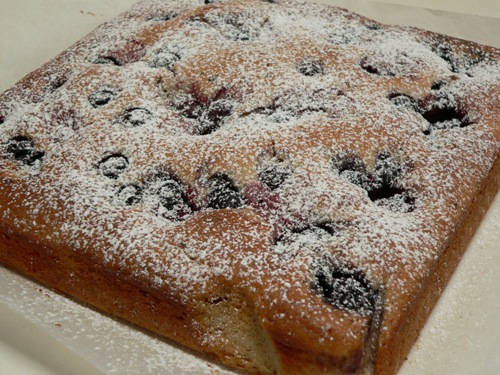
The original recipe specified fresh blueberries, but I never have them on hand, so I always use defrosted frozen berries.  Note that you really do need to let them defrost, or they’ll sink like stones into the cake batter.  As it was, mine were still a little too cold, hence the craters in the top of the cake.

  • 150g (10 tablespoons) butter, cut into pieces
  • 155g (¾ cup) caster (superfine) sugar
  • 2 large (59g) eggs
  • 265g (1¾ cups) self-raising flour
  • 200g (7oz) berry yoghurt (I used homemade, but the original recipe recommended Attiki brand fat-reduced strawberry)
  • 150g (5.3oz) berries, fresh or defrosted if frozen
  • Icing sugar (confectioner’s sugar) to dust

1. Preheat oven to 180C (360F) or 160C (320F) with fan.  Line the base and sides of a 20cm/8″ or 23cm/9″ square cake pan.

2. Beat together the butter and sugar in a large bowl until pale and creamy.  Add the eggs one at a time, mixing well after each addition.

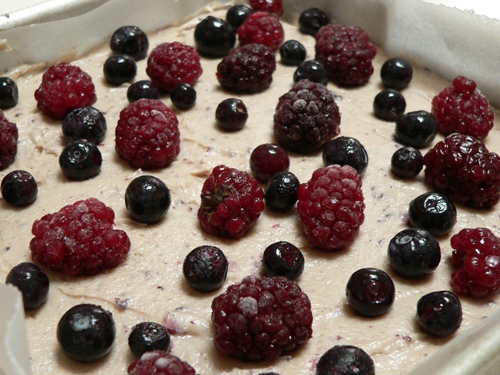
3. Stir in half the flour and half the yoghurt until just combined.  Then stir in the remaining yoghurt and flour until combined.  Scrape the batter into the prepared tin and smooth the top.  Scatter the berries evenly over the top and bake for 35 – 40 minutes (check it after 30 minutes), or until a skewer inserted into the centre comes out clean.

4. Allow the cake to rest for 10 minutes before removing from the pan to finish cooling on a wire rack.  Dust with icing sugar before serving.

Click here for a printable version of this recipe

Read Full Post »

Aren’t these cute?

I’m inviting Ozoz (The Kitchen Butterfly) and Heidi (Steps on the Journey) over for a virtual tea party.  Oz because these are known here as butterfly cakes, and Heidi because our recent discussion inspired me to seek out this old-fashioned recipe, a staple of kids’ birthday parties alongside the fairy bread and chocolate crackles.

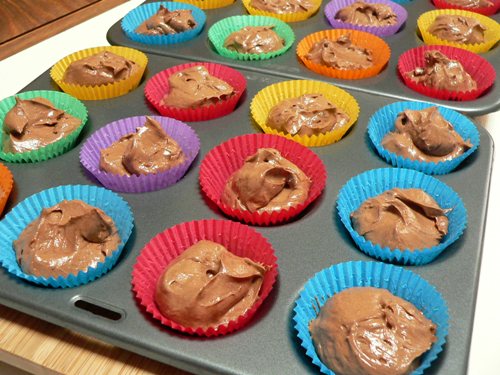
Butterfly cakes are usually vanilla flavoured, filled with cream and decorated with a little jam for colour,  but I couldn’t resist this simple recipe from Trish Deseine’s Chocolate cookbook. The cake component is quite mildly flavoured, making it a perfect foil for the rich buttercream.  Of course, you could easily adapt this technique to any cupcake recipe!

Cakes

  • 125g (8 tablespoons) unsalted butter, softened
  • 125g (40z) white sugar
  • 3 large (59g) eggs
  • 100g (3½ oz) plain (AP) flour
  • 25g (1 oz) cocoa powder (sifted)
  • 1½ teaspoons baking powder (sifted)

Butter cream

  • 150g (10 tablespoons) unsalted butter, softened
  • 250g (9 oz) icing sugar mixture (confectioner’s sugar)
  • 40g (1½ oz) cocoa powder  (sifted)

1. Preheat oven to 190C (375F) or 175C with fan (350F with fan).  Line patty pans with paper cups.

2. In a mixing bowl, beat together the butter and sugar until soft, then add the eggs one at a time and beat to incorporate.  Add the flour, cocoa and baking powder and mix well to combine.

3. Half fill the paper cups (mine took a heaped dessertspoon full each) and bake for about 15 minutes or until firm.  The little cakes will be quite flat with a slightly domed top.  Allow to cool completely.

4. To make the butter cream, stir the cocoa powder into two tablespoons of hot water to dissolve. In a mixing bowl, beat the dissolved cocoa powder, butter and icing sugar together until light and fluffy, adding a little more hot water if necessary.

5. With a small sharp knife, carefully cut out a circle from the top of each cake, leaving a hollow dip on the top.  Fill the hole with butter cream (I used a piping bag).  Cut the removed circle into two halves, and position them in the butter cream at an angle to resemble butterfly wings.  Now invite a few friends around for a tea party!

Click here for a printable version of this recipe

Read Full Post »

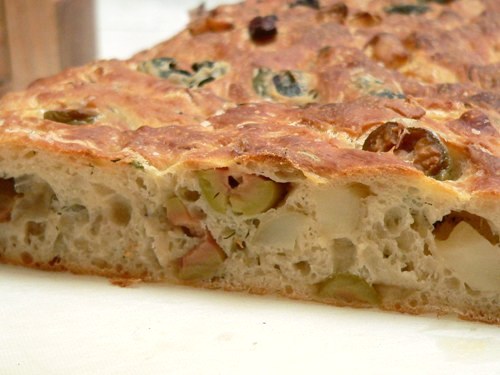
Over the weekend, I baked a couple of Dan Lepard’s irresistible treats, including this most recent recipe from his Guardian column.

It’s made with baby potatoes, a mix of green and black olives, and bakers’ flour – and baked in a large parchment-lined roasting tray.  The perfect accompaniment to an all vegetarian dinner party!

. . . . .

It’s not apple season here at the moment, and most of the available fruit is coming out of cold storage.  It’s not the best for eating raw, but wonderful for cooking.

We turned five large Pink Lady apples into Dan’s upper-crust apple pie – the fruit was tossed in a hot butter caramel, then topped with a delicious pastry laced with Calvados.  Small Man, our apple pie aficianado, declared it to be most fine…

Read Full Post »

Everyone has their culinary bugbear – some can’t bake cakes, others struggle with pastry, and many are put off by tempering chocolate.  For us, it’s always been homemade pasta.  That’s not to say we haven’t thrown time and money at trying to get it right, but each attempt has turned out stodgy, floury and brittle.

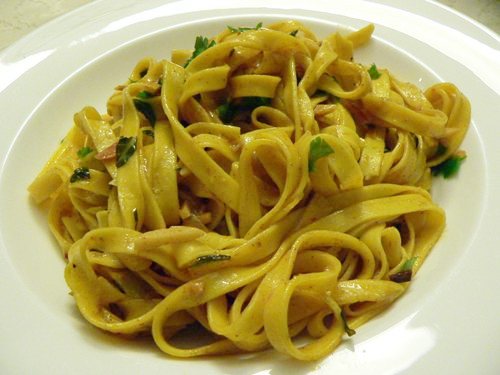
So it was with some trepidation that we decided to try a recipe from Yotam Ottolenghi’s new cookbook, Plenty.   But oh, we were so delighted with the results!  The pasta was mixed in minutes in our large food processor, and passed easily through the rollers and cutters without the usual shredding and crumbling.

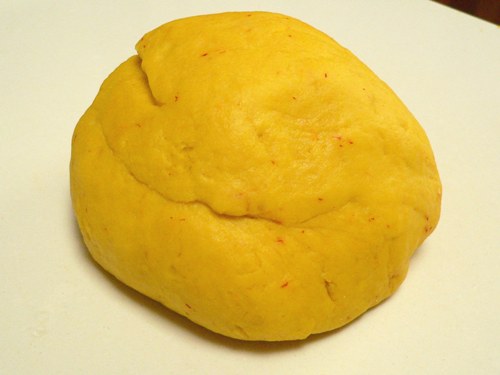
We began with four eggs from our girls, and gifts from friends – a small box of saffron from James and a knob of turmeric that Diana grew in her backyard.  The recipe specifies ground turmeric, but Di’s fresh version was too good to pass up.
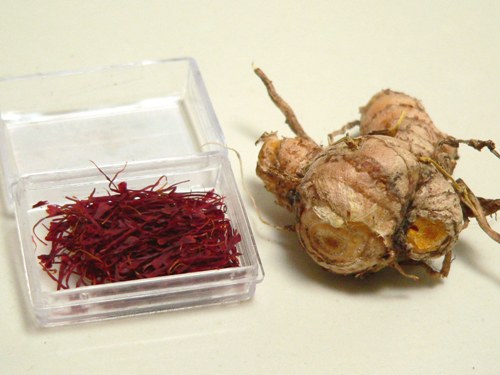
The finished dough was a glorious golden yellow…
  • 440g pasta flour or 00 flour
  • 4 large free range eggs
  • 4 tablespoons (80ml) boiling water
  • 4 tablespoons (80ml) extra virgin olive oil
  • 2 scant teaspoons saffron threads
  • 1 teaspoon ground turmeric (we used grated fresh)

1. In a medium sized bowl, soak the saffron threads in the boiling water for ten minutes, then stir in the turmeric and olive oil.  Add the eggs and beat well to combine.

2. Place the flour in the large bowl of a heavy duty food processor and, with the motor running, gradually pour the egg and oil mixture through the chute.  Pulse the food processor until the ingredients are thoroughly mixed and start to come together.

3. Tip the dough and any loose flour onto a clean bench and knead briefly until smooth.  Wrap snuggly in a plastic bag, and then rest the dough in the fridge for at least 30 minutes, or up to one day.

4. Cut the rested dough into four pieces, keeping three covered as you work the first one. Shape the small ball into a long rectangle, then pass it through the rollers of a pasta machine, starting with the thickest setting.  Pass the sheet through, fold it, and pass it through again – repeating this process a few times to give the dough strength.

5. Once the pasta is elastic and doesn’t tear or crumble through the rollers, gradually reduce the  settings until it reaches the desired thickness.  Flour the thin sheet of pasta well, then either cut it into strips with a knife, or pass it through the cutting blades of the pasta machine.  Hang the noodles up while you process the remaining dough – we used a laundry rack, but I think tradition dictates a wooden dowel supported between two kitchen chairs!

This pasta cooks in mere minutes in salted boiling water, and we served it with slivered almonds, mint, parsley and the spiced butter and shallot sauce which accompanied the recipe in the cookbook.  Truly superb vegetarian fare!

PS. We’ve repeated this recipe without the turmeric and saffron and found it works perfectly well for “everyday” egg pasta.  The quantities given above make approximately 750g of pasta dough.

Click here for a printable version of this recipe

Read Full Post »
« Newer Posts - Older Posts »