Feeds:
Posts
Comments

Archive for the ‘Recipes’ Category

Hold tight lad, and think of Lancashire hotpot!

Wallace & Gromit, A Grand Day Out

. . . . .

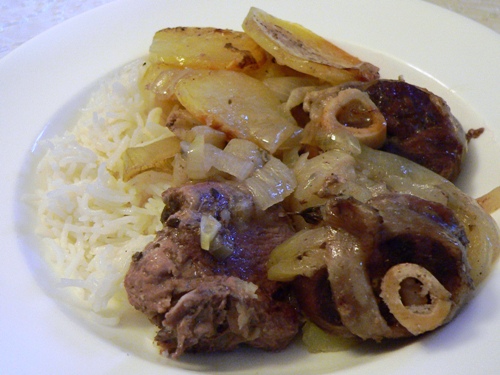
Chef Rick Stein showcased this dish on his Food Heroes programme, and it was so appealing in its simplicity and “Wallace-&-Gromitness” that I raced out to the butchers the same day to buy ingredients.  Pete normally has an aversion to hotpots, particularly ones with boney pieces of meat – a consequence of growing up on what he and his siblings refer to as “mystery meat stews”.  Nevertheless, he loved this dish, as did the boys, both of whom had second helpings.

Rick Stein didn’t provide quantities on his show,  so I had to make them up on the fly.  Having said that, I think the essence of this style of cooking is to make use of the ingredients you have on hand. I’m sure all sorts of cheaper cuts and offal would traditionally have been used, and allowed to tenderise during the long cooking time. This recipe makes a very big batch, so count on feeding the neighbours, like we did!

  • 1kg lamb shanks, cut into pieces (ask the butcher to do this for you)
  • 1kg lamb loin chops
  • lots of onions
  • lots of potatoes
  • 1 litre chicken stock
  • salt, pepper
  • oregano
  • melted butter

1. Preheat the oven to 180C with fan.  Trim and discard the surplus fat from the loin chops.

2. Peel and thinly slice the potatoes and onions.  The onions give the dish sweetness, so don’t skimp on them.

3. Brush melted butter over the base of a large casserole dish (I used a Le Creuset dutch oven) and arrange a layer of sliced potatoes.  Top with a layer of lamb (both shank pieces and loin chops), then a layer of onions.  Season well between layers with salt and pepper and a sprinkle of oregano (original recipe used thyme, but I didn’t have any).

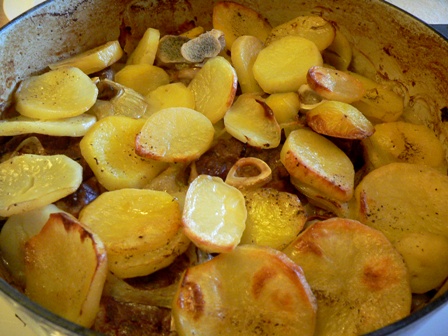
4. Layer more potato slices, then more lamb and onions, season again and repeat until all the ingredients have been added, finishing with a layer of potatoes.  Pour over the chicken stock, then brush the top of the potatoes with melted butter.  Cover and bake for 2 – 2¼ hours, removing the lid for the last 20 minutes to allow the potatoes to brown.

We served our hotpot with steamed rice, but Rick Stein served it with braised red cabbage, which has apparently become its traditional accompaniment in recent years.  Perfect comfort food!
Read Full Post »

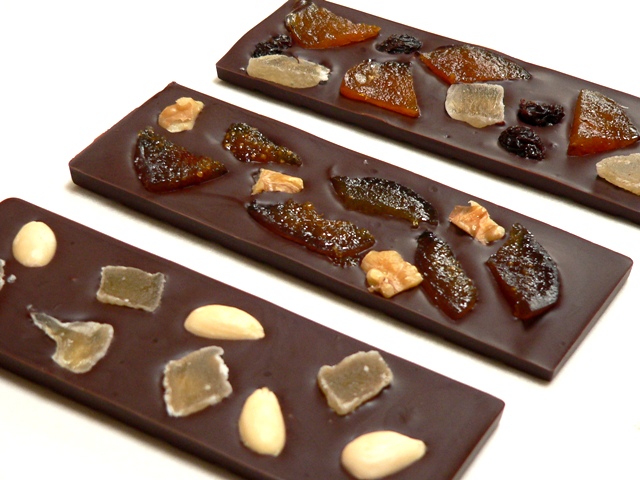
Clever Gillian at Some Say Cocoa made mendiants, French chocolate disks studded with dried fruit and nuts. They inspired me to try a block version using the leftover bits and pieces from our Christmas cakes.

Above, from left to right, are almond and crystallised ginger, glacé fig and walnut, and glacé apricot, ginger and raisin bars.  They’re quite easy to make – pour the tempered chocolate into block moulds, then embellish to your heart’s content. As Gillian points out, you need to work quickly, as the chocolate starts to set up straight away.

I also made a couple of larger blocks – one with glacé fig and raisins, and the other with glacé apricot and cacao nibs.  Wrapped in cellophane, these bejeweled bars will make a festive addition to our Christmas hampers!

. . . . .

Thank you to everyone who entered our Giveaway!

Maryann, Sue and Liz, your parcels will be in the mail shortly!

Read Full Post »

br 014

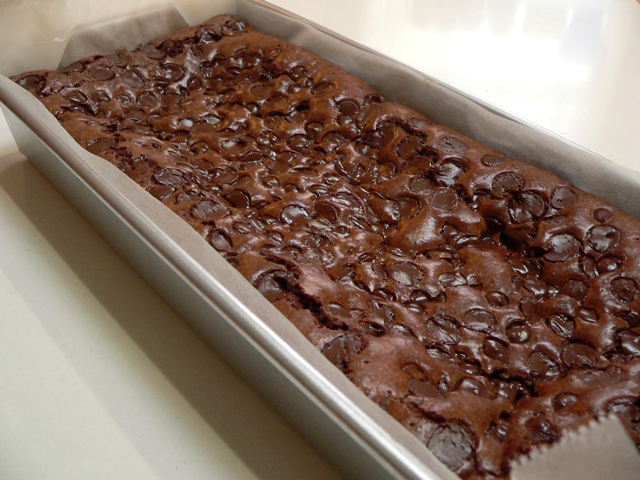
These are the fudgiest, most decadent brownies in our repertoire.

They’re an amalgam of the ingredients list from the Super Fudge Brownie recipe (Mrs Fields Best Ever Cookie Book) – adapted to suit what we can source here in Oz – and the methodology from the Supernatural Brownies.

  • 180g unsweetened or bittersweet chocolate, chopped or in callets (I use Callebaut Cocoa Mass or Callebaut Dark 70%)
  • 250g unsalted butter
  • 4 large (59g) eggs
  • 450g white sugar
  • ¼ teaspoon fine sea salt
  • 15ml (3 teaspoons) homemade vanilla extract
  • 100g plain flour
  • 180g semisweet chocolate chips (I used Callebaut 54%)

1. Preheat oven to 150C/300F (with fan).  Line a  20cm/8″ square pan OR a 31 x 14cm/12 x 5½” biscotti pan with parchment paper.

2. In a large pyrex bowl, microwave the butter and unsweetened or bittersweet chocolate in short bursts on high until the chocolate begins to melt, then stir until smooth.  Set aside to cool slightly.

3. In a large mixing bowl, whisk the eggs well by hand, then add the sugar, salt and vanilla, whisking to combine.  Using a spatula, stir in the chocolate and butter mixture, then fold in the flour until well incorporated.

4. Pour the batter into the prepared pan.  Smooth the surface with a spatula, then sprinkle the semisweet chocolate chips all over.  Bake for 45 to 55 minutes, or until the batter is set and a toothpick inserted into the centre comes out clean.  Do not overbake!

5. Cool on a wire rack to room temperature, then cover and refrigerate for at least an hour.  Cover and serve chilled.  This recipe also freezes brilliantly – tuck some away for chocolate emergencies!

Click here for a printable version of this recipe


008


Read Full Post »

My friend Anna, expat Aussie living in Paris, is an honorary member of our village, spending several weeks here every year with her family.  Check out her blog, Five In Paris, for a charming glimpse of Parisian life that you won’t read about in the travel books.

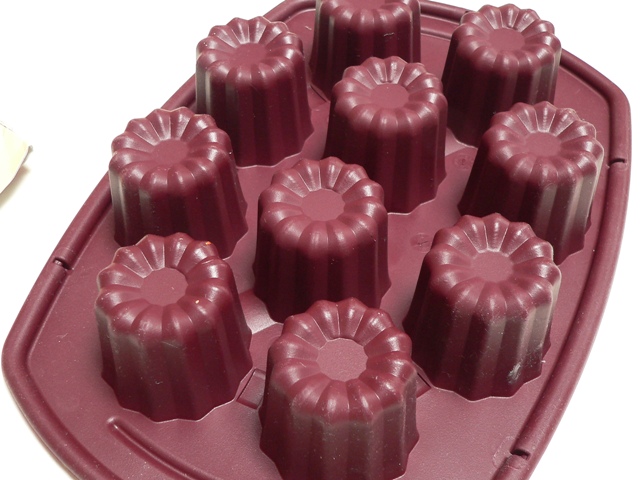
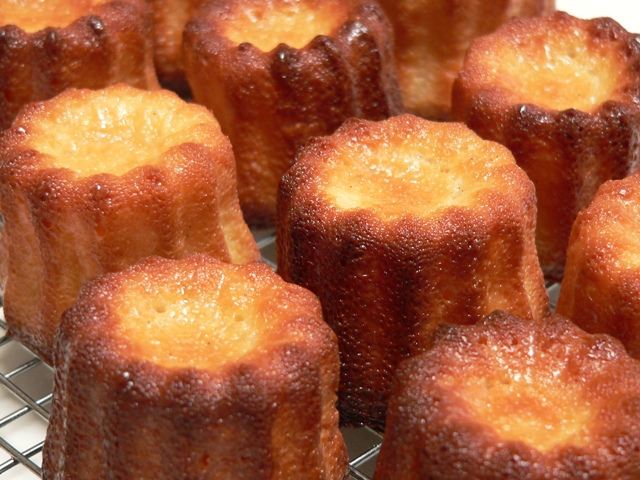
Anna and I have had an ongoing email discussion about canelés – a decadent French pastry baked in distinctly shaped pans.  When I complained that the only moulds I could source here were $11 each (so a set of a dozen would set you back $132), Anna promptly sent me a silicone canelé mould from France.  Despite my aversion to silicone, Anna assured me that it was perfect for this purpose and supplied me with her recipe as well.

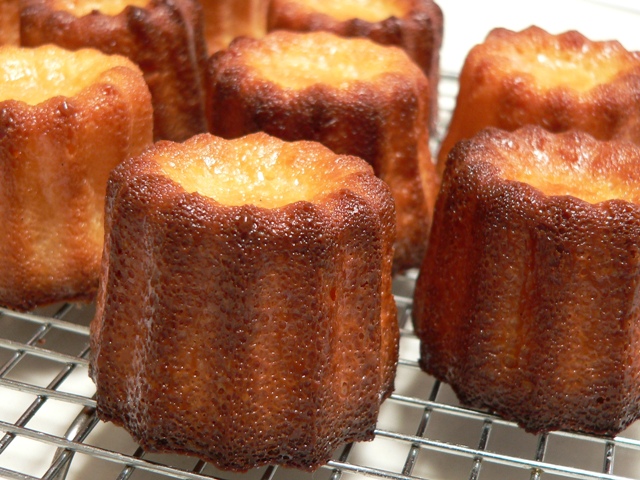
These were sooooo good.  Like a caramelised crispy baked custard.  They were soooo good that they caused all the happiness receptors in my brain to fire, and I spent the next hour grinning like the Cheshire Cat.  Several thousand calories later, I rang Anna to debrief, and she generously agreed to let me post her recipe here.

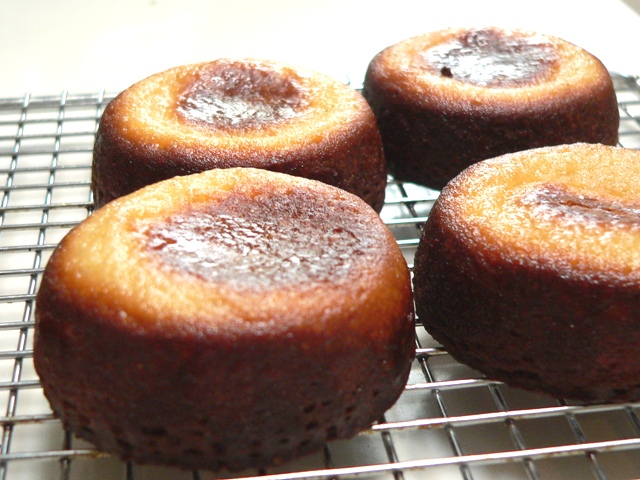
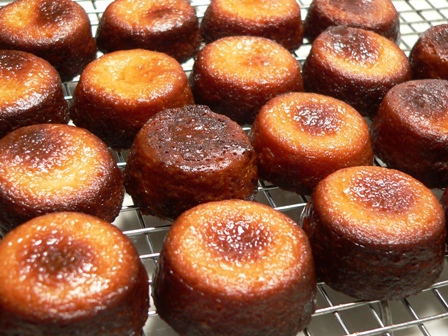
To begin with, you need a canelé mould – and they’re not readily available here in Oz.  However, I tried baking some of the batter in muffin pans and the end results were delicious – better than the properly shaped ones in fact (possibly because of the metal tin).  They don’t look like much, but they’re very crispy and moreish – Pete preferred the muffin tin version over the fluted ones!

Anna’s Canelés
(adapted for my kitchen)

  • 500ml milk
  • 2 large (59g) eggs
  • 1 large (59g) egg yolk
  • 125g plain (all-purpose) flour
  • 225g sugar
  • 15g vanilla sugar
  • 15g melted unsalted butter
  • 2 teaspoons rum (optional)

1. Beat the eggs and egg yolk together in a heatproof bowl with a wire whisk. Bring the milk to a boil in a small saucepan.  Pour the hot milk over the beaten eggs, whisking constantly as you pour the milk in (or you’ll get scrambled eggs).  Leave to cool.

2. In a large mixing bowl, whisk together the sugar, flour, vanilla sugar and melted butter. Gradually pour the cold milk and eggs over the flour mixture , whisking constantly to avoid any lumps.  Add the rum (optional) and mix well.  Leave the batter overnight or ideally for 24 hours.  I let it cool and then store it in a jug in the fridge until needed – give it a good stir and allow it to come back to room temperature before baking.

3.  Preheat oven to 180 – 190C with fan.  Anna’s original recipe  specified 200C, but that was too hot in my oven and the batch I cooked at that temperature burned.

4.  Grease the moulds with canola oil spray – give the muffin tins a good spray and the silicone moulds a light one.  Fill the moulds to ¾ full.  Bake for 60 minutes (I know, it’s hard to believe they won’t burn to a crisp, but they don’t).  You want the outsides to be very brown and the insides moist and tender.  Allow the cakes cooked in silicone to rest 10 minutes before removing, then let them cool completely before eating, to allow the exterior to crisp up.  Best eaten on the day they’re made!

The silicone moulds were fine for this purpose, although they certainly weren’t as non-stick as they’re reputed to be.  I found that unless I greased them lightly, the canelés would stick and collapse when removed from the moulds.

Anna mentioned that there’s no “right” way to cook these – Parisians will order their canelés to be cooked according to personal preference – very dark, slightly burnt, light brown and so forth.  I like mine golden brown (the bitterness from a burnt exterior puts me off), but Pete likes his slightly darker. Try this easy recipe a couple of times and decide how you prefer them!

Edit: I tried baking the recipe in mini muffin tins as Anna suggested below.  This batch also used lactose-free milk.  They worked brilliantly!  The mini canelés took 40 minutes in a 180C fan-forced oven (although it might be less, depending on your oven – start checking after 30 minutes).

Read Full Post »

020809 002

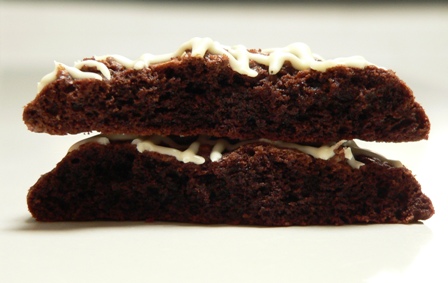
Debbi Fields is a genius.  Her recipes are foolproof, wickedly good and just perfect for the festive season.  The Mrs Fields Best Ever Cookie Book is used more than any other cookbook in our kitchen – I’ve made more than thirty recipes from it. Watch this space, as I’ll be giving away copies of this cookbook before Christmas!

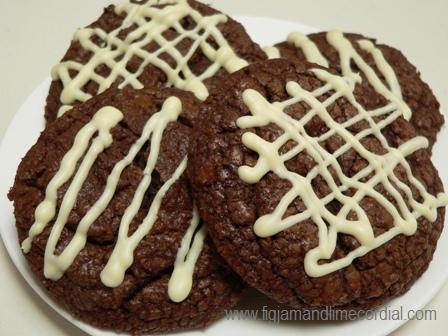
These Fudge Cookies with White Chocolate – a recent addition to our baking lineup – have instantly become one of Pete’s favourites.  They’re very grown up, very dark and very moreish.  Here’s our take on the recipe, which makes about three dozen cookies.  They freeze well, so don’t feel the need to eat them all at once!

  • 360g (12oz) semisweet chocolate callets (I use Callebaut 54% cocoa)
  • 2 cups plain flour
  • ¾ cup unsweetened cocoa powder, sifted
  • 1 teaspoon bicarbonate of soda (baking soda), sifted
  • ¼ teaspoon fine sea salt
  • 250g (1 cup) unsalted butter, softened
  • 1½ cups (packed) dark brown sugar
  • 3 large (59g) eggs
  • 2 teaspoons homemade vanilla extract
  • 120g (4oz) white chocolate callets
  • 1 teaspoon vegetable oil* (see topping instructions below)

1. Preheat oven to 150C (300F) with fan.

2. In a small pyrex bowl, melt the semisweet chocolate by microwaving on high in short bursts, taking care not to scorch the chocolate.  Stir frequently.  Set the melted chocolate aside to cool slightly.

3. In a medium bowl, combine the flour, sifted cocoa, sifted bicarb soda and salt.  I don’t sift much, but cocoa and bicarbonate of soda are two ingredients that really need it, or you’ll end up with bitter lumps in your finished cookie.

4. In a large mixing bowl, use an electric mixer to cream the butter and sugar, then beat in the eggs and vanilla until just blended.  Mix in the cooled semisweet chocolate, then the flour mixture until just combined.  Be careful not to overbeat.

5. Scoop rounded tablespoons of the dough (I use a small icecream scoop) onto a baking tray lined with parchment, leaving room for the cookies to spread.  Bake for 18 to 22 minutes, or until set.  Cool on the tray for a minute, then transfer to wire racks to cool completely.

Topping:

The original instructions are to melt the white chocolate and oil together in a double boiler, then to drizzle this mixture over the top of the cooled cookies with the tines of a fork.

I usually temper the white chocolate, omitting the oil, and then pipe the tempered white chocolate over the top of the cookies.  Enjoy!

020809 003

Read Full Post »

« Newer Posts - Older Posts »