Feeds:
Posts
Comments

Archive for the ‘Recipes’ Category

bagl 004

Updated 3rd March 2015

. . . . .

Sourdough bagels are wickedly good, with a complex, slightly tangy flavour that distinguishes them from the yeasted version.  This recipe makes eighteen generous, chewy bagels. I topped some with poppy seeds, and the rest with just a small scattering of Malden salt, ready for school lunches.

Some notes:

1. We make two sort of bagels – yeasted (for which the detailed tutorial is here) and sourdough. Please refer to our yeasted bagel tutorial for photos, as the methodology is very similar.

2. 166% hydration means that the starter is regularly fed at a ratio of one cup of flour to one cup of water.

3. Malt extract can be found on many supermarket shelves and brewing stores. I decant it into glass jars, as it tends to go mouldy quite quickly if left in its original (non-airtight) container.

Sourdough Bagels

  • 450g active starter (166% hydration)
  • 500 – 550g  water
  • 1100g bakers (bread) flour
  • 18g fine sea salt
  • 6 teaspoons (50g) malt extract (or brown sugar)
  • toppings (I used poppy seeds and sesame seeds)

1. Mix starter, 500g water and malt syrup in large mixing bowl.  Whisk flour and salt together in separate bowl.  Mix flour into liquid ingredients, squelch together with a clean hand until combined. If you’re using brown sugar, or if the dough feels too dry, add a little more water. Once all flour has been fully incorporated, rest the dough for 30 minutes, covered.

2. After resting, uncover the dough and knead briefly until smooth.  Note that this is quite a stiff dough. Return to mixing bowl, cover and set in warm place to rise until doubled in size (this usually takes about five hours, but could take twice as many in cold conditions). The dough could also be left on the bench overnight to rise if desired.

3. Turn the risen dough out onto the bench and knead briefly.  Divide into 120g portions.  Knead and pinch each portion into a round smooth ball. Form each ball into a doughnut shape by punching a hole through the middle and twirling the dough around both index fingers, stretching as you go.  The hole should be quite big.  Shape the dough to look like a tyre with a large hole.

4. Place the tyres on a baking tray lined with Bake and sprinkled with flour, leaving room to rise.  Cover with a tea towel and allow to prove another 1 – 1½ hours in a warm place. Preheat oven to 200 C with fan.

5. Bring to boil a large pot of water with at least 6 – 10cm of water. Add 1 Tbsp malt extract (or brown sugar) and 1 Tbsp salt, and bring to a rolling boil.  Boil (“kettle”) bagels, three or four at a time, for 1½ minutes on each side.  Remove with a slotted spoon, and dry gently with a clean non-linting tea towel.  Place on baking tray lined with bake.

6. Brush tops of bagels with egg wash (1 egg + 1 Tbsp water), then sprinkle with toppings if desired.

7. Bake for 12 – 15 minutes, then rotate the trays and continue baking for a total baking time of about 20 – 25 minutes. Cool on wire racks.

bagl 002

Read Full Post »

crc 008

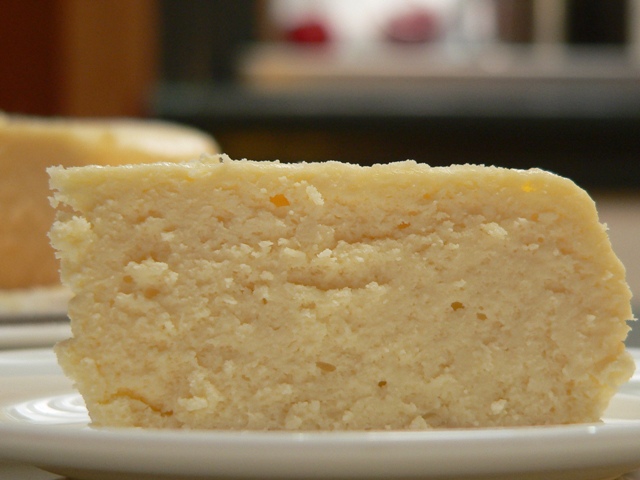
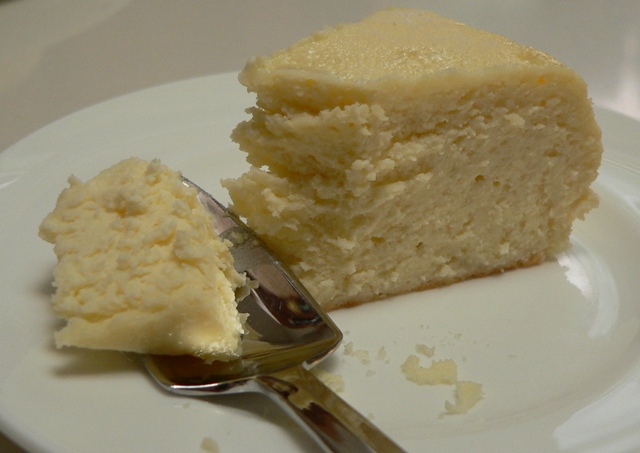
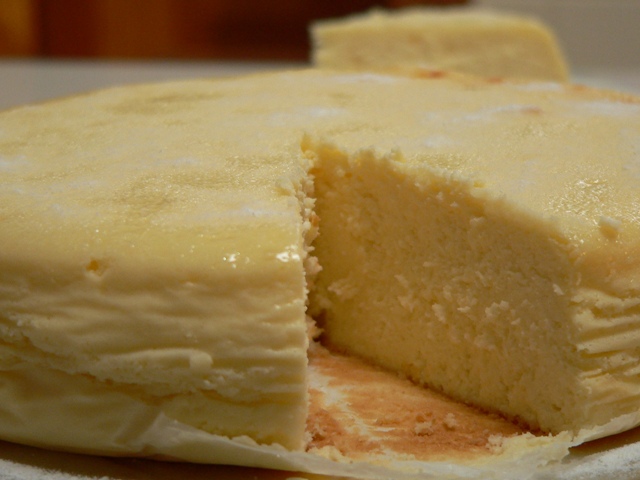
Still experimenting, I made a crustless ricotta cake for Pete A, who can always use another gluten free dessert.

As I’m unable to ever change just a single parameter (very unscientific of me, I know), I also tried making this with normal (wet) ricotta, which had been drained in a sieve.  It worked very well, so if you can’t find dry ricotta, you could probably substitute standard ricotta in its place – just make sure you drain it for at least an hour until it’s really dry.  If you’re buying wet ricotta, make sure you buy more than you need, and measure the ricotta for the recipe after it has drained.  Of course, you could also use dry ricotta for this recipe, as per our original recipe.

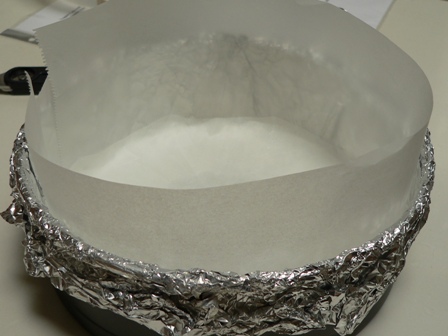
To make the crustless ricotta cake, I lined my 8″/20cm springform tin with a large sheet of foil, to prevent leaks.  I then lined the inside of that with parchment paper.

rc7 002

1. Make the mixture according to the instructions here, making only the filling part of the recipe.  The quantities I used were :

  • 500g (drained weight) fresh ricotta , drained in a sieve for at least an hour
  • 250g thick sour cream
  • 30g gluten-free cornflour (cornstarch)
  • 2 eggs, separated
  • 1 tsp vanilla
  • 150g gluten-free icing sugar mixture (not pure icing sugar)

Make sure you choose gluten free cornflour, as some brands are made from wheat.  Also, check the packaging of the icing sugar mixture carefully.  The one I buy has “gluten-free” on the front of the bag.  The gf varieties include maize or tapioca flour as an anti-caking agent, whereas the cheaper brands often use wheat starch.

2. Preheat the oven to 150C (with fan).

3. Carefully pour the prepared filling mixture into the cake tin and bake for 40 – 45 minutes until the mixture is set.  Allow the cake to cool in the oven with the door ajar (for at least an hour, two is better), then put the whole tin in the fridge to cool until cold.  Carefully unwrap the foil and remove the springform tin.

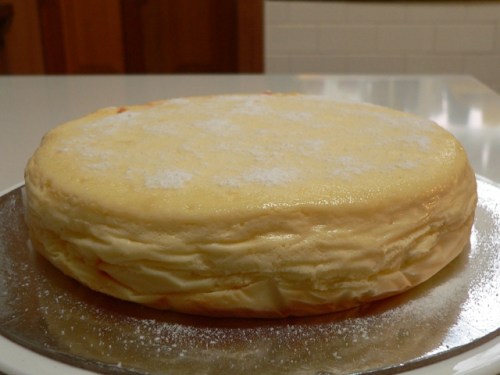
4. Let the cake rest overnight in the fridge, then dust liberally with icing sugar before serving.

This was so easy to make without the pastry and, while it’s less pretty than the crusted version (Pete’s comment was that it looked like a wheel of cheese, which is what it is, I guess), it’s could probably be dressed up with a fancy topping of lemon curd or strawberries and cream.

crc 007

crc 015

crc 005

Read Full Post »

rc3 046a

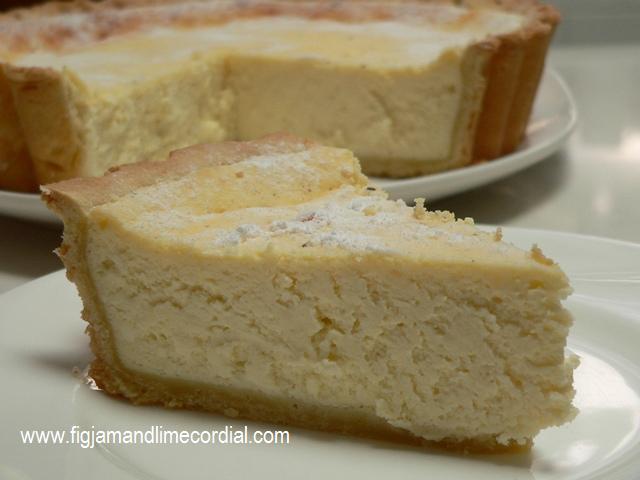
Ricotta cheesecake, or simply “ricotta cake” as it’s known around these parts, is a tricky dish to get right.  I couldn’t find any recipes for this fluffy textured Italian-style cheesecake that’s so popular in Sydney Inner West, so I had to concoct my own. It’s taken eight attempts to finally come up with one that I’m completely happy with.  The neighbours are sick to death of eating my rejects!

Fig Jam and Lime Cordial Ricotta Cake

Filling:

  • 750g dry ricotta (edit: you can use well drained normal ricotta if you can’t buy the drier style – which is what I’ve done here)
  • 375g thick sour cream
  • 45g cornflour (cornstarch)
  • 3 eggs, separated
  • 1½   tsp vanilla
  • 225g icing sugar mixture (not pure icing sugar)

June’s Pastry

  • 250g unsalted butter
  • 300g plain flour
  • 100g bread/bakers/continental flour
  • 150g icing sugar mixture (not pure icing sugar)
  • 2 eggs

Note: June’s pastry makes this recipe extra special, but if you were in a hurry, you could probably get away with substituting any sweet shortcrust pastry recipe, or even frozen sheets (though I haven’t tried it myself).  The filling is remarkably easy,  so if you cheat on the pastry, this would be quite a simple dish to put together.

1.  Make a batch of pastry, following the instructions here. Chill until required. Spray oil over the base and sides of a large, deep 10”/25cm flan tin with a removable base.

2.  Remove the pastry from the fridge, and roll out on a flour dusted surface or sheet of Bake until the pastry is wide enough to fully line the bottom and sides of the flan tin (you won’t need all the dough).  Gently fit the pastry into the flan tin and smooth out carefully.  Allow the dough to come up above the sides slightly (to allow for shrinkage).  This is a fiddly process as the pastry is quite soft.  Use a little flour for dusting, and feel free to patch the pastry if it tears.  Preheat oven to 150C with fan.

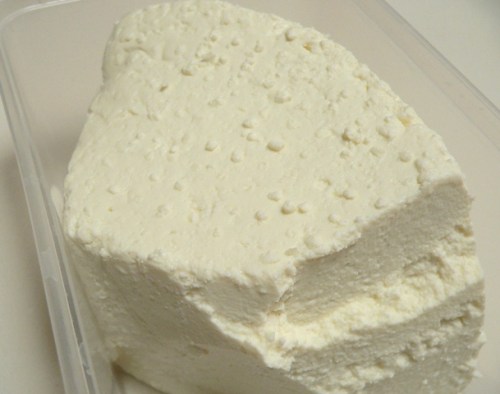
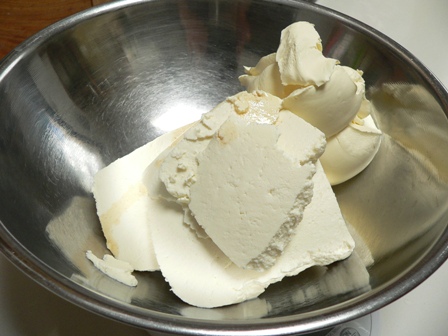
3. Make the filling: put the ricotta and sour cream in a large mixing bowl, and mix together with a large fork, breaking up the lumps as much as possible. Here’s a photo of the dry ricotta, so you know what to buy.  Don’t make the mistake of getting baked ricotta – you want dry fresh ricotta.

rc 015

rc3 052

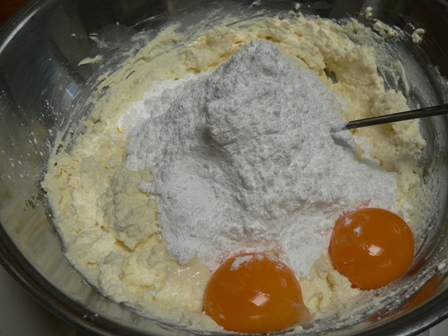
4. Add the cornflour, icing sugar mixture, vanilla and egg yolks, and continue to stir until well combined. Note: only two egg yolks shown in this photo, but you need to add three.  These photos were taken when I was making the smaller cake below.

rc3 056

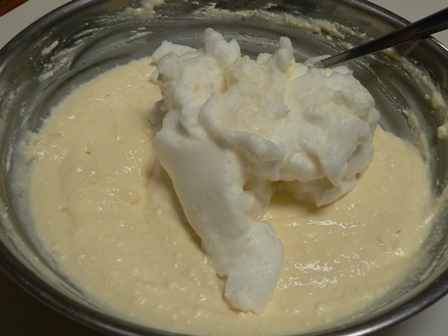
5. Beat the egg whites in a separate bowl until stiff.  Still using the fork, stir a large spoonful of egg white into the ricotta mixture until the mix lightens, then gently fold the remaining egg whites into the mix.  Pour into the pastry lined tin.

rc3 058

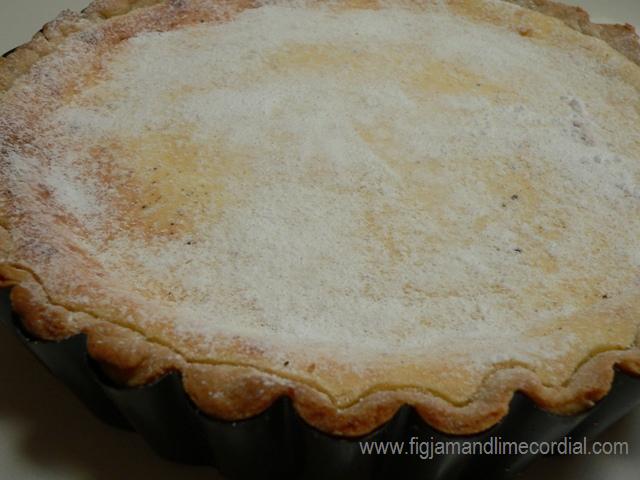
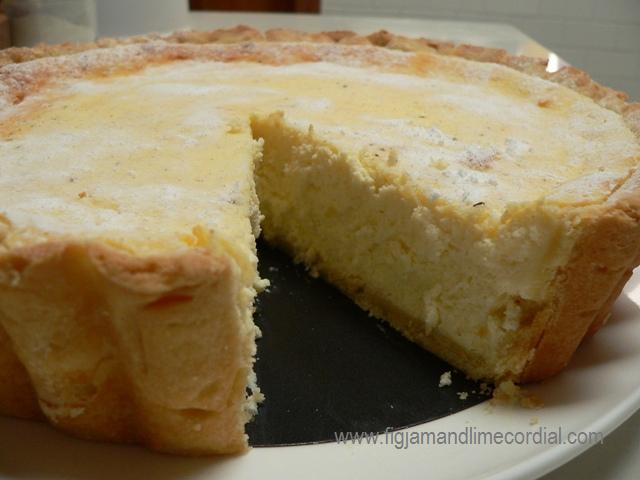
5. Carefully place the cake into the oven and bake for 45 – 55 minutes at 150C with fan.  The cake will be ready when the crust is brown and the filling is set.  Do not overbake.  Cracks may appear on the surface, but don’t panic, as the cake will still taste wonderful.  Once cooked, allow the cake to cool completely in the oven with the door ajar, then refrigerate for several hours or overnight to allow the cake to fully set.  It really is best if you can make it the day before you need it, as it tastes much better on the second day.

6. Dust the cake with a generous amount of icing sugar before serving!

rc3 025a

rc3 028a

. . . . .

This cake can also be made in an 8″/20cm springform round tin.  To make the filling for the smaller sized cake, use the following ingredients:

  • 500g dry ricotta (edit: you can use well drained normal ricotta if you can’t buy the drier style – which is what I’ve done here)
  • 250g thick sour cream
  • 30g cornflour (cornstarch)
  • 2 eggs, separated
  • 1 tsp vanilla
  • 150g icing sugar mixture (not pure icing sugar)

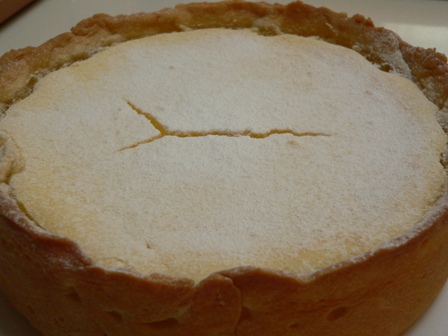
The one I made cracked, but it still tasted fantastic!  Bake the smaller cake for 40 – 45 minutes, or until the pastry is browned and the top is set.  Because the cake is baked at a relatively slow temperature, I’ve found it best to use metal tins to ensure the pastry cooks and browns properly.

rc3 073

© copyright 2009 by Fig Jam and Lime Cordial. All rights reserved.

Read Full Post »

160809 017

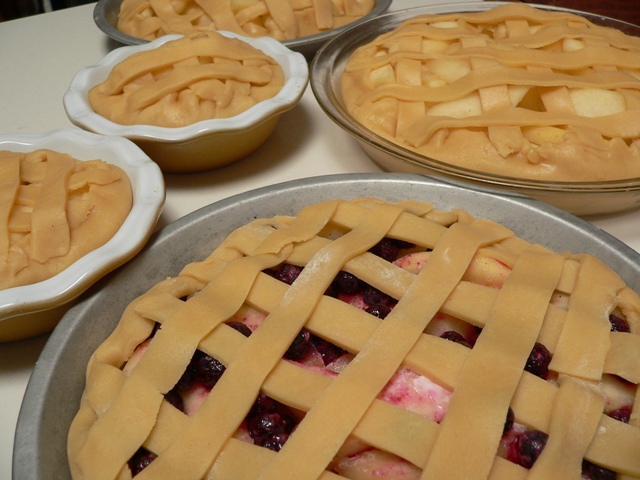
I had a little manic episode of pie making last weekend…

All up, I made eight pies – I took three to Kevin and Carol’s place on Friday night; three were stashed in the freezer, ready to bake; one was for Nic’s birthday; and the last one was for Small Man, who needs to eat apple pie for two days in a row, or his chi gets out of kilter.

For a change, I made the dough with duck eggs, which I’d bought on a whim from Flemington markets.  Here’s the recipe for a one and a half batch of June’s pastry, which was enough for all five pies in the photo below, with a little bit leftover for the freezer.  It freezes beautifully, so you can always keep a stash on hand.

  • 375g unsalted butter
  • 300g plain flour
  • 300g bakers/bread/continental flour
  • 225g icing sugar mixture (not pure icing sugar)
  • 2 duck eggs or 3 large (59g) chicken eggs

1.  In a large mixing bowl, mix together the flours and icing sugar mixture.  Cut the butter into small pieces and rub it into the flour mixture.

2. Crack in the eggs and mix everything together.  It will be sticky at first, but keep scraping off your fingers and kneading it together until it forms a smooth dough.  Add more flour, a little at a time, if needed.

3.  Shape the dough into a ball and rest it, wrapped in cling film, in the fridge until required.  Note that this is quite a sticky dough, so you’ll need to dust everything well with flour before you roll it out (I roll out onto a sheet of parchment paper).  If the pastry breaks as you’re putting it into the pie dish, don’t panic – just squish it back together again. It’s really a very flexible dough and the duck eggs give it a lovely silkiness.

160809 013

4.  If you’re making apple pie, follow the filling instructions here.  For Nic’s pie, I tossed a handful of frozen berries in a little cornflour and added them to the apple mixture.  I brushed the tops with a  little beaten egg and sprinkled them with Demerara (turbinado) sugar, which gave the finished pie crusts a wonderful crunch.

160809 015

Every fortnight or so, we’ll buy a box of apples at Flemington Markets.  Whenever possible, we’ll get Pink Ladies, but the Fujis have also been very nice this season.  Because we buy in bulk, there are always some bruised ones in the box – these become apple pies, apple pectin, apple jelly and sometimes apple butter.  It makes me deliriously happy that we’ve found ways to use every last bit of the apple – not a single part is ever wasted!

Read Full Post »

yc 004

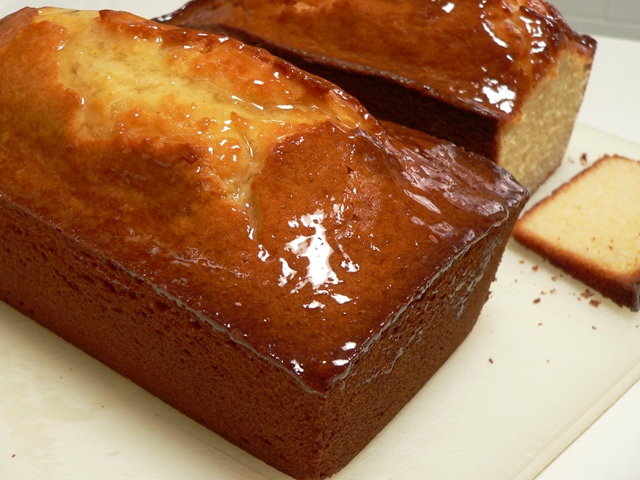
Our friend Anna, Aussie expat in France, mentioned to me recently that this is the  cake that Parisians bake.

In fact, it’s almost the only thing that most of her peers ever bake and, despite being the standard birthday cake for children, it’s usually served unadorned. Anna is revered by her fellow school mums for going to the extraordinary effort of making icing!

I can understand why it’s so popular, because this is an incredibly simple  yet delicious recipe to knock together.  I needed to make two cakes in a hurry yesterday, and was able to whip them both up in under 15 minutes (and that was making one cake at a time).  The batter is made without an electric mixer and involves simply beating the dry ingredients into the wet ones with a whisk.

yc 009

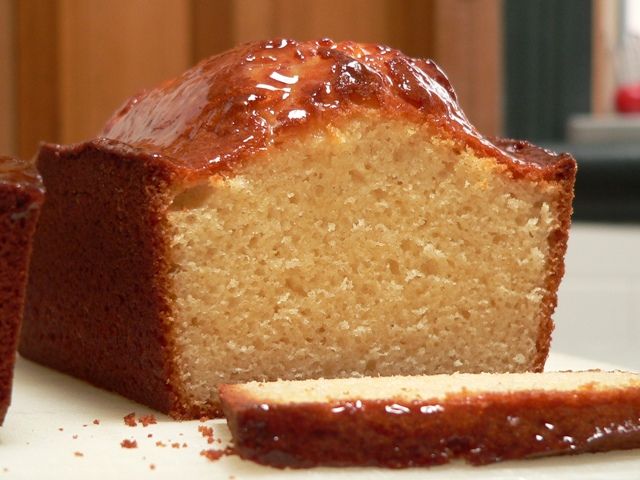
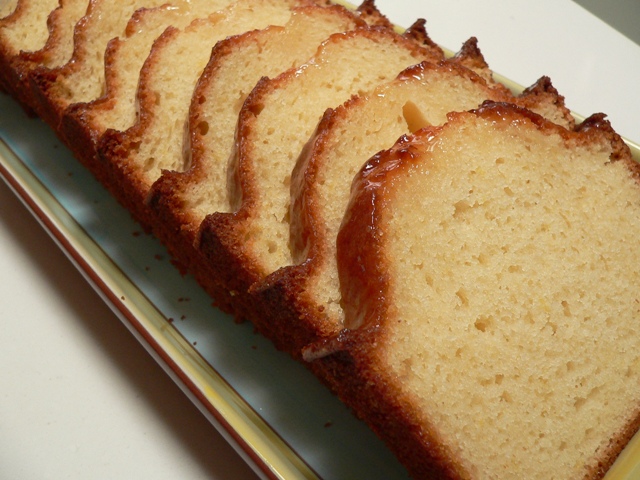
There are oodles of recipes for this cake floating around, but the one I like best is Dorie Greenspan’s, from her cookbook, Baking From My Home To Yours.  Here is our version, made with Pete’s homemade Greek yoghurt and cumquat jelly.  This batch was made with straight flour, omitting the optional almond meal.

Click here for a printable version of this recipe.

  • 1 cup (150g) plain (all purpose) flour
  • ½ cup (65g) almond meal (or extra ½ cup plain flour)
  • 2 teaspoons (10g) baking powder
  • pinch salt
  • 1 cup (220g) sugar
  • 1 teaspoon of lemon zest
  • ½ cup (125ml) Greek yoghurt
  • 3 large (59g) eggs
  • ¼ teaspoon homemade vanilla extract
  • ½ cup (115g)  vegetable oil
  • ½ cup cumquat jelly (for glaze) or other jam or marmalade

1. Spray a 21.5 x 11 x 7cm loaf tin with oil spray.  I use this Chicago Metallics loaf tin, which seems to be the perfect size for all sorts of things.  Preheat oven to 175C (350F), or 160C with fan.

2.  In a medium bowl, whisk together the flour, meal, sifted baking powder and salt.

3. In a large mixing bowl, whisk together the yoghurt, eggs, vanilla, sugar and zest until well combined.

4.  Scatter in the dry ingredients, a little at a time, whisking as you go.  Once mixed, gradually fold in the oil with a spatula.  The resultant batter with be smooth and shiny.  Scrape the batter into the prepared loaf tin and level out the top.

5. Bake for 50 to 55 minutes, until a skewer inserted into the centre of the cake comes out clean.  Cool the pan on a rack for 5 minutes. Loosen around the edges of the cake with a butter knife, then turn out the cake and allow to cool to room temperature on a wire rack.

6. Glaze: melt the cumquat jelly in a small bowl in the microwave, being careful not to boil it.  Brush all over the cake with a pastry brush, and allow to set.

yc 012

. . . . .

Here is an easy birthday cake which I made using this recipe…

Read Full Post »

« Newer Posts - Older Posts »