Feeds:
Posts
Comments

Archive for the ‘Recipes’ Category

022

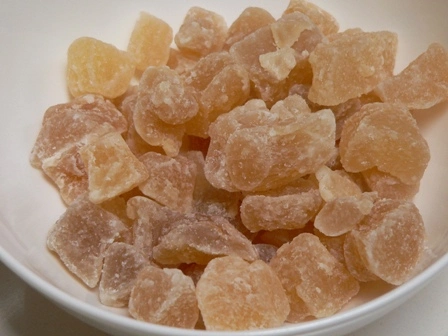
Gillian at Some Say Cocoa – my virtual chocolate fix – blogged about ginger chocolate recently. I’m so suggestible (don’t you love that word? Alex taught it to me..), that I had to go straight out and buy ginger from the supermarket to make  my own.

Buderim Ginger make some of the finest in the world, and this is one of their newer products – a glace ginger without the added sugar coating.  It’s still sweet, but without being overly so, and a little too easy to eat straight from the packet.

003

008

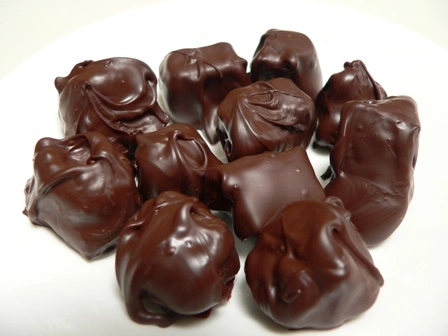
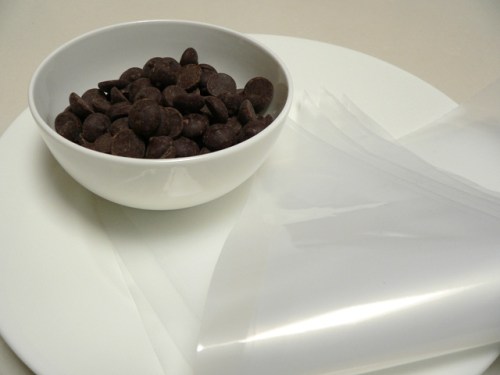
I dipped a few pieces at a time into a small bowl of tempered dark chocolate, which was resting on a heat mat to keep it at  88°C.  The chocolate was a mix of Callebaut 54% and 70%, to counter the sweetness of the ginger.

017

029

Perhaps the best thing about making ginger chocolate is that not everyone likes it.  All the more for those of us who do!

Read Full Post »

icec 019

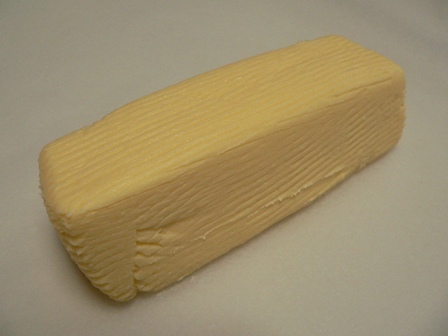
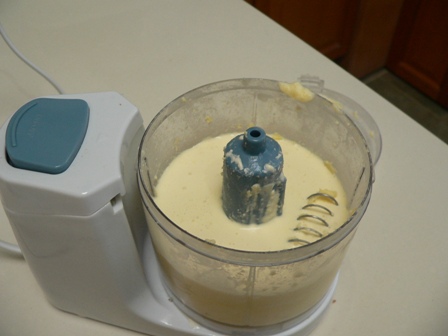
I know I’ve blagged on about making your own butter before, but it really is so easy to do.  We almost never throw away expired cream any more.  I had a carton of pure cream (aka heavy whipping cream, 35% fat) which had reached its use by date, so I spent a few minutes this morning turning it into butter.  There was about 400ml of cream which made 170g freshly churned, lightly salted butter.  Life is good…

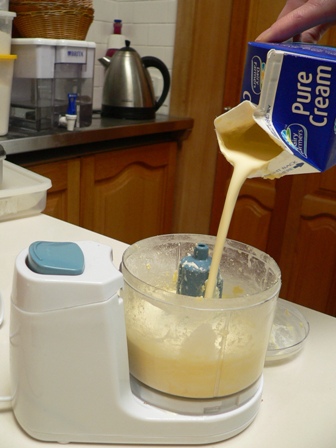
The cream went into my mini food processor in two batches (photos taken of the second batch, which is why the processor bowl is dirty).  My machine has a little whisk attachment that fits over the blade.  You could just as easily use a mixer with a whisk attachment, which is what we do whenever we have a larger quantity of cream.  If we do use the mixer, we switch from the whisk to the paddle attachment about half way through.

icec 002

Add a pinch of salt, if you like.  We find this helps the butter keep a little bit better.

icec 004

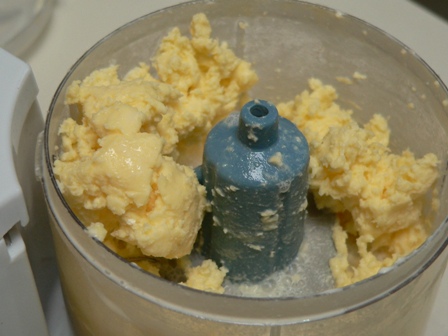
After a few minutes of pulsing, the cream will split, leaving fresh butter and buttermilk (whey).  The cream will whip up, then collapse, then split.

icec 006

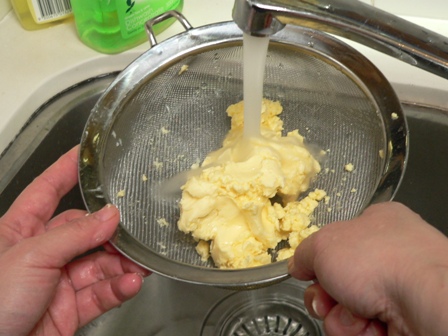
Give the butter a quick rinse to wash off the sour whey.  Note that the leftover liquid is actually buttermilk, albeit a much thinner version of the stuff you can buy commercially.  When we make a large batch of butter, I save the buttermilk and use it for baking.

icec 009

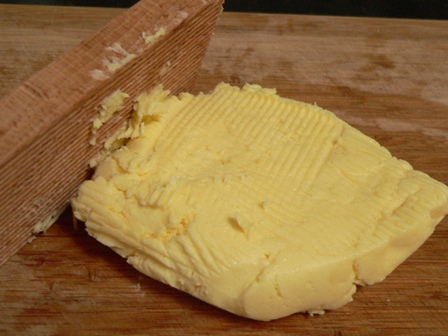
Then smack it around a bit on a chopping board to get any residual liquid out.  We use gnocchi paddles and a wooden board placed at a slight angle over the sink, to allow the liquid to drain off.  The butter sticks less to wood than it does to plastic.

icec 013

Here’s the final butter, shaped and ready to be wrapped in parchment paper and stored in the fridge.  Our homemade butter doesn’t keep as long as the commercial version, but we use it for everything from spreading on steaks to baking cookies.  And there is almost nothing like super fresh butter in mashed potatoes!

I made two-thirds of a cup of butter this morning – from cream that was due to be thrown away.  Even just typing that makes me smile..

icec 019

Read Full Post »

005

At the markets last Friday, Jimmy the Tomato Man made me buy a box of yellow capsicums.  The conversation went like this..

“How much are the capsicums, Jimmy?”

“$14 a box, but for you, $10..”

“Hmmm….”

“No, you’re such a lovely customer, for you, $8. Now you have to buy it, or I’ll be insulted, no-one else gets such a good price from me..” (as he puts the box in our trolley and I meekly hand over the money).

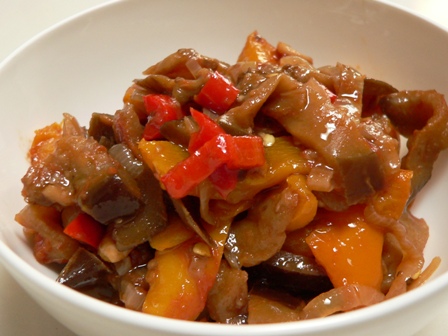
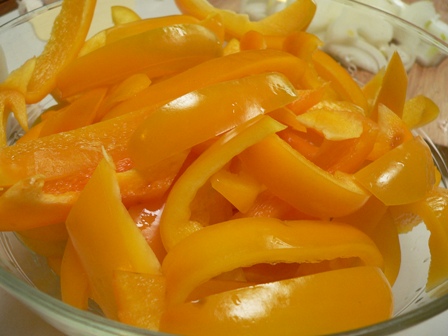
After making a roasted pepper hot sauce, I wanted to use the remaining capsicums to make caponatina – a dish our elderly Italian neighbour used to prepare.  It’s basically a combination of chopped vegetables – in this case, capsicums, eggplants, tomatoes and onions – pan-fried in olive oil and seasoned with garlic, chillies and anchovies.  I grilled (broiled)  the fingers of eggplant before adding them to the pan, to reduce their sponginess and the amount of oil they absorbed.  The caponatina was then finished with a generous amount of white wine vinegar, a splash of Moo’s aged balsamic vinegar and salt and pepper to taste.

Caponatina is usually served cold as an antipasto dish, and giving it time to rest in the fridge allows the flavours to meld.  Traditional recipes have far more liquid, including tomato sauce and lots of oil, but this lighter version is a nice accompaniment to hot and cold meats – we had ours with sausages!

caponatina1

Read Full Post »

Isn’t it wonderful how…

…a disposable piping bag…

002

…and a little tempered chocolate

160809 033

…..and a sprinkle of icing sugar…

007

…can turn a boring butter cookie into a festive treat?

060809 002

(I caught Big Boy with one of these in each hand yesterday, taking alternate bites from each cookie…)

Read Full Post »

310709 006

And now for something completely different…

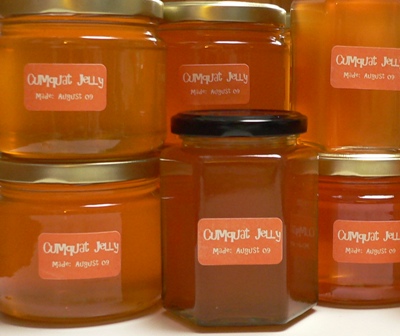
We’ve never been big marmalade fans, so when Annick gave us a bag of cumquats from her tree, we weren’t sure what to do with them.  Pete eventually decided to make cumquat jelly.  It’s delicious – sweet with a hint of bitterness , and an interesting, complex flavour that’s reminiscent of Grand Marnier.  I’m sure we’ll find a myriad of sweet and savoury applications for this – if there’s any left over to play with.  So far, everyone who’s tasted it has asked for a jar…

Here is Pete’s original recipe.  It makes quite a lot of jelly, so make sure you have plenty of sterilised jars ready to go (we pop ours into the dishwasher to clean them before we start).

  • 1 kg cumquats, washed well in warm water, halved
  • 1 lemon cut in 16ths
  • 1 x 300ml jar homemade pectin
  • 2 kg sugar

Note: when cutting the fruit, use a sharp knife and be careful not to lose too much juice.  This recipe makes about 8 x 300ml jars.

1. Place the cumquats and lemon (including all the seeds and peel) in a large stock pot.  Add approximately 1.75 litres of filtered water and the jar of pectin.  Gently simmer the fruit (covered) for 1 – 2 hours.

2. Half way through the cooking time, break up the fruit with a potato masher.  Continue to stew until the fruit turns into liquid mush.

3. Line a colander with a clean, open-weave cloth and pour boiling water over it to sterilise.  Place the colander over a large bowl and pour the cooked fruit and all the liquid in to drain.  Allow the pulp to drain until quite dry – several hours or overnight.  Don’t press the fruit in any way, or you’ll get cloudy jelly.

4. Measure the drained liquid.  You need a total of 2 litres.  This might vary a little depending on how juicy your cumquats are – if necessary, adjust the sugar accordingly.  Pete used two kilos of sugar to two litres of strained liquid.

5. Pour the liquid into a large stock pot.  It has to boil right up in the pot in order to set, so make sure it’s big enough. Add the sugar to the warm liquid, stir and then heat gently to dissolve.

6. Bring to a gentle boil then skim well – there should be a lot of white foam to remove.

7. Once the jelly has been well skimmed (be patient and do a good job, to ensure you get a clear, jewel-like end product), turn the heat up and boil vigorously until the jelly rises up in the pan to around five times its original volume.

8. Turn off the heat and check if further skimming is required. Test for set by putting a spoonful on a cold plate.  Allow to rest until cool, then push it with your finger.  If it wrinkles, it’s set.  Also, if left undisturbed for a couple of minutes, the hot jelly should start to form a very thin, delicate skin on the top of the liquid – a good indication that it will set well.

9. Once the jelly is setting up, pour it into sterilised jars, seal tightly, and hot water process by boiling them for at least 10 minutes in a large saucepan of water, with the liquid covering the lids by at least 1″ (2.5cm).  Make sure you don’t pour cold water onto the hot jars, or they’ll crack – have the water already boiling and gently lower the sealed jars in.

. . . . .

See our Jam Making Primer for more tips on making jam.

Read Full Post »

« Newer Posts - Older Posts »