Feeds:
Posts
Comments

Archive for the ‘Recipes’ Category

030709 037

Oh, how I wish we could grow raspberries in Sydney!  Our temperate clime precludes this, and as a result, a punnet of  fresh raspberries (150g) usually costs $9 or more.  Thankfully, frozen raspberries are widely available, and at $11 a kilo, they’re a reasonably economical option.

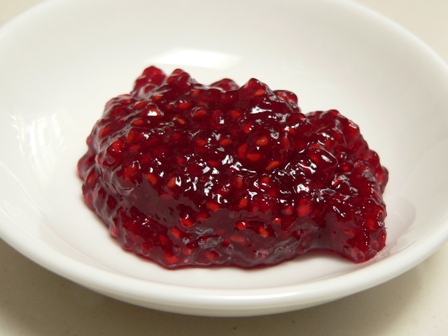
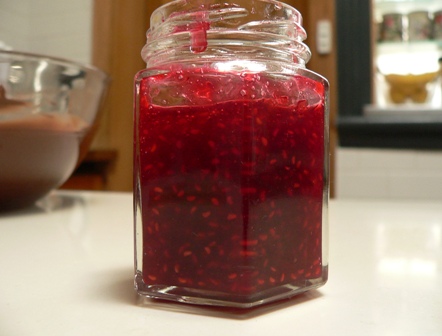
We’ve never made a straight raspberry jam before, but inspired by a jar of homemade Tasmanian jam that we were given recently, we bought two boxes of frozen raspberries to give this a go.  Pete loves raspberries, and wanted to make a jam which would set with less sugar, so as to not mask the tartness of the berries.  To achieve that, he used three jars of our homemade pectin, which led to a firm but not rocky hard set (even after a night in the fridge) – feel free to use less if you’re happy with a softer jam.  Berries are low in pectin, so they normally require quite a bit of pectin and sugar to set.

Pete’s Raspberry Jam

  • 1.4kg frozen (or fresh) raspberries
  • 1kg white sugar
  • 3 x 300ml jars of homemade pectin (use less if you want a softer set)
  • Juice of 1 large lemon
  • 2 teaspoons vanilla syrup

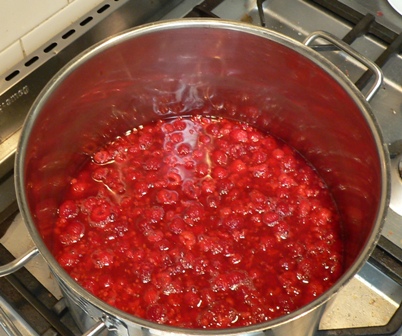
1. In a large stock pot, combine the raspberries, pectin and lemon juice.  Warm until the raspberries are defrosted, but don’t bring to a boil.

030709 029

2.  Add the sugar, vanilla syrup and bring the pot to a gentle boil.  Skim the pot of any scum or foam that rises to the surface. Once you’ve cleaned up the surface, turn the heat up and bring the pot to a rolling boil.

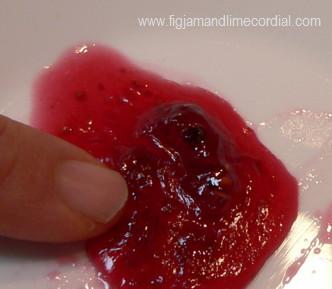
3.  Boil until the jam sets.  Test by putting a small blob on a cold plate – if the jam is set, it will wrinkle when given a small poke with your finger.

4.  Ladle the jam into sterile jars and seal tightly, then process the jars in a boiling water bath for 10 minutes, ensuring that the water covers the lids by at least 2.5cm.  Note: make sure you put the hot jars into hot water – if you use cold water, the glass jars may crack.  This batch filled 6 x 300ml jars, with a little bit left over for tasting!

030709 043

. . . . .

See our Jam Making Primer for more tips on making jam.

Read Full Post »

How to have a perfect picnic:

Step 1: choose a perfect location.  It doesn’t get much better than Sydney’s Royal Botanic Gardens, where you can admire both the Opera House and Harbour Bridge from the water’s edge.  I didn’t take the photo above, but that was the view we had on Sunday as we sat in the winter sunshine and ate lunch.

Step 2: plan to spend the day with people you love – in our case it was Dan and Patrick and their gorgeous kids, Little T and Bodhi, home for a visit from the US.  Dan’s twin brother Daz and his family were there as well, ensuring there were lots of little people to be “eaten” when Mr Wolf announced it was “dinner time!”.

200709 012

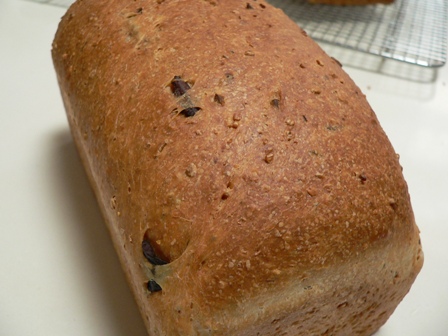
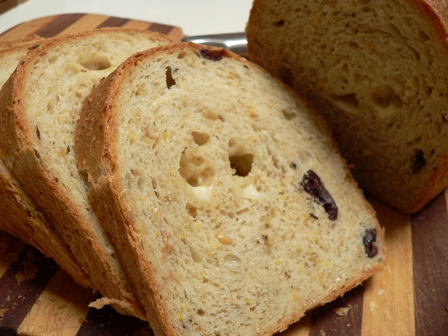
Step 3: make simple picnic food. I was up early on Sunday morning and made a couple of loaves of olive and cheese bread.  These were still slightly warm by lunch time and easy to slice and share.  I started at 8.30am and the loaves were out of the oven and ready to go by 11am.  That might sound like a long time, but remember that breadmaking is mostly about leaving the dough alone – the actual hands-on time involved can be measured in minutes.

I began by making the basic bread dough and, at the initial mixing stage, threw in whatever I could find in the fridge – in this case it was pitted Kalamata olives, chunks of pecorino cheese and chopped pancetta.  After the first rise, the dough was shaped and risen a second time in loaf tins, then baked until golden.

200709 008

A bag of homemade meringues was the perfect finish to a simply perfect lunch.

On the way back to the car we passed a colony of flying foxes roosting in the trees, a flock of Australian White Ibises flying overhead (they honk like geese) and an astonishing array of flora from all over the world. Just magic – yet another reminder that we live in one of the most beautiful cities in the world!

Read Full Post »

tomatoes 009

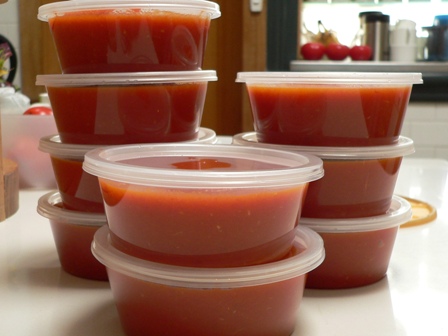
Whenever we can, we make our own tomato passata, using an adaptation of a Bill Granger recipe.  Forget your preconceived notions of sauce making being an all day affair involving barrels of tomatoes and backyard boilers – this is an easy way to make a reasonable quantity of passata in a relatively short time.  We freeze our sauce in one cup (250ml) takeaway containers, which is a good working quantity for us – one tub is enough to top three pizzas, or three tubs will make a batch of bolognese sauce.

To give you some idea of value – we bought a box of romas from Jimmy the Tomato Man last Friday for $10 ($1/kilo).  We still have two kilos left, which means the eight kilos we used cooked down to nine small takeaway containers.  It doesn’t seem like very much, but remember that the tomatoes have already reduced.  As a result, you don’t need to use nearly as much in a recipe, nor do you need to cook it for as long. Apart from being  more economical (our bolognese sauce uses $9 – $10 worth of tinned and bottled tomatoes, when we don’t have our own), the homemade passata tastes better – Big Boy now won’t eat pizzas topped with anything else.

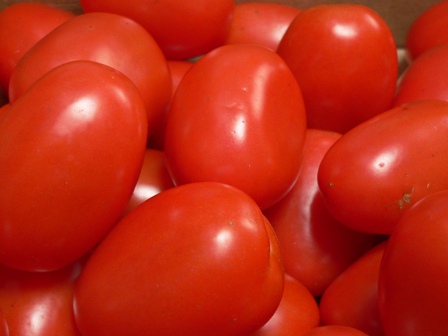
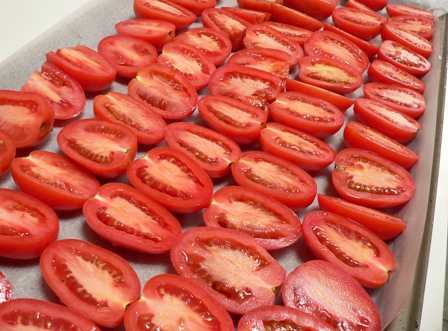
Step 1: buy great tomatoes.  Romas are by far the best if you can afford them, but the recipe will work with any sort of red tomato, providing they’re ripe and juicy, but not too mushy. Wash them and cut them in half, then lay them out on a large oven tray lined with parchment paper.

tomatoes 003

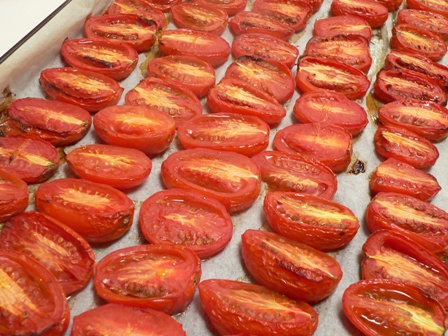
Step 2: Drizzle with olive oil and sprinkle over with salt. Bake in a preheated 220C oven for about half an hour, or until some of the edges just start to blacken.

tomatoes 013

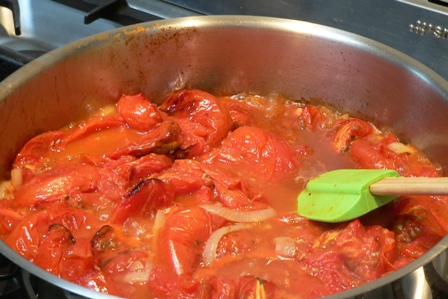
Step 3: In the meantime, heat olive oil in a large pan and fry some chopped onion and garlic until soft.  Add the roasted tomatoes with any juices to the pan and stir well.

tomatoes 016

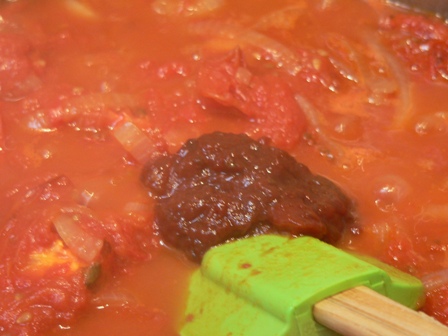
Step 4: Add a large spoonful of tomato relish (optional). We use one that Pete makes.

tomatoes 017

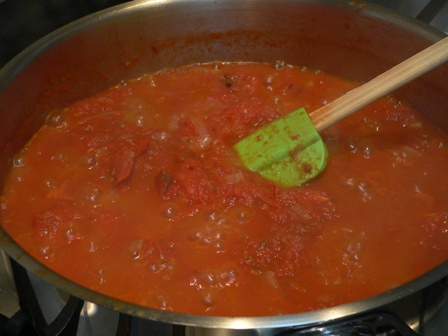
Step 5: Cook well until the skins separate from the tomato flesh and the passata is reduced and thickened to your liking.

tomatoes 021

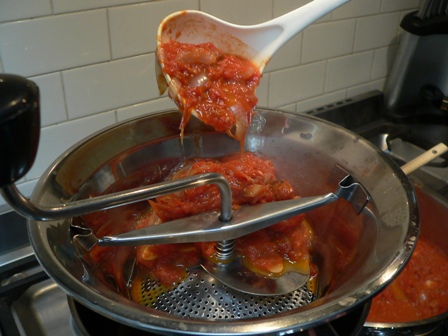
Step 6: Process the sauce through a food mill to remove the skins.

tomatoes 022

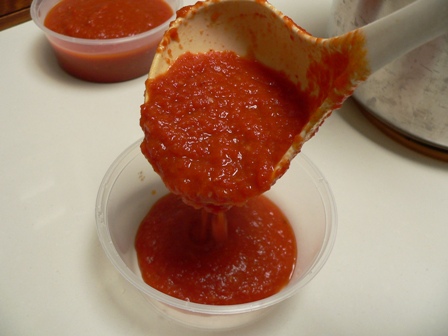
Step 7: Ladle the finished passata into containers, label and store in the freezer.

tomatoes 028

tomatoes 031

. . . . .

© copyright 2009 by Fig Jam and Lime Cordial. All rights reserved.

Read Full Post »

tarama 010

I used to make this regularly a decade ago after Soula the Greek Girl (as she was known at the time) gave me the recipe.  I hadn’t thought about it in years, but when I passed a tub of tarama roe at the markets recently, I couldn’t resist buying some, despite having Pete in my ear, saying “Are you sure you want to do this?”. I understood his concern. Whenever I’d made this in the past, I’d eaten it until I was sick, then sworn off it forever – it’s one of those recipes…

But this time I was smarter, I made the batch and split it four ways to share with the neighbours.  It’s something you have to do straight away, before you get a chance to (over)eat it – if you think about it too long, you’ll have eaten a tub in the “just tasting for seasoning” process.

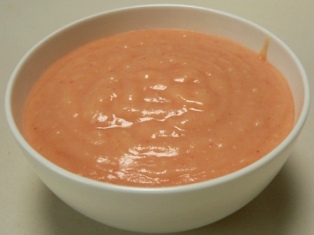
This is quite an unusual taramosalata recipe in that it uses potato as thickener rather than bread crumbs.  It’s a lot lighter as a result, but probably won’t keep as long (not that I’ve ever had that problem).  It has the advantage of being gluten-free, and I’ve varied Soula’s original version to lower the fat content, which is hard to believe given that there is still one to two cups of olive oil in the recipe. However, it does make a large quantity – my batch filled four 750ml takeaway containers (now I wish I’d kept two for myself, as I’ve eaten mine).

  • Juice of 1 large lemon
  • 1 Tbsp white vinegar
  • 5 medium pink potatoes (approx. 1kg)
  • 1 large brown onion
  • 2 cups boiling water
  • 1 – 2 cups pure olive oil
  • 200g taramosalata roe

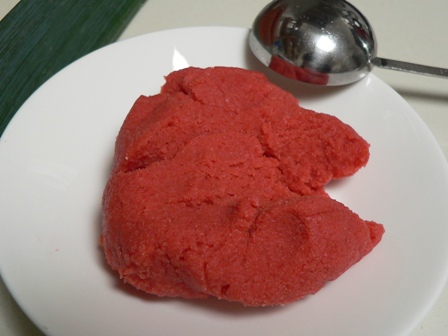
Note: taramosalata roe, or “tarama” as it is sometimes labelled, can be bought from most continental delis.  It’s sold by weight – look out for a large white tub of brilliantly hued paste.

tarama 003

1. Wash the potatoes, but don’t peel them. Prick them all over with a fork, then microwave in a covered pyrex dish until soft – in my microwave that took about 13 minutes, but it will vary depending on the size of your potatoes.  Take them and allow them to cool slightly.

2. While the potatoes are microwaving, puree the onion in a large food processor.  Add the lemon juice, salt, vinegar, tarama and ½ cup of oil, and blitz until well combined and as smooth as possible.

3. Peel the hot potatoes, cut them into pieces, and while still hot, add them to the food processor one potato at a time.

4. Add the boiling water and oil as required to keep the mixture loose and dip like.  I like to add the full amount of boiling water and as little of the oil as I can get away with (but a minimum of one cup).   The finished result should be like a very runny mash potato – it will thicken up as it cools in the fridge. 

Note: Soula’s original recipe specified 1 cup boiling water to 2 cups olive oil, in case anyone wants to try the full fat version.

I know it’s culturally incongruous, but I always serve this with corn chips or corn crackers – there’s something about the flavour combination that really appeals to me!

Read Full Post »

jam 024a

We’ve made nearly 300 jars of jam in the last year, and it’s been a really fun learning curve.  Pete does most of the actual jam making; my job is to prepare the pectin, sterilise jars and most importantly, to sit on the kitchen bench and cheer him on.

We’ve learnt a few things through experience over the last 12 months, and I thought I’d pass these on, in case they’re of use to anyone.  Making jam at home is not complicated, but it is desperately rewarding and will provide you with an endless supply of much appreciated, highly anticipated gifts.  Here are our top tips.

1. Make your own pectin. Homemade apple pectin is so much easier to use than commercial pectin – the latter can only be boiled briefly, whereas the homemade version can be added to the fruit right from the beginning.  Apart from tasting better (our personal opinion), it’s also easier to control how the jam sets with your own pectin, because you can start with less and add more to adjust as you go.  We always make our pectin in large batches and  can it (see point 11 below), but there’s no reason why you couldn’t make a small amount for the batch of jam you’re planning and use it straight away.

2. Source really good glass jars. If you’re in Australia, try either Cospak or, our favourite, Plasdene.  The ladies at Plasdene in Milperra are particularly helpful, albeit occasionally bemused by us (“Celia, what on earth are you going to do with all these jars?”).  They have a wonderful showroom which can inspire lots of new ideas, and watch out for the specials by the door as you walk in.  Both places have minimum orders, so it’s worth ringing first before you order or visit.  Also, the glass jars are easy to recycle, but you really can’t reuse the lids, so if you can afford it, try to buy some extra lids for the refills while you’re there.

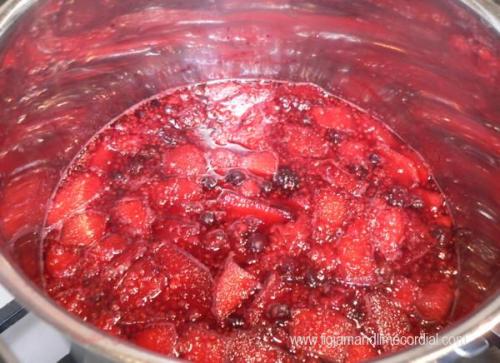
3. Use a big stock pot. Jams and jellies need wide fat pots, not narrow tall ones.   They also need to be BIG, because the mixture needs to boil up in the pot before it will set.  Pete’s recommendation for jelly making is that the jelly should only fill about 1/8 of the pot when you start, although jam can be a little fuller.
jam 011a

4. Try to use fruit at its peak. Apart from being the whole purpose of jam making – that is, to preserve the fruit at its very best – it’s also really the only time it’s worth doing, for both quality and economic reasons.  Having said that, make full use of your freezer if you have one – fruit frozen in season works perfectly well for jam.  In many cases, it doesn’t even need to be defrosted first.

5.  There are four key elements of jam making – fruit, sugar, pectin and acid. If any one of these is absent, the jam usually won’t set, and if the balance is out, the jam won’t set well.  Lemon juice is in every jam we make, as it helps to activate the pectin. Sometimes, particularly with jellies, the mix won’t set unless there is enough sugar. Every recipe is a guide, because the fruit varies from batch to batch, so you need to constantly taste and adjust as you go.

6. Don’t add the sugar too soon. Begin the jam making process by placing the prepared fruit, pectin and acid in a large stock pot and bringing it to the boil.  Once the fruit has softened to your liking, then add the sugar.  When the sugar is added, the skins of the fruit won’t soften any further, and fruits like strawberries won’t break down much more.  But for fruits like raspberries, which fall apart very easily, the sugar can be added straight away.

7. Try to minimise the amount of added sugar. Start with a lesser amount than you think you need, then add more if required to set the jam. Sugar is often used in commercial jams to cover up poor quality fruit, but conversely, if you have really great fruit, too much sugar will mask that as well.  Lately, Pete has been experimenting with using more pectin and less sugar, and the jams have all been setting quite well (albeit a little firmer than normal).  Again, it’s all about the balance between the four key ingredients.

It’s worth mentioning at this point that jellies need a  minimum amount of sugar to set (usually one cup of sugar to one cup of liquid) – jams are more forgiving on this front.

8. Boil gently at first, then at full-bore. This is an often disputed point in  jam making.  Pete’s approach is this: bring the fruit, pectin and lemon juice to a gentle (but proper) boil, and keep it at that level until the fruit softens to a consistency you’re happy with.  Add the sugar, then bring it back up to a gentle boil until the sugar dissolves.  Skim well at this point – you won’t be able to skim once the pot is boiling vigorously. Once the sugar is dissolved and the jam has been clarified, then raise the heat and bring the pot to a full rolling boil (one that rises up in the pot) until the jam is set.

Jellies in particular will never set until they are brought to a feverish boil which causes them to rise up in the pot (which is why you need to use a big, wide pot!).  If you’ve brought them to a rising boil and the jelly still won’t set, you will probably need to add something – either more pectin, sugar or acid.

9. Always skim off as much foam as you can. This is particularly important with jelly – as it boils, the foam rising to the surface carries with it the impurities (for want of a better word) in the jelly, and the more you can remove at this time, the clearer and more jewel-like the finished product will be.  By the way, foam and surface scum are really good signs – they mean the pectin is doing its job and setting the preserve.

10. Test for set. Before you start, put a small saucer in the fridge to cool.  Alternatively, you could use an ice-pack and put the saucer on that to chill.  Test the jam or jelly by putting a small blob on the cold saucer.  Wait a minute or two, then give the jam a poke with your finger.  If it wrinkles, then it’s ready. Make sure you turn off the heat while you’re testing, or you might end up scorching your jam.
jam 017a

11.  Hot water processing. Another hotly debated issue and there are many people who don’t believe this step is necessary.  We always ladle our jams and jellies into sterilised jars, then seal them and boil them in a hot water bath for ten minutes.  It’s an easy process, providing you remember to put the hot jars in hot water (pouring cold water on the hot jars can crack them – I learnt that the hard way).  We either use a pasta pot, or we place a silicone mat in the base of our big stock pot, and stand the jars on that.  Make sure the boiling water covers the top of the jars by at least 2.5cm (1″).   Please note that if you’re making preserves other than sweet jams and jellies, then hot water processing may not be adequate, and you might need to invest in a pressure canner to ensure food safety.

jam 020a

© copyright 2009 by Fig Jam and Lime Cordial. All rights reserved.

. . . . .

Do you have any jam making tips?  We’d love to hear them! And for more information, including recipes, please have a look at our JAMS page.

Read Full Post »
« Newer Posts - Older Posts »