Feeds:
Posts
Comments

Archive for the ‘Recipes’ Category

fudge-torte2-009

I tend to anthropomorphise inanimate objects.  My oven is Bob, the laser printer is Ralph, the car is Buddy.  But I’ve never given the food processor a name, because I’ve never been overly attached to it.  It’s over 20 years old and for the past ten of those, I’ve willed it to break, so that I could replace it.   You know how you end up sick of something, but just can’t justify replacing it because it still works?

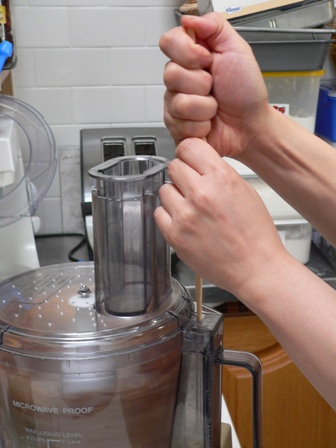
About six months ago, something finally did give – the little button that starts the blade spinning when you close the lid broke.  As a temporary fix, Pete drilled it out so that I could operate the machine with a chopstick.  And now, bizarrely, I can’t bring myself to part with it. Pete’s been trying for months to buy me a new food processor – a whiz bang stainless steel one with multiple bowls – and I keep refusing.  It’s like the old one suddenly has personality.  So now it has a reprieve and I’ll be using it until the motor burns out.  Maybe she needs a name..any suggestions?

. . . . . . . .

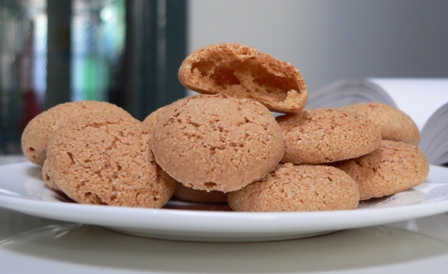
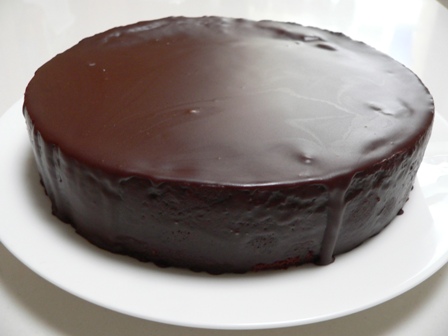
It’s interesting to observe the domino effect food blogs have on each other.  I was inspired to make Dorie Greenspan’s Fifteen Minute Chocolate Amaretti Torte today by a piece that Barb wrote on her blog, Babette Feasts.  She, in turn, was baking this cake as part of a weekly bake-off run by another food blog.  The recipe is featured here and it’s a very easy cake to make – using just seven ingredients.  The  batter really does take just minutes to make in a food processor (even one that’s chopstick operated) and uses these gorgeous amaretti biscuits in place of flour.  They’re so addictive that I ate a dozen of them in the short time the mix was whizzing in the food processor (fortunately I could eat them one-handed, while operating the chopstick with the other). See how hollow they are inside?
fudge-and-torte-011

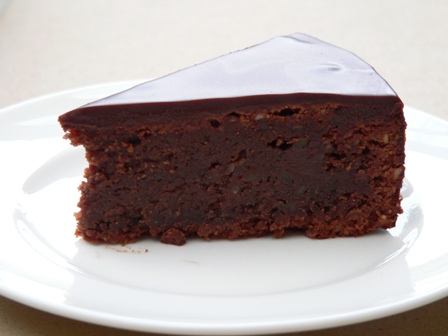
The end result was this dense, fudgey, almond and chocolate treat.  A perfect dinner party dessert!
fudge-torte2-001

By the way, this recipe comes from Dorie Greenspan’s Baking from My Home to Yours.  I ordered a copy from Amazon earlier this year and have made half a dozen dishes from it already.  It’s the sort of cookbook you take to bed with you at night to plan the next day’s baking.
fudge-and-torte-003

Read Full Post »

fudge-and-torte-018

Fudge is hard.  Unless you’re willing to make a condensed milk version, fudge making is a tricky process – one that involves delicate timing and temperatures, followed by controlled beating for a precise amount of time.  After throwing out an entire batch yesterday that went grainy, I was  about ready to give up on fudge.  But, loathe to admit defeat, we tried again today.

What did we learn from yesterday’s disastrous attempt?  Firstly, not to try and increase the amount of chocolate, or the mixture is likely to end up grainy.  Secondly, that everything has to be well dissolved before the mixture starts to boil, or the sugar will crystallise and the whole thing will end up in the bin.  Finally, that the addition of a little corn or glucose syrup can make the process much easier .

Here is our fudge recipe – I was pretty happy with the end result, and Pete and Big Boy tried to eat it all before dinner. I didn’t let them!

Edit 24/4/09 – some amendments made to methodology.  We’re trying to make a creamy fudge, as opposed to a harder crumbly one, and I’ve found the more gently you handle the candy, the less likely you are to get a grainy result. The fudge making process is a work in progress!

Ingredients:

  • 3oz (90g) dark chocolate (I used 70% Callebaut)
  • 3 cups sugar
  • ½ cup full cream milk
  • ½ cup cream (Australian cream is like a US heavy whipping cream)
  • good pinch salt
  • 1 Tbsp glucose syrup (or corn syrup)
  • 3 Tbsp (45g) butter
  • 2 tsp vanilla extract

1. Grease a square or rectangular glass pan with butter. My pan was a 7″ x 11″ (18 x 28cm) pyrex dish, but the original recipe recommended an 8″ (20cm) square one.

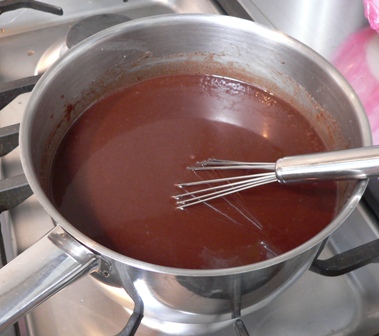
2. Mix together the sugar, milk, cream, glucose syrup and salt in a saucepan.  Stir with a spatula over a low heat until the sugar is dissolved, then add the chocolate and stir together until melted.  At this point, I used a whisk  – everything needs to dissolve before the mix starts to boil, so you might need to adjust your heat accordingly.   Whisk gently and try not to splash too much sugar onto the sides of the pan.  Use a pastry brush dipped in a little bit of hot water to wash any sugar crystals down from the side of the pan.

fudge-and-torte-001

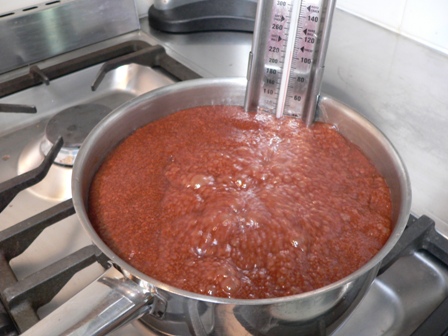
3. As soon as the mixture starts to boil, stop stirring and clip a candy thermometer to the side of the saucepan, being careful not to let it touch the bottom. The pot I used was probably a little too small – be aware that the mix will rise up as it boils!  Boil over a medium-low heat – if you raise the temperature of the mixture too quickly, it’s more likely to end up grainy.

4. Let the mixture boils until it reaches the soft-ball stage, 235F – 240F (113C to 115C). Stay there and watch it – don’t wander off! I pulled mine off the heat at about 238F, to make sure it didn’t get too hot.  You can test for “soft ball” by putting a little into a glass of ice water and seeing if you can squeeze it together into a soft ball – if so, it’s ready to go.

fudge-and-torte-0021

5. As soon as it reaches the soft-ball temperature, remove the pan from the heat and allow it to cool.  I put mine onto the stainless steel bench, but you might need a heat mat if your bench isn’t as resilient.  Allow to cool to  110-120F (43.5 – 49C).  At that point, a slight skin will have formed on top.  Add the chopped up butter and vanilla, but don’t stir. Don’t try to rush the cooling time, or the fudge won’t set properly. I find cooling to 120F resulted in a creamier texture, whereas 110F gave us a firmer, more crumbly fudge.

6. Once it has cooled, scrape the fudge into the mixing bowl of a stand mixer.  Beat the fudge at a low speed until it “sets up”.  Pause occasionally to let the fudge react (and also to make sure you don’t blow your mixer motor up). The big thing to look out for is a change in appearance – the fudge will lose its gloss and turn a dull, matt brown.  It will also significantly lighten in colour and stiffen up.

7.  As soon as you see this colour and sheen change, scrape the fudge into the prepared pan and press it down with your hands to flatten it evenly into the tray.  Allow the fudge to cool to room temperature, then cut it into squares and store in an airtight container at room temperature.

. . . . .

The fudge experiments continue : The Gentle Art of Fudge Making

Read Full Post »

090409-034

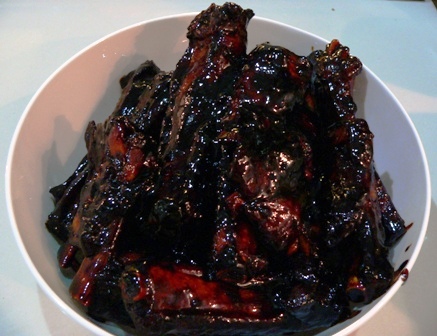
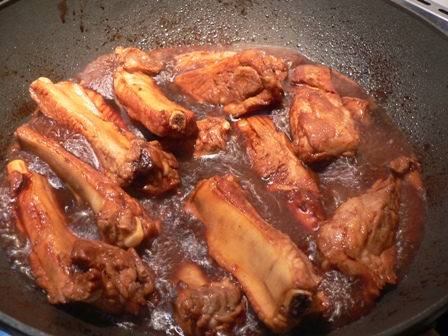
It was hard to get a decent photo of these ribs.  It was late, the light was poor, and my planned art shot of a couple of ribs elegantly laid out on a plate didn’t eventuate, because they were descended upon by a pack of wolves the moment they hit the table.  I had to put the camera down, or risk missing out.

Yes, they really are that sticky and yes, they really are that good.  The  instructions are jotted down in my recipe book simply as “Carol” (as in our old friends Kevin and Carol), because this is her recipe.  It’s an easy standby, but can be messy to cook, especially when you’re cooking it down to thicken the sauce.  I wear an apron and my welding gloves, because the hot sugar-soy sauce can splatter in a nasty way.

  • 1kg American pork spare ribs (known in the US as “baby back ribs”)
  • 3 Tbsp (60ml) sugar
  • 2 Tbsp (40ml) white vinegar
  • 2 Tbsp (40ml) sherry
  • 2 Tbsp (40ml) light soy
  • 2 Tbsp (40ml) dark sweet soy

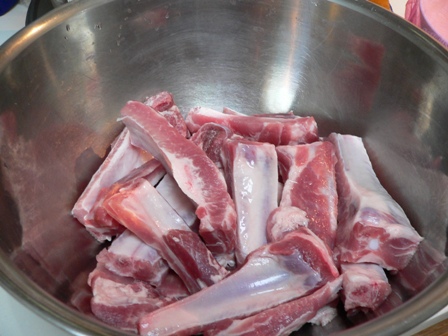
1. Cut the ribs into riblets, and give them a quick rinse to get off any bits of splintered bone (optional).

090409-028

2. Put all the ingredients in a large pot and bring to simmering over medium heat, then reduce heat to low and simmer covered for half an hour, stirring occasionally.  Cook until the ribs are tender (see photo below).

090409-031

3. Remove the lid and turn up the heat. Cook, stirring continuously, until the sauce is completely caramelised and sticky, and the ribs are well coated.  Hand out lots of napkins before you start eating – you’ll need them!

Read Full Post »

tomato-goat-cheese-tart-012

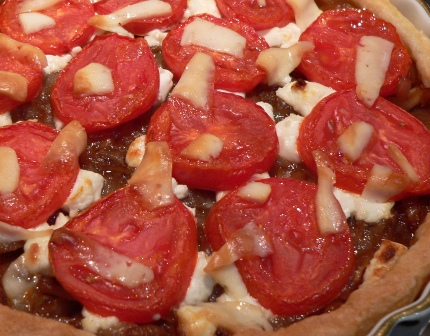
This delicious tart was part of last night’s dinner – inspired by Barb Freda’s blog, Babette Feasts.  Some minor changes – I added balsamic vinegar to the onions rather than wine and used a sharp sheep’s milk pecorino instead of parmesan shavings. It was topped with super-ripe Roma tomatoes that we’d bought from Jimmy at the markets last week, and would definitely have been better had I remembered to buy some basil!

Instead of the puff pastry specified in the recipe, I used June’s sour cream dough.  This was the first time I’d tried it in a savoury context and it worked really well – I can see it becoming our new house standard.  It’s a surprisingly simple recipe, which I always make by hand in a large mixing bowl – it’s so easy that I don’t feel it’s worth dragging the food processor out!

Sour Cream Pastry

  • 500g plain flour
  • 250g unsalted butter, cut into cubes
  • 300g sour cream (thick)

Rub the butter into the flour, then work in the sour cream until the mixture forms a silky dough.  If you’d like it to be flaky, you can fold the dough a few times (as shown here).  I only gave it one fold, followed by a rest in the fridge, and the pastry was perfect for lining the quiche dish.  This quantity of pastry is massively more than I needed – I used about a quarter for our small dish and froze the rest (in two lots) for a later date.  I’ve been thinking it might be the perfect pastry for curry puffs!

Read Full Post »

bread-making-3-023

Focaccia is a great bread for entertaining.  We often serve it in small slices, accompanied by a good extra virgin olive oil and white balsamic vinegar for dipping.

A simple way to make focaccia is with the basic bread dough.  Allow the dough to complete its first rise, then flatten it out and fit it into a parchment lined tray.  The photos here show a focaccia made with a half batch of dough which produced a 20cm (8″) square of bread.

bread-making-3-011

Allow the dough to rise for about half an hour, covered with greased clingfilm.  In the meantime, preheat the oven to 250C (480F).  When the dough has risen enough, drizzle a thin coating of olive oil over the top and sprinkle it with some good sea salt (we used Maldon flakes). It’s hard to tell from the photo below, but the dough had risen quite a bit – it was  thicker and puffier than it was in the top photo.

bread-making-3-019

Spread the oil and salt out a little, then push your fingertips into the dough, right to the bottom of the pan.  This is what gives the bread its distinctive dimpled appearance.

Put the bread into the hot oven, lowering the temperature to 220C (430F) and bake for 20 – 25mins, rotating the bread once during the baking time.  Viola!  Smile graciously when people tell you how clever you are!

nutella-rolls-015

Read Full Post »

« Newer Posts - Older Posts »