Feeds:
Posts
Comments

Archive for the ‘Recipes’ Category

Making Chocolate Christmas Trees

ctm

We’ve been making chocolate Christmas trees since 2011. It’s one of our favourite things to do in the festive season! Here’s a step-by-step guide to how we make them.

. . . . .

Step 1: Purchase a 3D Christmas tree mould. I highly recommend this one from Candyland Crafts (mould number C-1715). It costs just US$1.99, and we’ve used the same ones now for six Christmases. I use three for each batch, and I find that they produce a very prettily proportioned tree.

As an aside, if you’re buying from Candyland Crafts (they’re based in New Jersey USA), it’s worth purchasing in bulk (20 moulds or so at a time) in order to make the international shipping worthwhile. They have a huge range to choose from! I’ve bought from them for years now and have always been delighted with their products and service…

cta

Step 2: Temper 600g of chocolate. We use a mix of half Callebaut 811 Dark (54% cacao) and half Callebaut 823 Milk – this produces a milk chocolate which isn’t overly sweet. For tempering instructions, please have  a look at our Chocolate #101 tutorial. Remember that milk chocolate needs to drop to 86 – 88ºF (30 – 31°C) before it’s in temper, so be patient.

Once the chocolate is ready, place it on a heat mat covered with a tea towel. By the way, I do buy a lot of chocolate from Chefs’ Warehouse in Sydney, but the tea towel below isn’t advertising – it was just the only clean one in the kitchen…

ctb

Step 3: Stir in 150g of Pailleté Feuilletine. These wafer shards add a delicious crunch to the tree. After many years of experimenting, we now only make Feuilletine-filled trees, as the solid chocolate ones are very difficult to take apart and eat! I’ve been told (but have never tried it) that cornflakes make an acceptable substitute…

ctc

ctd

Step 4: Carefully ladle the mixture into the tree mould. If you remember (I usually don’t), fill the little stars before you add the wafer to the chocolate for a prettier result. Only fill each hole to about ¾ full…

cte

Gently bang the moulds on the bench to spread the chocolate out evenly…

cto

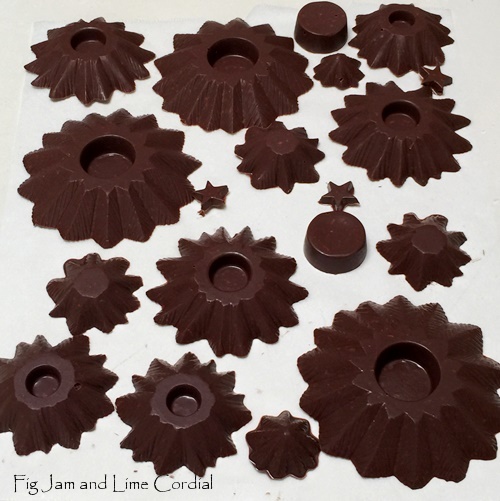
Step 5: Sit the filled moulds on a level surface in the fridge to set. They need about 15 minutes to harden completely, but I popped mine in and went for a walk. Once they’re ready, carefully turn them out onto a sheet of parchment. With practice, you should be able to just get three full trees from this amount of mix – I was a little bit short this time…
ctf

. . . . .

Intermission: At this point, if you only have one heat mat and one bowl, wash the bowl and boil the heat mat and let it cool down. You’ll need them again for the second stage.

. . . . .

Step 6: Find a Christmas elf to assist you, as it helps to have an extra pair of hands. Have a stack of spare moulds ready. Temper another batch of chocolate (either milk or dark is fine) and pop it onto the tea towel covered heat mat.

Now, spoon a blob of tempered chocolate onto a board and stick the base of the tree on securely. Add another small blob of chocolate on top…

ctg

Start layering up, from largest piece to smallest…

cth

Step 7: Stick each layer on with just a little bit of chocolate around the rim. Resist the urge to fill the open cavity with chocolate – trust us on this one – we did that the first year and created Christmas tree shaped clubs that needed rolling pins to break apart…

cti

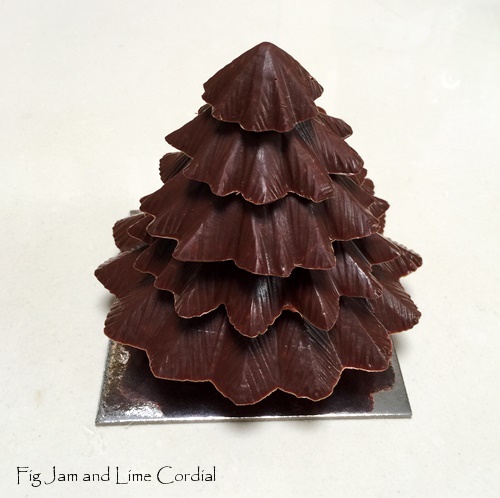
Step 8: Keep layering up until you get to the top…
ctj

Step 9: Add just the tiniest bit of chocolate to the base of a star, and carefully position it on top. Then stand the finished tree in a cool spot to fully harden while you do the next one. You’ll have lots of leftover chocolate when you’re done – quickly ladle these into your spare moulds and pop them into the fridge to set…

ctk

ctl

Step 10: Dust your trees with icing sugar snow. I use a tea ball strainer and simply shake over the top. Viola! The perfect Christmas table centrepiece!

ctm

. . . . .

As I’d misjudged my fills a bit this time, I had a few pieces leftover. Usually the boys just eat these, but Pete suggested that we try making a taller tree for our own table. It’s very stately…

ctma

ctn

. . . . .

Our trees are now finished and wrapped in cellophane, ready for gifting. Onto gingerbread next! I hope you’re all enjoying the festive season as much as we are!
Read Full Post »

Sawsan’s Hummus

hommu3

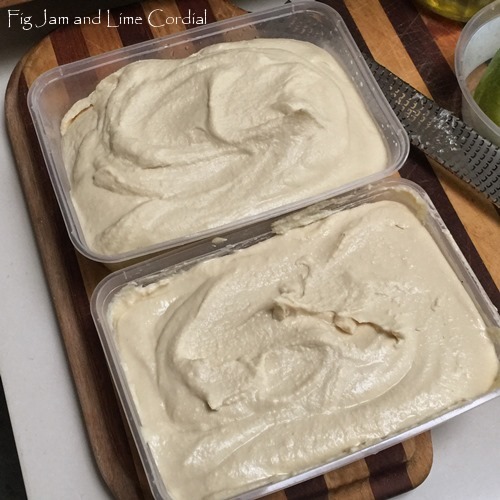
Lovely Sawsan, the Chef In Disguise, posted a recipe recently for her homemade hummus. It’s delicious!

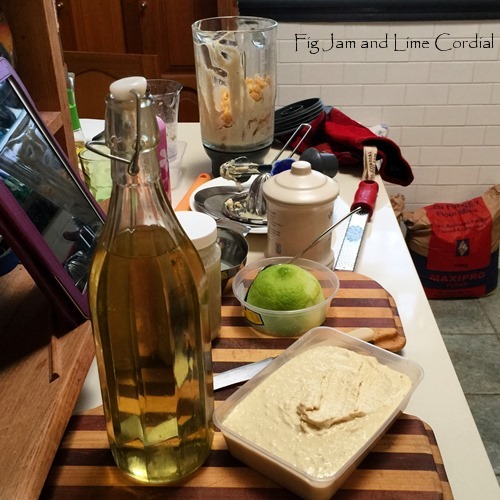
I was up early yesterday morning, so I thought I’d give it a go. As advised, I’d soaked chickpeas the night before – it took less than half an hour of boiling to get them to the right consistency.

I was intrigued that Sawsan’s recipe included Greek yoghurt. We make it every week (it’s very easy – here’s our tutorial from 2010), so we always have some on hand. I also added a splash of hot water to the chickpeas as they were blitzing to produce a smoother result. The kitchen was a bombsite by 7am…

hommus1

But it was so worth it! Sawsan’s recipe produces a silky smooth, rich dip with perfectly balanced flavours – it’s not too oily and the combination of yoghurt and lemon juice adds a delicious tang. If you’re still buying hummus from the supermarket, do give this a go. You’ll never go back!

hommus2

Read Full Post »

It’s taken me a long time to get my mum to eat sourdough.

She’s never been a fan of hard crusty bread, so I had to find a way to bake a consistently soft crusted loaf before I could win her over.

I began with a variation on the Overnight High Hydration formula (quantities below are for one loaf, but I’ve made a double batch in the photos below):

  • 60g ripe starter (fed at a ratio of one part water to one part bakers flour)
  • 350g water
  • 20g olive oil
  • 5g brown sugar
  • 500g bakers/bread flour
  • 9g fine sea salt.

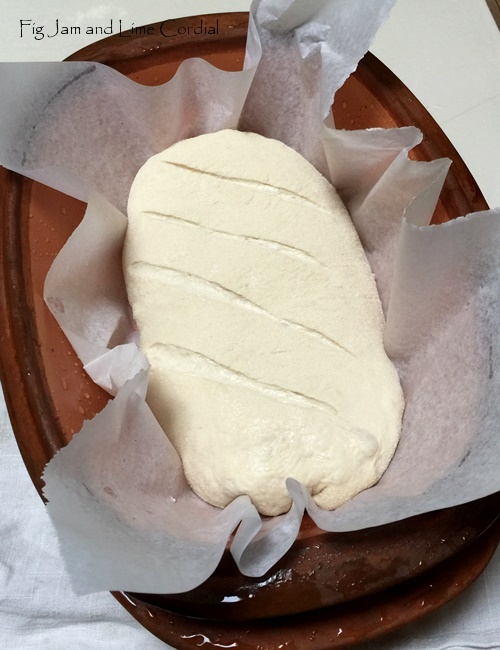
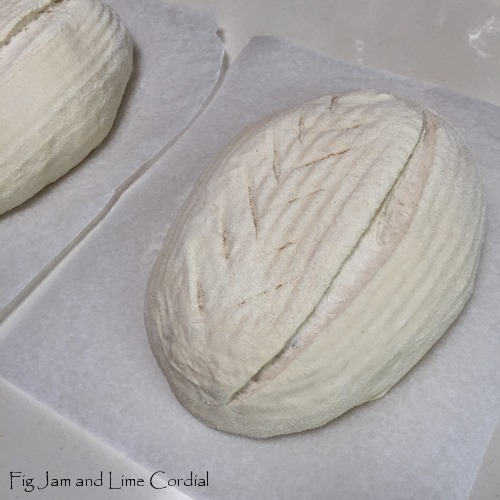
Follow the instructions as per the high hydration tutorial (adding the sugar and olive oil in with the water) and allow the dough to prove overnight. The following morning, shape the dough into a loaf and place it on a large sheet of parchment paper. Cover and allow to rise briefly.

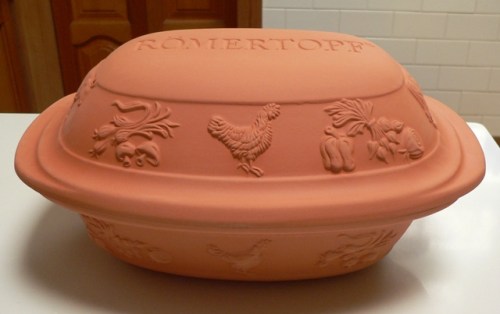
Soak a Römertopf clay pot in the sink. Don’t preheat the oven.

Once the pot has soaked for about 15 – 20 minutes, slash the risen dough and carefully lower it into the wet base. The parchment is important, or the loaf will stick like crazy to the clay. Carefully position the lid on top.

ssd1

Place the pot(s) in the unheated oven and turn the temperature to 220C with fan. Set the timer for 30 minutes. Once it goes off, open the oven, remove the lid carefully, rotate the pot and bake uncovered for a further 20 minutes at the same temperature.

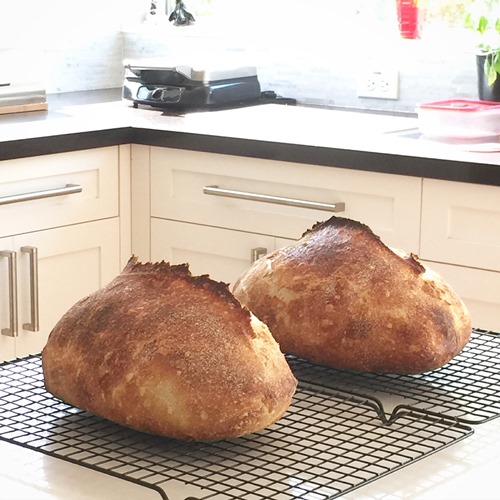
Remove from the oven and allow to cool on a wire rack. Take care not to put the hot Romy onto a cold bench as it could crack…

ssd2

The crust will seem firm to start with, but will soften up as it cools…

. . . . .

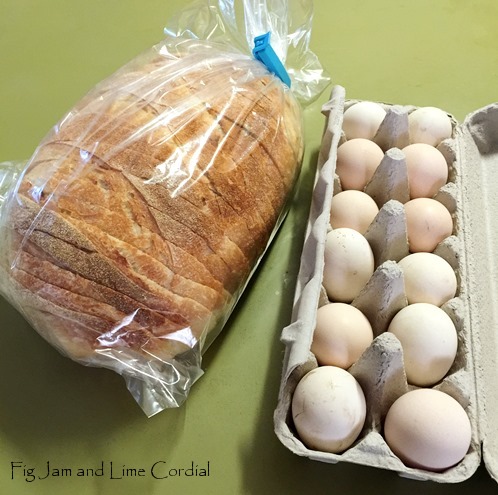
I’ve been baking this loaf for Mum now for a couple of months, and she’s a big fan – she’s noticed that the sourdough doesn’t give her stomach cramps in the same way that supermarket bread does.

ssd4

I think the two critical elements here are the addition of a little bit of oil, and starting the dough off in a cold oven. The pre-soaked clay pot adds steam as the loaf is rising, further helping to keep it soft, but this method may also work in a regular covered enamel roaster (although I haven’t tested it yet). If you try it, please let me know how you go!

Read Full Post »

My sourdough starter Priscilla will be ten years old in January, 2017.

In all the years that we’ve had her, I can count on one hand the number of times we’ve bought bread. She has infused herself into the wood and granite and concrete of our kitchen – I suspect that if we left a bowl of flour and water on the bench, the essence of Priscilla would seep out from the nooks and crannies and bring it to a bubble like the witches’ cauldron in Macbeth.

I’d love to say that I grew Pris from scratch, but that would be fibbing. She is unique though, and I’ll tell you why.

In December 2006, I ordered two different sourdough starters from the US. I activated both, storing them very carefully in separate sealed jars in the fridge.

A couple of weeks later, I accidentally tipped the leftover starter on the bench into the wrong jar…and Priscilla was born. I have no idea whether she’s a combination of both original starters, or whether one dominated over the other – she may even be a mutant evolved from the two. But I do know that ever since that day, I’ve had my bubbly girl in the fridge, and she has never let me down.

ostn9u

Priscilla, Queen of the Refrigerator, has a very distinct personality.

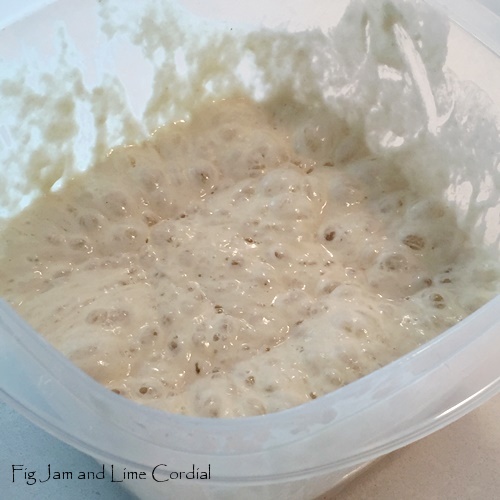
If I ignore her for a couple of weeks, she gets sulky and goes out drinking – I know this because she ends up floating in a pool of alcohol (hooch). Then she needs coddling before she’ll behave again – small, regular feeds and gentle words of apology. She can be a diva when she gets her nose out of joint.

On a good day, she will joyously blow bubbles and produce an elegant, well-behaved dough that feels like silk. She seems almost eager to please then, as if to say, “there you go, are you happy now?” and “what else would you like to do? It’s no problem, really…”

imk0316c

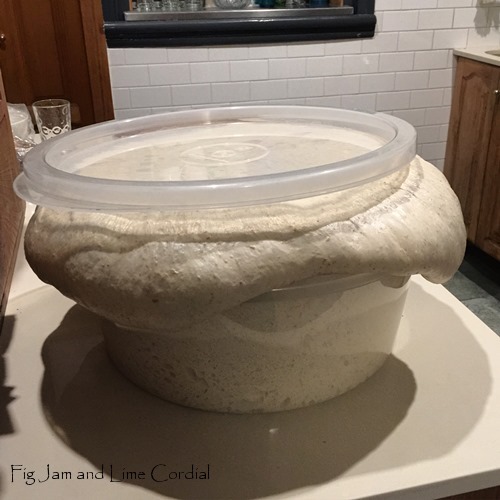
She becomes hyperactive in hot weather, creating billowing doughs that try to escape their containers. But bless her, she never collapses in an exhausted heap, and even after a 12 hour+ bulk prove on the bench, she’ll always bounce back for a second rise. Many sourdough starters aren’t this resilient, but Priscilla isn’t greedy, and she seems to know how to pace herself. Or maybe she just has me figured out.

oops

Like many ten year olds, our starter can be a fussy eater. She likes a high protein bakers’ flour, turns her nose up at the fancy stuff, and prefers filtered water. She has a surprisingly sweet disposition for someone with “sour” in her name, and turns out loaves which are flavoursome without being overly acidic. After all, she knows the boys wouldn’t like that.

Since her arrival, Priscilla has changed our lives. If we could bake bread from scratch, then surely we could also grow vegetables and make yoghurt and temper chocolate? It couldn’t be too hard to bake cakes and cookies, or run chickens in the backyard, could it? Self-empowerment comes from believing you can do things you never thought possible, and then being brave enough to try.

garden

And it’s not just our lives she’s changed, because Pris has budded off hundreds of offspring. She has a whole family tree of children, nephews, nieces, second cousins and more grandchildren than you could imagine, each with its own name and personality. She even has a line of drag queen offspring who are exceptionally flamboyant and bubbly. She’s the matriarch of a whole sourdough dynasty!

Sigh. I’d better go now, as she’s calling me. I’ve got dough rising and it’s time to shape!

Read Full Post »

In keeping with the sourdough nutter that I am, I mailed packets of dried Priscilla starter to my friend Dan in San Francisco before we flew over. After all, we were staying with them for a month, and the thought of eating bought bread during that time, even in the legendary home of sourdough, never occurred to me.

I sent over three packets – one for us, one for our friend Chris, and one spare.

Obi-dog Kenobi, Dan’s magnadoodle (ok, he’s a labradoodle) got to one of the sachets as it came through the mail slot, and ate it. For 24 hours, he farted rotten egg gas that made the resident skunks run for cover, but he was otherwise completely unharmed.

Here he is, freshly groomed. He’s the best dog in the world, and the only one I’ve ever met with human eyes…

obi

But I digress.

On Emilie’s advice, we bought King Arthur bread flour from Safeway and woke the starter up. Johnny Cash was born…

johnny cash

Within a couple of days, Dan had baked her first batch of sourdough…

sd1

The day after that, she made an olive loaf…

dan's first loaf

Then a fruit and nut loaf…

sd2

By the time we left, she was producing two to three loaves every other day, completely on her own. She’s a star…

dan loaves

Dan uses a slightly modified version of our high hydration overnight tutorial, with all white bakers flour and 700g of water instead of 750g. This makes the dough a bit easier to manage and produces a slightly less holey crumb – ideal for school lunches and snacks.

She commented to me last week that even when she’s weary, it only takes a few minutes to knock up the dough, and then it’s simply left in a covered bowl until after school drop off the following morning. That’s the nice thing about sourdough – once we find a groove that works, it’s pretty easy to fit it into our daily routines. And unlike some other starters, Priscilla is spectacularly resilient – her doughs can prove for the better part of a day and still bounce back for a shaped second rise.

Our old friend Chris brought his gorgeous family to have lunch with us – he took home a little container of Johnny Cash and birthed June Carter Cash at his house. Here are his latest loaves – he’s been going gangbusters as well…

jcc

Sharing the sourdough mania with our friends was one of the highlights of our trip to San Francisco. It’s a joy to see them having so much fun with it, and to know that we’re all baking with the same starter!

Read Full Post »

« Newer Posts - Older Posts »