Before my first attempt at confit duck a few years ago, I read up extensively on the technique.
Given the revered tones it was always afforded by food writers, I’d assumed that it was a complicated, detailed process. I tried to wrap my brain around the amount of salt needed to cure the meat and how that would affect the keeping time, whether it was better to cook at a higher temp for a shorter time, or a lower one for longer, how different spices would affect the dish, and so forth.
What I’ve since come to realise is this: confit is a doddle.
It’s actually a remarkably easy process that simply involves cooking something (usually meat) submerged in a melted fat at a low temperature for a long time. The very gentle cooking produces tender, delicious results.
In days past, the French would confit duck legs in its own fat, then store them buried deeply under yet more fat, in jars on their pantry shelves. If you’re planning to do that, then the salting part of the process is very important to preserving the meat. Plus you’re on your own, I’ve never been game to try that in our hot Australian climate.
Even if you plan to store the confit for any length of time in the fridge, the salting of the meats is still important to the keeping time. But as I now store all my confit in the freezer or eat it within a few days, I now only salt for flavour. Duck fat is the ideal medium for cooking in, but other fats will work as well, and the filtered fat can be reused several times.
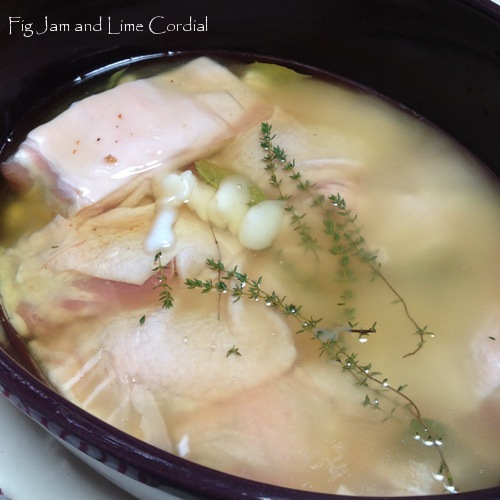
I confit all sorts of meats on a regular basis. The other day I uncovered a packet of mystery chicken fillets in the freezer (a freebie from Haverick Meats as part of their weekly promotion) and a small piece of belly pork. I rubbed them with a little salt and let them rest for about half an hour. The salt was then rinsed off and the patted-dry pieces were submerged under a combination of garlicky Portuguese lard and duck fat (photo above). Garlic cloves, a few sprigs of thyme and a couple of bay leaves were tossed in for good measure.
After three hours at 120C (no fan), the meat was tender and flavoursome…
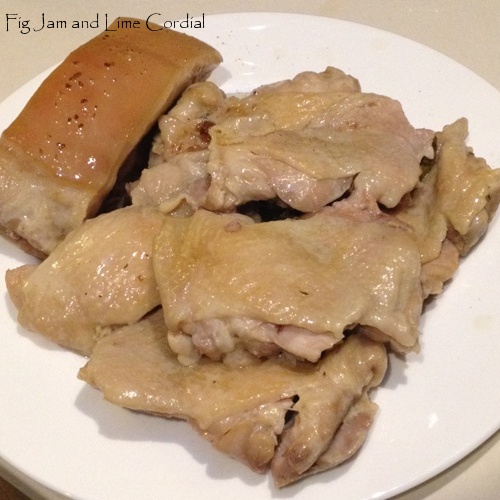
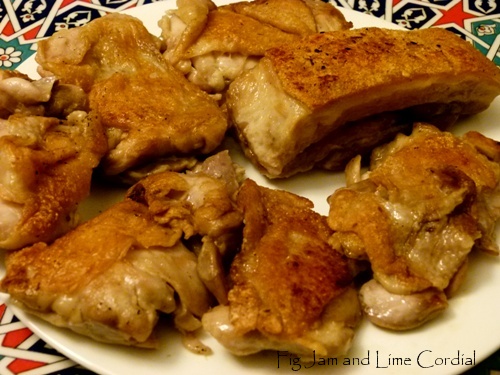
We crisped the skin up in a frying pan and served it with rice and salad for dinner, but it was so rich that we only managed a small piece each. The remainder was frozen in vac-sealed bags for later use…
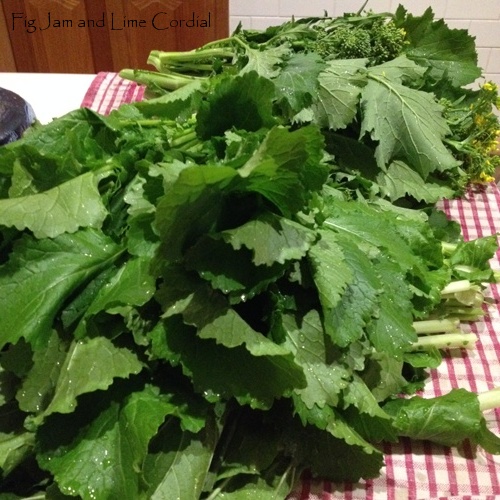
Having confit in the freezer lets us pull together dinner at a moment’s notice. We cook down a large quantity of garden greens and combine it with a little of the meat to form a pasta sauce. It’s so flavoursome that just 150g is enough for dinner for four – we use it sparingly, as we would prosciutto or guanciale…
All sorts of meats can be cooked in this way, even cheaper cuts like this pork hock – I deboned it first, keeping the skin…
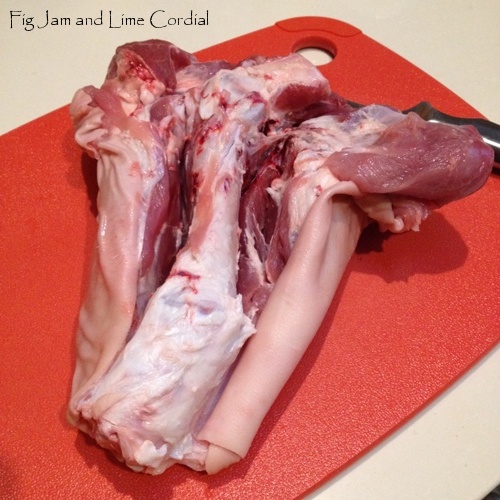
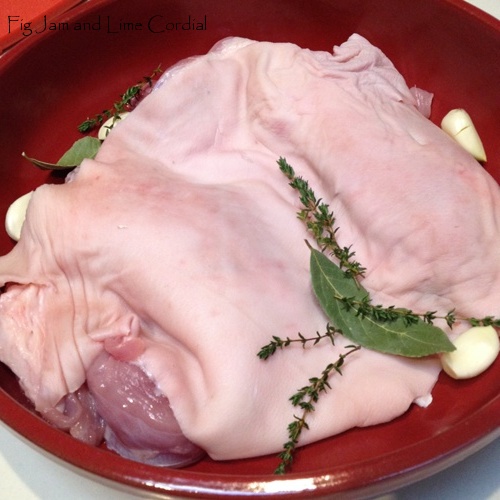
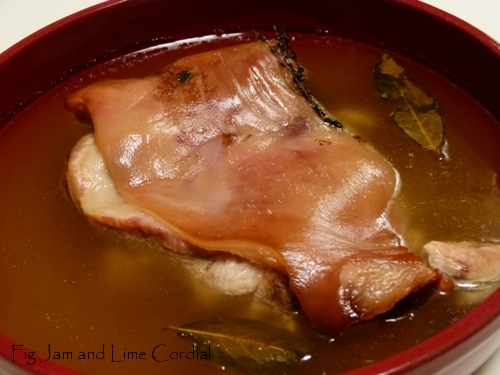
After cooking, I discarded the skin then divided the meat into three bags for the freezer. The fat was filtered for reuse…
I found these Pepes duck supremes (breast and wing cut) at a butcher in Flemington for just $11.50/kg…
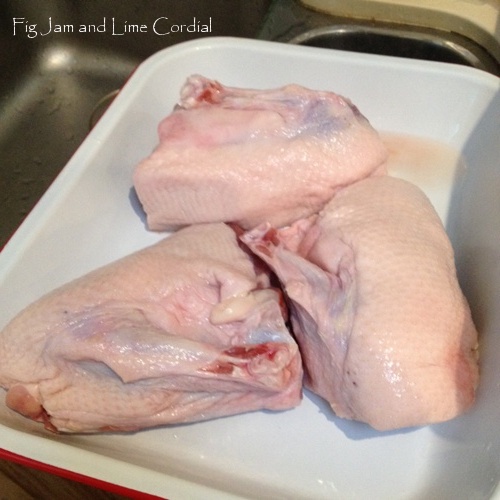
I put them in the oven to cook slowly for ten hours overnight at 90C, following this Maggie Beer recipe. The pieces were rubbed with a seasoned salt and left in the fridge for four hours, then rinsed and patted dry before being submerged in a combination of all the leftover fats from the previous confits…
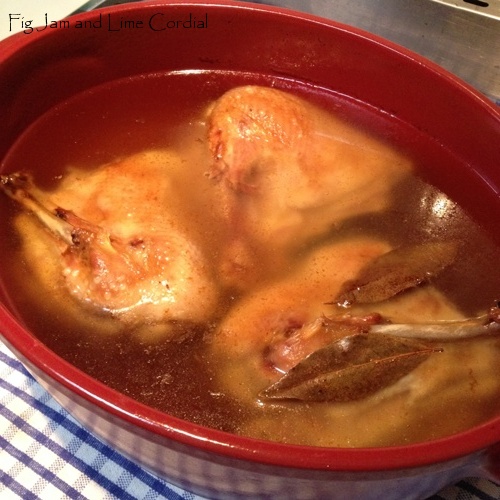
The following morning they were falling off the bone tender…
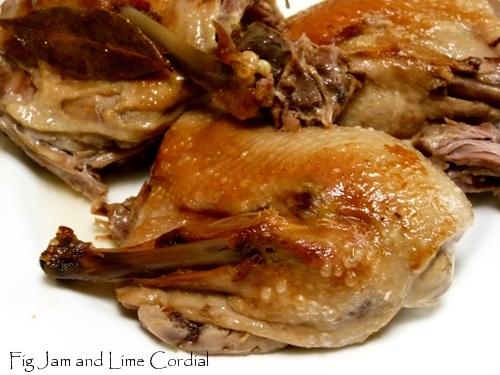
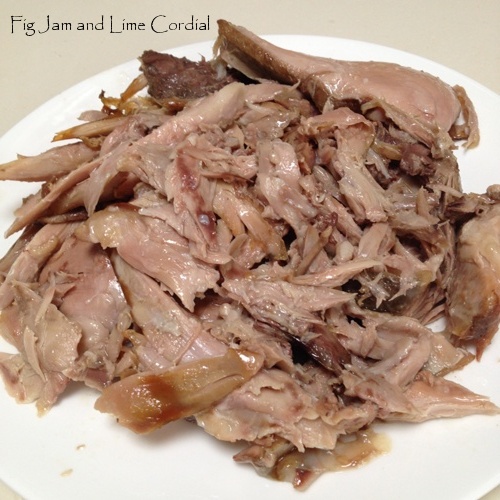
I stripped all the meat from the skin and bones…
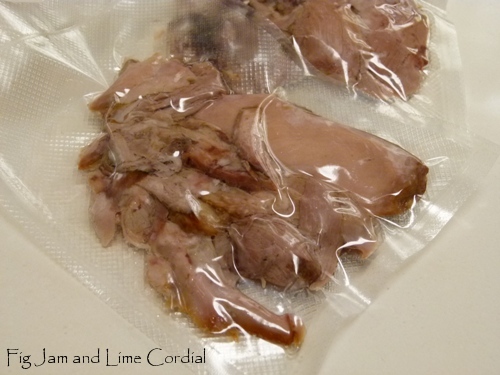
…vacuum sealed two portions and stashed them in the freezer for future meals…
…and combined the remainder with a little finely chopped rosemary fried in a spoonful of the fat. The meat was pressed into small dishes…
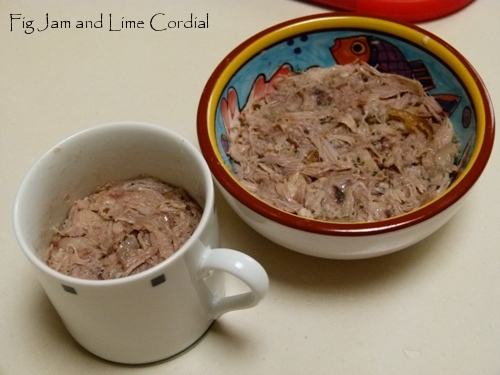
…and covered with a sheen of fat. They’ll live in the fridge for a week or so, waiting to be eaten cold on crackers or toast, or stirred through a pasta…
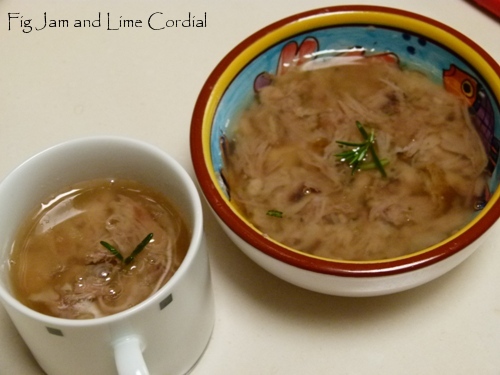
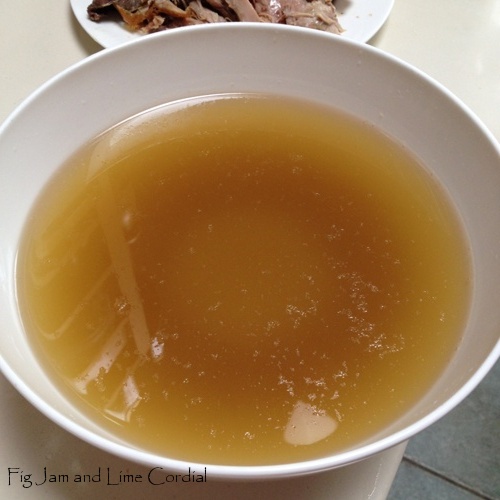
The leftover liquid was strained through muslin and left in the fridge to set. I ended up with a litre and a half of fat and two small containers of strongly flavoured gelatinous stock…
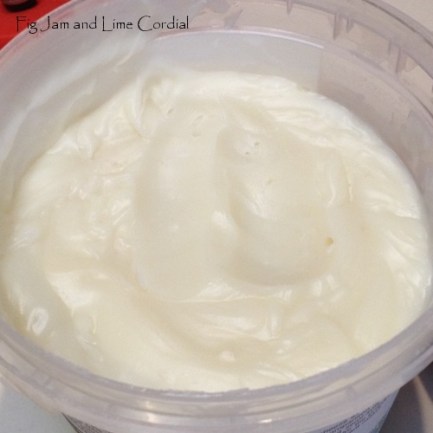
When cold, the fat sets to a snowy white. I stored half of it in the fridge and the rest in the freezer…
The skin and bones weren’t wasted – they were simmered in water for a couple of hours more…
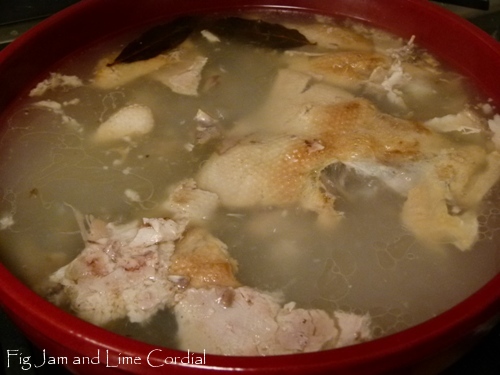
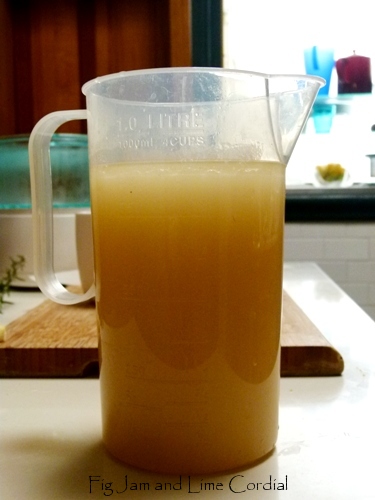
…resulting in nearly a litre of extra duck stock (lightly flavoured), which will be used in a future risotto…
So…don’t be put off by all the recipes that make confit sound like a complicated process – it really doesn’t have to be. It’s a great way to get maximum value from meat and it allows us to fill our freezer with ingredients that can be quickly pulled together for delicious mid-week meals. And as the meat is so rich, a little goes a very long way!
PS. Perhaps the hardest part of confit is getting together enough fat to cover the meat. It’s possible, but expensive, to buy duck fat for this purpose. We’ve collected ours gradually from our duck roasts, but I’ve read that it’s also possible to confit in olive oil – I’ve never tried it though. Would love to know how you go if you do!
Read Full Post »









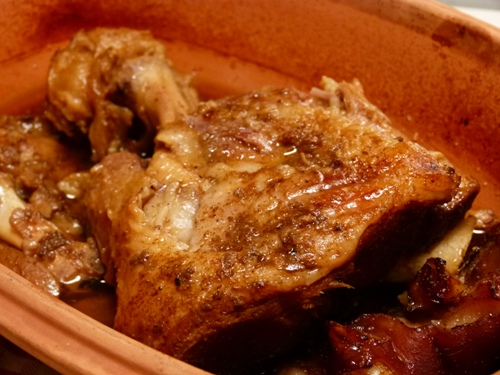







 Fig Jam and Lime Cordial