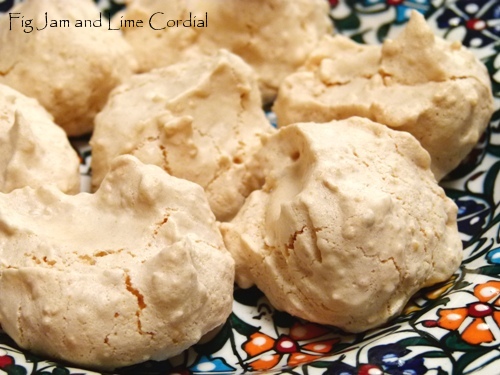
When I was a little girl, I used to read the Magic Faraway Tree stories by Enid Blyton. In the books, one of the characters (I can’t remember if it was Silky the fairy or Moonface) would often bake “pop biscuits”. These would go “pop” in the mouth when eaten, and as a child, I was fascinated with them.
I’d like to think that if pop biscuits actually existed, they might taste a bit like these amaretti. They’re supposed to be easy to make, but it’s taken me three attempts to get them right!
I started with a recipe from Alice Medrich’s Sinfully Easy Delicious Desserts (which I bought as an e-book)…

Here are my first two attempts – maybe they’ll save you from making the same mistakes I did.
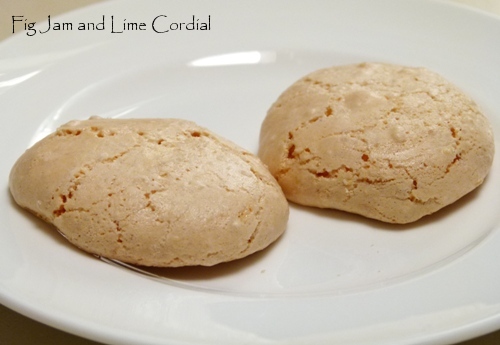
Initially, I tried to cheat and use almond meal rather than grinding blanched almonds. These tasted quite nice, but they were heavy and dense, and took ages to bake…
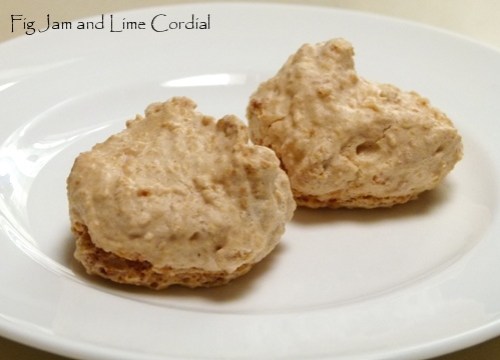
The second batch ended up very flat – which would have been great if I’d been making macarons. The egg whites need to be beaten until very stiff, and they weren’t for this batch, which resulted in the meringue spreading out as it baked…
Finally, success on the third attempt…
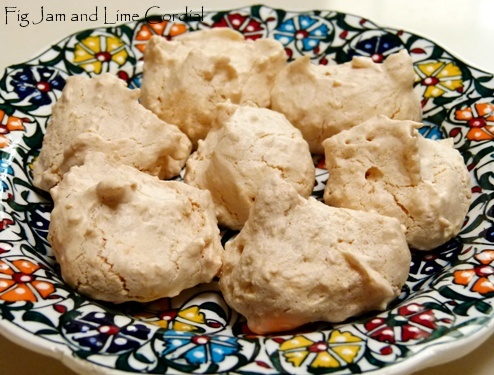
I tweaked the original recipe a little, but I was very happy with the end result. They’re light, super crisp, and really do go “pop” in the mouth…
- 225g (8oz) blanched almonds (I used almond slivers)
- 225g (8oz) icing sugar mixture (confectioner’s sugar)
- pinch of fine sea salt
- 4 large (59g) free range egg whites
- ¼ teaspoon cream of tartar
- 110g (40z) caster (superfine) sugar
1. In a large food processor, blitz together the almonds, icing sugar and salt. Pulse until the almonds are well ground. Don’t be tempted to substitute almond meal here – it doesn’t work, but I have no idea why not.
2. In the large bowl of an electric mixer, using the whisk attachment, beat the egg whites and cream of tartar until foamy, then gradually add the caster sugar until the mixture is thick and glossy. Continue beating until the whites are very stiff.
3. Gently pour the almond and icing sugar mixture over the top of the egg whites and, using a large metal spoon, carefully fold the dry ingredients in until just combined. Try to keep as much air in the egg whites as possible.
4. Preheat the oven to 150C with fan. Using two teaspoons, drop heaped teaspoonfuls of the meringue mixture onto parchment lined trays. This batter makes a large number of amaretti (I ended up with about 75).
5. Bake for 30 minutes, rotating the trays halfway through the baking time. The amaretti should puff up and turn a light brown. Turn the oven off, leave the oven door slightly ajar (I prop mine open with my leather welding gloves) and allow the cookies to cool in the oven (sometimes I leave them overnight). Once completely cool, store in an airtight container.
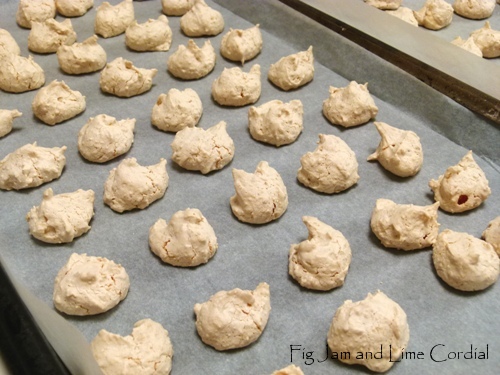
Allowing them to dry out completely in the oven ensures they’ll keep well for weeks…
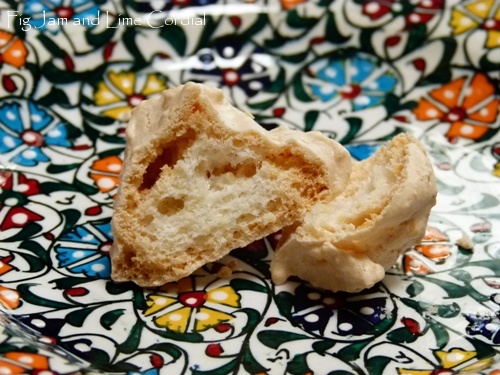
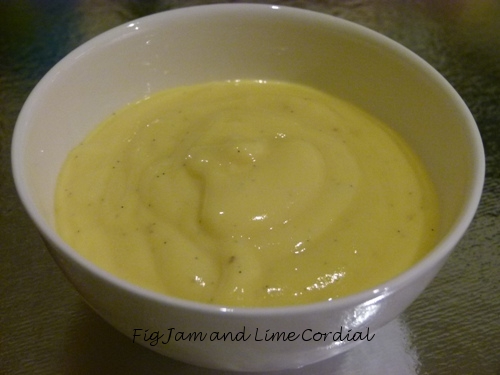
One last suggestion – turn the four leftover egg yolks into microwave custard, and serve it with crushed amaretti for a perfectly simple, delicious dessert. My microwave custard recipe is all through this blog, but here it is again to save you searching for it…
- 2 cups (500ml) full-cream milk (I used UHT)
- 1 tsp homemade vanilla extract*
- 4 egg yolks (from 59g eggs)
- 1 Tbsp (4 tsps) cornflour (cornstarch)
- 1/3 cup (70g) caster (superfine) sugar*
* Instead of the extract and caster sugar, I often use vanilla sugar.
1. In a large pyrex mixing bowl, whisk together the milk, extract, cornflour and caster sugar until smooth. Microwave on high for 2 minutes until hot (my microwave is 1100 watts).
2. In a separate bowl, whisk the egg yolks until smooth. Pour the egg yolks through a sieve into the bowl of heated milk, whisking constantly as it ribbons into the hot mixture to ensure it doesn’t curdle.
3. Heat the eggy milk in the microwave on high for 1 minute, then whisk. Heat for another 30 seconds, then whisk again. Continue heating in 30 seconds bursts, whisking well after each, until the custard has thickened to your liking. Use immediately, or refrigerate until needed, with a piece of clingfilm pressed to the surface to stop it skinning.
Read Full Post »
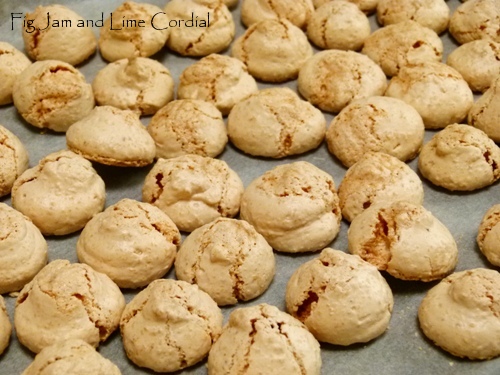

 Fig Jam and Lime Cordial