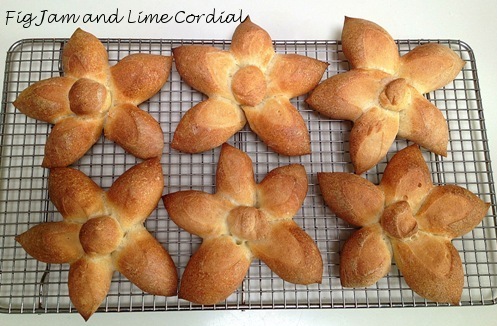
I’ve been having so much fun experimenting with the basic sourdough recipe that I wrote up a few weeks ago!
Even though the formula was one I made up (did you notice the nice round numbers?), it’s nevertheless proven to be quite versatile. Recently, when I was baking along on Twitter with my buddies Alison and Rachel, I made epi stars and fruit loaves.
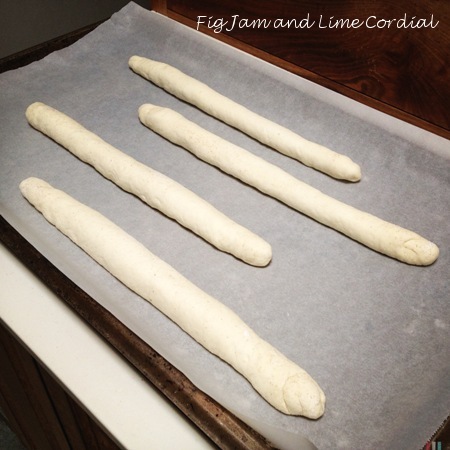
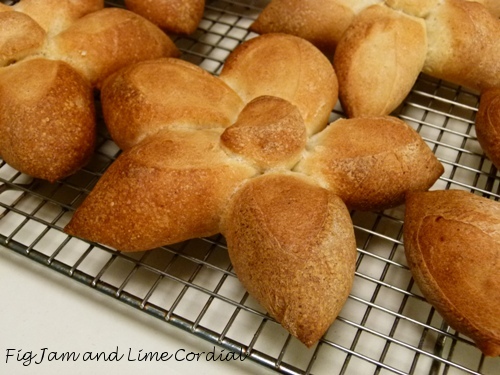
The stars were made from a single batch of the basic sourdough. After the bulk prove, they were rolled into long skinny sausages. These were covered with a tea towel and left to prove a second time…
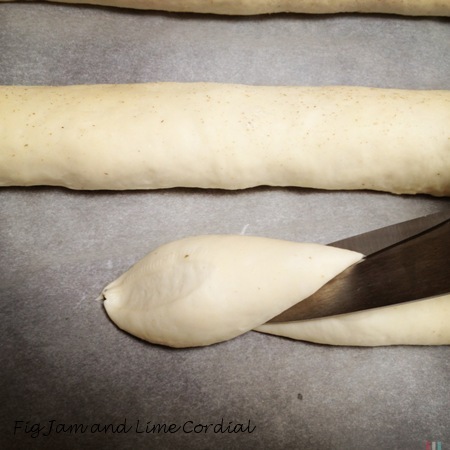
Once they had puffed up a bit, I cut them into “ears”, using my kitchen scissors (which unlike Charlie Louie’s, hadn’t been used to amputate a lorikeet’s leg). This is the method used to make epi, which I wrote about here, except in this case, I cut all the way through the dough…
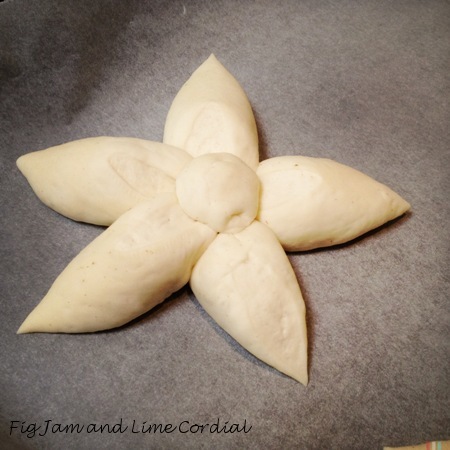
The “ears” were arranged on a sheet of parchment paper to form a star, and the round ends of each log were pressed into the middle to cover up the join…
The stars were sprayed with a little water and then baked in a preheated 220C fan-forced oven for 15 minutes, followed by a further 20 minutes at 175C with fan…
. . . . .
My second batch of sourdough was used to make two small fruit loaves…
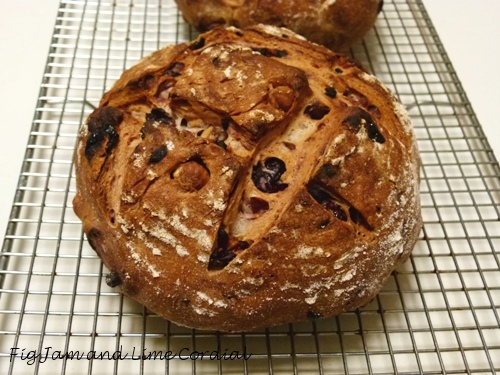
As usual, I got carried away with the fruit and nuts, and ended up adding way more than was sensible. If you do try this, I’d recommend using 200g worth of additions rather than 350g – the larger quantity made kneading and shaping the dough very fiddly…
- 150g ripe sourdough starter
- 250g water
- 25g olive oil
- 500g bakers/bread flour
- 10g fine sea salt
- 200g dried fruit and nuts (I used 350g – a mix of cranberries, dried blueberries, Turkish figs, roasted hazelnuts, macadamia nuts, pepitoes, raisins, dried cherries and walnuts)
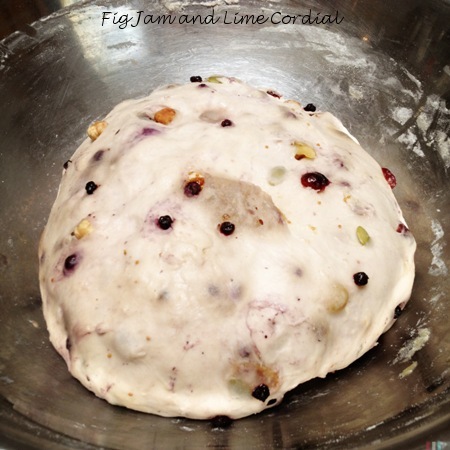
Add the fruit and nuts to the wet ingredients and stir to combine before mixing in the flour and salt. Otherwise, I just followed the basic instructions in the tutorial here. Here’s a photo of the dough after its bulk prove…
The dough was shaped (clumsily, because bits of fruit kept popping out and flying across the bench) into two small loaves and allowed to rise a second time. I used my bannetons, but this would work equally well on a paper lined tray as per the tutorial.
When I shape fruit loaves, I always try to have as little fruit on the top of the dough as possible, as these tend to burn in the oven.
After a second rise (these didn’t actually rise very much the second time, despite my giving them over an hour), I slashed the tops, spritzed them with a little water, and baked the loaves in a preheated 220C fan forced oven for 15 minutes (it might need 20, depending on your oven), before dropping the temperature to 175C with fan for a further 30 minutes baking time.
I’ve learned over the years that fruit loaves need a watchful eye, as they can brown up very quickly, and might scorch a little at the higher temperature. This batch, however, were fine…

I sliced up a loaf and a half for the freezer, and left just half a loaf out for eating the next day. This is Pete’s favourite, so he was very happy indeed!
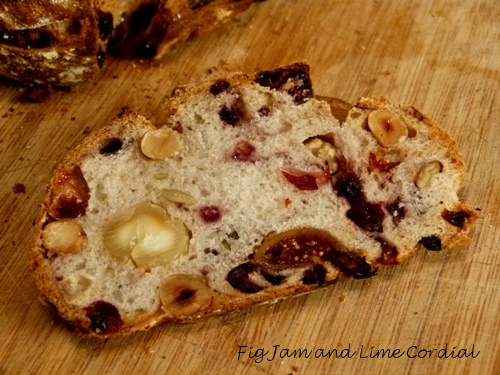
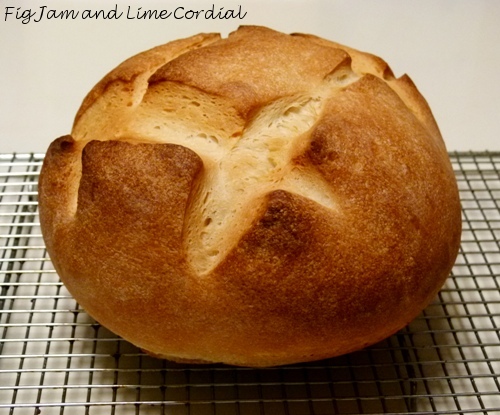



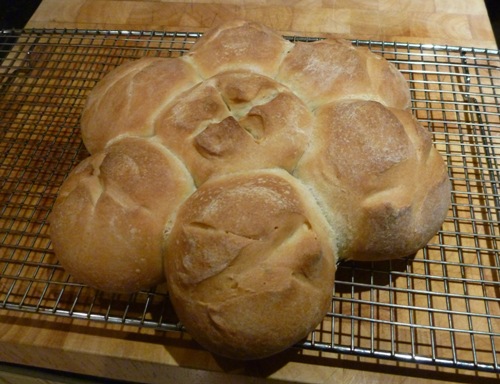
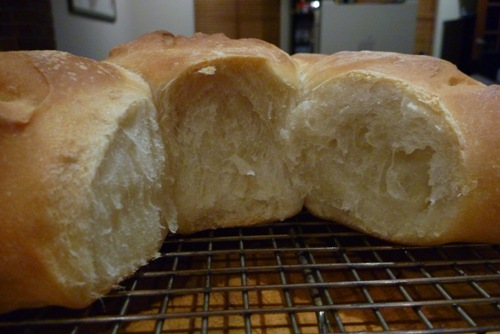


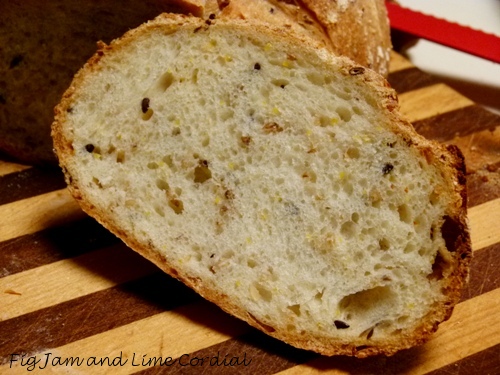

 Fig Jam and Lime Cordial